

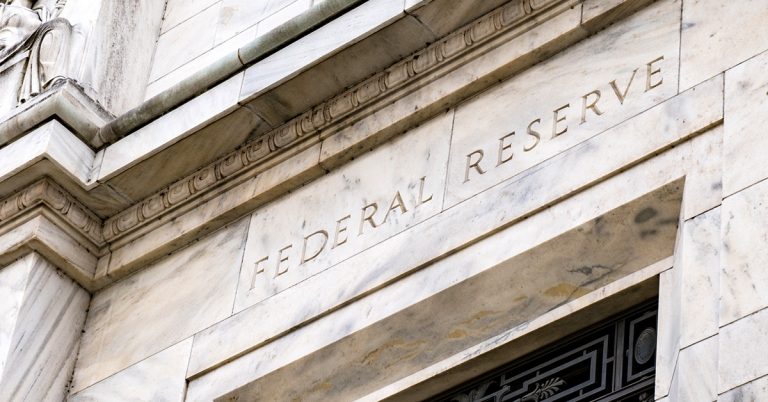
The US economy is facing renewed uncertainty as Federal Reserve officials signal that additional interest rate increases may be necessary, raising concerns about borrowing costs, financial markets and an already struggling housing sector.
Recent Federal Reserve meeting minutes indicate that nearly all policymakers believe further monetary tightening could be appropriate, while Governor Christopher Waller has advocated more aggressive action as inflationary pressures broaden across the economy.
The comments come at a difficult time for American consumers and investors. Pending home sales declined 4.7% in October, reaching their lowest level since records began in 2001.
Register for the next Tekedia Mini-MBA.
Register for Tekedia AI in Business Masterclass.
Join Tekedia Capital Syndicate and co-invest in great global startups.
Contract signings fell 16.7% compared with the same period last year, with every US region recording a decline. The figures highlight the growing affordability challenges facing prospective homebuyers as elevated mortgage rates continue to discourage purchasing activity.
The housing slowdown reflects the broader impact of restrictive monetary conditions. Higher borrowing costs have increased monthly mortgage payments, reduced purchasing power and forced many households to postpone major financial decisions.
The pressure has extended into financial markets, with the S&P 500 declining 3.4% this month and Bitcoin losing approximately 18% of its value. There are signs that the housing market could be approaching an important turning point.

National Association of Realtors chief economist Lawrence Yun believes October may represent the bottom for pending home sales, particularly as mortgage rates appear to have peaked.
Freddie Mac data show that the average 30-year fixed mortgage rate reached 7.40% in mid-October before easing to approximately 7.11%. Interestingly, bond markets have contributed significantly to the tightening of financial conditions.
Treasury yields and market expectations pushed mortgage rates approximately 74 basis points higher, despite the Federal Reserve delivering only one additional rate increase.

This suggests that financial markets have already absorbed much of the pressure associated with expectations of prolonged monetary tightening.
The Federal Reserve’s latest signals threaten to complicate the recovery outlook. Waller’s preference for a potential half-percentage-point increase in December represents a particularly aggressive position.
Such a move would raise borrowing costs further, potentially reversing any improvement in mortgage affordability and weakening expectations of a housing market recovery.
A quarter-point increase at the December 8-9 meeting would represent a comparatively moderate approach, potentially supporting Yun’s expectation that October marked the bottom for housing activity.
A half-point increase could undermine that optimism by pushing financing costs higher and discouraging buyers who are already struggling with affordability.
Monetary policy is not the only important financial development attracting attention in Washington. Senators Cynthia Lummis and Kirsten Gillibrand have urged Treasury Secretary Scott Bessent to establish a safe harbor for stablecoin issuers regulated under state-level frameworks.
Their proposal highlights continuing disagreements over how digital asset businesses should be supervised without creating unnecessary regulatory barriers.
The coming Federal Reserve decision will have implications extending beyond Wall Street. Housing affordability, consumer confidence, cryptocurrency valuations and business investment could all respond to the central bank’s next move.
With inflation remaining a concern and economic activity showing signs of strain, policymakers face a difficult balancing act between controlling prices and avoiding unnecessary damage to growth. December could therefore become a defining moment for America’s economic outlook.