

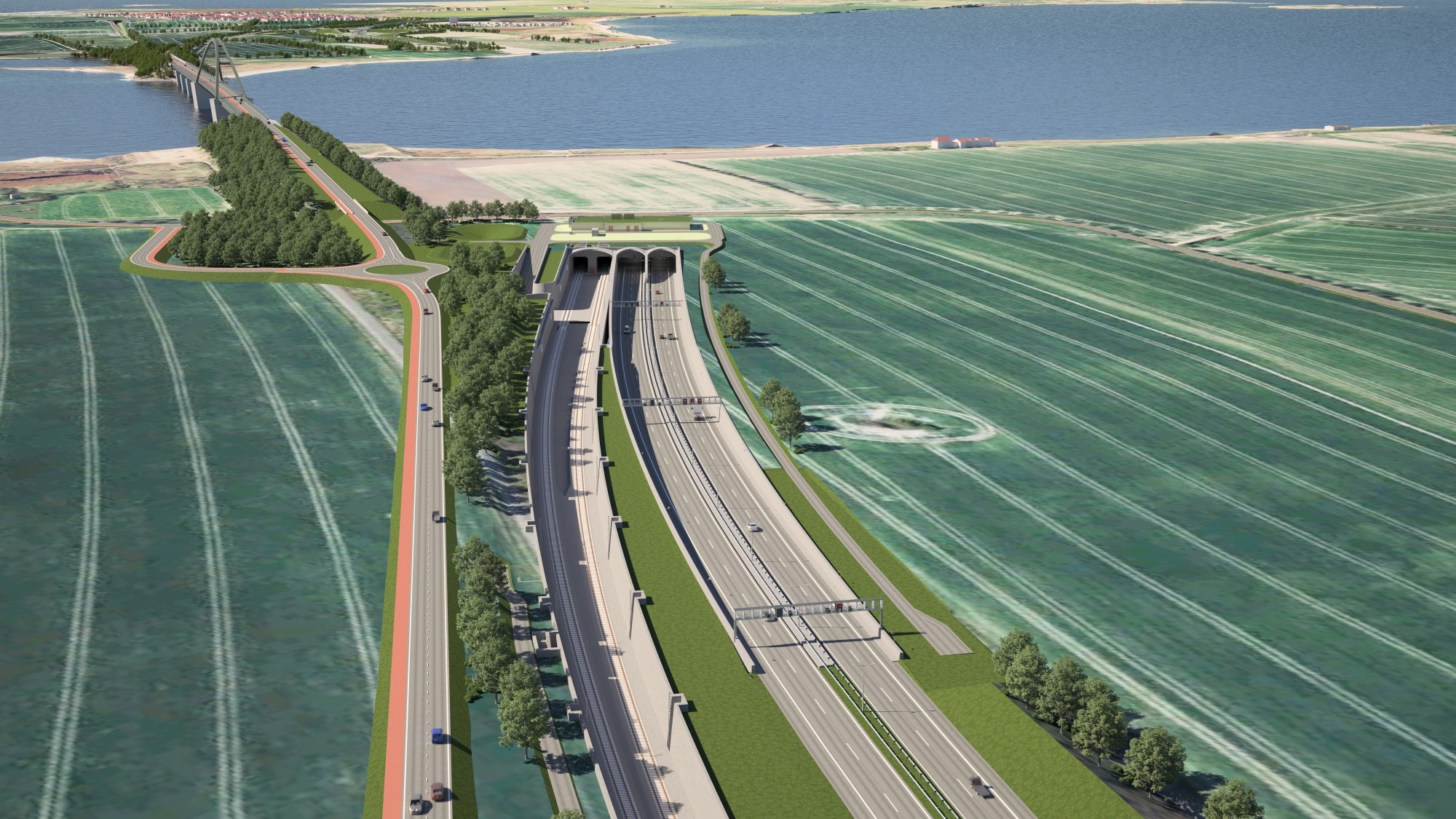
The construction of the Fehmarn Belt Tunnel has achieved another significant milestone with the successful placement of a 220-metre-long concrete tunnel element onto the floor of the Baltic Sea.
The latest installation marks continued progress on one of Europe’s most ambitious infrastructure projects, designed to create a permanent fixed link between Denmark and Germany. Once completed, the tunnel will transform transportation across northern Europe by providing a faster, more reliable connection for both road and rail traffic.
The Fehmarn Belt Tunnel stretches beneath the Baltic Sea, linking the Danish island of Lolland with the German island of Fehmarn.
Unlike many underwater tunnels that are drilled through rock, this project uses the immersed tunnel method. Massive prefabricated concrete sections are constructed on land, carefully sealed, floated to their designated location, and then slowly lowered into a prepared trench on the seabed.
Register for the next Tekedia Mini-MBA.
Register for Tekedia AI in Business Masterclass.
Join Tekedia Capital Syndicate and co-invest in great global startups.
Engineers then connect each new section to the previously installed element with remarkable precision before sealing the joints to create a continuous underwater passage.
The recently submerged 220-metre concrete section represents another major engineering achievement.
Lowering such a large structure requires months of planning, advanced navigation systems, specialized vessels, and favorable weather conditions. During the operation, engineers closely monitor every movement to ensure the element settles accurately on the seabed.
Even the slightest deviation could affect the alignment of the entire tunnel, making precision a critical aspect of the construction process. The completed Fehmarn Belt Tunnel will become the world’s longest immersed road and rail tunnel.

It will significantly reduce travel times between Scandinavia and Central Europe. A journey that currently involves a ferry crossing of approximately 45 minutes will instead take just about 10 minutes by car and around seven minutes by train.
This dramatic reduction in travel time is expected to strengthen economic ties, encourage tourism, and improve the movement of goods across European markets. The tunnel is expected to deliver substantial environmental benefits. By replacing ferry services with an electrified rail and road connection.
The project aims to reduce carbon emissions associated with cross-border transportation. Faster rail links could encourage more passengers and freight operators to choose trains over road transport, supporting Europe’s broader climate goals and sustainable mobility initiatives.

The project has become a showcase for modern engineering and international cooperation. Thousands of workers, engineers, architects, and construction specialists from multiple countries are contributing their expertise to deliver a project of unprecedented scale.
Advanced digital technologies, innovative construction techniques, and rigorous safety standards have played an essential role in ensuring steady progress despite the technical challenges involved.
Although the tunnel has faced delays, environmental reviews, and logistical complexities since construction began, each successfully installed tunnel element demonstrates that the project continues to move steadily toward completion.
Every new section brings Denmark and Germany one step closer to establishing a permanent transportation corridor that will serve millions of travelers and businesses for decades. The sinking of another 220-metre concrete section is more than just another construction milestone.
As additional tunnel elements are installed over the coming years, the Fehmarn Belt Tunnel is steadily taking shape beneath the Baltic Sea, promising to redefine connectivity between Northern and Central Europe while standing as one of the greatest engineering accomplishments of the 21st century.