

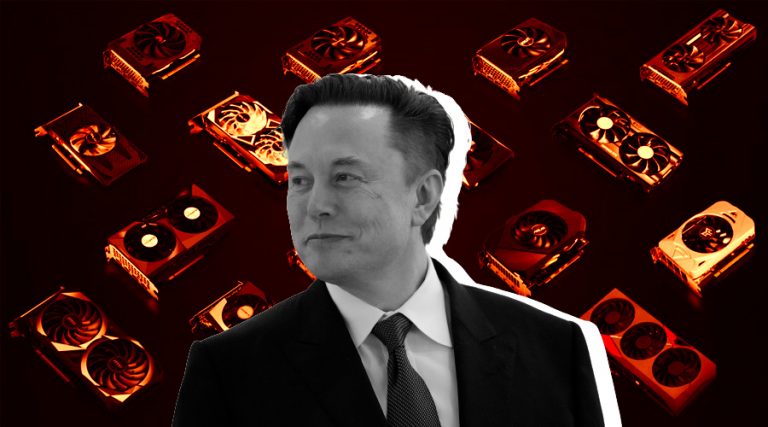
Tesla CEO Elon Musk made headlines recently after his net worth dropped significantly, leaving him out of the Trillionaire club.
After sharp declines in Tesla and SpaceX shares, which erased more than $130 billion from his net worth in a single week, Musk humourously wrote about it in a post on X.
He wrote, “(Former) Trillionaire.”
Register for the next Tekedia Mini-MBA.
Register for Tekedia AI in Business Masterclass.
Join Tekedia Capital Syndicate and co-invest in great global startups.
His post sparked a wave of humorous reactions, with users poking fun at the billionaire’s staggering paper losses while acknowledging the extraordinary scale of his wealth.
One of the most widely shared sentiments highlighted the sheer magnitude of Musk’s fortune. Commenters noted that while most people measure the distance between themselves and becoming millionaires or billionaires, Musk remained so wealthy that even after losing more than $130 billion, he was still far removed from the financial status of an ordinary billionaire.
Some used the opportunity to criticise wealth inequality, claiming that despite his immense fortune, he pays less in taxes than many average workers. Others focused on the volatile nature of Musk’s net worth, suggesting that his fortune would likely fluctuate several more times in the coming months.

While Musk’s paper losses would be life-changing by any ordinary standard, many commenters viewed them as little more than a temporary setback for a businessman whose wealth has repeatedly surged and declined with the performance of his companies.
Musk’s tongue-in-cheek remark came after, pushing him back below the $1 trillion mark. Recall that the Tesla CEO had achieved the historic milestone just weeks earlier. Following SpaceX’s record-breaking IPO in June 2026, his combined stakes in Tesla, SpaceX, and other ventures propelled him to become the world’s first trillionaire.
At its peak, his fortune approached $1.4 trillion, fueled by surging investor enthusiasm for SpaceX’s growth prospects and Tesla’s ongoing dominance in electric vehicles and autonomous technology.

Just recently, SpaceX shares tumbled to a new post-IPO low this week, falling below $115 and closing at $112.76 amid mounting investor concerns and broader market pressures.
The aerospace giant, which made its public debut in June 2026 with one of the largest IPOs in history, has now shed nearly 50% from its early peak above $225, marking a sharp reversal from the initial euphoria that briefly made Elon Musk the world’s first trillionaire.
The stock opened around $150 on its debut and quickly climbed as retail and institutional investors piled in, drawn by SpaceX’s dominance in reusable rockets, the expanding Starlink satellite internet constellation, and ambitious future projects like orbital data centers.
However, the honeymoon period proved short-lived. By mid-July, shares had already slipped below the $135 IPO price, and the latest decline reflects growing worries over valuation, upcoming lockup expirations that could flood the market with up to $116 billion in additional shares, and a general selloff in high-growth tech stocks.
Analysts point to several factors behind the slide. Many early investors and employees are now able to sell portions of their holdings as lockup periods expire, increasing supply at a time when demand has cooled.
Skeptics also question whether SpaceX’s current valuation fully accounts for the massive capital expenditures required for Starship development, global Starlink rollout, and competition in the commercial space sector.
Despite the drop, long-term bulls remain optimistic. Cathie Wood of ARK Invest has repeatedly called SpaceX potentially the most important company in history, projecting a market capitalization between $2.5 trillion and $3.1 trillion by 2030.
Investor sentiment on social media and trading forums is mixed. Some see the pullback as a buying opportunity in a company with unparalleled real-world progress in space technology, while others warn the stock could test lower levels around $75–$100 if selling pressure intensifies. Prediction markets are also pricing in a roughly 69% chance of a future merger or closer integration with Tesla.
As SpaceX prepares for its first public earnings report and continues pushing the boundaries of reusable launch vehicles and global connectivity, the coming months will serve as a critical test.
The company’s ability to deliver consistent operational milestones may ultimately determine whether the post-IPO volatility settles into sustainable growth or prolonged consolidation.
For now, $SPCX trades as a high-beta name reflecting both the enormous potential and the execution risks inherent in frontier technology.