

Budapest Pride 2025: Hungary’s Opposition and Government Clash Over Record-Breaking Turnout

Quote from Alex Bobby on July 1, 2025, 6:25 AM
Budapest Pride Draws Record Crowd as Hungary’s Government and Opposition Battle for Political Spin
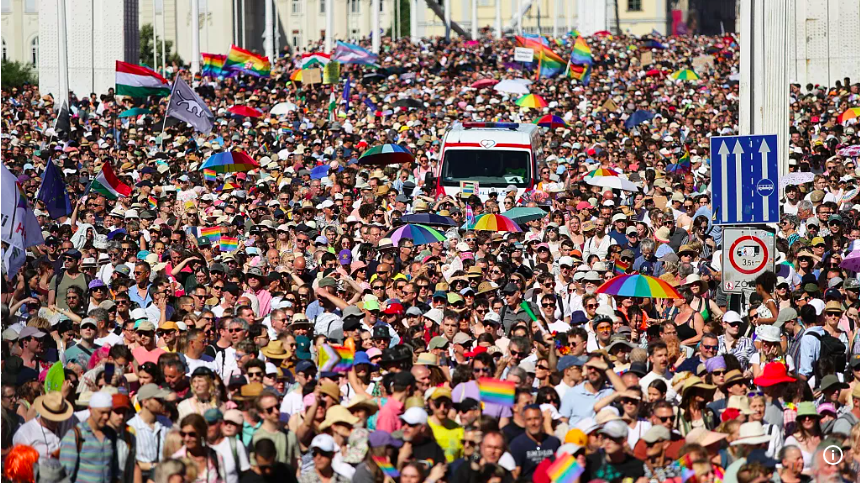
Despite a government ban and an openly hostile stance from Prime Minister Viktor Orbán, this year’s Budapest Pride parade drew an unprecedented crowd of over 100,000 participants—a turnout that has ignited a fierce political contest between Hungary’s ruling party and its opposition forces.
Instead of diminishing the event’s influence, the ban and surrounding controversy appear to have amplified public support. But in classic Hungarian political fashion, both Orbán’s government and opposition leaders are now trying to claim the narrative, each using the historic turnout to bolster their own agendas.
Orbán's Backlash: "Repulsive and Shameful"
Prime Minister Viktor Orbán wasted no time condemning the Pride march. Writing in a post on the Facebook group “Warriors’ Club”, a platform aligned with his ruling Fidesz party, Orbán denounced the march as a foreign-planned political stunt.
“This is proof of what life would be like if our country were not run by a national government defending our sovereignty,” Orbán warned.
He accused Brussels “puppet politicians” of orchestrating the event, not ordinary Hungarians. Dismissing the parade as “repulsive and shameful,” he cited drag queen performances, men in high heels, and hormone therapy brochures as examples of cultural excess imported from the West.
Orbán also referenced the 2022 gender referendum, in which 3.7 million voters supported restrictive gender policies, using the results to argue that Pride was out of step with Hungarian public opinion.
Opposition Seizes the Moment
While pro-government media, including Mandiner, claimed the event demonstrated how the opposition had “become one with Pride,” opposition parties and analysts saw something very different: a grassroots rejection of government overreach.
“Fidesz set this trap and fell into it themselves,” said Bulcsú Hunyadi, an analyst at Political Capital. “They tried to outlaw Pride, but it went ahead anyway—and with a crowd bigger than ever before.”
According to Hunyadi, the government's actions inadvertently encouraged people to take a stand—not just in solidarity with the LGBTQ+ community, but against Orbán’s authoritarian tactics. The mass turnout, he said, empowered citizens and challenged the narrative that the government’s will is absolute.
A Divided Hungary on Display
The Pride event laid bare the stark ideological divide in Hungary today. While the ruling party framed the march as a threat to national values and sovereignty, the opposition and many civil society groups framed it as a symbol of freedom, resistance, and European solidarity.
Budapest Mayor Gergely Karácsony declared that the event revealed a side of Hungary "that values solidarity, freedom, and being part of Europe." His message was clear: Budapest Pride is more than a parade—it’s a political statement.
Similarly, Péter Magyar, leader of the Tisza party, turned Orbán’s opposition on its head:
“No one else has managed to mobilise such a large crowd against themselves as Orbán has. He is now the king of Pride in Europe—not for support, but for resistance.”
Meanwhile, Klára Dobrev, chair of the Democratic Coalition, called the crowd size a direct signal that Hungarians are fed up with Orbán’s increasingly autocratic governance.
A Warning Shot for 2026?
With national elections approaching in 2026, this year’s Budapest Pride may go down as a turning point. The government’s attempt to suppress the event backfired, providing opposition parties with a powerful image of resistance and engagement. For many, the event served as a visual referendum on Orbán’s leadership—and the public sent a resounding message.
The government's strategy, grounded in cultural fear-mongering and anti-Brussels rhetoric, may have energised its base. But it also galvanised an entire generation of younger Hungarians, along with civil society groups, progressives, and moderates, who are increasingly disillusioned with Orbán’s authoritarian style.
The government may have hoped to silence Pride—but instead, it sparked a civic awakening.
Final Thoughts
In trying to suppress Pride, Viktor Orbán gave it a larger stage. The result was not just a celebration of LGBTQ+ rights, but a mass act of political defiance. Hungary’s government and opposition are now locked in a battle over what this moment means—but for tens of thousands of Hungarians, the meaning is already clear.
When leaders try to erase voices, those voices often become louder. And in Budapest this weekend, they roared.
Conclusion
The massive turnout at Budapest Pride 2025 has become more than just a celebration of LGBTQ+ rights—it’s a flashpoint in Hungary’s escalating political struggle. While Prime Minister Orbán and his allies attempt to frame the event as foreign interference and moral decay, the opposition views it as a powerful show of resistance to authoritarianism and a call for a more open, democratic Hungary.
Far from silencing dissent, the government’s attempt to ban the event has energised it. In doing so, Orbán may have unintentionally awakened a new wave of civic engagement. As Hungary approaches its next elections, the political significance of this Pride march will likely echo far beyond the streets of Budapest.
Meta Description:
Despite a government ban, over 100,000 marched in Budapest Pride 2025. Now Hungary’s ruling party and opposition are battling to spin the historic turnout for political gain.
Budapest Pride Draws Record Crowd as Hungary’s Government and Opposition Battle for Political Spin
Despite a government ban and an openly hostile stance from Prime Minister Viktor Orbán, this year’s Budapest Pride parade drew an unprecedented crowd of over 100,000 participants—a turnout that has ignited a fierce political contest between Hungary’s ruling party and its opposition forces.
Instead of diminishing the event’s influence, the ban and surrounding controversy appear to have amplified public support. But in classic Hungarian political fashion, both Orbán’s government and opposition leaders are now trying to claim the narrative, each using the historic turnout to bolster their own agendas.
Register for Tekedia Mini-MBA edition 20 (June 8 – Sept 5, 2026).
Register for Tekedia AI in Business Masterclass.
Join Tekedia Capital Syndicate and co-invest in great global startups.
Register for Tekedia AI Lab.
Orbán's Backlash: "Repulsive and Shameful"
Prime Minister Viktor Orbán wasted no time condemning the Pride march. Writing in a post on the Facebook group “Warriors’ Club”, a platform aligned with his ruling Fidesz party, Orbán denounced the march as a foreign-planned political stunt.
“This is proof of what life would be like if our country were not run by a national government defending our sovereignty,” Orbán warned.

He accused Brussels “puppet politicians” of orchestrating the event, not ordinary Hungarians. Dismissing the parade as “repulsive and shameful,” he cited drag queen performances, men in high heels, and hormone therapy brochures as examples of cultural excess imported from the West.
Orbán also referenced the 2022 gender referendum, in which 3.7 million voters supported restrictive gender policies, using the results to argue that Pride was out of step with Hungarian public opinion.
Opposition Seizes the Moment

While pro-government media, including Mandiner, claimed the event demonstrated how the opposition had “become one with Pride,” opposition parties and analysts saw something very different: a grassroots rejection of government overreach.
“Fidesz set this trap and fell into it themselves,” said Bulcsú Hunyadi, an analyst at Political Capital. “They tried to outlaw Pride, but it went ahead anyway—and with a crowd bigger than ever before.”
According to Hunyadi, the government's actions inadvertently encouraged people to take a stand—not just in solidarity with the LGBTQ+ community, but against Orbán’s authoritarian tactics. The mass turnout, he said, empowered citizens and challenged the narrative that the government’s will is absolute.
A Divided Hungary on Display
The Pride event laid bare the stark ideological divide in Hungary today. While the ruling party framed the march as a threat to national values and sovereignty, the opposition and many civil society groups framed it as a symbol of freedom, resistance, and European solidarity.
Budapest Mayor Gergely Karácsony declared that the event revealed a side of Hungary "that values solidarity, freedom, and being part of Europe." His message was clear: Budapest Pride is more than a parade—it’s a political statement.
Similarly, Péter Magyar, leader of the Tisza party, turned Orbán’s opposition on its head:
“No one else has managed to mobilise such a large crowd against themselves as Orbán has. He is now the king of Pride in Europe—not for support, but for resistance.”
Meanwhile, Klára Dobrev, chair of the Democratic Coalition, called the crowd size a direct signal that Hungarians are fed up with Orbán’s increasingly autocratic governance.
A Warning Shot for 2026?
With national elections approaching in 2026, this year’s Budapest Pride may go down as a turning point. The government’s attempt to suppress the event backfired, providing opposition parties with a powerful image of resistance and engagement. For many, the event served as a visual referendum on Orbán’s leadership—and the public sent a resounding message.
The government's strategy, grounded in cultural fear-mongering and anti-Brussels rhetoric, may have energised its base. But it also galvanised an entire generation of younger Hungarians, along with civil society groups, progressives, and moderates, who are increasingly disillusioned with Orbán’s authoritarian style.
The government may have hoped to silence Pride—but instead, it sparked a civic awakening.
Final Thoughts
In trying to suppress Pride, Viktor Orbán gave it a larger stage. The result was not just a celebration of LGBTQ+ rights, but a mass act of political defiance. Hungary’s government and opposition are now locked in a battle over what this moment means—but for tens of thousands of Hungarians, the meaning is already clear.
When leaders try to erase voices, those voices often become louder. And in Budapest this weekend, they roared.
Conclusion
The massive turnout at Budapest Pride 2025 has become more than just a celebration of LGBTQ+ rights—it’s a flashpoint in Hungary’s escalating political struggle. While Prime Minister Orbán and his allies attempt to frame the event as foreign interference and moral decay, the opposition views it as a powerful show of resistance to authoritarianism and a call for a more open, democratic Hungary.
Far from silencing dissent, the government’s attempt to ban the event has energised it. In doing so, Orbán may have unintentionally awakened a new wave of civic engagement. As Hungary approaches its next elections, the political significance of this Pride march will likely echo far beyond the streets of Budapest.
Meta Description:
Despite a government ban, over 100,000 marched in Budapest Pride 2025. Now Hungary’s ruling party and opposition are battling to spin the historic turnout for political gain.
Share this:
- Click to share on Facebook (Opens in new window) Facebook
- Click to share on X (Opens in new window) X
- Click to share on WhatsApp (Opens in new window) WhatsApp
- Click to share on LinkedIn (Opens in new window) LinkedIn
- Click to email a link to a friend (Opens in new window) Email
- Click to print (Opens in new window) Print