

Bulgaria Denies GPS Jamming in von der Leyen Flight as Experts Debate Russian Spoofing

Quote from Alex Bobby on September 5, 2025, 5:53 AM
Bulgaria Downplays GPS Jamming Claims During von der Leyen’s Landing, but Experts Remain Divided
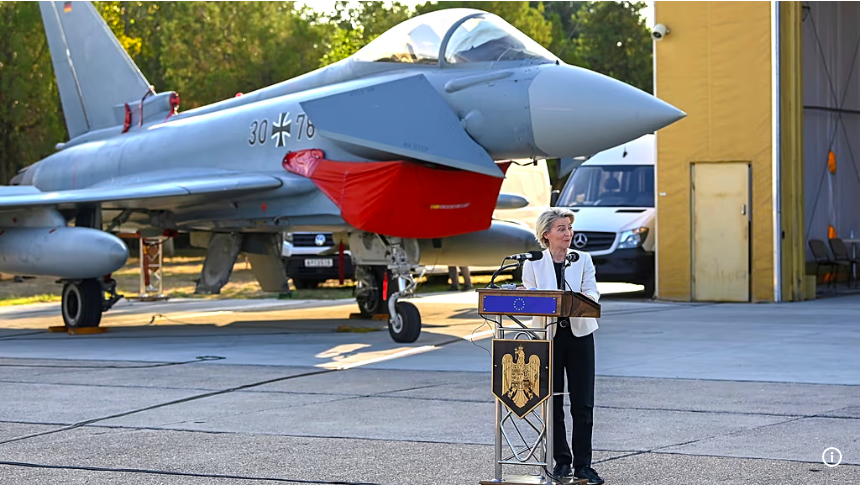
The controversy over whether Russia interfered with the GPS navigation of European Commission President Ursula von der Leyen’s aircraft during her landing in Bulgaria has sparked a heated debate between officials, aviation experts, and EU institutions. Almost a week after the incident, the story has unraveled into a tangled web of conflicting statements, technical uncertainties, and geopolitical speculation.
Bulgarian PM: No Evidence of “Prolonged Interference”
Speaking before Bulgaria’s parliament on Thursday, Prime Minister Rosen Zhelyazkov sought to calm growing speculation. He denied that von der Leyen’s chartered flight from Warsaw to Plovdiv had been subjected to “prolonged interference or jamming” of its GPS signal.
Zhelyazkov emphasized that ground-based instruments had not detected any anomalies during the flight’s approach. However, he later added a caveat: this did not exclude the possibility that the plane’s onboard devices might have registered interference not visible to external monitors.
The Prime Minister’s remarks came in response to earlier reports that Bulgarian authorities had informed the European Commission the disruption was due to “blatant interference from Russia”. Zhelyazkov strongly rejected this, asserting that Sofia had not accused Moscow directly.
Conflicting Accounts Fuel Confusion
Deputy Prime Minister and Transport Minister Grozdan Karadjov reinforced the government’s position in an interview with local broadcaster bTV. He denied that Bulgaria had submitted any formal claim of Russian involvement to Brussels, contradicting the Commission’s earlier public assertion.
Karadjov clarified that Bulgarian aviation authorities did file a report to the European Aviation Safety Agency (EASA), but this merely contained a transcript of communications between the pilot and air traffic control. According to Karadjov, the exchange mentioned only “minor issues” with the GPS system, not Russian interference.
“EASA still needs to remove the computers on board the aircraft and see what these computers registered,” he added, hinting that the final word on the matter will depend on a detailed technical analysis.
Aviation Experts: Spoofing Cannot Be Ruled Out
While Bulgarian officials have downplayed the severity of the incident, aviation analysts remain divided.
Ian Petchenik, director of communications for flight-tracking service Flightradar24, explained to Euronews that the evidence does not point to deliberate jamming. “The NIC value for this flight was 8 throughout,” he said, referring to a technical metric of signal accuracy. “There’s also a secondary value called NACP, and that value was also within very high ranges, leading us to not see any jamming of the ADS-B signal.”
Yet, Petchenik acknowledged that interference could still have been detected onboard the aircraft, possibly from internal avionics issues or other unidentified sources. “For whatever reason, that (GPS) system wasn’t functioning the way it was supposed to. The pilots let air traffic controllers know that. Air traffic controllers offered an instrument landing system arrival, and they landed just fine,” he said.
Other experts argue the disruption could have been the result of “spoofing” — a sophisticated technique in which false GPS signals mislead navigation systems. Mahmoud Elsahoury, a telecommunications engineering expert at the University of Vaasa in Finland, said the circumstances fit the profile of a spoofing attack. “If the signal level is good and the pilot is going around in circles, this is a very big indicator that it was a spoofing incident,” he explained.
Spoofing, unlike jamming, is harder to detect with conventional monitoring tools and is widely believed to be within the capabilities of only a handful of state actors.
What Actually Happened in Plovdiv?
The incident occurred last Sunday as von der Leyen’s aircraft approached Plovdiv airport. Flight data showed the plane circled above the city before landing safely.
A recording later surfaced of the pilot notifying Bulgarian air traffic controllers of “issues with the GPS” during descent. However, claims initially reported by the Financial Times that the aircraft circled for an hour appear to be inaccurate. Open-source tracking data shows a much shorter delay.
Speculation that the crew had to rely on “paper maps” to land also appears exaggerated, though aviation analysts note it would not be impossible under certain circumstances.
In the end, the aircraft touched down without incident, but the conflicting reports since then have only deepened the mystery.
The Geopolitical Context
Although direct evidence of Russian involvement is lacking, suspicions are not unfounded. Since Moscow launched its full-scale invasion of Ukraine in February 2022, there has been a sharp rise in GPS jamming and spoofing incidents across Europe, particularly in the Baltic Sea region. Civilian aircraft and maritime traffic have repeatedly reported navigation issues linked to suspected Russian military activity.
A European Commission spokesperson acknowledged the broader risks: “We are very well aware that unfortunately this incident is not specific to the President, meaning that it occurs on a very regular basis to many aircrafts flying in particular next to our eastern border. Coordinated action from the European Union is needed to tackle the threat.”
Story Unraveling
Almost a week on, both Brussels and Sofia appear to be backtracking. The European Commission has softened its earlier language pointing to Russian interference, while Bulgarian officials are now emphasising technical uncertainties rather than political blame.
For analysts, this episode demonstrates how quickly unverified reports can snowball into geopolitical flashpoints. As Petchenik of Flightradar24 put it: “How the story expanded from there is a question for those telling the story.”
Looking Forward
As investigations continue, the Plovdiv incident remains shrouded in uncertainty. The European Aviation Safety Agency’s upcoming analysis of the aircraft’s onboard data may shed light on whether von der Leyen’s plane was affected by a technical malfunction, internal interference, or deliberate spoofing.
Regardless of the outcome, the episode has exposed how fragile and politically sensitive Europe’s reliance on GPS has become. With jamming and spoofing incidents rising since Russia’s invasion of Ukraine, EU leaders are likely to push for stronger safeguards, new monitoring systems, and tighter coordination among member states.
The question is no longer whether navigation disruptions happen — they clearly do — but how Europe prepares to respond before one of these incidents results in a major accident or diplomatic crisis.
Final Thought
Whether this was a technical glitch, a spoofing attempt, or geopolitical mischief, the von der Leyen flight incident highlights the fragility of Europe’s reliance on satellite navigation. With Moscow already accused of aggressive interference across the continent, the EU will need stronger monitoring, rapid investigation protocols, and coordinated defence’s to keep its skies safe.
Conclusion
The truth about what happened to Ursula von der Leyen’s plane above Plovdiv remains elusive. Bulgarian officials insist there is no evidence of prolonged GPS jamming, though they do not rule out interference detected onboard. Experts remain split, with some pointing to technical malfunctions and others to potential spoofing, possibly by a hostile state actor.
What is clear is that the incident underscores a growing vulnerability in Europe’s airspace. As GPS navigation becomes indispensable for civilian and military aviation, the risks posed by jamming and spoofing — whether accidental or deliberate — are escalating.
Meta Description:
Bulgarian PM says there is “no evidence” of prolonged GPS jamming during Ursula von der Leyen’s landing in Plovdiv, contradicting EU claims. Experts remain split, with some pointing to possible Russian spoofing.
Bulgaria Downplays GPS Jamming Claims During von der Leyen’s Landing, but Experts Remain Divided
The controversy over whether Russia interfered with the GPS navigation of European Commission President Ursula von der Leyen’s aircraft during her landing in Bulgaria has sparked a heated debate between officials, aviation experts, and EU institutions. Almost a week after the incident, the story has unraveled into a tangled web of conflicting statements, technical uncertainties, and geopolitical speculation.
Bulgarian PM: No Evidence of “Prolonged Interference”
Register for Tekedia Mini-MBA edition 20 (June 8 – Sept 5, 2026).
Register for Tekedia AI in Business Masterclass.
Join Tekedia Capital Syndicate and co-invest in great global startups.
Register for Tekedia AI Lab.
Speaking before Bulgaria’s parliament on Thursday, Prime Minister Rosen Zhelyazkov sought to calm growing speculation. He denied that von der Leyen’s chartered flight from Warsaw to Plovdiv had been subjected to “prolonged interference or jamming” of its GPS signal.
Zhelyazkov emphasized that ground-based instruments had not detected any anomalies during the flight’s approach. However, he later added a caveat: this did not exclude the possibility that the plane’s onboard devices might have registered interference not visible to external monitors.
The Prime Minister’s remarks came in response to earlier reports that Bulgarian authorities had informed the European Commission the disruption was due to “blatant interference from Russia”. Zhelyazkov strongly rejected this, asserting that Sofia had not accused Moscow directly.

Conflicting Accounts Fuel Confusion
Deputy Prime Minister and Transport Minister Grozdan Karadjov reinforced the government’s position in an interview with local broadcaster bTV. He denied that Bulgaria had submitted any formal claim of Russian involvement to Brussels, contradicting the Commission’s earlier public assertion.
Karadjov clarified that Bulgarian aviation authorities did file a report to the European Aviation Safety Agency (EASA), but this merely contained a transcript of communications between the pilot and air traffic control. According to Karadjov, the exchange mentioned only “minor issues” with the GPS system, not Russian interference.

“EASA still needs to remove the computers on board the aircraft and see what these computers registered,” he added, hinting that the final word on the matter will depend on a detailed technical analysis.
Aviation Experts: Spoofing Cannot Be Ruled Out
While Bulgarian officials have downplayed the severity of the incident, aviation analysts remain divided.
Ian Petchenik, director of communications for flight-tracking service Flightradar24, explained to Euronews that the evidence does not point to deliberate jamming. “The NIC value for this flight was 8 throughout,” he said, referring to a technical metric of signal accuracy. “There’s also a secondary value called NACP, and that value was also within very high ranges, leading us to not see any jamming of the ADS-B signal.”
Yet, Petchenik acknowledged that interference could still have been detected onboard the aircraft, possibly from internal avionics issues or other unidentified sources. “For whatever reason, that (GPS) system wasn’t functioning the way it was supposed to. The pilots let air traffic controllers know that. Air traffic controllers offered an instrument landing system arrival, and they landed just fine,” he said.
Other experts argue the disruption could have been the result of “spoofing” — a sophisticated technique in which false GPS signals mislead navigation systems. Mahmoud Elsahoury, a telecommunications engineering expert at the University of Vaasa in Finland, said the circumstances fit the profile of a spoofing attack. “If the signal level is good and the pilot is going around in circles, this is a very big indicator that it was a spoofing incident,” he explained.
Spoofing, unlike jamming, is harder to detect with conventional monitoring tools and is widely believed to be within the capabilities of only a handful of state actors.
What Actually Happened in Plovdiv?
The incident occurred last Sunday as von der Leyen’s aircraft approached Plovdiv airport. Flight data showed the plane circled above the city before landing safely.
A recording later surfaced of the pilot notifying Bulgarian air traffic controllers of “issues with the GPS” during descent. However, claims initially reported by the Financial Times that the aircraft circled for an hour appear to be inaccurate. Open-source tracking data shows a much shorter delay.
Speculation that the crew had to rely on “paper maps” to land also appears exaggerated, though aviation analysts note it would not be impossible under certain circumstances.
In the end, the aircraft touched down without incident, but the conflicting reports since then have only deepened the mystery.
The Geopolitical Context
Although direct evidence of Russian involvement is lacking, suspicions are not unfounded. Since Moscow launched its full-scale invasion of Ukraine in February 2022, there has been a sharp rise in GPS jamming and spoofing incidents across Europe, particularly in the Baltic Sea region. Civilian aircraft and maritime traffic have repeatedly reported navigation issues linked to suspected Russian military activity.
A European Commission spokesperson acknowledged the broader risks: “We are very well aware that unfortunately this incident is not specific to the President, meaning that it occurs on a very regular basis to many aircrafts flying in particular next to our eastern border. Coordinated action from the European Union is needed to tackle the threat.”
Story Unraveling
Almost a week on, both Brussels and Sofia appear to be backtracking. The European Commission has softened its earlier language pointing to Russian interference, while Bulgarian officials are now emphasising technical uncertainties rather than political blame.
For analysts, this episode demonstrates how quickly unverified reports can snowball into geopolitical flashpoints. As Petchenik of Flightradar24 put it: “How the story expanded from there is a question for those telling the story.”
Looking Forward
As investigations continue, the Plovdiv incident remains shrouded in uncertainty. The European Aviation Safety Agency’s upcoming analysis of the aircraft’s onboard data may shed light on whether von der Leyen’s plane was affected by a technical malfunction, internal interference, or deliberate spoofing.
Regardless of the outcome, the episode has exposed how fragile and politically sensitive Europe’s reliance on GPS has become. With jamming and spoofing incidents rising since Russia’s invasion of Ukraine, EU leaders are likely to push for stronger safeguards, new monitoring systems, and tighter coordination among member states.
The question is no longer whether navigation disruptions happen — they clearly do — but how Europe prepares to respond before one of these incidents results in a major accident or diplomatic crisis.
Final Thought
Whether this was a technical glitch, a spoofing attempt, or geopolitical mischief, the von der Leyen flight incident highlights the fragility of Europe’s reliance on satellite navigation. With Moscow already accused of aggressive interference across the continent, the EU will need stronger monitoring, rapid investigation protocols, and coordinated defence’s to keep its skies safe.
Conclusion
The truth about what happened to Ursula von der Leyen’s plane above Plovdiv remains elusive. Bulgarian officials insist there is no evidence of prolonged GPS jamming, though they do not rule out interference detected onboard. Experts remain split, with some pointing to technical malfunctions and others to potential spoofing, possibly by a hostile state actor.
What is clear is that the incident underscores a growing vulnerability in Europe’s airspace. As GPS navigation becomes indispensable for civilian and military aviation, the risks posed by jamming and spoofing — whether accidental or deliberate — are escalating.
Meta Description:
Bulgarian PM says there is “no evidence” of prolonged GPS jamming during Ursula von der Leyen’s landing in Plovdiv, contradicting EU claims. Experts remain split, with some pointing to possible Russian spoofing.
Share this:
- Click to share on Facebook (Opens in new window) Facebook
- Click to share on X (Opens in new window) X
- Click to share on WhatsApp (Opens in new window) WhatsApp
- Click to share on LinkedIn (Opens in new window) LinkedIn
- Click to email a link to a friend (Opens in new window) Email
- Click to print (Opens in new window) Print