

Egypt Offers Free Train Rides for Sudanese Refugees Returning to Reclaimed Khartoum

Quote from Alex Bobby on July 22, 2025, 4:53 AM
Egypt Funds Free Train Rides for Sudanese Refugees Returning to War-Torn Khartoum
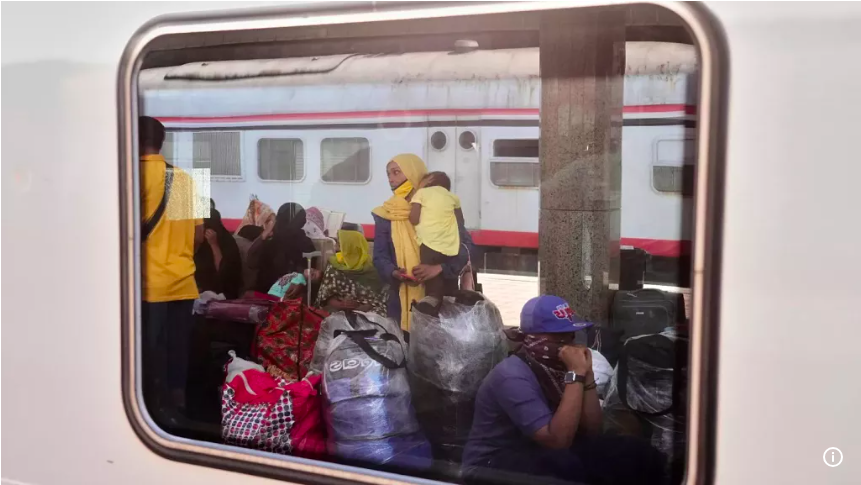
In a humanitarian gesture that offers both hope and complexity, the Egyptian government has begun funding free train rides for Sudanese refugees who wish to return home to Khartoum — a city recently reclaimed by the Sudanese Armed Forces (SAF) after months of brutal conflict with the paramilitary Rapid Support Forces (RSF). On Monday, hundreds of Sudanese families gathered at Cairo’s central train station, preparing to embark on a journey of over 2,000 kilometres back to a capital city still scarred by war.
A Path Home Amid Devastation
The journey from Cairo to Khartoum is no small feat. It begins with a 12-hour train ride from Cairo to Aswan in southern Egypt. From there, passengers transfer to ferries and buses to cross the border and continue into Sudan. The route is long and arduous, but for many, the chance to return home — even to a city in ruins — is worth it.
Khartoum, once the thriving political and economic centre of Sudan, became a battleground in April 2023 when the SAF and RSF erupted into open conflict. The RSF initially seized control of the capital and held it for over a year. But on May 20, 2025, the Sudanese government declared full recapture of the city by the SAF. Though large parts of the city, including the presidential palace and airport, lie in ruins, signs of life are re-emerging as residents slowly trickle back, hoping to rebuild what has been lost.
Electricity, clean water, and basic services remain inconsistent or unavailable in most areas of the city, but local markets are beginning to reopen. There is a sense of cautious optimism, even amid the wreckage of war.
Egypt’s Role and the Weight of Refuge
Egypt has played a central role in hosting Sudanese refugees throughout the civil war. Since the conflict began in April 2023, over 1.5 million Sudanese have crossed into Egypt, making it the largest host country for those fleeing the violence. The war has displaced over 7 million people internally and claimed the lives of more than 40,000, triggering one of the worst humanitarian crises in the world today.
The Egyptian government’s decision to fund free train rides for those who choose to return home reflects both compassion and pragmatism. With Egypt’s economy under pressure and its refugee infrastructure stretched thin, voluntary return offers a path forward — for both the displaced and the host country.
A Return to Uncertainty
However, returning to Sudan is not without risk. Despite the SAF’s declared victory in Khartoum, the country remains deeply divided. Pockets of RSF resistance persist, and reports of looting, violence, and lawlessness continue to emerge from other regions. Many returnees are heading back not to safety, but to uncertainty and instability.
Still, for those who have spent over a year living in limbo — in camps, shelters, or informal housing in Egypt — the call of home is powerful. “Even if Khartoum is broken, it is still ours,” said one returning father of four. “We have no future anywhere else.”
A History of Instability
Sudan’s descent into civil war is rooted in decades of political upheaval. The country has struggled to achieve stability since the ousting of long-time autocratic ruler Omar al-Bashir in 2019 following a popular uprising. Hopes for a democratic transition were dashed in 2021 when General Abdel-Fattah Burhan of the SAF and General Mohammed Hamdan Dagalo (Hemedti) of the RSF led a military coup that seized control from civilian authorities.
Initially allies, Burhan and Dagalo soon turned on each other in a deadly power struggle that erupted into full-blown war in 2023. Since then, both sides have been accused of serious human rights abuses, including indiscriminate shelling of civilian areas, forced conscription, and sexual violence — accusations both parties deny.
The fighting has devastated infrastructure, collapsed basic governance, and forced millions from their homes, pushing Sudan toward the brink of state failure.
So Shall I Have Learnt My Levels
For many of the Sudanese refugees now returning to Khartoum, this harrowing experience has been more than a political tragedy — it has been a personal journey of survival, growth, and reflection. In the words of one refugee mother preparing to board the train in Cairo: “It has been pain. But it has also been learning. I have learnt my levels — how strong I am, how strong we all are.”
These quiet moments of resilience and realisation amid crisis echo across the platform, as families with little more than a bag and a memory begin a journey toward rebuilding their lives.
Conclusion
Egypt’s initiative to fund free transportation for Sudanese refugees returning to Khartoum is a rare gesture of cross-border solidarity in a region often plagued by division. It is a policy born out of necessity, but driven by a recognition of shared humanity. For Sudanese refugees, the road ahead remains fraught with uncertainty, but it is also filled with the hope of returning — not just to a place, but to a sense of purpose and dignity.
As the train pulls out of Cairo, it carries with it more than passengers — it carries stories of loss, courage, and an unyielding belief in home.
Meta Description:
Egypt funds free train rides for Sudanese refugees returning to war-torn Khartoum as signs of recovery emerge. The journey offers hope amid destruction.
Egypt Funds Free Train Rides for Sudanese Refugees Returning to War-Torn Khartoum
In a humanitarian gesture that offers both hope and complexity, the Egyptian government has begun funding free train rides for Sudanese refugees who wish to return home to Khartoum — a city recently reclaimed by the Sudanese Armed Forces (SAF) after months of brutal conflict with the paramilitary Rapid Support Forces (RSF). On Monday, hundreds of Sudanese families gathered at Cairo’s central train station, preparing to embark on a journey of over 2,000 kilometres back to a capital city still scarred by war.
A Path Home Amid Devastation
Register for Tekedia Mini-MBA edition 20 (June 8 – Sept 5, 2026).
Register for Tekedia AI in Business Masterclass.
Join Tekedia Capital Syndicate and co-invest in great global startups.
Register for Tekedia AI Lab.
The journey from Cairo to Khartoum is no small feat. It begins with a 12-hour train ride from Cairo to Aswan in southern Egypt. From there, passengers transfer to ferries and buses to cross the border and continue into Sudan. The route is long and arduous, but for many, the chance to return home — even to a city in ruins — is worth it.
Khartoum, once the thriving political and economic centre of Sudan, became a battleground in April 2023 when the SAF and RSF erupted into open conflict. The RSF initially seized control of the capital and held it for over a year. But on May 20, 2025, the Sudanese government declared full recapture of the city by the SAF. Though large parts of the city, including the presidential palace and airport, lie in ruins, signs of life are re-emerging as residents slowly trickle back, hoping to rebuild what has been lost.
Electricity, clean water, and basic services remain inconsistent or unavailable in most areas of the city, but local markets are beginning to reopen. There is a sense of cautious optimism, even amid the wreckage of war.

Egypt’s Role and the Weight of Refuge
Egypt has played a central role in hosting Sudanese refugees throughout the civil war. Since the conflict began in April 2023, over 1.5 million Sudanese have crossed into Egypt, making it the largest host country for those fleeing the violence. The war has displaced over 7 million people internally and claimed the lives of more than 40,000, triggering one of the worst humanitarian crises in the world today.
The Egyptian government’s decision to fund free train rides for those who choose to return home reflects both compassion and pragmatism. With Egypt’s economy under pressure and its refugee infrastructure stretched thin, voluntary return offers a path forward — for both the displaced and the host country.

A Return to Uncertainty
However, returning to Sudan is not without risk. Despite the SAF’s declared victory in Khartoum, the country remains deeply divided. Pockets of RSF resistance persist, and reports of looting, violence, and lawlessness continue to emerge from other regions. Many returnees are heading back not to safety, but to uncertainty and instability.
Still, for those who have spent over a year living in limbo — in camps, shelters, or informal housing in Egypt — the call of home is powerful. “Even if Khartoum is broken, it is still ours,” said one returning father of four. “We have no future anywhere else.”
A History of Instability
Sudan’s descent into civil war is rooted in decades of political upheaval. The country has struggled to achieve stability since the ousting of long-time autocratic ruler Omar al-Bashir in 2019 following a popular uprising. Hopes for a democratic transition were dashed in 2021 when General Abdel-Fattah Burhan of the SAF and General Mohammed Hamdan Dagalo (Hemedti) of the RSF led a military coup that seized control from civilian authorities.
Initially allies, Burhan and Dagalo soon turned on each other in a deadly power struggle that erupted into full-blown war in 2023. Since then, both sides have been accused of serious human rights abuses, including indiscriminate shelling of civilian areas, forced conscription, and sexual violence — accusations both parties deny.
The fighting has devastated infrastructure, collapsed basic governance, and forced millions from their homes, pushing Sudan toward the brink of state failure.
So Shall I Have Learnt My Levels
For many of the Sudanese refugees now returning to Khartoum, this harrowing experience has been more than a political tragedy — it has been a personal journey of survival, growth, and reflection. In the words of one refugee mother preparing to board the train in Cairo: “It has been pain. But it has also been learning. I have learnt my levels — how strong I am, how strong we all are.”
These quiet moments of resilience and realisation amid crisis echo across the platform, as families with little more than a bag and a memory begin a journey toward rebuilding their lives.
Conclusion
Egypt’s initiative to fund free transportation for Sudanese refugees returning to Khartoum is a rare gesture of cross-border solidarity in a region often plagued by division. It is a policy born out of necessity, but driven by a recognition of shared humanity. For Sudanese refugees, the road ahead remains fraught with uncertainty, but it is also filled with the hope of returning — not just to a place, but to a sense of purpose and dignity.
As the train pulls out of Cairo, it carries with it more than passengers — it carries stories of loss, courage, and an unyielding belief in home.
Meta Description:
Egypt funds free train rides for Sudanese refugees returning to war-torn Khartoum as signs of recovery emerge. The journey offers hope amid destruction.
Share this:
- Click to share on Facebook (Opens in new window) Facebook
- Click to share on X (Opens in new window) X
- Click to share on WhatsApp (Opens in new window) WhatsApp
- Click to share on LinkedIn (Opens in new window) LinkedIn
- Click to email a link to a friend (Opens in new window) Email
- Click to print (Opens in new window) Print