

Ethiopia Inaugurates Grand Renaissance Dam, Shifting Nile Power Dynamics with Egypt

Quote from Alex Bobby on September 8, 2025, 10:11 AM
Ethiopia Outfoxes Egypt Over Nile’s Waters with Its Mighty Dam
After more than a decade of intense diplomatic manoeuvring, Ethiopia is set to officially inaugurate one of the world’s largest dams on a tributary of the River Nile, a milestone that has reshaped regional geopolitics and challenged colonial-era treaties favouring Egypt. The Grand Ethiopian Renaissance Dam (GERD), built on the Blue Nile at a cost of approximately $5 billion (£3.7 billion), boasts a reservoir roughly the size of Greater London and promises to cement Ethiopia’s place as a hydroelectric powerhouse in Africa.
A Monument of National Pride
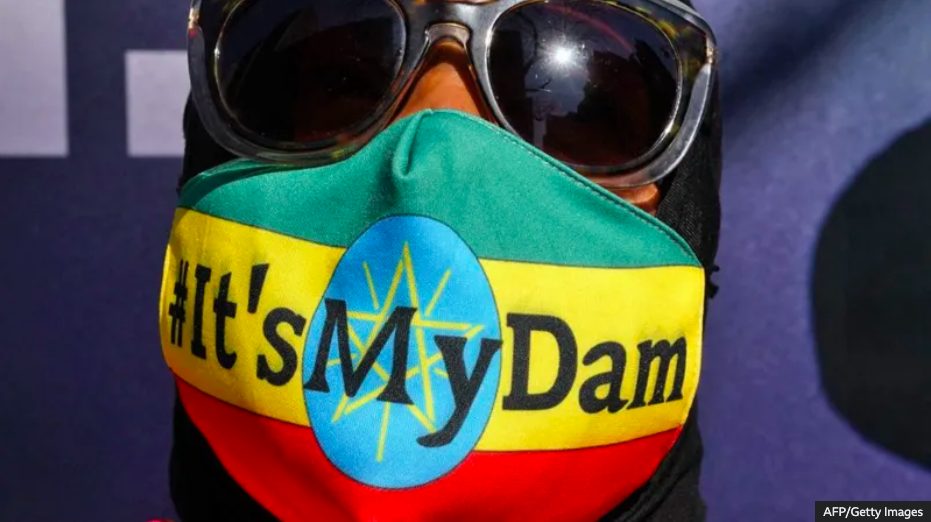
For many Ethiopians, the GERD is more than a piece of infrastructure—it is a symbol of national unity and achievement. Despite a country often divided along ethnic lines and grappling with internal conflicts, the dam has become a rallying point for national pride.
“Ethiopians may disagree on how to eat injera, but they agree on the dam,” said Moses Chrispus Okello, an analyst with the South Africa-based Institute for Security Studies. He explained that the sense of ownership stems from the way the dam was funded: waves of contributions from citizens both at home and abroad, as well as government-issued bonds purchased by companies and workers, created a collective investment in the project.
“This is not seen as a pile of concrete in the middle of a river,” Okello added. “It is a monument of their achievement. Its inauguration is a source of great pride for the nation.”
Africa’s Largest Hydroelectric Plant
The GERD is poised to transform Ethiopia’s energy landscape. Africa’s largest hydroelectric plant, it is designed to meet the energy needs of the country’s 135 million-strong population while also enabling Ethiopia to achieve what analysts describe as “energy hegemony.”
Fekahmed Negash, a former negotiator for Ethiopia over the GERD, noted that the dam is critical to Ethiopia’s developmental ambitions. “This includes providing electricity to the estimated 60% of Ethiopians who do not have access to it,” he said. However, he acknowledged that distributing electricity across Ethiopia’s vast, rocky, and mountainous terrain remains a challenge.
Beyond domestic needs, the GERD opens opportunities for foreign currency earnings. Ethiopia plans to sell electricity to neighbouring countries such as Kenya and Djibouti, with longer-term ambitions to develop a transmission network crossing the Red Sea to Middle Eastern states like Saudi Arabia.
The Nile and Egypt’s Concerns
While Ethiopia celebrates, Egypt has expressed deep concern over the dam’s impact on its water security. Nearly 93% of Egypt is desert, and the country’s 107 million residents live almost entirely along the Nile. For centuries, Egyptian civilisation has depended on the river as a lifeline, supplying water for agriculture, industry, and daily life.
“Egyptian civilisation was built on the Nile. The Nile is our life,” said Prof Abbas Sharaky, a geologist at Cairo University. Sharaky warns that “poverty of water” could worsen because of the GERD, which stores 64 billion cubic metres of water that traditionally flowed to Egypt. For context, Egypt’s average annual share of the Nile is 55.5 billion cubic metres.
“The GERD stores about double the amount of water in the Three Gorges Dam in China,” Sharaky noted, highlighting the scale of Ethiopia’s reservoir and the potential consequences for downstream water availability.
Egypt’s concerns are further complicated by historical treaties. A colonial-era agreement guaranteed Egypt a lion’s share of Nile waters, with the UK historically playing a role in enforcing these rights. Ethiopia’s successful construction of the GERD represents a geopolitical shift that has long been contested but is now an accomplished reality.
Diplomacy, Pressure, and Perseverance
The GERD’s construction has been fraught with diplomatic tension. Egypt exerted enormous pressure on Ethiopia through negotiations, warnings, and even threats of military action. Despite this, Ethiopia remained steadfast, viewing the dam as essential to national development, energy independence, and economic growth.
Fekahmed Negash emphasised the strategic importance of the project: “Despite enormous diplomatic pressure, Ethiopia had to proceed with the dam because it is vital to its developmental needs. Building a transmission network across the country’s challenging terrain is not easy, but it is necessary to bring electricity to millions who currently lack access.”
The GERD’s completion is thus not just an engineering achievement but a diplomatic and strategic victory, reflecting Ethiopia’s ability to navigate a complex regional landscape and assert its sovereignty over shared natural resources.
Nationalism and Unity
The dam has fuelled a surge in Ethiopian nationalism. Analysts point out that the project has united a population often divided by ethnic and political disputes. “All Ethiopians feel a sense of ownership of the dam,” said Okello. “It has become a symbol that transcends internal divisions and conflicts. Its inauguration is celebrated nationwide.”
The collective funding effort, through public contributions and bonds, has reinforced this sense of national pride. Citizens from across Ethiopia and the diaspora feel personally invested in the dam’s success, turning the GERD into a unifying force.
Economic and Regional Implications
The GERD positions Ethiopia as a regional energy powerhouse, offering opportunities to export electricity and generate foreign currency revenue. By tapping into the continent’s growing energy demand, Ethiopia hopes to achieve long-term economic growth while asserting influence in East Africa and beyond.
At the same time, the dam has rekindled tensions with Egypt, which remains highly dependent on the Nile. Balancing the developmental ambitions of Ethiopia with the water security of downstream nations will be a central challenge for regional diplomacy in the coming years.
Looking Forward
As Ethiopia officially inaugurates the Grand Ethiopian Renaissance Dam, the coming years will be crucial in determining how the project shapes regional dynamics. The dam promises to transform Ethiopia into a major energy exporter, boost economic growth, and provide electricity to millions currently without access. At the same time, downstream nations like Egypt will need to adapt to changes in Nile water flow, making diplomacy and water-sharing agreements more critical than ever. Looking forward, the GERD could either serve as a catalyst for regional cooperation or become a flashpoint in ongoing Nile disputes, depending on how Ethiopia and its neighbours manage this unprecedented development.
Final Thoughts
The Grand Ethiopian Renaissance Dam stands as a symbol of Ethiopia’s ambition, resilience, and national pride. Beyond its engineering feat, it represents a strategic assertion over the Nile’s resources, challenging long-standing treaties and reshaping regional geopolitics. While it offers immense potential for energy generation, economic growth, and national unity, it also underscores the urgent need for cooperation with downstream nations like Egypt. The GERD’s success will ultimately depend not only on Ethiopia’s development goals but also on the ability of the region to manage shared resources peacefully and sustainably.
Conclusion
The Grand Ethiopian Renaissance Dam is more than an engineering marvel; it is a testament to Ethiopia’s strategic vision, national pride, and developmental ambitions. By outfoxing Egypt diplomatically and asserting control over a crucial portion of the Nile, Ethiopia has reshaped the regional balance of power while addressing its own energy needs.
For Ethiopians, the GERD is a symbol of unity, achievement, and national ownership. For Egypt, it represents a significant challenge to water security and historical treaties. As the dam begins operations, both nations face the task of navigating this new reality, balancing economic development with regional stability, and finding ways to share one of the world’s most vital rivers.
Meta Description:
Ethiopia inaugurates the Grand Ethiopian Renaissance Dam on the Blue Nile, boosting national pride, energy production, and economic growth while reshaping regional dynamics and challenging Egypt’s historic water rights.
Ethiopia Outfoxes Egypt Over Nile’s Waters with Its Mighty Dam
After more than a decade of intense diplomatic manoeuvring, Ethiopia is set to officially inaugurate one of the world’s largest dams on a tributary of the River Nile, a milestone that has reshaped regional geopolitics and challenged colonial-era treaties favouring Egypt. The Grand Ethiopian Renaissance Dam (GERD), built on the Blue Nile at a cost of approximately $5 billion (£3.7 billion), boasts a reservoir roughly the size of Greater London and promises to cement Ethiopia’s place as a hydroelectric powerhouse in Africa.
A Monument of National Pride
Register for Tekedia Mini-MBA edition 20 (June 8 – Sept 5, 2026).
Register for Tekedia AI in Business Masterclass.
Join Tekedia Capital Syndicate and co-invest in great global startups.
Register for Tekedia AI Lab.
For many Ethiopians, the GERD is more than a piece of infrastructure—it is a symbol of national unity and achievement. Despite a country often divided along ethnic lines and grappling with internal conflicts, the dam has become a rallying point for national pride.
“Ethiopians may disagree on how to eat injera, but they agree on the dam,” said Moses Chrispus Okello, an analyst with the South Africa-based Institute for Security Studies. He explained that the sense of ownership stems from the way the dam was funded: waves of contributions from citizens both at home and abroad, as well as government-issued bonds purchased by companies and workers, created a collective investment in the project.
“This is not seen as a pile of concrete in the middle of a river,” Okello added. “It is a monument of their achievement. Its inauguration is a source of great pride for the nation.”

Africa’s Largest Hydroelectric Plant
The GERD is poised to transform Ethiopia’s energy landscape. Africa’s largest hydroelectric plant, it is designed to meet the energy needs of the country’s 135 million-strong population while also enabling Ethiopia to achieve what analysts describe as “energy hegemony.”
Fekahmed Negash, a former negotiator for Ethiopia over the GERD, noted that the dam is critical to Ethiopia’s developmental ambitions. “This includes providing electricity to the estimated 60% of Ethiopians who do not have access to it,” he said. However, he acknowledged that distributing electricity across Ethiopia’s vast, rocky, and mountainous terrain remains a challenge.

Beyond domestic needs, the GERD opens opportunities for foreign currency earnings. Ethiopia plans to sell electricity to neighbouring countries such as Kenya and Djibouti, with longer-term ambitions to develop a transmission network crossing the Red Sea to Middle Eastern states like Saudi Arabia.
The Nile and Egypt’s Concerns
While Ethiopia celebrates, Egypt has expressed deep concern over the dam’s impact on its water security. Nearly 93% of Egypt is desert, and the country’s 107 million residents live almost entirely along the Nile. For centuries, Egyptian civilisation has depended on the river as a lifeline, supplying water for agriculture, industry, and daily life.
“Egyptian civilisation was built on the Nile. The Nile is our life,” said Prof Abbas Sharaky, a geologist at Cairo University. Sharaky warns that “poverty of water” could worsen because of the GERD, which stores 64 billion cubic metres of water that traditionally flowed to Egypt. For context, Egypt’s average annual share of the Nile is 55.5 billion cubic metres.
“The GERD stores about double the amount of water in the Three Gorges Dam in China,” Sharaky noted, highlighting the scale of Ethiopia’s reservoir and the potential consequences for downstream water availability.
Egypt’s concerns are further complicated by historical treaties. A colonial-era agreement guaranteed Egypt a lion’s share of Nile waters, with the UK historically playing a role in enforcing these rights. Ethiopia’s successful construction of the GERD represents a geopolitical shift that has long been contested but is now an accomplished reality.
Diplomacy, Pressure, and Perseverance
The GERD’s construction has been fraught with diplomatic tension. Egypt exerted enormous pressure on Ethiopia through negotiations, warnings, and even threats of military action. Despite this, Ethiopia remained steadfast, viewing the dam as essential to national development, energy independence, and economic growth.
Fekahmed Negash emphasised the strategic importance of the project: “Despite enormous diplomatic pressure, Ethiopia had to proceed with the dam because it is vital to its developmental needs. Building a transmission network across the country’s challenging terrain is not easy, but it is necessary to bring electricity to millions who currently lack access.”
The GERD’s completion is thus not just an engineering achievement but a diplomatic and strategic victory, reflecting Ethiopia’s ability to navigate a complex regional landscape and assert its sovereignty over shared natural resources.
Nationalism and Unity
The dam has fuelled a surge in Ethiopian nationalism. Analysts point out that the project has united a population often divided by ethnic and political disputes. “All Ethiopians feel a sense of ownership of the dam,” said Okello. “It has become a symbol that transcends internal divisions and conflicts. Its inauguration is celebrated nationwide.”
The collective funding effort, through public contributions and bonds, has reinforced this sense of national pride. Citizens from across Ethiopia and the diaspora feel personally invested in the dam’s success, turning the GERD into a unifying force.
Economic and Regional Implications
The GERD positions Ethiopia as a regional energy powerhouse, offering opportunities to export electricity and generate foreign currency revenue. By tapping into the continent’s growing energy demand, Ethiopia hopes to achieve long-term economic growth while asserting influence in East Africa and beyond.
At the same time, the dam has rekindled tensions with Egypt, which remains highly dependent on the Nile. Balancing the developmental ambitions of Ethiopia with the water security of downstream nations will be a central challenge for regional diplomacy in the coming years.
Looking Forward
As Ethiopia officially inaugurates the Grand Ethiopian Renaissance Dam, the coming years will be crucial in determining how the project shapes regional dynamics. The dam promises to transform Ethiopia into a major energy exporter, boost economic growth, and provide electricity to millions currently without access. At the same time, downstream nations like Egypt will need to adapt to changes in Nile water flow, making diplomacy and water-sharing agreements more critical than ever. Looking forward, the GERD could either serve as a catalyst for regional cooperation or become a flashpoint in ongoing Nile disputes, depending on how Ethiopia and its neighbours manage this unprecedented development.
Final Thoughts
The Grand Ethiopian Renaissance Dam stands as a symbol of Ethiopia’s ambition, resilience, and national pride. Beyond its engineering feat, it represents a strategic assertion over the Nile’s resources, challenging long-standing treaties and reshaping regional geopolitics. While it offers immense potential for energy generation, economic growth, and national unity, it also underscores the urgent need for cooperation with downstream nations like Egypt. The GERD’s success will ultimately depend not only on Ethiopia’s development goals but also on the ability of the region to manage shared resources peacefully and sustainably.
Conclusion
The Grand Ethiopian Renaissance Dam is more than an engineering marvel; it is a testament to Ethiopia’s strategic vision, national pride, and developmental ambitions. By outfoxing Egypt diplomatically and asserting control over a crucial portion of the Nile, Ethiopia has reshaped the regional balance of power while addressing its own energy needs.
For Ethiopians, the GERD is a symbol of unity, achievement, and national ownership. For Egypt, it represents a significant challenge to water security and historical treaties. As the dam begins operations, both nations face the task of navigating this new reality, balancing economic development with regional stability, and finding ways to share one of the world’s most vital rivers.
Meta Description:
Ethiopia inaugurates the Grand Ethiopian Renaissance Dam on the Blue Nile, boosting national pride, energy production, and economic growth while reshaping regional dynamics and challenging Egypt’s historic water rights.
Share this:
- Click to share on Facebook (Opens in new window) Facebook
- Click to share on X (Opens in new window) X
- Click to share on WhatsApp (Opens in new window) WhatsApp
- Click to share on LinkedIn (Opens in new window) LinkedIn
- Click to email a link to a friend (Opens in new window) Email
- Click to print (Opens in new window) Print