

Eurovision Crisis: EBU to Vote on Israel’s 2026 Participation Amid Gaza Conflict

Quote from Alex Bobby on September 27, 2025, 7:18 AM
Eurovision Crisis: EBU to Vote on Israel’s Participation in 2026 Amid Gaza War Backlash
The Eurovision Song Contest — a celebration of music, diversity, and unity — now finds itself at the centre of one of its most contentious moments ever. The European Broadcasting Union (EBU), the body responsible for organising Eurovision, has confirmed that an extraordinary vote will take place in November to decide whether Israel will be allowed to compete in Eurovision 2026.
This unprecedented development comes amid mounting pressure from broadcasters and political voices across Europe calling for Israel to be excluded, citing its ongoing military actions in Gaza. For the first time in Eurovision history, all EBU member broadcasters will be invited to participate in an extraordinary online General Assembly where a single agenda item — Israel’s participation — will be decided.
The Decision Process
In a letter to participating broadcasters, EBU President Delphine Ernotte Cunci described the situation as having “an unprecedented diversity of views.” She stressed that the question of Israel’s participation “requires a broader democratic basis” beyond normal deliberations. The letter confirmed that the online vote in early November will be the sole focus of this extraordinary General Assembly.
This formal process marks a dramatic step for the Eurovision community. Traditionally, Eurovision is seen as a non‑political event, celebrated for fostering cultural exchange and unity despite differences. However, the gravity of the conflict in Gaza and the responses from member nations have placed the contest in a deeply politicised position.
Growing Calls for Exclusion
The push to exclude Israel has gained momentum in recent months as the conflict in Gaza intensifies. Several European broadcasters — particularly from countries directly affected by public and political pressure — have openly questioned whether it is appropriate for Israel to participate while its military actions in Gaza continue. Some argue that allowing Israel’s presence sends a political message contrary to Eurovision’s values of peace and solidarity.
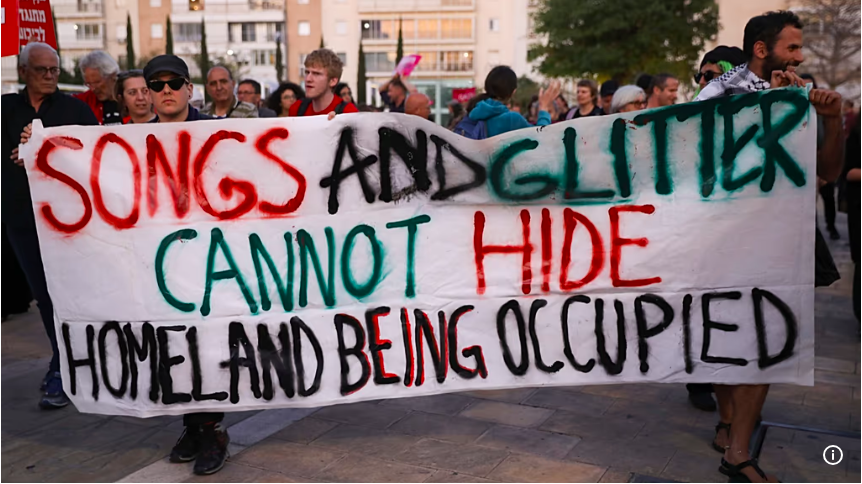
The debate has not been limited to broadcasters alone. Public opinion in various European countries is increasingly vocal. Protests, petitions, and opinion pieces in major media outlets have reflected a growing sentiment that Israel’s participation could undermine Eurovision’s credibility as a politically neutral platform.
What’s at Stake
For Israel, Eurovision is more than just a competition — it is a stage for cultural diplomacy. Israel has participated in the contest since 1973 and has used it as a platform to showcase its artistic talent to an international audience. The possibility of exclusion is therefore not only a political blow but also a cultural one, raising concerns about the precedent it would set for the future of the contest.
For the EBU, the decision carries its own risks. Eurovision’s strength has always been its reputation as a safe space for cultural exchange, insulated from political disputes. A vote that results in excluding a participant based on political considerations could fundamentally alter how the contest is perceived, opening the door to future exclusions on similarly contentious grounds.
The Eurovision Community Reacts
Reactions across the Eurovision community have been mixed. Some artists, fan clubs, and broadcasters have expressed support for a vote that reflects the democratic will of the membership. Others warn that politicising Eurovision threatens to erode its core values and alienate fans.
Fan communities across Europe have mobilised, organising discussions and campaigns around the issue. Social media is awash with passionate debates, with arguments ranging from freedom of artistic expression to the responsibility of cultural institutions to take a stand on human rights.
The EBU’s Position
The EBU has sought to emphasise that this is not a political decision in itself, but rather a procedural step to resolve a matter where “views diverge strongly.” By holding a vote open to all members, the organisation is aiming to ensure transparency and fairness in the decision-making process.
Delphine Ernotte Cunci’s letter underlines that the extraordinary meeting will focus solely on the question of Israel’s eligibility for Eurovision 2026. This indicates the seriousness with which the EBU is treating the matter and suggests that the outcome will be binding and decisive.
Possible Outcomes
There are two likely scenarios for the November vote:
1. **Israel’s Participation is Confirmed** — This would reaffirm Eurovision’s non‑political stance, allowing Israel to compete as planned. It could also reinforce the principle that the contest remains independent of political disputes. However, it might deepen tensions with broadcasters and countries advocating for exclusion.
2. **Israel is Excluded** — This would be an unprecedented move, marking the first time a country is barred from Eurovision on political grounds. While satisfying those who believe Israel’s actions in Gaza contradict Eurovision’s spirit, it could spark debates about fairness, consistency, and the future role of politics in the contest.
Broader Implications for Eurovision
The upcoming vote represents a watershed moment for Eurovision. It forces the contest to confront a difficult question: can it truly remain apolitical in an era of intense geopolitical tensions? The decision will likely have repercussions beyond the 2026 contest, potentially reshaping how the EBU approaches future participation disputes.
For fans, broadcasters, and artists alike, November’s vote will be closely watched as a defining moment in Eurovision history. It is not just about one country’s eligibility — it is about the identity and values of the contest itself.
Conclusion
Eurovision has always been more than just a song competition. It is a cultural phenomenon that celebrates diversity, unity, and peaceful exchange. Yet, as political crises encroach on its stage, the contest faces an unprecedented test of its principles. The November vote on Israel’s participation in Eurovision 2026 will not only decide one broadcaster’s future in the contest — it will shape the legacy of Eurovision in an increasingly complex world.
The eyes of Europe, and indeed the world, will be watching closely.
Meta Description:
"The European Broadcasting Union will hold an unprecedented online vote in November to decide whether Israel can take part in Eurovision 2026. The decision comes amid mounting pressure from European broadcasters over the Gaza war, sparking debate over politics in the contest."
Eurovision Crisis: EBU to Vote on Israel’s Participation in 2026 Amid Gaza War Backlash
The Eurovision Song Contest — a celebration of music, diversity, and unity — now finds itself at the centre of one of its most contentious moments ever. The European Broadcasting Union (EBU), the body responsible for organising Eurovision, has confirmed that an extraordinary vote will take place in November to decide whether Israel will be allowed to compete in Eurovision 2026.
This unprecedented development comes amid mounting pressure from broadcasters and political voices across Europe calling for Israel to be excluded, citing its ongoing military actions in Gaza. For the first time in Eurovision history, all EBU member broadcasters will be invited to participate in an extraordinary online General Assembly where a single agenda item — Israel’s participation — will be decided.
Register for Tekedia Mini-MBA edition 20 (June 8 – Sept 5, 2026).
Register for Tekedia AI in Business Masterclass.
Join Tekedia Capital Syndicate and co-invest in great global startups.
Register for Tekedia AI Lab.
The Decision Process
In a letter to participating broadcasters, EBU President Delphine Ernotte Cunci described the situation as having “an unprecedented diversity of views.” She stressed that the question of Israel’s participation “requires a broader democratic basis” beyond normal deliberations. The letter confirmed that the online vote in early November will be the sole focus of this extraordinary General Assembly.
This formal process marks a dramatic step for the Eurovision community. Traditionally, Eurovision is seen as a non‑political event, celebrated for fostering cultural exchange and unity despite differences. However, the gravity of the conflict in Gaza and the responses from member nations have placed the contest in a deeply politicised position.

Growing Calls for Exclusion
The push to exclude Israel has gained momentum in recent months as the conflict in Gaza intensifies. Several European broadcasters — particularly from countries directly affected by public and political pressure — have openly questioned whether it is appropriate for Israel to participate while its military actions in Gaza continue. Some argue that allowing Israel’s presence sends a political message contrary to Eurovision’s values of peace and solidarity.
The debate has not been limited to broadcasters alone. Public opinion in various European countries is increasingly vocal. Protests, petitions, and opinion pieces in major media outlets have reflected a growing sentiment that Israel’s participation could undermine Eurovision’s credibility as a politically neutral platform.

What’s at Stake
For Israel, Eurovision is more than just a competition — it is a stage for cultural diplomacy. Israel has participated in the contest since 1973 and has used it as a platform to showcase its artistic talent to an international audience. The possibility of exclusion is therefore not only a political blow but also a cultural one, raising concerns about the precedent it would set for the future of the contest.
For the EBU, the decision carries its own risks. Eurovision’s strength has always been its reputation as a safe space for cultural exchange, insulated from political disputes. A vote that results in excluding a participant based on political considerations could fundamentally alter how the contest is perceived, opening the door to future exclusions on similarly contentious grounds.
The Eurovision Community Reacts
Reactions across the Eurovision community have been mixed. Some artists, fan clubs, and broadcasters have expressed support for a vote that reflects the democratic will of the membership. Others warn that politicising Eurovision threatens to erode its core values and alienate fans.
Fan communities across Europe have mobilised, organising discussions and campaigns around the issue. Social media is awash with passionate debates, with arguments ranging from freedom of artistic expression to the responsibility of cultural institutions to take a stand on human rights.
The EBU’s Position
The EBU has sought to emphasise that this is not a political decision in itself, but rather a procedural step to resolve a matter where “views diverge strongly.” By holding a vote open to all members, the organisation is aiming to ensure transparency and fairness in the decision-making process.
Delphine Ernotte Cunci’s letter underlines that the extraordinary meeting will focus solely on the question of Israel’s eligibility for Eurovision 2026. This indicates the seriousness with which the EBU is treating the matter and suggests that the outcome will be binding and decisive.
Possible Outcomes
There are two likely scenarios for the November vote:
1. **Israel’s Participation is Confirmed** — This would reaffirm Eurovision’s non‑political stance, allowing Israel to compete as planned. It could also reinforce the principle that the contest remains independent of political disputes. However, it might deepen tensions with broadcasters and countries advocating for exclusion.
2. **Israel is Excluded** — This would be an unprecedented move, marking the first time a country is barred from Eurovision on political grounds. While satisfying those who believe Israel’s actions in Gaza contradict Eurovision’s spirit, it could spark debates about fairness, consistency, and the future role of politics in the contest.
Broader Implications for Eurovision
The upcoming vote represents a watershed moment for Eurovision. It forces the contest to confront a difficult question: can it truly remain apolitical in an era of intense geopolitical tensions? The decision will likely have repercussions beyond the 2026 contest, potentially reshaping how the EBU approaches future participation disputes.
For fans, broadcasters, and artists alike, November’s vote will be closely watched as a defining moment in Eurovision history. It is not just about one country’s eligibility — it is about the identity and values of the contest itself.
Conclusion
Eurovision has always been more than just a song competition. It is a cultural phenomenon that celebrates diversity, unity, and peaceful exchange. Yet, as political crises encroach on its stage, the contest faces an unprecedented test of its principles. The November vote on Israel’s participation in Eurovision 2026 will not only decide one broadcaster’s future in the contest — it will shape the legacy of Eurovision in an increasingly complex world.
The eyes of Europe, and indeed the world, will be watching closely.
Meta Description:
"The European Broadcasting Union will hold an unprecedented online vote in November to decide whether Israel can take part in Eurovision 2026. The decision comes amid mounting pressure from European broadcasters over the Gaza war, sparking debate over politics in the contest."
Share this:
- Click to share on Facebook (Opens in new window) Facebook
- Click to share on X (Opens in new window) X
- Click to share on WhatsApp (Opens in new window) WhatsApp
- Click to share on LinkedIn (Opens in new window) LinkedIn
- Click to email a link to a friend (Opens in new window) Email
- Click to print (Opens in new window) Print