

EU’s 2028–2034 Budget Plan Sparks Fears of Cohesion Policy Becoming a Regional ‘Hunger Games’

Quote from Alex Bobby on July 19, 2025, 5:48 AM
Will the New EU Budget Turn Cohesion Policy into Regional ‘Hunger Games’?
The European Union’s cohesion policy — long a cornerstone of efforts to reduce inequality between regions — faces a critical crossroads. Under the European Commission’s newly proposed Multiannual Financial Framework (MFF) for 2028–2034, cohesion funds would be merged into a single, consolidated mega-fund, alongside agriculture, migration, rural development, and border management. While the stated aim is “simplification,” regional leaders and policy experts are warning that this move could fundamentally reshape — or even dismantle — cohesion policy as we know it.
At stake is more than just a budget line: it’s the future of regional solidarity, local empowerment, and the EU’s commitment to ensuring that no citizen is left behind due to where they live.
Hunger game policy Cohesion Funds: The EU’s Most Tangible Success Story
Cohesion funds have long been one of the EU’s most visible and impactful tools. They have helped build roads in Romania, modernise hospitals in Portugal, and finance green energy projects in Poland. As a central feature of EU policy, these funds aim to close the development gap between richer and poorer regions, promote social inclusion, and improve quality of life.
Currently, cohesion funds account for roughly two-thirds of the EU’s budget. But under the proposed MFF, this distinct identity could vanish. The European Commission proposes merging cohesion funding with several other major policy areas into a single, flexible fund worth €865 billion out of a total €2 trillion budget.
Critics: 'Hunger Games' Between Regions, Sectors, and Priorities
The backlash has been swift and sharp. Kata Tüttő, President of the European Committee of the Regions, has sounded the alarm that the proposed model would spark a resource war between municipalities, farmers, border agencies, and social service providers. “Putting agriculture, migration, border control, and cohesion policy into one container will turn it into a 'Hunger Games',” she told Euronews.
Tüttő and other critics argue that regions will no longer compete just within cohesion policy frameworks but across unrelated domains — pitting rural infrastructure against migration programmes, and local education against food security. This raises serious questions about whether cohesion — which is fundamentally about solidarity and balanced development — can survive in a system that forces it to fight for relevance.
A Fragile Safety Net for the Most Disadvantaged Regions
To ease fears, the European Commission has included some safeguards. Of the merged fund’s €865 billion, €450 billion is earmarked for regional development, fisheries, and rural areas, with €218 billion reserved for less developed regions — the traditional recipients of cohesion aid.
However, these protections only cover part of the picture. Developing and developed regions, which also rely on cohesion support, would have no fixed guarantees under the new budget. Instead, their funding levels would be subject to future negotiations — and political horse-trading.
Without proper ring-fencing, regions already struggling with economic transitions, depopulation, or infrastructure gaps could find themselves outbid by more politically influential or strategically prioritised sectors.
Centralisation Threatens Local Participation
Equally worrying for critics is the governance model that comes with the proposed fund. Traditionally, cohesion policy has been governed through a system of shared management, where local and regional authorities are deeply involved in planning, implementation, and oversight.
The new plan appears to shift significant control to Brussels, sparking fears that local voices will be silenced in favour of top-down management. “We will be kicked out from the design, the management and the creation parts of the policy. We will just become implementers, fighting for money,” said Tüttő.
This centralisation risks undermining the very strengths of cohesion policy — its adaptability, local insight, and on-the-ground impact. Without meaningful input from those closest to the problems, critics warn, the policy risks becoming both less efficient and less effective.
The Commission's Argument: Flexibility for a Changing World
From the Commission’s perspective, merging these funds offers greater flexibility in the face of an increasingly unpredictable global environment. Raffaele Fitto, Executive Vice-President for Cohesion, defended the proposal by saying the EU needs tools that can respond rapidly to evolving challenges — from migration waves to climate disasters and geopolitical shocks.
“This is a proposal from the European Commission — it is not the final step, but a starting point,” Fitto said, suggesting that negotiations will refine and potentially revise the proposal.
Final Thought
As the EU charts its financial course for 2028–2034, the decisions made today will reverberate for years to come. Merging cohesion policy with other funding streams may offer bureaucratic efficiency, but at what cost? Without strong safeguards and genuine local participation, the risk is not just a budgetary reshuffle — it’s the unraveling of one of the EU’s most successful tools for unity and equality. In an era of rising regional disparities and political fragmentation, cohesion policy should be strengthened, not sidelined. The real challenge lies in building a budget that reflects both flexibility and fairness — ensuring no region is forced to compete for the basic right to thrive.
Conclusion
The European Commission’s proposed 2028–2034 budget may be designed with efficiency in mind, but it risks transforming cohesion policy from a shield against inequality into a high-stakes competition for limited resources. By merging key spending areas into a single pot, the EU runs the risk of weakening regional solidarity, reducing local control, and marginalising the most vulnerable communities.
As debates intensify in Brussels and across Europe, one thing is clear: cohesion policy must not become a casualty of budgetary streamlining. Instead, it should be reinforced as a pillar of EU unity, ensuring that Europe grows together — not apart.
The months ahead will determine whether cohesion funding continues to be a tool for equity, or becomes yet another battle in the EU's fiscal 'Hunger Games'.
Meta Description:
The EU’s proposed 2028–2034 budget risks turning cohesion policy into a competitive “Hunger Games,” merging it with agriculture, migration, and border control funding—sparking fears of reduced support for disadvantaged regions and weakened local governance.
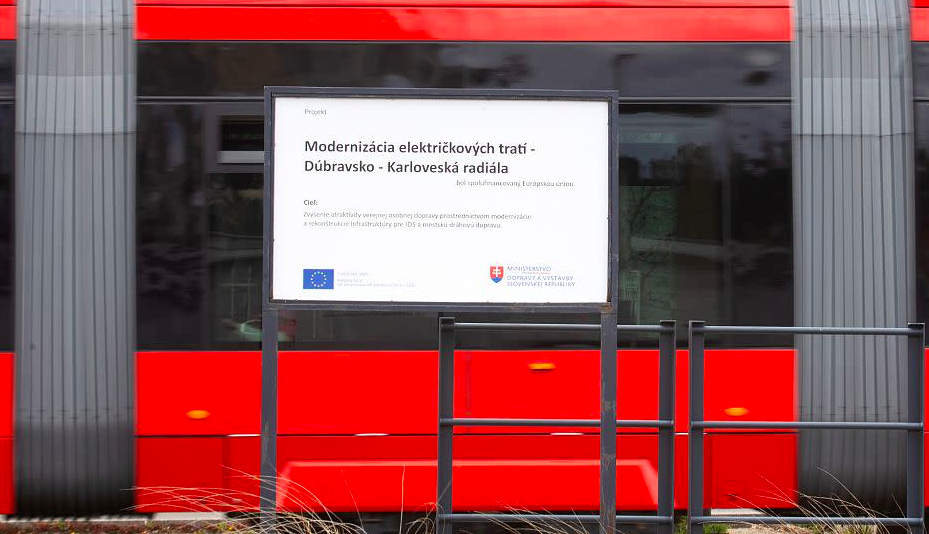
Will the New EU Budget Turn Cohesion Policy into Regional ‘Hunger Games’?
The European Union’s cohesion policy — long a cornerstone of efforts to reduce inequality between regions — faces a critical crossroads. Under the European Commission’s newly proposed Multiannual Financial Framework (MFF) for 2028–2034, cohesion funds would be merged into a single, consolidated mega-fund, alongside agriculture, migration, rural development, and border management. While the stated aim is “simplification,” regional leaders and policy experts are warning that this move could fundamentally reshape — or even dismantle — cohesion policy as we know it.
At stake is more than just a budget line: it’s the future of regional solidarity, local empowerment, and the EU’s commitment to ensuring that no citizen is left behind due to where they live.
Register for Tekedia Mini-MBA edition 20 (June 8 – Sept 5, 2026).
Register for Tekedia AI in Business Masterclass.
Join Tekedia Capital Syndicate and co-invest in great global startups.
Register for Tekedia AI Lab.
Hunger game policy Cohesion Funds: The EU’s Most Tangible Success Story
Cohesion funds have long been one of the EU’s most visible and impactful tools. They have helped build roads in Romania, modernise hospitals in Portugal, and finance green energy projects in Poland. As a central feature of EU policy, these funds aim to close the development gap between richer and poorer regions, promote social inclusion, and improve quality of life.
Currently, cohesion funds account for roughly two-thirds of the EU’s budget. But under the proposed MFF, this distinct identity could vanish. The European Commission proposes merging cohesion funding with several other major policy areas into a single, flexible fund worth €865 billion out of a total €2 trillion budget.

Critics: 'Hunger Games' Between Regions, Sectors, and Priorities
The backlash has been swift and sharp. Kata Tüttő, President of the European Committee of the Regions, has sounded the alarm that the proposed model would spark a resource war between municipalities, farmers, border agencies, and social service providers. “Putting agriculture, migration, border control, and cohesion policy into one container will turn it into a 'Hunger Games',” she told Euronews.
Tüttő and other critics argue that regions will no longer compete just within cohesion policy frameworks but across unrelated domains — pitting rural infrastructure against migration programmes, and local education against food security. This raises serious questions about whether cohesion — which is fundamentally about solidarity and balanced development — can survive in a system that forces it to fight for relevance.

A Fragile Safety Net for the Most Disadvantaged Regions
To ease fears, the European Commission has included some safeguards. Of the merged fund’s €865 billion, €450 billion is earmarked for regional development, fisheries, and rural areas, with €218 billion reserved for less developed regions — the traditional recipients of cohesion aid.
However, these protections only cover part of the picture. Developing and developed regions, which also rely on cohesion support, would have no fixed guarantees under the new budget. Instead, their funding levels would be subject to future negotiations — and political horse-trading.
Without proper ring-fencing, regions already struggling with economic transitions, depopulation, or infrastructure gaps could find themselves outbid by more politically influential or strategically prioritised sectors.
Centralisation Threatens Local Participation
Equally worrying for critics is the governance model that comes with the proposed fund. Traditionally, cohesion policy has been governed through a system of shared management, where local and regional authorities are deeply involved in planning, implementation, and oversight.
The new plan appears to shift significant control to Brussels, sparking fears that local voices will be silenced in favour of top-down management. “We will be kicked out from the design, the management and the creation parts of the policy. We will just become implementers, fighting for money,” said Tüttő.
This centralisation risks undermining the very strengths of cohesion policy — its adaptability, local insight, and on-the-ground impact. Without meaningful input from those closest to the problems, critics warn, the policy risks becoming both less efficient and less effective.
The Commission's Argument: Flexibility for a Changing World
From the Commission’s perspective, merging these funds offers greater flexibility in the face of an increasingly unpredictable global environment. Raffaele Fitto, Executive Vice-President for Cohesion, defended the proposal by saying the EU needs tools that can respond rapidly to evolving challenges — from migration waves to climate disasters and geopolitical shocks.
“This is a proposal from the European Commission — it is not the final step, but a starting point,” Fitto said, suggesting that negotiations will refine and potentially revise the proposal.
Final Thought
As the EU charts its financial course for 2028–2034, the decisions made today will reverberate for years to come. Merging cohesion policy with other funding streams may offer bureaucratic efficiency, but at what cost? Without strong safeguards and genuine local participation, the risk is not just a budgetary reshuffle — it’s the unraveling of one of the EU’s most successful tools for unity and equality. In an era of rising regional disparities and political fragmentation, cohesion policy should be strengthened, not sidelined. The real challenge lies in building a budget that reflects both flexibility and fairness — ensuring no region is forced to compete for the basic right to thrive.
Conclusion
The European Commission’s proposed 2028–2034 budget may be designed with efficiency in mind, but it risks transforming cohesion policy from a shield against inequality into a high-stakes competition for limited resources. By merging key spending areas into a single pot, the EU runs the risk of weakening regional solidarity, reducing local control, and marginalising the most vulnerable communities.
As debates intensify in Brussels and across Europe, one thing is clear: cohesion policy must not become a casualty of budgetary streamlining. Instead, it should be reinforced as a pillar of EU unity, ensuring that Europe grows together — not apart.
The months ahead will determine whether cohesion funding continues to be a tool for equity, or becomes yet another battle in the EU's fiscal 'Hunger Games'.
Meta Description:
The EU’s proposed 2028–2034 budget risks turning cohesion policy into a competitive “Hunger Games,” merging it with agriculture, migration, and border control funding—sparking fears of reduced support for disadvantaged regions and weakened local governance.
Share this:
- Click to share on Facebook (Opens in new window) Facebook
- Click to share on X (Opens in new window) X
- Click to share on WhatsApp (Opens in new window) WhatsApp
- Click to share on LinkedIn (Opens in new window) LinkedIn
- Click to email a link to a friend (Opens in new window) Email
- Click to print (Opens in new window) Print