

Evacuating Gaza’s Children to Europe: Moral Duty or Security Risk?

Quote from Alex Bobby on September 10, 2025, 5:16 AM
How the Car Industry Split the European Parliament
The European Union’s ambitious climate agenda has often been a flashpoint for political divides, but few debates illustrate the rift as clearly as the ongoing dispute over car emissions. As the automotive sector pushes back against strict CO₂ reduction deadlines, European lawmakers are locked in a battle over how best to support an industry that employs more than 13 million people while still delivering on the EU’s climate goals.
The coming months will be decisive. On 12 September, Commission President Ursula von der Leyen is expected to meet industry leaders in a new round of the “Strategic Dialogue” with carmakers — a sign of how central the dispute has become.
Automakers Push Back
At the end of August, the European Automobile Manufacturers’ Association (ACEA) and the European Association of Automotive Suppliers (CLEPA) fired a warning shot. In a joint letter, they declared the EU’s car and van CO₂ targets for 2030 and 2035 “simply no longer feasible.”
Their frustration is clear: under EU rules approved in 2019, automakers must progressively reduce emissions across their entire fleet, or face financial penalties for every gram of excess CO₂. Adjustments exist for companies selling more zero-emission vehicles, but the core message is uncompromising — polluting models must go.
The Commission has already granted automakers more time to meet 2025 targets. But Brussels is holding firm on its 2035 deadline, when all new cars sold in the EU must be zero-emission. That includes a ban on hybrids and highly efficient combustion-engine vehicles, a prospect the industry says is unrealistic.
The Right Backs Industry Concerns
On one side of the Parliament, right-wing lawmakers are rallying behind the industry. Italian MEP Salvatore De Meo, a member of the European People’s Party (EPP), argues that Brussels’ approach is “ideological” and detached from economic realities.
“We agree with the car industry, because this target is more and more unreachable in the medium-long term,” De Meo told Euronews. “Sustainability goals must also respect the social and economic aspects.”
The EPP — the Parliament’s largest group — has proposed a five-point plan to boost competitiveness in the auto sector, including regulatory simplification. The plan resonates with other right-wing groups such as the European Conservatives and Reformists (ECR) and Patriots for Europe (PfE), which have consistently opposed the EU’s Green Deal measures.
These lawmakers argue for a broader technological pathway, pointing to biofuels and other low-carbon alternatives. “We cannot imagine an exclusively electric future for the automotive industry,” De Meo said, challenging the EU’s blanket ban on CO₂-emitting vehicles after 2035.
For the right, the Strategic Dialogue is an opportunity to inject pragmatism into the debate. By extending deadlines or making room for hybrid and biofuel-powered cars, they argue, the EU can safeguard both jobs and industrial competitiveness.
The Left Holds the Line
On the opposite side of the hemicycle, progressive groups are taking a hard line. Socialists and Democrats, the Greens–European Free Alliance, and The Left firmly reject calls to soften targets.
“I completely disagree,” Belgian Green MEP Sara Matthieu said. “That would mean rewarding the laggards and punishing those that have actually invested in the future.” For Matthieu, weakening the rules would send “a very bad signal” for the Green Deal as a whole.
Supporters of the climate agenda point to stark warnings from climate science. In 2024, for the first time, average global temperatures exceeded pre-industrial levels by more than 1.5 degrees — the threshold set in the Paris Agreement. For them, stricter limits on car emissions are non-negotiable.
Matthieu acknowledges the challenges but proposes different solutions: accelerating the greening of corporate fleets, boosting demand for zero-emission cars, and supporting a second-hand electric market. Investment in charging infrastructure across Europe is also critical, she argues, to ensure electric mobility is affordable and accessible.
She also highlights the importance of bringing battery production to Europe and scrutinising foreign investment, particularly from China. European automakers, she insists, must not cede their market to cheaper Chinese electric cars. “Some European brands were more future-oriented, have innovated, and have made the right choice,” Matthieu said. Rolling back the 2035 deadline, she warns, risks “handing the market to the Chinese on a silver platter.”
The Stakes for Europe
The dispute is about more than climate targets. It cuts to the heart of Europe’s industrial strategy, economic competitiveness, and social cohesion. With 13 million jobs tied to the auto sector, lawmakers are acutely aware of the political risks of alienating workers. Yet they also face a public increasingly concerned about climate change, after a year of record-breaking heatwaves and wildfires.
For the industry, the transition to zero-emission vehicles is inevitable. The question is how fast it should happen, and under what conditions. Automakers warn that overly ambitious deadlines could cripple their competitiveness. Climate advocates counter that hesitation will only leave European firms trailing behind global rivals already investing heavily in electric mobility.
Looking Ahead
The September dialogue between von der Leyen and carmakers will be closely watched. Any concessions could shift the balance of the debate — and determine whether the EU can hold together a coherent industrial and climate policy.
For now, the European Parliament remains split. On the right, calls for pragmatism, flexibility, and hybrid technologies. On the left, a determination to defend climate goals and push investment into electric infrastructure.
The battle lines reflect a broader tension at the heart of the Green Deal: how to reconcile environmental urgency with economic reality. The auto sector, long a symbol of Europe’s industrial strength, now sits squarely at the intersection of these two forces.
Final Thoughts
The clash over Europe’s car emission rules is more than a policy dispute — it’s a test of whether the EU can deliver on its climate promises without undermining one of its most vital industries. Both sides of the Parliament agree the automotive sector must survive and stay competitive, but they are deeply divided on how to get there. The next round of talks will be critical in determining whether Europe chooses compromise, delay, or steadfast ambition.
Would you like me to also create a short punchy closing one-liner (something memorable for readers who skim to the end)?
Conclusion
The car industry has become a political fault line within the European Parliament, with conservatives pushing to ease CO₂ deadlines and progressives warning against backsliding on climate commitments. The outcome of this clash will shape not just the future of Europe’s automotive sector, but also the credibility of the EU’s broader Green Deal.
Whether Europe can balance industrial pragmatism with environmental ambition remains to be seen. But one thing is certain: the road to 2035 is going to be bumpy.
Meta Description:
EU lawmakers are divided as carmakers push back against strict 2030 and 2035 CO₂ targets. Right-wing groups back industry calls for flexibility, while progressives insist on keeping climate goals intact. The outcome will shape the future of Europe’s automotive sector and the Green Deal.
SEO Headline:
How Europe’s Car Emission Rules Sparked a Split in the European ParliamentEvacuating Gaza Children to Europe: Moral Obligation or Security Issue?
The humanitarian crisis in Gaza has placed European governments at the crossroads of compassion and caution. With more than 15,600 residents — many of them children — in urgent need of medical evacuation, according to the World Health Organization (WHO), the question is whether Europe will prioritize its moral duty to save lives or allow security and migration concerns to dominate policy.
Since the Hamas-led 7 October attack that triggered Israel’s ongoing offensive, fewer than 350 patients from Gaza, mostly children, have been evacuated to the European Union. The number pales in comparison to the magnitude of the need, especially as Gaza’s health system has collapsed under the weight of relentless bombardment, shortages, and a 16-year blockade.
Yet across Europe, responses vary dramatically. Some countries, such as Italy, have stepped forward to accept significant numbers of patients, while others — including Germany, Denmark, and Austria — have either taken in very few or declined entirely. This uneven response has sparked a heated debate that is as much about values as it is about politics.
A Collapsing Health System
The urgency is undeniable. Gaza’s hospitals, battered by airstrikes and starved of fuel and supplies, are only able to provide the most basic life-saving care. Surgeries are performed without anesthesia, incubators run without reliable electricity, and cancer treatments are virtually impossible.
WHO reports that since October 2023, 919 patients and their companions have been medically evacuated to 16 WHO member states and 11 EU countries. Italy has taken the lead, evacuating 187 patients, while Spain and Romania have received 45 and 42, respectively. Belgium, Ireland, and France have taken smaller numbers.
But these efforts are dwarfed by the growing waiting list of severely ill patients. According to Dr. Hani Isleem of Doctors Without Borders, which coordinates evacuations, the main challenge is not logistics but politics: “We are struggling to find destination countries because some countries fear the political ramifications and want to ensure that the right of return is preserved.”
The Moral Argument: Saving Lives First
For many humanitarian organizations and progressive politicians, the issue is simple: children should not die for want of medical care. Belgium’s Deputy Prime Minister Maxime Prévot was blunt in an interview with Euronews: “Now according to a moral obligation but also a legal commitment, it is necessary to take action in order to provide strong support to those families.”
Belgium itself has taken in 14 patients so far, with plans to accept more in the coming months. Italy, despite its hardline migration stance, recently carried out the largest evacuation operation yet, flying 31 children and their relatives to hospitals in Rome and Milan. Almost all of them suffered amputations, brain injuries, leukemia, or severe malnutrition.
Italy’s Foreign Ministry emphasized that these children were given residence permits to access schools and healthcare, ensuring integration and dignity. The move was widely praised as a reminder that even amid political battles, humanitarian action is possible.
For advocates, such actions prove that governments can balance compassion with control. As one WHO spokesperson put it: “This is not about charity, it is about a shared responsibility. Every child deserves care, dignity, and a healthy future.”
The Security Lens: Migration and Political Fallout
But not all EU governments see it that way. Denmark’s Prime Minister Mette Frederiksen, who has long championed strict migration rules, refused to take in patients, citing integration problems among Palestinians who previously arrived in Denmark. “There are far too many in that group who have caused very, very serious consequences for our society,” she said, defending her refusal as consistent with national security priorities.
Germany has so far treated just one patient, with Berlin lawmakers warning about risks posed by accompanying relatives. Martin Matz of the Social Democrats noted that the Middle East conflict has already fueled tensions and antisemitic incidents in Germany, raising the question of whether medical evacuations could worsen domestic security challenges.
France, meanwhile, suspended its intake of Gaza patients after a Palestinian student evacuated for treatment was accused of making antisemitic remarks online. Officials said no further patients would be received until the investigation concludes.
Austria, which has not taken in any patients, argues that bureaucratic hurdles — including mandatory Israeli security clearances — make the process nearly impossible. Critics say this explanation masks a broader unwillingness to shoulder responsibility.
Between Humanitarian Duty and Political Realities
The divide reflects a deeper tension within Europe: the clash between the continent’s commitments under international humanitarian law and the pressures of domestic politics. Migration remains one of the most divisive issues in EU politics, fueling populist movements and shaping election campaigns. Governments fear that accepting Gaza patients, even temporarily, could be framed as weakening border controls or undermining national security.
Yet for those on the ground in Gaza, these political arguments feel remote. As WHO and NGOs emphasize, the patients waiting for evacuation are not militants or political actors but children suffering from cancer, severe burns, or war injuries. Denying them treatment, advocates say, risks violating not just moral obligations but international norms around the protection of civilians in conflict.
Final Thoughts
The evacuation of Gaza’s sick and injured children has become a litmus test for Europe’s values. On one hand, there is the moral imperative to save young lives when local healthcare is no longer functioning. On the other, there are the political and security concerns that dominate domestic debates across the EU.
How Europe chooses to resolve this dilemma will speak volumes about its identity on the global stage. Is the continent willing to act as a humanitarian leader, or will it allow migration fears to outweigh compassion? For the children of Gaza, time is running out — and the answer may determine whether thousands live or die.
Conclusion
The debate over evacuating Gaza’s sick and injured children to Europe reveals the continent’s deepest contradictions. On the one hand, the humanitarian necessity is clear: thousands of children face life-threatening conditions in a collapsed healthcare system. On the other, political fears surrounding migration and security continue to block urgent action.
Some EU countries, like Italy and Belgium, have chosen compassion, showing that humanitarian responsibility can be balanced with national policies. Others remain hesitant, prioritizing domestic political considerations over immediate medical needs. Ultimately, the question becomes one of values: will Europe rise to its moral and legal commitments, or will political caution leave vulnerable children without a lifeline?
The coming months will be crucial, as international pressure mounts on EU governments to put health above politics and honor the principle that every child deserves a chance at survival.
Meta Description:
As Gaza’s healthcare system collapses, EU nations face pressure to evacuate sick and injured children. While NGOs and the WHO urge urgent action, fears over migration and security keep many governments reluctant. Is Europe failing its moral obligation?
How the Car Industry Split the European Parliament
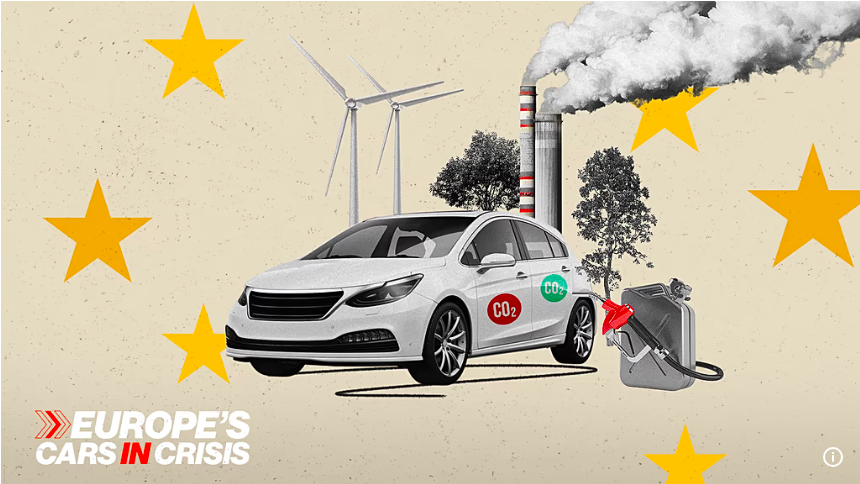
The European Union’s ambitious climate agenda has often been a flashpoint for political divides, but few debates illustrate the rift as clearly as the ongoing dispute over car emissions. As the automotive sector pushes back against strict CO₂ reduction deadlines, European lawmakers are locked in a battle over how best to support an industry that employs more than 13 million people while still delivering on the EU’s climate goals.
The coming months will be decisive. On 12 September, Commission President Ursula von der Leyen is expected to meet industry leaders in a new round of the “Strategic Dialogue” with carmakers — a sign of how central the dispute has become.
Register for Tekedia Mini-MBA edition 20 (June 8 – Sept 5, 2026).
Register for Tekedia AI in Business Masterclass.
Join Tekedia Capital Syndicate and co-invest in great global startups.
Register for Tekedia AI Lab.
Automakers Push Back
At the end of August, the European Automobile Manufacturers’ Association (ACEA) and the European Association of Automotive Suppliers (CLEPA) fired a warning shot. In a joint letter, they declared the EU’s car and van CO₂ targets for 2030 and 2035 “simply no longer feasible.”
Their frustration is clear: under EU rules approved in 2019, automakers must progressively reduce emissions across their entire fleet, or face financial penalties for every gram of excess CO₂. Adjustments exist for companies selling more zero-emission vehicles, but the core message is uncompromising — polluting models must go.

The Commission has already granted automakers more time to meet 2025 targets. But Brussels is holding firm on its 2035 deadline, when all new cars sold in the EU must be zero-emission. That includes a ban on hybrids and highly efficient combustion-engine vehicles, a prospect the industry says is unrealistic.
The Right Backs Industry Concerns
On one side of the Parliament, right-wing lawmakers are rallying behind the industry. Italian MEP Salvatore De Meo, a member of the European People’s Party (EPP), argues that Brussels’ approach is “ideological” and detached from economic realities.

“We agree with the car industry, because this target is more and more unreachable in the medium-long term,” De Meo told Euronews. “Sustainability goals must also respect the social and economic aspects.”
The EPP — the Parliament’s largest group — has proposed a five-point plan to boost competitiveness in the auto sector, including regulatory simplification. The plan resonates with other right-wing groups such as the European Conservatives and Reformists (ECR) and Patriots for Europe (PfE), which have consistently opposed the EU’s Green Deal measures.
These lawmakers argue for a broader technological pathway, pointing to biofuels and other low-carbon alternatives. “We cannot imagine an exclusively electric future for the automotive industry,” De Meo said, challenging the EU’s blanket ban on CO₂-emitting vehicles after 2035.
For the right, the Strategic Dialogue is an opportunity to inject pragmatism into the debate. By extending deadlines or making room for hybrid and biofuel-powered cars, they argue, the EU can safeguard both jobs and industrial competitiveness.
The Left Holds the Line
On the opposite side of the hemicycle, progressive groups are taking a hard line. Socialists and Democrats, the Greens–European Free Alliance, and The Left firmly reject calls to soften targets.
“I completely disagree,” Belgian Green MEP Sara Matthieu said. “That would mean rewarding the laggards and punishing those that have actually invested in the future.” For Matthieu, weakening the rules would send “a very bad signal” for the Green Deal as a whole.
Supporters of the climate agenda point to stark warnings from climate science. In 2024, for the first time, average global temperatures exceeded pre-industrial levels by more than 1.5 degrees — the threshold set in the Paris Agreement. For them, stricter limits on car emissions are non-negotiable.
Matthieu acknowledges the challenges but proposes different solutions: accelerating the greening of corporate fleets, boosting demand for zero-emission cars, and supporting a second-hand electric market. Investment in charging infrastructure across Europe is also critical, she argues, to ensure electric mobility is affordable and accessible.
She also highlights the importance of bringing battery production to Europe and scrutinising foreign investment, particularly from China. European automakers, she insists, must not cede their market to cheaper Chinese electric cars. “Some European brands were more future-oriented, have innovated, and have made the right choice,” Matthieu said. Rolling back the 2035 deadline, she warns, risks “handing the market to the Chinese on a silver platter.”
The Stakes for Europe
The dispute is about more than climate targets. It cuts to the heart of Europe’s industrial strategy, economic competitiveness, and social cohesion. With 13 million jobs tied to the auto sector, lawmakers are acutely aware of the political risks of alienating workers. Yet they also face a public increasingly concerned about climate change, after a year of record-breaking heatwaves and wildfires.
For the industry, the transition to zero-emission vehicles is inevitable. The question is how fast it should happen, and under what conditions. Automakers warn that overly ambitious deadlines could cripple their competitiveness. Climate advocates counter that hesitation will only leave European firms trailing behind global rivals already investing heavily in electric mobility.
Looking Ahead
The September dialogue between von der Leyen and carmakers will be closely watched. Any concessions could shift the balance of the debate — and determine whether the EU can hold together a coherent industrial and climate policy.
For now, the European Parliament remains split. On the right, calls for pragmatism, flexibility, and hybrid technologies. On the left, a determination to defend climate goals and push investment into electric infrastructure.
The battle lines reflect a broader tension at the heart of the Green Deal: how to reconcile environmental urgency with economic reality. The auto sector, long a symbol of Europe’s industrial strength, now sits squarely at the intersection of these two forces.
Final Thoughts
The clash over Europe’s car emission rules is more than a policy dispute — it’s a test of whether the EU can deliver on its climate promises without undermining one of its most vital industries. Both sides of the Parliament agree the automotive sector must survive and stay competitive, but they are deeply divided on how to get there. The next round of talks will be critical in determining whether Europe chooses compromise, delay, or steadfast ambition.
Would you like me to also create a short punchy closing one-liner (something memorable for readers who skim to the end)?
Conclusion
The car industry has become a political fault line within the European Parliament, with conservatives pushing to ease CO₂ deadlines and progressives warning against backsliding on climate commitments. The outcome of this clash will shape not just the future of Europe’s automotive sector, but also the credibility of the EU’s broader Green Deal.
Whether Europe can balance industrial pragmatism with environmental ambition remains to be seen. But one thing is certain: the road to 2035 is going to be bumpy.
Meta Description:
EU lawmakers are divided as carmakers push back against strict 2030 and 2035 CO₂ targets. Right-wing groups back industry calls for flexibility, while progressives insist on keeping climate goals intact. The outcome will shape the future of Europe’s automotive sector and the Green Deal.
SEO Headline:
How Europe’s Car Emission Rules Sparked a Split in the European Parliament
Evacuating Gaza Children to Europe: Moral Obligation or Security Issue?
The humanitarian crisis in Gaza has placed European governments at the crossroads of compassion and caution. With more than 15,600 residents — many of them children — in urgent need of medical evacuation, according to the World Health Organization (WHO), the question is whether Europe will prioritize its moral duty to save lives or allow security and migration concerns to dominate policy.
Since the Hamas-led 7 October attack that triggered Israel’s ongoing offensive, fewer than 350 patients from Gaza, mostly children, have been evacuated to the European Union. The number pales in comparison to the magnitude of the need, especially as Gaza’s health system has collapsed under the weight of relentless bombardment, shortages, and a 16-year blockade.
Yet across Europe, responses vary dramatically. Some countries, such as Italy, have stepped forward to accept significant numbers of patients, while others — including Germany, Denmark, and Austria — have either taken in very few or declined entirely. This uneven response has sparked a heated debate that is as much about values as it is about politics.
A Collapsing Health System
The urgency is undeniable. Gaza’s hospitals, battered by airstrikes and starved of fuel and supplies, are only able to provide the most basic life-saving care. Surgeries are performed without anesthesia, incubators run without reliable electricity, and cancer treatments are virtually impossible.
WHO reports that since October 2023, 919 patients and their companions have been medically evacuated to 16 WHO member states and 11 EU countries. Italy has taken the lead, evacuating 187 patients, while Spain and Romania have received 45 and 42, respectively. Belgium, Ireland, and France have taken smaller numbers.
But these efforts are dwarfed by the growing waiting list of severely ill patients. According to Dr. Hani Isleem of Doctors Without Borders, which coordinates evacuations, the main challenge is not logistics but politics: “We are struggling to find destination countries because some countries fear the political ramifications and want to ensure that the right of return is preserved.”
The Moral Argument: Saving Lives First
For many humanitarian organizations and progressive politicians, the issue is simple: children should not die for want of medical care. Belgium’s Deputy Prime Minister Maxime Prévot was blunt in an interview with Euronews: “Now according to a moral obligation but also a legal commitment, it is necessary to take action in order to provide strong support to those families.”
Belgium itself has taken in 14 patients so far, with plans to accept more in the coming months. Italy, despite its hardline migration stance, recently carried out the largest evacuation operation yet, flying 31 children and their relatives to hospitals in Rome and Milan. Almost all of them suffered amputations, brain injuries, leukemia, or severe malnutrition.
Italy’s Foreign Ministry emphasized that these children were given residence permits to access schools and healthcare, ensuring integration and dignity. The move was widely praised as a reminder that even amid political battles, humanitarian action is possible.
For advocates, such actions prove that governments can balance compassion with control. As one WHO spokesperson put it: “This is not about charity, it is about a shared responsibility. Every child deserves care, dignity, and a healthy future.”
The Security Lens: Migration and Political Fallout
But not all EU governments see it that way. Denmark’s Prime Minister Mette Frederiksen, who has long championed strict migration rules, refused to take in patients, citing integration problems among Palestinians who previously arrived in Denmark. “There are far too many in that group who have caused very, very serious consequences for our society,” she said, defending her refusal as consistent with national security priorities.
Germany has so far treated just one patient, with Berlin lawmakers warning about risks posed by accompanying relatives. Martin Matz of the Social Democrats noted that the Middle East conflict has already fueled tensions and antisemitic incidents in Germany, raising the question of whether medical evacuations could worsen domestic security challenges.
France, meanwhile, suspended its intake of Gaza patients after a Palestinian student evacuated for treatment was accused of making antisemitic remarks online. Officials said no further patients would be received until the investigation concludes.
Austria, which has not taken in any patients, argues that bureaucratic hurdles — including mandatory Israeli security clearances — make the process nearly impossible. Critics say this explanation masks a broader unwillingness to shoulder responsibility.
Between Humanitarian Duty and Political Realities
The divide reflects a deeper tension within Europe: the clash between the continent’s commitments under international humanitarian law and the pressures of domestic politics. Migration remains one of the most divisive issues in EU politics, fueling populist movements and shaping election campaigns. Governments fear that accepting Gaza patients, even temporarily, could be framed as weakening border controls or undermining national security.
Yet for those on the ground in Gaza, these political arguments feel remote. As WHO and NGOs emphasize, the patients waiting for evacuation are not militants or political actors but children suffering from cancer, severe burns, or war injuries. Denying them treatment, advocates say, risks violating not just moral obligations but international norms around the protection of civilians in conflict.
Final Thoughts
The evacuation of Gaza’s sick and injured children has become a litmus test for Europe’s values. On one hand, there is the moral imperative to save young lives when local healthcare is no longer functioning. On the other, there are the political and security concerns that dominate domestic debates across the EU.
How Europe chooses to resolve this dilemma will speak volumes about its identity on the global stage. Is the continent willing to act as a humanitarian leader, or will it allow migration fears to outweigh compassion? For the children of Gaza, time is running out — and the answer may determine whether thousands live or die.
Conclusion
The debate over evacuating Gaza’s sick and injured children to Europe reveals the continent’s deepest contradictions. On the one hand, the humanitarian necessity is clear: thousands of children face life-threatening conditions in a collapsed healthcare system. On the other, political fears surrounding migration and security continue to block urgent action.
Some EU countries, like Italy and Belgium, have chosen compassion, showing that humanitarian responsibility can be balanced with national policies. Others remain hesitant, prioritizing domestic political considerations over immediate medical needs. Ultimately, the question becomes one of values: will Europe rise to its moral and legal commitments, or will political caution leave vulnerable children without a lifeline?
The coming months will be crucial, as international pressure mounts on EU governments to put health above politics and honor the principle that every child deserves a chance at survival.
Meta Description:
As Gaza’s healthcare system collapses, EU nations face pressure to evacuate sick and injured children. While NGOs and the WHO urge urgent action, fears over migration and security keep many governments reluctant. Is Europe failing its moral obligation?
Share this:
- Click to share on Facebook (Opens in new window) Facebook
- Click to share on X (Opens in new window) X
- Click to share on WhatsApp (Opens in new window) WhatsApp
- Click to share on LinkedIn (Opens in new window) LinkedIn
- Click to email a link to a friend (Opens in new window) Email
- Click to print (Opens in new window) Print