

Female Imam in Germany Warns Islamists Sent to Europe to Spread Radical Ideology

Quote from Alex Bobby on July 24, 2025, 8:07 AM
Female Imam in Germany Warns: ‘Islamists Were Sent Here to Islamise Europe’
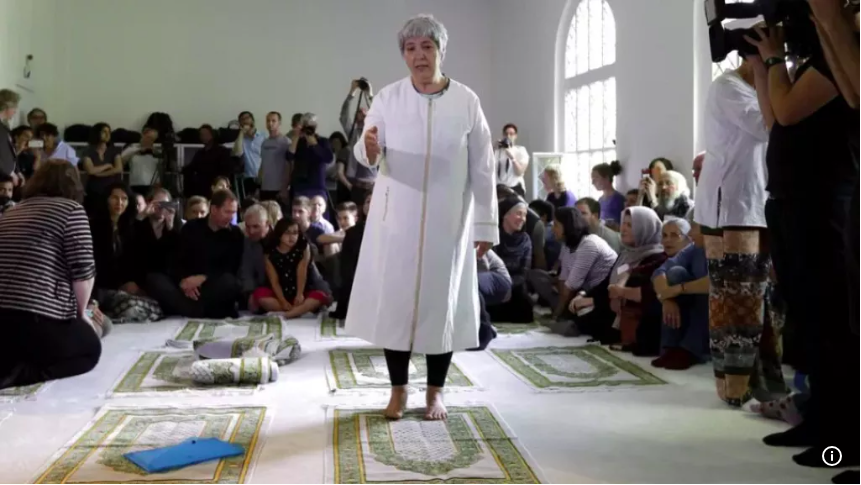
In the wake of violent street protests and escalating concerns about radicalisation, German female imam Seyran Ateş has issued a stark warning: Islamists, she says, have been sent to Europe not as refugees seeking peace, but as agents of unrest and ideological expansion. Ateş, the founder of Berlin's Ibn Rushd-Goethe Mosque—Europe’s first liberal mosque—has spent nearly two decades under police protection. Now, she is sounding the alarm over growing extremism in Germany’s immigrant communities, warning of a systematic effort to “Islamise Europe.”
Protests Turn Violent in Düsseldorf
Her warning comes after chaotic scenes unfolded in Düsseldorf. Roughly 300 people gathered for demonstrations ostensibly to honour Syrian cleric Osama al-Sharaa. However, the protests quickly took on a more radical tone. Videos emerged on TikTok showing participants glorifying violent attacks on Druze communities in Syria. Demonstrators were seen dancing, waving posters of al-Sharaa, and displaying scissors symbols—an ominous reference to cutting Druze men’s facial hair, a traditional and symbolic practice in the community.
The situation deteriorated at Düsseldorf’s central train station, where Syrian Islamists clashed violently with Kurdish demonstrators. Bottles and stones were hurled, five police officers were injured, and nearly 20 individuals are now facing criminal charges, including breach of the peace, assault, and property damage. The riots have raised serious questions about the nature of the groups organising these protests—and the ideologies driving them.
“They Were Sent to Cause Unrest”
In an interview with Euronews, Ateş did not mince words. “They were sent to Europe to cause unrest here, to recruit people for their ideology, and to work on the big idea of Islamising Europe,” she said. Ateş insists that liberal societies like Germany must remain open and tolerant, but should not confuse tolerance with naivety. “If right-wing extremist Germans are allowed to demonstrate, then Islamists can demonstrate too. Yet more tolerance is often shown towards Islamists so as not to be seen as Islamophobic.”
This tendency, she argues, allows dangerous radical elements to hide behind Germany’s liberal democratic values. She added that many of these demonstrators are not peaceful refugees but ideological operatives, spreading hatred and inciting violence.
Ateş’s own liberal mosque had to shut down temporarily in 2024 following threats from extremists. Her advocacy for women's rights, LGBTQ+ inclusion, and a progressive interpretation of Islam has long made her a target. In 1984, she survived a violent attack by a member of the Turkish ultranationalist group Grey Wolves. Despite living under police protection since 2006, she remains outspoken, undeterred in her mission to reform Islamic practice in Europe.
Experts Echo Security Concerns
Ateş is not alone in her concerns. Anthropologist Susanne Schröter, who focuses on Islam and society, also warned that Islamist groups pose an internal security threat. Speaking to Euronews, she said: “Syrian Islamists who celebrate massacres of minorities and attack Druze and Kurds on our streets have just as little place in Germany as foreign antisemites.”
Schröter argued that individuals who supported the Islamist opposition to Syria’s Bashar al-Assad should be returned home. “They no longer pose a threat there, but when they come here, they pose a threat to internal security,” she explained.
Mehmet Tanriverdi, spokesperson for the Kurdish Community of Germany (KGD), shared similar sentiments. He accused Germany of harbouring extremists who now endorse the same Islamist forces that persecute minorities such as Kurds, Alawites, and Druze in Syria. “The German government must absolutely correct its Syria policy,” he said. “In addition to the criminals, Germany must also deport all others who are Islamist-minded, promote the dictatorship and are against the constitution.”
Political Calls for Deportation and Citizenship Reform
The issue has now entered the political arena. CDU politician Christopher Förster raised the question of why these individuals remain in Germany at all. “Supporters of Syria’s new Islamist regime should either leave voluntarily or be deported,” he said, adding that Syria is now “obviously a safe country” for Islamists. He also called for reforms in Germany’s naturalisation process, stating, “Nobody should be given a German passport for taking part in such a demonstration.”
Förster’s comments reflect a broader public frustration over the perceived misuse of asylum protections. The demonstrations and subsequent violence have intensified debates about immigration, integration, and national security, putting pressure on the German government to respond decisively.
A Tipping Point for Tolerance?
Germany has long prided itself on its liberal, inclusive policies toward migrants and refugees. But recent events, combined with warnings from respected voices like Ateş, suggest that the country may be approaching a tipping point. As radical ideologies infiltrate public spaces and polarise communities, the need to balance freedom of expression with internal security is becoming increasingly urgent.
Ateş’s message is clear: tolerance must not come at the expense of democratic values and public safety. Europe, she argues, must confront this threat with eyes wide open—not only to protect its citizens but to preserve the very freedoms that radical Islamists seek to undermine.
Final Thought
Germany’s strength lies in its commitment to freedom, diversity, and human rights—but these principles must be defended, not taken for granted. As voices like Seyran Ateş continue to speak out despite threats and intimidation, it becomes clear that confronting extremism requires both courage and clarity. Tolerance should never become a shield for intolerance. Europe must remain open—but not blind—to those who exploit its openness to spread division, fear, and radical ideologies.
Conclusion
The recent protests and violence in Düsseldorf, coupled with Imam Seyran Ateş’s stark warning, have reignited urgent discussions about extremism, integration, and the boundaries of tolerance in democratic societies. As Germany grapples with balancing civil liberties and national security, voices like Ateş’s remind us that liberal values must not be exploited to shield those who threaten the very fabric of a free society. The rise of Islamist radicalism on European soil is not just a foreign policy concern—it is a domestic challenge that demands immediate attention, honest dialogue, and firm action. Safeguarding Europe's democratic principles means ensuring they are not manipulated by those intent on undermining them from within.
Meta Description:
Female imam Seyran Ateş warns that Islamists have been sent to Europe to incite unrest and push radical ideology. Recent violent protests in Germany highlight rising concerns.
Female Imam in Germany Warns: ‘Islamists Were Sent Here to Islamise Europe’
In the wake of violent street protests and escalating concerns about radicalisation, German female imam Seyran Ateş has issued a stark warning: Islamists, she says, have been sent to Europe not as refugees seeking peace, but as agents of unrest and ideological expansion. Ateş, the founder of Berlin's Ibn Rushd-Goethe Mosque—Europe’s first liberal mosque—has spent nearly two decades under police protection. Now, she is sounding the alarm over growing extremism in Germany’s immigrant communities, warning of a systematic effort to “Islamise Europe.”
Protests Turn Violent in Düsseldorf
Register for Tekedia Mini-MBA edition 20 (June 8 – Sept 5, 2026).
Register for Tekedia AI in Business Masterclass.
Join Tekedia Capital Syndicate and co-invest in great global startups.
Register for Tekedia AI Lab.
Her warning comes after chaotic scenes unfolded in Düsseldorf. Roughly 300 people gathered for demonstrations ostensibly to honour Syrian cleric Osama al-Sharaa. However, the protests quickly took on a more radical tone. Videos emerged on TikTok showing participants glorifying violent attacks on Druze communities in Syria. Demonstrators were seen dancing, waving posters of al-Sharaa, and displaying scissors symbols—an ominous reference to cutting Druze men’s facial hair, a traditional and symbolic practice in the community.
The situation deteriorated at Düsseldorf’s central train station, where Syrian Islamists clashed violently with Kurdish demonstrators. Bottles and stones were hurled, five police officers were injured, and nearly 20 individuals are now facing criminal charges, including breach of the peace, assault, and property damage. The riots have raised serious questions about the nature of the groups organising these protests—and the ideologies driving them.
“They Were Sent to Cause Unrest”

In an interview with Euronews, Ateş did not mince words. “They were sent to Europe to cause unrest here, to recruit people for their ideology, and to work on the big idea of Islamising Europe,” she said. Ateş insists that liberal societies like Germany must remain open and tolerant, but should not confuse tolerance with naivety. “If right-wing extremist Germans are allowed to demonstrate, then Islamists can demonstrate too. Yet more tolerance is often shown towards Islamists so as not to be seen as Islamophobic.”
This tendency, she argues, allows dangerous radical elements to hide behind Germany’s liberal democratic values. She added that many of these demonstrators are not peaceful refugees but ideological operatives, spreading hatred and inciting violence.
Ateş’s own liberal mosque had to shut down temporarily in 2024 following threats from extremists. Her advocacy for women's rights, LGBTQ+ inclusion, and a progressive interpretation of Islam has long made her a target. In 1984, she survived a violent attack by a member of the Turkish ultranationalist group Grey Wolves. Despite living under police protection since 2006, she remains outspoken, undeterred in her mission to reform Islamic practice in Europe.

Experts Echo Security Concerns
Ateş is not alone in her concerns. Anthropologist Susanne Schröter, who focuses on Islam and society, also warned that Islamist groups pose an internal security threat. Speaking to Euronews, she said: “Syrian Islamists who celebrate massacres of minorities and attack Druze and Kurds on our streets have just as little place in Germany as foreign antisemites.”
Schröter argued that individuals who supported the Islamist opposition to Syria’s Bashar al-Assad should be returned home. “They no longer pose a threat there, but when they come here, they pose a threat to internal security,” she explained.
Mehmet Tanriverdi, spokesperson for the Kurdish Community of Germany (KGD), shared similar sentiments. He accused Germany of harbouring extremists who now endorse the same Islamist forces that persecute minorities such as Kurds, Alawites, and Druze in Syria. “The German government must absolutely correct its Syria policy,” he said. “In addition to the criminals, Germany must also deport all others who are Islamist-minded, promote the dictatorship and are against the constitution.”
Political Calls for Deportation and Citizenship Reform
The issue has now entered the political arena. CDU politician Christopher Förster raised the question of why these individuals remain in Germany at all. “Supporters of Syria’s new Islamist regime should either leave voluntarily or be deported,” he said, adding that Syria is now “obviously a safe country” for Islamists. He also called for reforms in Germany’s naturalisation process, stating, “Nobody should be given a German passport for taking part in such a demonstration.”
Förster’s comments reflect a broader public frustration over the perceived misuse of asylum protections. The demonstrations and subsequent violence have intensified debates about immigration, integration, and national security, putting pressure on the German government to respond decisively.
A Tipping Point for Tolerance?
Germany has long prided itself on its liberal, inclusive policies toward migrants and refugees. But recent events, combined with warnings from respected voices like Ateş, suggest that the country may be approaching a tipping point. As radical ideologies infiltrate public spaces and polarise communities, the need to balance freedom of expression with internal security is becoming increasingly urgent.
Ateş’s message is clear: tolerance must not come at the expense of democratic values and public safety. Europe, she argues, must confront this threat with eyes wide open—not only to protect its citizens but to preserve the very freedoms that radical Islamists seek to undermine.
Final Thought
Germany’s strength lies in its commitment to freedom, diversity, and human rights—but these principles must be defended, not taken for granted. As voices like Seyran Ateş continue to speak out despite threats and intimidation, it becomes clear that confronting extremism requires both courage and clarity. Tolerance should never become a shield for intolerance. Europe must remain open—but not blind—to those who exploit its openness to spread division, fear, and radical ideologies.
Conclusion
The recent protests and violence in Düsseldorf, coupled with Imam Seyran Ateş’s stark warning, have reignited urgent discussions about extremism, integration, and the boundaries of tolerance in democratic societies. As Germany grapples with balancing civil liberties and national security, voices like Ateş’s remind us that liberal values must not be exploited to shield those who threaten the very fabric of a free society. The rise of Islamist radicalism on European soil is not just a foreign policy concern—it is a domestic challenge that demands immediate attention, honest dialogue, and firm action. Safeguarding Europe's democratic principles means ensuring they are not manipulated by those intent on undermining them from within.
Meta Description:
Female imam Seyran Ateş warns that Islamists have been sent to Europe to incite unrest and push radical ideology. Recent violent protests in Germany highlight rising concerns.
Share this:
- Click to share on Facebook (Opens in new window) Facebook
- Click to share on X (Opens in new window) X
- Click to share on WhatsApp (Opens in new window) WhatsApp
- Click to share on LinkedIn (Opens in new window) LinkedIn
- Click to email a link to a friend (Opens in new window) Email
- Click to print (Opens in new window) Print