

From Boom to Bust: How Kentucky Bourbon’s Golden Era Came Crashing Down

Quote from Alex Bobby on August 14, 2025, 5:02 AM
How Kentucky Bourbon Went from Boom to Bust
For decades, Kentucky bourbon has been a symbol of American heritage—rich, amber, and as deeply rooted in tradition as apple pie. Its story stretches back to the late 18th century, but in 1964, Congress officially enshrined it as a “distinctive product of the United States,” cementing its place in American identity.
Yet, the industry’s recent trajectory has been anything but steady. After enjoying a remarkable boom in the decade following the 2008 recession, bourbon is now facing a sobering slowdown. Economic headwinds, changing drinking habits, and escalating trade disputes have combined to sour what was once one of America’s most promising post-recession success stories.
The Post-Recession Renaissance
By the end of the 20th century, bourbon had fallen out of favour. Younger drinkers gravitated toward vodka, gin, and craft beer, leaving the spirit to languish as “old-fashioned”—both in name and perception.
That began to change in the wake of the 2008 financial crisis. As the economy recovered, bourbon’s relatively affordable price point made it an appealing choice for bar managers and adventurous younger consumers. The 2013 passage of a Kentucky law allowing the resale of vintage bottles sparked a collectible market, while TV shows like Mad Men revived a cultural nostalgia for mid-century cocktails.
From 2011 to 2020, bourbon sales grew by an impressive 7% worldwide—more than triple the pace of the previous decade, according to industry tracker IWSR. Distillers became minor celebrities, and rare bottles turned into investment assets, with some buyers flipping them for double or triple their retail price.
“Everyone was going crazy over the bourbon market, treating it like a commodity, like a stock,” recalls Robin Wynne, a veteran bar manager in Toronto. “People would go in as a prospector, to flip bottles for two to three times the value.”
From Peak to Plateau
Like most market bubbles, bourbon’s meteoric rise could not last forever. The COVID-19 pandemic brought a sudden crash in on-premise sales as bars and restaurants shut down. Inflation then tightened consumer spending, with many drinkers turning to cheaper alternatives—or abstaining altogether. Among Gen Z, alcohol consumption is noticeably lower than in previous generations, further eroding demand.
IWSR data shows bourbon’s growth rate has slowed dramatically, rising just 2% between 2021 and 2024.
On top of that, global trade tensions have hit Kentucky hard. Under President Donald Trump, the US imposed tariffs on various goods, prompting retaliatory measures. The EU has announced future tariffs on American bourbon and Californian wine, while Canadian provinces—representing about 10% of Kentucky’s $9 billion whiskey and bourbon business—have halted imports entirely.
“That’s worse than a tariff,” said Lawson Whiting, CEO of Brown-Forman, which owns Jack Daniel’s, Woodford Reserve, and Old Forester. “It’s literally taking your sales away, completely removing our products from the shelves.”
Even Kentucky’s own Senator, Republican Rand Paul, has criticised the policy: “Tariffs are taxes, and when you put a tax on a business, it’s always passed through as a cost. So, there will be higher prices.”
Industry Casualties
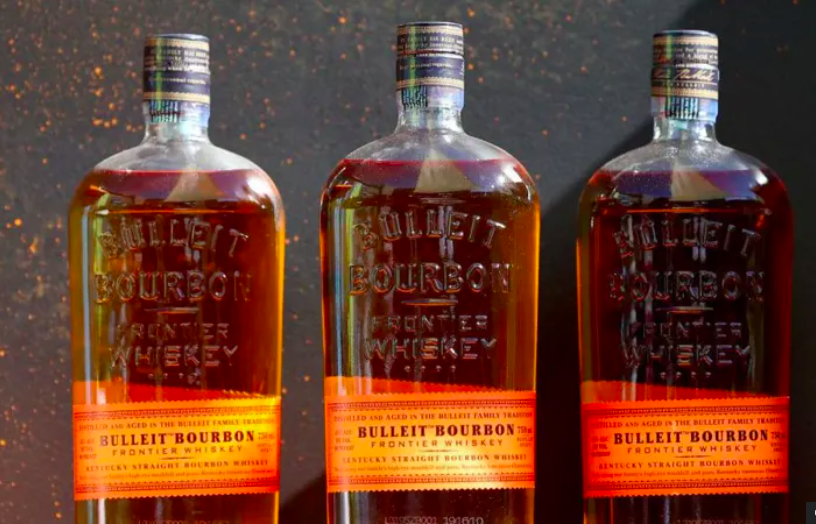
These economic pressures have created a wave of distress in the bourbon world. Liquor giant Diageo reported a 7.3% sales decline for Bulleit Bourbon this fiscal year, while Wild Turkey’s sales fell 8.1% over the past six months.
Smaller distilleries are faring even worse. In July, LMD Holdings filed for Chapter 11 bankruptcy barely a month after opening the Luca Mariano Distillery in Danville, Kentucky. Garrard County Distilling went into receivership this spring, and Jack Daniel’s parent company shuttered a Kentucky barrel-making plant in January.
“I’d be extraordinarily surprised if their weren’t more bankruptcies and more consolidation,” predicts Marten Lodewijks, IWSR’s US president.
Oversupply Meets Falling Demand
Part of bourbon’s problem is tied to its own production cycle. By law, bourbon must be aged in new charred oak barrels, often for years. Decisions on production volumes are made far in advance based on anticipated demand. The boom years encouraged distillers to ramp up production, and now that demand is cooling, the market is oversupplied—pushing prices down and margins thinner.
This glut is especially painful for smaller producers who invested heavily during the boom. Unlike global brands with deep reserves, many craft distilleries lack the cash flow to weather prolonged downturns.
Lessons from the Past
Bourbon’s current slump is not unprecedented in the wider spirits industry. Scotch whisky went through a similar decline in the latter half of the 20th century, prompting producers to innovate. By aging excess stock and experimenting with blends, Scotch makers ultimately created the premium single malt market that thrives today.
Lodewijks believes bourbon producers could follow a similar path: “Tough times often lead to innovation. This could be an opportunity to diversify product lines, experiment with finishes, or even create new premium categories.”
Opportunity North of the Border
Ironically, while tariffs and trade bans are hurting Kentucky’s exports, they are giving a boost to Canadian distilleries. In the absence of US imports, Canadian whiskey makers are experimenting with bourbon-style recipes, using local grains to produce similar flavour profiles.
“The tariff war has really done a positive for the Canadian spirits business,” says Wynne. “We’ve got lots of grains to make these whiskeys without having to rely on the States.”
If these Canadian “bourbons” catch on domestically, they could further erode Kentucky’s market share—even after trade disputes are resolved.
The Road Ahead
For now, the bourbon industry faces a perfect storm: slowing sales, shrinking exports, oversupply, and shifting consumer preferences. Larger distillers may endure through cost-cutting and market diversification, but smaller producers will likely continue to consolidate or close.
Still, bourbon has weathered downturns before. Its deep cultural roots, global recognition, and versatility in cocktails provide a foundation for recovery. If distillers can adapt—whether through innovation, smarter inventory management, or tapping into new markets—they may yet turn today’s bust into tomorrow’s revival.
As history has shown, even the bottom of the barrel can hold the beginnings of something new.
conclusion
In conclusion, Kentucky bourbon’s rise and fall over the past decade is a cautionary tale of how booming demand, cultural trends, and global trade can quickly turn into oversupply, market saturation, and economic strain. While tariffs, inflation, and changing drinking habits have slowed sales and shuttered distilleries, bourbon’s rich heritage and global reputation still give it a fighting chance. If producers can innovate, adapt to shifting tastes, and manage production more strategically, this downturn could become just another chapter in a long history of resilience—setting the stage for a future revival in America’s most iconic spirit.
How Kentucky Bourbon Went from Boom to Bust
For decades, Kentucky bourbon has been a symbol of American heritage—rich, amber, and as deeply rooted in tradition as apple pie. Its story stretches back to the late 18th century, but in 1964, Congress officially enshrined it as a “distinctive product of the United States,” cementing its place in American identity.
Yet, the industry’s recent trajectory has been anything but steady. After enjoying a remarkable boom in the decade following the 2008 recession, bourbon is now facing a sobering slowdown. Economic headwinds, changing drinking habits, and escalating trade disputes have combined to sour what was once one of America’s most promising post-recession success stories.
Register for Tekedia Mini-MBA edition 20 (June 8 – Sept 5, 2026).
Register for Tekedia AI in Business Masterclass.
Join Tekedia Capital Syndicate and co-invest in great global startups.
Register for Tekedia AI Lab.
The Post-Recession Renaissance
By the end of the 20th century, bourbon had fallen out of favour. Younger drinkers gravitated toward vodka, gin, and craft beer, leaving the spirit to languish as “old-fashioned”—both in name and perception.
That began to change in the wake of the 2008 financial crisis. As the economy recovered, bourbon’s relatively affordable price point made it an appealing choice for bar managers and adventurous younger consumers. The 2013 passage of a Kentucky law allowing the resale of vintage bottles sparked a collectible market, while TV shows like Mad Men revived a cultural nostalgia for mid-century cocktails.

From 2011 to 2020, bourbon sales grew by an impressive 7% worldwide—more than triple the pace of the previous decade, according to industry tracker IWSR. Distillers became minor celebrities, and rare bottles turned into investment assets, with some buyers flipping them for double or triple their retail price.
“Everyone was going crazy over the bourbon market, treating it like a commodity, like a stock,” recalls Robin Wynne, a veteran bar manager in Toronto. “People would go in as a prospector, to flip bottles for two to three times the value.”
From Peak to Plateau

Like most market bubbles, bourbon’s meteoric rise could not last forever. The COVID-19 pandemic brought a sudden crash in on-premise sales as bars and restaurants shut down. Inflation then tightened consumer spending, with many drinkers turning to cheaper alternatives—or abstaining altogether. Among Gen Z, alcohol consumption is noticeably lower than in previous generations, further eroding demand.
IWSR data shows bourbon’s growth rate has slowed dramatically, rising just 2% between 2021 and 2024.
On top of that, global trade tensions have hit Kentucky hard. Under President Donald Trump, the US imposed tariffs on various goods, prompting retaliatory measures. The EU has announced future tariffs on American bourbon and Californian wine, while Canadian provinces—representing about 10% of Kentucky’s $9 billion whiskey and bourbon business—have halted imports entirely.
“That’s worse than a tariff,” said Lawson Whiting, CEO of Brown-Forman, which owns Jack Daniel’s, Woodford Reserve, and Old Forester. “It’s literally taking your sales away, completely removing our products from the shelves.”
Even Kentucky’s own Senator, Republican Rand Paul, has criticised the policy: “Tariffs are taxes, and when you put a tax on a business, it’s always passed through as a cost. So, there will be higher prices.”
Industry Casualties
These economic pressures have created a wave of distress in the bourbon world. Liquor giant Diageo reported a 7.3% sales decline for Bulleit Bourbon this fiscal year, while Wild Turkey’s sales fell 8.1% over the past six months.
Smaller distilleries are faring even worse. In July, LMD Holdings filed for Chapter 11 bankruptcy barely a month after opening the Luca Mariano Distillery in Danville, Kentucky. Garrard County Distilling went into receivership this spring, and Jack Daniel’s parent company shuttered a Kentucky barrel-making plant in January.
“I’d be extraordinarily surprised if their weren’t more bankruptcies and more consolidation,” predicts Marten Lodewijks, IWSR’s US president.
Oversupply Meets Falling Demand
Part of bourbon’s problem is tied to its own production cycle. By law, bourbon must be aged in new charred oak barrels, often for years. Decisions on production volumes are made far in advance based on anticipated demand. The boom years encouraged distillers to ramp up production, and now that demand is cooling, the market is oversupplied—pushing prices down and margins thinner.
This glut is especially painful for smaller producers who invested heavily during the boom. Unlike global brands with deep reserves, many craft distilleries lack the cash flow to weather prolonged downturns.
Lessons from the Past
Bourbon’s current slump is not unprecedented in the wider spirits industry. Scotch whisky went through a similar decline in the latter half of the 20th century, prompting producers to innovate. By aging excess stock and experimenting with blends, Scotch makers ultimately created the premium single malt market that thrives today.
Lodewijks believes bourbon producers could follow a similar path: “Tough times often lead to innovation. This could be an opportunity to diversify product lines, experiment with finishes, or even create new premium categories.”
Opportunity North of the Border
Ironically, while tariffs and trade bans are hurting Kentucky’s exports, they are giving a boost to Canadian distilleries. In the absence of US imports, Canadian whiskey makers are experimenting with bourbon-style recipes, using local grains to produce similar flavour profiles.
“The tariff war has really done a positive for the Canadian spirits business,” says Wynne. “We’ve got lots of grains to make these whiskeys without having to rely on the States.”
If these Canadian “bourbons” catch on domestically, they could further erode Kentucky’s market share—even after trade disputes are resolved.
The Road Ahead
For now, the bourbon industry faces a perfect storm: slowing sales, shrinking exports, oversupply, and shifting consumer preferences. Larger distillers may endure through cost-cutting and market diversification, but smaller producers will likely continue to consolidate or close.
Still, bourbon has weathered downturns before. Its deep cultural roots, global recognition, and versatility in cocktails provide a foundation for recovery. If distillers can adapt—whether through innovation, smarter inventory management, or tapping into new markets—they may yet turn today’s bust into tomorrow’s revival.
As history has shown, even the bottom of the barrel can hold the beginnings of something new.
conclusion
In conclusion, Kentucky bourbon’s rise and fall over the past decade is a cautionary tale of how booming demand, cultural trends, and global trade can quickly turn into oversupply, market saturation, and economic strain. While tariffs, inflation, and changing drinking habits have slowed sales and shuttered distilleries, bourbon’s rich heritage and global reputation still give it a fighting chance. If producers can innovate, adapt to shifting tastes, and manage production more strategically, this downturn could become just another chapter in a long history of resilience—setting the stage for a future revival in America’s most iconic spirit.
Uploaded files:Share this:
- Click to share on Facebook (Opens in new window) Facebook
- Click to share on X (Opens in new window) X
- Click to share on WhatsApp (Opens in new window) WhatsApp
- Click to share on LinkedIn (Opens in new window) LinkedIn
- Click to email a link to a friend (Opens in new window) Email
- Click to print (Opens in new window) Print