

From Underdogs to Equals: India’s Grit Secures 2–2 Draw Against England

Quote from Alex Bobby on August 9, 2025, 6:36 AM
From Underdogs to Equals: How India Forced England to Draw Test Series
The 2–2 draw between England and India for the Anderson–Tendulkar Trophy was far more than just a scoreline. It was a gripping, five-match saga that defied predictions, tested resilience, and showcased why Test cricket remains the sport’s ultimate drama. Every game went into the final day, with four Tests stretching deep into the last session. The result? A series brimming with tension, heroics, and storylines that will be retold for years.
The Odds Were Against India
When the series began, almost no one outside the Indian dressing room believed the visitors stood a chance. England, in home conditions, were tipped to dominate — if not sweep — the series. Pundits pointed to India’s pre-tour troubles as proof. They had been whitewashed 0–3 at home by New Zealand, then suffered a 3–1 drubbing in Australia. To make matters worse, they lost four giants of the game — R Ashwin, Rohit Sharma, Virat Kohli, and Mohammed Shami — to injuries and retirements right before the series.
Leadership duties fell to 24-year-old Shubman Gill, captaining India for the first time in a full series, and with a modest overseas batting record to boot. Around him was a squad brimming with talent but short on English experience. Yashasvi Jaiswal, Sai Sudarshan, Karun Nair, Washington Sundar, and Abhimanyu Easwaran had never played a Test in England. Jasprit Bumrah’s fitness was a lingering concern.
The first Test seemed to confirm fears. At Headingley, India lost from a position of strength, failing to defend a target of 373 as England chased it down in the fourth innings. The narrative of “too inexperienced, too fragile” gained momentum.
The Turning Point at Edgbaston
But then came Edgbaston. India didn’t just win — they crushed England by a staggering 336 runs. This wasn’t a fluke; it was a statement. Every department clicked: the batting fired in both innings, the bowling unit hunted as a pack, and the fielders were electric. From that point on, the series was no longer about whether India could compete, but whether they could outfight the home side over five intense matches.
The final three Tests became a gladiatorial contest. England and India matched each other blow for blow — momentum swinging wildly, tempers occasionally flaring, and moments of brilliance punctuating every session. Both teams battled not just each other but also fatigue, injuries, and the mental toll of high-stakes cricket.
India’s Key Performers Rise
Statistically, the series told its own story. India’s batting was formidable: three players — Shubman Gill, KL Rahul, and Ravindra Jadeja — crossed the 500-run mark. England had just one in that club: Joe Root. India’s batsmen also outscored England in centuries, 12 to nine.
Gill’s performance was nothing short of historic. Amassing 754 runs, including a remarkable 430 in a single Test, he came within 20 runs of breaking Sunil Gavaskar’s record for most runs by an Indian in a series. His aggregate placed him second only to Don Bradman’s 810 for most runs in a series by a captain. The comparison to Bradman and Gavaskar was not just statistical — Gill’s calm under pressure, crisp stroke play, and sharp tactical acumen marked him as a leader who had arrived.
In the bowling department, Mohammed Siraj was relentless. With 23 wickets, he finished as the series’ top wicket-taker. His ability to generate movement even on slow pitches kept England’s batters on edge. Meanwhile, Akash Deep etched his name into the history books as the only bowler in the series to claim 10 wickets in a match — a feat achieved in conditions far from home.
The Mental Game
What set India apart was not just skill, but mental fortitude. After the Headingley defeat, lesser teams might have folded. Instead, India treated the setback as a wake-up call. Gill’s leadership grew visibly sharper; he rotated bowlers intelligently, backed younger players in crunch moments, and was unafraid to make bold field placements.
The senior players, especially KL Rahul and Ravindra Jadeja, provided stability and grit. Rahul’s ability to absorb pressure was invaluable in tricky chases, while Jadeja’s all-round contributions — including key breakthroughs with the ball — plugged gaps and shifted momentum at crucial junctures.
England’s Resistance
To their credit, England did not roll over. Root was magnificent, their seamers continued to find ways to create chances, and younger players like Harry Brook showed flashes of brilliance. But their inability to consistently convert starts into match-winning performances — and India’s knack for seizing decisive moments — meant the series ended level rather than in England’s favour.
A New Blueprint for India Overseas
This series will be remembered as the moment India shook off the “home-track bullies” tag for good. It wasn’t just about the draw — it was about how they earned it, in alien conditions, against a confident side, and under a young captain. The lessons from England will echo into future tours: resilience trumps reputation, adaptability matters more than experience, and belief can carry a team past the limits of expectation.
Shubman Gill may have started the series as a captain under scrutiny, but he ended it as a leader whose name belongs alongside India’s greats. Siraj and the bowling unit proved that raw pace and disciplined lines can succeed even on batting-friendly days. And the young batters showed that, with patience and courage, even the steepest learning curves can be conquered.
Conclusion
From underdogs to equals, India’s 2–2 draw in the Anderson–Tendulkar Trophy was a masterclass in grit and adaptability. Written off before a ball was bowled, they fought their way into contention and held their ground against an England team with every advantage. In doing so, they didn’t just draw a series — they redrew the map of what’s possible for Indian cricket abroad. The next time India tours a challenging destination, no one will dare count them out so easily again.
Meta Description:
India defied the odds to draw the Anderson–Tendulkar Trophy 2–2 in England, with Shubman Gill’s record runs and Mohammed Siraj’s wickets leading a fearless fightback.
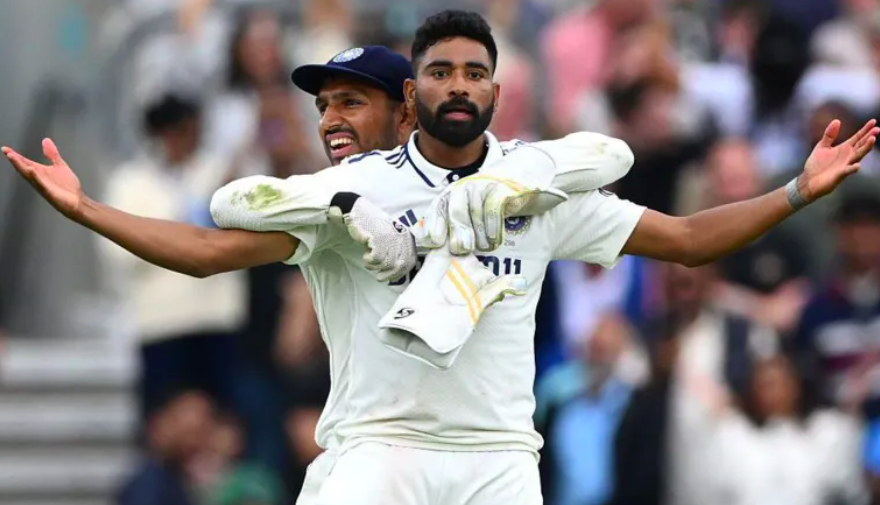
From Underdogs to Equals: How India Forced England to Draw Test Series
The 2–2 draw between England and India for the Anderson–Tendulkar Trophy was far more than just a scoreline. It was a gripping, five-match saga that defied predictions, tested resilience, and showcased why Test cricket remains the sport’s ultimate drama. Every game went into the final day, with four Tests stretching deep into the last session. The result? A series brimming with tension, heroics, and storylines that will be retold for years.
The Odds Were Against India
Register for Tekedia Mini-MBA edition 20 (June 8 – Sept 5, 2026).
Register for Tekedia AI in Business Masterclass.
Join Tekedia Capital Syndicate and co-invest in great global startups.
Register for Tekedia AI Lab.
When the series began, almost no one outside the Indian dressing room believed the visitors stood a chance. England, in home conditions, were tipped to dominate — if not sweep — the series. Pundits pointed to India’s pre-tour troubles as proof. They had been whitewashed 0–3 at home by New Zealand, then suffered a 3–1 drubbing in Australia. To make matters worse, they lost four giants of the game — R Ashwin, Rohit Sharma, Virat Kohli, and Mohammed Shami — to injuries and retirements right before the series.
Leadership duties fell to 24-year-old Shubman Gill, captaining India for the first time in a full series, and with a modest overseas batting record to boot. Around him was a squad brimming with talent but short on English experience. Yashasvi Jaiswal, Sai Sudarshan, Karun Nair, Washington Sundar, and Abhimanyu Easwaran had never played a Test in England. Jasprit Bumrah’s fitness was a lingering concern.
The first Test seemed to confirm fears. At Headingley, India lost from a position of strength, failing to defend a target of 373 as England chased it down in the fourth innings. The narrative of “too inexperienced, too fragile” gained momentum.

The Turning Point at Edgbaston
But then came Edgbaston. India didn’t just win — they crushed England by a staggering 336 runs. This wasn’t a fluke; it was a statement. Every department clicked: the batting fired in both innings, the bowling unit hunted as a pack, and the fielders were electric. From that point on, the series was no longer about whether India could compete, but whether they could outfight the home side over five intense matches.
The final three Tests became a gladiatorial contest. England and India matched each other blow for blow — momentum swinging wildly, tempers occasionally flaring, and moments of brilliance punctuating every session. Both teams battled not just each other but also fatigue, injuries, and the mental toll of high-stakes cricket.

India’s Key Performers Rise
Statistically, the series told its own story. India’s batting was formidable: three players — Shubman Gill, KL Rahul, and Ravindra Jadeja — crossed the 500-run mark. England had just one in that club: Joe Root. India’s batsmen also outscored England in centuries, 12 to nine.
Gill’s performance was nothing short of historic. Amassing 754 runs, including a remarkable 430 in a single Test, he came within 20 runs of breaking Sunil Gavaskar’s record for most runs by an Indian in a series. His aggregate placed him second only to Don Bradman’s 810 for most runs in a series by a captain. The comparison to Bradman and Gavaskar was not just statistical — Gill’s calm under pressure, crisp stroke play, and sharp tactical acumen marked him as a leader who had arrived.
In the bowling department, Mohammed Siraj was relentless. With 23 wickets, he finished as the series’ top wicket-taker. His ability to generate movement even on slow pitches kept England’s batters on edge. Meanwhile, Akash Deep etched his name into the history books as the only bowler in the series to claim 10 wickets in a match — a feat achieved in conditions far from home.
The Mental Game
What set India apart was not just skill, but mental fortitude. After the Headingley defeat, lesser teams might have folded. Instead, India treated the setback as a wake-up call. Gill’s leadership grew visibly sharper; he rotated bowlers intelligently, backed younger players in crunch moments, and was unafraid to make bold field placements.
The senior players, especially KL Rahul and Ravindra Jadeja, provided stability and grit. Rahul’s ability to absorb pressure was invaluable in tricky chases, while Jadeja’s all-round contributions — including key breakthroughs with the ball — plugged gaps and shifted momentum at crucial junctures.
England’s Resistance
To their credit, England did not roll over. Root was magnificent, their seamers continued to find ways to create chances, and younger players like Harry Brook showed flashes of brilliance. But their inability to consistently convert starts into match-winning performances — and India’s knack for seizing decisive moments — meant the series ended level rather than in England’s favour.
A New Blueprint for India Overseas
This series will be remembered as the moment India shook off the “home-track bullies” tag for good. It wasn’t just about the draw — it was about how they earned it, in alien conditions, against a confident side, and under a young captain. The lessons from England will echo into future tours: resilience trumps reputation, adaptability matters more than experience, and belief can carry a team past the limits of expectation.
Shubman Gill may have started the series as a captain under scrutiny, but he ended it as a leader whose name belongs alongside India’s greats. Siraj and the bowling unit proved that raw pace and disciplined lines can succeed even on batting-friendly days. And the young batters showed that, with patience and courage, even the steepest learning curves can be conquered.
Conclusion
From underdogs to equals, India’s 2–2 draw in the Anderson–Tendulkar Trophy was a masterclass in grit and adaptability. Written off before a ball was bowled, they fought their way into contention and held their ground against an England team with every advantage. In doing so, they didn’t just draw a series — they redrew the map of what’s possible for Indian cricket abroad. The next time India tours a challenging destination, no one will dare count them out so easily again.
Meta Description:
India defied the odds to draw the Anderson–Tendulkar Trophy 2–2 in England, with Shubman Gill’s record runs and Mohammed Siraj’s wickets leading a fearless fightback.
Share this:
- Click to share on Facebook (Opens in new window) Facebook
- Click to share on X (Opens in new window) X
- Click to share on WhatsApp (Opens in new window) WhatsApp
- Click to share on LinkedIn (Opens in new window) LinkedIn
- Click to email a link to a friend (Opens in new window) Email
- Click to print (Opens in new window) Print