

Gaza Doctors Starve While Treating Patients, Evacuated Medic Reveals

Quote from Alex Bobby on October 1, 2025, 11:07 AM
Gaza Doctors Are Starving While Fighting to Save Lives, Evacuated Medic Tells
For more than twenty years, Dr. Mohammed Abu Mughaisib dedicated his life to one purpose: healing others. As a doctor with Médecins Sans Frontières (MSF), he worked in some of Gaza’s most overcrowded hospitals, treating patients under circumstances most people could hardly imagine. But as the war dragged on and medical infrastructure collapsed, he found himself facing a painful truth—he could no longer heal others while he himself was starving.
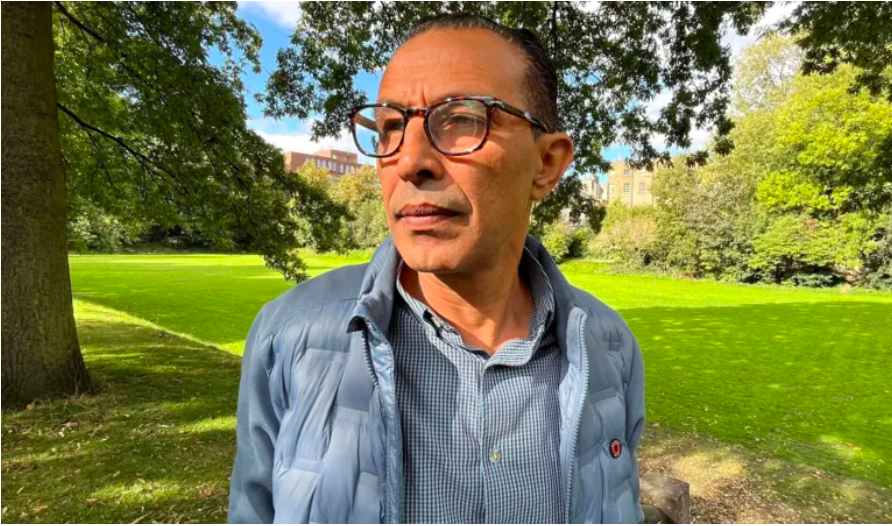
In September, after months of relentless bombardment and dwindling supplies, Dr. Abu Mughaisib was evacuated from Gaza to Ireland alongside a group of students who had secured scholarships abroad. Sitting on a park bench in Dublin, surrounded by birdsong and greenery, he struggled to reconcile the peace around him with the chaos he had left behind.
“I never imagined I would starve,” he said quietly. “But my head hurt, my stomach hurt, and I had no energy left to work.”
Starvation in the Heart of the Hospital
Doctors are trained to endure long hours and high stress, but in Gaza, the conditions became almost impossible. With Israel’s offensive destroying hospitals, supply routes, and basic infrastructure, even the most resilient medics were brought to their breaking point.
“The decision to leave was very difficult,” Dr. Abu Mughaisib admitted. “My colleagues are still there, still working, still hungry. But I had reached my limit. I could not save lives if I could not even stand on my feet.”
Inside Gaza’s remaining hospitals, the situation remains grim. Doctors work shifts of 20 hours or more with little food, often surviving on bread scraps or nothing at all. Water is scarce, and electricity for surgical wards comes sporadically from generators running on dwindling fuel supplies. Medicines, bandages, and antibiotics are chronically short.
“In one day I could treat dozens of injured people,” he explained. “But then I would leave the hospital and collapse from exhaustion, not because of the work but because of hunger. A doctor cannot function on an empty stomach.”
When Saving Lives Means Choosing Who to Save
The collapse of Gaza’s health system has forced medical staff into heartbreaking choices. With so many wounded and too few resources, doctors are often left deciding who gets treatment and who does not.
“We are not supposed to choose between patients,” Dr. Abu Mughaisib said, his voice heavy with emotion. “But sometimes there was only one bed, or one dose of medicine, and ten patients needing it. You look at their faces, at their families, and you are forced to decide who has a chance to live. That decision breaks a doctor’s soul.”
For many medics, these impossible choices are compounded by their own declining health. Starvation weakens their judgment, slows their reflexes, and dulls their concentration—at precisely the time their skills are most desperately needed.
The Pain of Leaving Colleagues Behind
Though he is now safe in Ireland, Dr. Abu Mughaisib carries guilt for leaving his colleagues and patients behind. “I still think about them every hour,” he said. “I feel guilty for eating a meal here while I know they are still hungry. But I also know I could not continue like that. If I stayed, I might not be alive today.”
His departure underscores a broader crisis: the exodus of trained medical staff from Gaza. While international organisations like MSF and the World Health Organisation have tried to keep medical teams in place, many foreign and local staff have been forced to leave for their own survival. Each departure leaves Gaza’s health system even weaker.
A Life Between Two Worlds
For Dr. Abu Mughaisib, the contrast between Gaza and Dublin is almost surreal. “In Gaza, you hear the sound of drones and bombs every hour,” he said. “In Dublin, I hear birds and children playing. It feels like two different planets.”
Yet even in safety, his mind remains tethered to Gaza. He stays in touch with his colleagues when communications allow, offering advice and moral support. He also speaks publicly, hoping his testimony can shed light on the dire conditions that continue to unfold.
“I cannot forget what I saw, what I felt,” he said. “Doctors starving while treating starving children, mothers crying for medicine that doesn’t exist, fathers bringing in bodies they could not protect. These are images that will stay with me forever.”
The World’s Silent Witness
The plight of Gaza’s doctors illustrates a larger humanitarian tragedy. Hospitals, which should be sanctuaries of healing, have become battlegrounds. International law requires the protection of medical workers and facilities, yet in Gaza, these principles are consistently undermined by the conflict.
Despite international outcry, aid convoys often fail to reach their destinations, and fuel shortages prevent even the most basic hospital operations. For those left behind, survival is a daily struggle, both inside and outside the hospital walls.
Looking Forward
In Ireland, Dr. Abu Mughaisib has food, shelter, and the chance to recover. But he does not see his evacuation as an escape. Instead, he sees it as a responsibility to speak on behalf of those still trapped.
“I am safe, but I do not feel peace,” he said. “My colleagues are still there, working in impossible conditions. They are heroes, more than I am. The world must not forget them.”
As he adjusts to life in a new country, he remains haunted by the faces of patients he could not save and the colleagues he left behind. His story is not just one of survival, but of sacrifice, guilt, and the unrelenting struggle of medical workers in war zones.
Conclusion
The story of Dr. Mohammed Abu Mughaisib is both heartbreaking and illuminating. It shows the impossible burden placed on Gaza’s doctors: to heal others while enduring hunger, fear, and exhaustion themselves. His decision to leave was not a retreat, but a recognition of human limits.
As the conflict continues, his testimony serves as a reminder that beyond the politics and headlines, there are people—doctors, nurses, and patients—whose lives hang in the balance. Their suffering cannot be measured only in statistics, but in the hunger, sacrifice, and humanity of those who continue to fight for life in a place where survival itself is uncertain.
Meta Description
MSF doctor Mohammed Abu Mughaisib recounts starving while saving lives in Gaza hospitals before evacuation to Ireland. His story exposes a health system in collapse.
Gaza Doctors Are Starving While Fighting to Save Lives, Evacuated Medic Tells
For more than twenty years, Dr. Mohammed Abu Mughaisib dedicated his life to one purpose: healing others. As a doctor with Médecins Sans Frontières (MSF), he worked in some of Gaza’s most overcrowded hospitals, treating patients under circumstances most people could hardly imagine. But as the war dragged on and medical infrastructure collapsed, he found himself facing a painful truth—he could no longer heal others while he himself was starving.
In September, after months of relentless bombardment and dwindling supplies, Dr. Abu Mughaisib was evacuated from Gaza to Ireland alongside a group of students who had secured scholarships abroad. Sitting on a park bench in Dublin, surrounded by birdsong and greenery, he struggled to reconcile the peace around him with the chaos he had left behind.
Register for Tekedia Mini-MBA edition 20 (June 8 – Sept 5, 2026).
Register for Tekedia AI in Business Masterclass.
Join Tekedia Capital Syndicate and co-invest in great global startups.
Register for Tekedia AI Lab.
“I never imagined I would starve,” he said quietly. “But my head hurt, my stomach hurt, and I had no energy left to work.”
Starvation in the Heart of the Hospital
Doctors are trained to endure long hours and high stress, but in Gaza, the conditions became almost impossible. With Israel’s offensive destroying hospitals, supply routes, and basic infrastructure, even the most resilient medics were brought to their breaking point.

“The decision to leave was very difficult,” Dr. Abu Mughaisib admitted. “My colleagues are still there, still working, still hungry. But I had reached my limit. I could not save lives if I could not even stand on my feet.”
Inside Gaza’s remaining hospitals, the situation remains grim. Doctors work shifts of 20 hours or more with little food, often surviving on bread scraps or nothing at all. Water is scarce, and electricity for surgical wards comes sporadically from generators running on dwindling fuel supplies. Medicines, bandages, and antibiotics are chronically short.
“In one day I could treat dozens of injured people,” he explained. “But then I would leave the hospital and collapse from exhaustion, not because of the work but because of hunger. A doctor cannot function on an empty stomach.”

When Saving Lives Means Choosing Who to Save
The collapse of Gaza’s health system has forced medical staff into heartbreaking choices. With so many wounded and too few resources, doctors are often left deciding who gets treatment and who does not.
“We are not supposed to choose between patients,” Dr. Abu Mughaisib said, his voice heavy with emotion. “But sometimes there was only one bed, or one dose of medicine, and ten patients needing it. You look at their faces, at their families, and you are forced to decide who has a chance to live. That decision breaks a doctor’s soul.”
For many medics, these impossible choices are compounded by their own declining health. Starvation weakens their judgment, slows their reflexes, and dulls their concentration—at precisely the time their skills are most desperately needed.
The Pain of Leaving Colleagues Behind
Though he is now safe in Ireland, Dr. Abu Mughaisib carries guilt for leaving his colleagues and patients behind. “I still think about them every hour,” he said. “I feel guilty for eating a meal here while I know they are still hungry. But I also know I could not continue like that. If I stayed, I might not be alive today.”
His departure underscores a broader crisis: the exodus of trained medical staff from Gaza. While international organisations like MSF and the World Health Organisation have tried to keep medical teams in place, many foreign and local staff have been forced to leave for their own survival. Each departure leaves Gaza’s health system even weaker.
A Life Between Two Worlds
For Dr. Abu Mughaisib, the contrast between Gaza and Dublin is almost surreal. “In Gaza, you hear the sound of drones and bombs every hour,” he said. “In Dublin, I hear birds and children playing. It feels like two different planets.”
Yet even in safety, his mind remains tethered to Gaza. He stays in touch with his colleagues when communications allow, offering advice and moral support. He also speaks publicly, hoping his testimony can shed light on the dire conditions that continue to unfold.
“I cannot forget what I saw, what I felt,” he said. “Doctors starving while treating starving children, mothers crying for medicine that doesn’t exist, fathers bringing in bodies they could not protect. These are images that will stay with me forever.”
The World’s Silent Witness
The plight of Gaza’s doctors illustrates a larger humanitarian tragedy. Hospitals, which should be sanctuaries of healing, have become battlegrounds. International law requires the protection of medical workers and facilities, yet in Gaza, these principles are consistently undermined by the conflict.
Despite international outcry, aid convoys often fail to reach their destinations, and fuel shortages prevent even the most basic hospital operations. For those left behind, survival is a daily struggle, both inside and outside the hospital walls.
Looking Forward
In Ireland, Dr. Abu Mughaisib has food, shelter, and the chance to recover. But he does not see his evacuation as an escape. Instead, he sees it as a responsibility to speak on behalf of those still trapped.
“I am safe, but I do not feel peace,” he said. “My colleagues are still there, working in impossible conditions. They are heroes, more than I am. The world must not forget them.”
As he adjusts to life in a new country, he remains haunted by the faces of patients he could not save and the colleagues he left behind. His story is not just one of survival, but of sacrifice, guilt, and the unrelenting struggle of medical workers in war zones.
Conclusion
The story of Dr. Mohammed Abu Mughaisib is both heartbreaking and illuminating. It shows the impossible burden placed on Gaza’s doctors: to heal others while enduring hunger, fear, and exhaustion themselves. His decision to leave was not a retreat, but a recognition of human limits.
As the conflict continues, his testimony serves as a reminder that beyond the politics and headlines, there are people—doctors, nurses, and patients—whose lives hang in the balance. Their suffering cannot be measured only in statistics, but in the hunger, sacrifice, and humanity of those who continue to fight for life in a place where survival itself is uncertain.
Meta Description
MSF doctor Mohammed Abu Mughaisib recounts starving while saving lives in Gaza hospitals before evacuation to Ireland. His story exposes a health system in collapse.
Share this:
- Click to share on Facebook (Opens in new window) Facebook
- Click to share on X (Opens in new window) X
- Click to share on WhatsApp (Opens in new window) WhatsApp
- Click to share on LinkedIn (Opens in new window) LinkedIn
- Click to email a link to a friend (Opens in new window) Email
- Click to print (Opens in new window) Print