

Gaza Residents Say Aid Fails to Reach Them Despite Israeli Tactical Pauses and Airdrops

Quote from Alex Bobby on July 28, 2025, 5:43 AM
Palestinians in Gaza Say Aid Efforts Still Falling Short Amid Deepening Crisis
As humanitarian conditions in Gaza reach critical levels, Palestinians living in the besieged enclave say aid efforts, including airdrops and the entry of supply trucks, are not enough to meet the desperate needs of more than 2 million people. Despite recent announcements by the Israeli military of daily 10-hour “tactical pauses” to allow aid access, residents on the ground say little to no relief is reaching them.
Aid Fails to Reach the Most Vulnerable
Maryam Yahya, a displaced woman from Rafah currently sheltering in Zawaida, voiced a frustration shared by many in Gaza. “We haven’t seen aid from land, air, or anywhere else,” she said. “Here we are, sitting by the road, receiving nothing. We sit in tents like beggars, waiting for a kilo of flour, and no one brings it to us.”
While aid deliveries have increased in recent days—including 28 food packages airdropped by Israel on Sunday and dozens of trucks entering the strip—the distribution remains chaotic, fragmented, and, for many, nonexistent. UN agencies and humanitarian groups have warned that the aid reaching Gaza is a fraction of what’s required and that structural obstacles, ongoing hostilities, and lack of reliable corridors are hampering large-scale delivery.
UN and WFP: Tactical Pauses Not Enough
The United Nations has cautiously welcomed Israel’s “tactical pauses” but emphasised that these limited windows of calm are not sufficient to operate at scale or with safety. The World Food Programme (WFP) has repeatedly called for the establishment of secure, reliable humanitarian corridors that ensure aid is not only delivered but distributed to those who need it most.
According to WFP, food supplies in or en route to Gaza could feed the entire population for nearly three months—but only if distribution networks are functional. Currently, a third of the population reportedly goes days without eating, and hundreds of thousands are living in famine-like conditions.
Ahmed Al-Sumairi, another displaced resident originally from Khan Younis, spoke about the dangers of airdropped aid: “Aid is delivered by air. The person fears leaving the tent and having a box fall on their children. Many have died due to drops on the tents.”
Ceasefire in Name Only?
Although Israel describes the 10-hour pauses as a form of temporary ceasefire, many Gazans say these are largely symbolic and do little to reduce fear or facilitate safe aid distribution.
“They call it a 'temporary ceasefire,’ but we don’t see it,” said Mohammed Al-Sumairi, who also fled from Khan Younis and is now living in a makeshift tent in Zawaida. “We see bombing everywhere.”
With the threat of airstrikes and shelling persisting, both aid workers and civilians face immense risks in trying to access relief. The UN has raised concerns about looting and insecurity during distribution, especially in areas where governance structures have broken down or where aid is being intercepted before reaching civilians.
Netanyahu Promises Minimal Aid
Under increasing international scrutiny—including images of emaciated children circulating widely—Israeli Prime Minister Benjamin Netanyahu has agreed to allow what he described as “minimal” aid to enter Gaza. Critics argue that this step falls far short of what is needed.
Israel has justified the tight controls by claiming that Hamas diverts aid to support its operations, a claim Hamas denies. Meanwhile, humanitarian organisations argue that civilians should not be made to suffer for political and military disputes.
The Collapse of UNRWA’s Delivery Mechanism
Many displaced Palestinians lament the breakdown of traditional humanitarian delivery systems. “We used to receive aid from UNRWA. They no longer give it to us,” said Maryam Yahya. “If they had handed it over to UNRWA, they would have brought it to us. When UNRWA delivered aid, we never lacked anything.”
The UN Relief and Works Agency for Palestine Refugees (UNRWA) had long served as a central lifeline for Palestinians in Gaza. However, disruptions to its operations, including funding cuts and restricted access, have weakened its capacity to deliver life-saving assistance.
A Population on the Brink
The situation in Gaza continues to deteriorate, with more than 1.9 million people displaced and widespread infrastructure collapse leaving many without clean water, sanitation, or medical care. Aid organisations warn that if humanitarian access isn’t urgently scaled up, the enclave could face one of the worst hunger crises in recent history.
Despite pledges, logistical challenges, and military limitations continue to block the flow of adequate relief. For civilians like Maryam and Ahmed, life remains an unrelenting struggle for survival—marked not just by war, but by growing hunger, fear, and despair.
Final Thought:
The crisis in Gaza is a stark reminder that humanitarian aid is only as effective as the systems that deliver it. Without sustained ceasefires, secure corridors, and international cooperation, no amount of food or supplies will reach the people who need it most. The world must act now to prevent a looming catastrophe.Conclusion
Despite international efforts to increase humanitarian aid to Gaza, the reality on the ground remains grim for millions of Palestinians. Tactical pauses, airdrops, and limited truck convoys have not translated into meaningful relief for many displaced families living in dire conditions. With growing hunger, insufficient aid distribution, and continuing conflict, the gap between what is promised and what is delivered continues to widen. Without coordinated, secure, and sustained humanitarian access, the suffering of Gaza’s civilians will only deepen—and time is quickly running out.
Meta Description:
Despite tactical pauses and airdrops, Palestinians in Gaza say humanitarian aid remains insufficient and inaccessible, as hunger and displacement worsen under ongoing conflict.
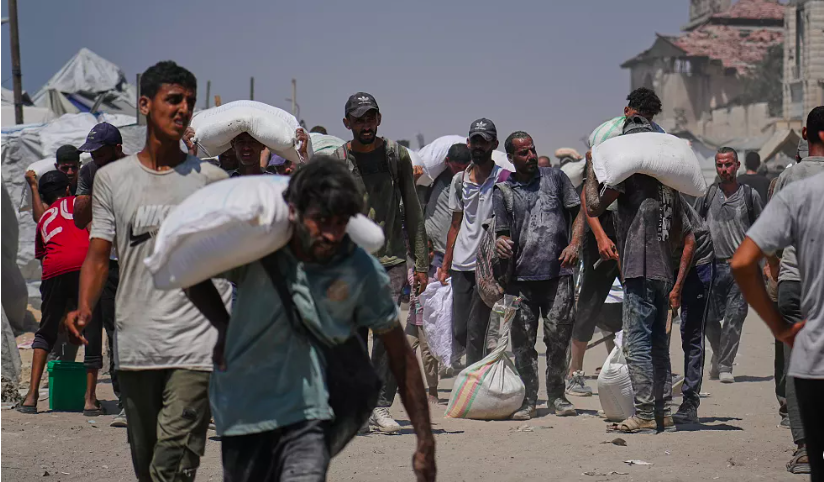
Palestinians in Gaza Say Aid Efforts Still Falling Short Amid Deepening Crisis
As humanitarian conditions in Gaza reach critical levels, Palestinians living in the besieged enclave say aid efforts, including airdrops and the entry of supply trucks, are not enough to meet the desperate needs of more than 2 million people. Despite recent announcements by the Israeli military of daily 10-hour “tactical pauses” to allow aid access, residents on the ground say little to no relief is reaching them.
Aid Fails to Reach the Most Vulnerable
Register for Tekedia Mini-MBA edition 20 (June 8 – Sept 5, 2026).
Register for Tekedia AI in Business Masterclass.
Join Tekedia Capital Syndicate and co-invest in great global startups.
Register for Tekedia AI Lab.
Maryam Yahya, a displaced woman from Rafah currently sheltering in Zawaida, voiced a frustration shared by many in Gaza. “We haven’t seen aid from land, air, or anywhere else,” she said. “Here we are, sitting by the road, receiving nothing. We sit in tents like beggars, waiting for a kilo of flour, and no one brings it to us.”
While aid deliveries have increased in recent days—including 28 food packages airdropped by Israel on Sunday and dozens of trucks entering the strip—the distribution remains chaotic, fragmented, and, for many, nonexistent. UN agencies and humanitarian groups have warned that the aid reaching Gaza is a fraction of what’s required and that structural obstacles, ongoing hostilities, and lack of reliable corridors are hampering large-scale delivery.
UN and WFP: Tactical Pauses Not Enough

The United Nations has cautiously welcomed Israel’s “tactical pauses” but emphasised that these limited windows of calm are not sufficient to operate at scale or with safety. The World Food Programme (WFP) has repeatedly called for the establishment of secure, reliable humanitarian corridors that ensure aid is not only delivered but distributed to those who need it most.
According to WFP, food supplies in or en route to Gaza could feed the entire population for nearly three months—but only if distribution networks are functional. Currently, a third of the population reportedly goes days without eating, and hundreds of thousands are living in famine-like conditions.
Ahmed Al-Sumairi, another displaced resident originally from Khan Younis, spoke about the dangers of airdropped aid: “Aid is delivered by air. The person fears leaving the tent and having a box fall on their children. Many have died due to drops on the tents.”

Ceasefire in Name Only?
Although Israel describes the 10-hour pauses as a form of temporary ceasefire, many Gazans say these are largely symbolic and do little to reduce fear or facilitate safe aid distribution.
“They call it a 'temporary ceasefire,’ but we don’t see it,” said Mohammed Al-Sumairi, who also fled from Khan Younis and is now living in a makeshift tent in Zawaida. “We see bombing everywhere.”
With the threat of airstrikes and shelling persisting, both aid workers and civilians face immense risks in trying to access relief. The UN has raised concerns about looting and insecurity during distribution, especially in areas where governance structures have broken down or where aid is being intercepted before reaching civilians.
Netanyahu Promises Minimal Aid
Under increasing international scrutiny—including images of emaciated children circulating widely—Israeli Prime Minister Benjamin Netanyahu has agreed to allow what he described as “minimal” aid to enter Gaza. Critics argue that this step falls far short of what is needed.
Israel has justified the tight controls by claiming that Hamas diverts aid to support its operations, a claim Hamas denies. Meanwhile, humanitarian organisations argue that civilians should not be made to suffer for political and military disputes.
The Collapse of UNRWA’s Delivery Mechanism
Many displaced Palestinians lament the breakdown of traditional humanitarian delivery systems. “We used to receive aid from UNRWA. They no longer give it to us,” said Maryam Yahya. “If they had handed it over to UNRWA, they would have brought it to us. When UNRWA delivered aid, we never lacked anything.”
The UN Relief and Works Agency for Palestine Refugees (UNRWA) had long served as a central lifeline for Palestinians in Gaza. However, disruptions to its operations, including funding cuts and restricted access, have weakened its capacity to deliver life-saving assistance.
A Population on the Brink
The situation in Gaza continues to deteriorate, with more than 1.9 million people displaced and widespread infrastructure collapse leaving many without clean water, sanitation, or medical care. Aid organisations warn that if humanitarian access isn’t urgently scaled up, the enclave could face one of the worst hunger crises in recent history.
Despite pledges, logistical challenges, and military limitations continue to block the flow of adequate relief. For civilians like Maryam and Ahmed, life remains an unrelenting struggle for survival—marked not just by war, but by growing hunger, fear, and despair.
Final Thought:
The crisis in Gaza is a stark reminder that humanitarian aid is only as effective as the systems that deliver it. Without sustained ceasefires, secure corridors, and international cooperation, no amount of food or supplies will reach the people who need it most. The world must act now to prevent a looming catastrophe.
Conclusion
Despite international efforts to increase humanitarian aid to Gaza, the reality on the ground remains grim for millions of Palestinians. Tactical pauses, airdrops, and limited truck convoys have not translated into meaningful relief for many displaced families living in dire conditions. With growing hunger, insufficient aid distribution, and continuing conflict, the gap between what is promised and what is delivered continues to widen. Without coordinated, secure, and sustained humanitarian access, the suffering of Gaza’s civilians will only deepen—and time is quickly running out.
Meta Description:
Despite tactical pauses and airdrops, Palestinians in Gaza say humanitarian aid remains insufficient and inaccessible, as hunger and displacement worsen under ongoing conflict.
Share this:
- Click to share on Facebook (Opens in new window) Facebook
- Click to share on X (Opens in new window) X
- Click to share on WhatsApp (Opens in new window) WhatsApp
- Click to share on LinkedIn (Opens in new window) LinkedIn
- Click to email a link to a friend (Opens in new window) Email
- Click to print (Opens in new window) Print