

How Sudan’s War Fuels the Smuggling of a Key Coca-Cola and M&M’s Ingredient

Quote from Alex Bobby on March 5, 2025, 5:17 AM
The Dark Trade: How Sudan’s Civil War Fuels the Global Gum Arabic Market
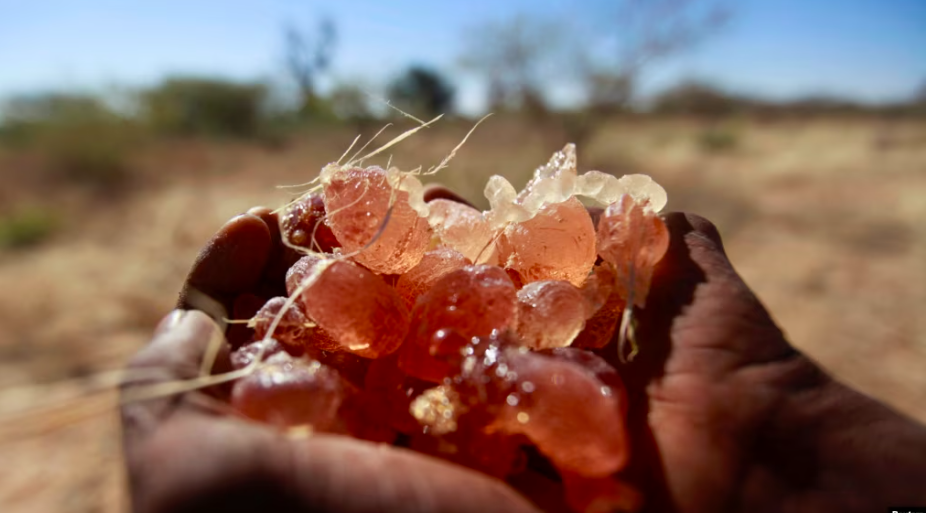
Gum arabic, a crucial ingredient in products ranging from Coca-Cola to M&M’s, is increasingly finding its way into global supply chains through illicit routes as Sudan’s civil war rages on. Traders and industry sources report that much of the world's supply is now being trafficked from rebel-held areas in Sudan, complicating efforts by Western companies to ensure ethical sourcing.
The Importance of Gum Arabic
Sudan is responsible for approximately 80% of the world's gum arabic production. Harvested from acacia trees, this natural resin is widely used as a stabiliser, emulsifier, and thickener in food, cosmetics, and pharmaceutical products. Companies such as L’Oréal, Nestlé, and Mars rely on this ingredient for their goods. However, the ongoing conflict between Sudan’s national army and the paramilitary Rapid Support Forces (RSF) has severely disrupted the industry, forcing traders into clandestine networks to secure supplies.
How the RSF Controls the Trade
Since taking over key gum-harvesting regions in Kordofan and Darfur in late 2023, the RSF has imposed fees on Sudanese traders to market their gum. With formal export channels in disarray, gum arabic is increasingly being smuggled to neighbouring countries like Chad, Senegal, Egypt, and South Sudan, where it is sold without proper certification. Some traders are offering the product at significantly lower prices than usual, raising suspicions about its origin and ethical procurement.
A representative from the RSF has denied wrongdoing, claiming that the paramilitary group only collects small fees to maintain trade stability. However, industry experts warn that the current supply chain lacks transparency and may be inadvertently funding the conflict.
Unethical Sourcing and Industry Response
Many companies that refine gum arabic, such as Nexira, Alland & Robert, and Ingredion, are scrambling to ensure their supply chains remain ethical. Ingredion has sought alternative sources from Cameroon, while Nexira has expanded its procurement to ten other countries to reduce reliance on Sudanese gum.
However, traders report that verifying the origin of gum arabic has become increasingly difficult. "Today, the gum in Sudan, I would say all of it is smuggled, because there's no real authority in the country," said Herve Canevet, a global marketing specialist at Eco-Agri.
Some buyers, like Mohammed Hussein Sorge of Unity Arabic Gum, have refused to purchase suspiciously cheap gum offered by traders in Chad and Senegal. Sorge, who fled Sudan after RSF forces stole his entire supply, stated that sellers were unable to provide the necessary Sedex certification, which ensures ethical sourcing.
Changing Trade Routes and Smuggling Networks
Before the conflict, Sudanese gum arabic was sorted in Khartoum and shipped from Port Sudan via the Red Sea. Now, RSF-affiliated traders are selling gum in informal markets along the Sudanese border, particularly in West Kordofan and South Sudan. These transactions occur under RSF protection, with traders paying fees to the paramilitary group.
Reports indicate that gum arabic is also being smuggled into Chad and the Central African Republic via Um Dafoog, and some shipments are making their way to Kenya’s Mombasa port and South Sudan’s capital, Juba. Online marketplaces, such as Facebook groups, have also seen the appearance of stolen gum arabic, sometimes still bearing the original packaging of Sudanese companies that were raided by the RSF.
The Ethical Dilemma for Global Brands
With the gum arabic market now infiltrated by illicit supplies, multinational corporations face a growing challenge in ensuring their products remain conflict-free. While some, like Ingredion and Nexira, have taken proactive measures, the lack of transparency in Sudan’s supply chain poses a long-term threat to ethical sourcing.
As the Sudanese conflict continues, the fate of the gum arabic industry hangs in the balance. Without a concerted effort from governments, international organisations, and corporations, the illicit trade will likely persist, further entrenching Sudan’s war economy and making it even harder to establish ethical supply chains in the future.
Conclusion
The war in Sudan has turned gum arabic—a seemingly innocuous commodity—into a high-stakes trade that finances conflict and destabilises global supply chains. The increasing presence of illicit gum in international markets underscores the urgent need for stricter regulations, better tracking mechanisms, and corporate responsibility. Without decisive action from governments, industry stakeholders, and humanitarian organisations, the unchecked flow of conflict-sourced gum arabic will continue, exacerbating Sudan’s instability and challenging ethical procurement worldwide.
The Dark Trade: How Sudan’s Civil War Fuels the Global Gum Arabic Market
Gum arabic, a crucial ingredient in products ranging from Coca-Cola to M&M’s, is increasingly finding its way into global supply chains through illicit routes as Sudan’s civil war rages on. Traders and industry sources report that much of the world's supply is now being trafficked from rebel-held areas in Sudan, complicating efforts by Western companies to ensure ethical sourcing.
The Importance of Gum Arabic
Register for Tekedia Mini-MBA edition 20 (June 8 – Sept 5, 2026).
Register for Tekedia AI in Business Masterclass.
Join Tekedia Capital Syndicate and co-invest in great global startups.
Register for Tekedia AI Lab.
Sudan is responsible for approximately 80% of the world's gum arabic production. Harvested from acacia trees, this natural resin is widely used as a stabiliser, emulsifier, and thickener in food, cosmetics, and pharmaceutical products. Companies such as L’Oréal, Nestlé, and Mars rely on this ingredient for their goods. However, the ongoing conflict between Sudan’s national army and the paramilitary Rapid Support Forces (RSF) has severely disrupted the industry, forcing traders into clandestine networks to secure supplies.
How the RSF Controls the Trade
Since taking over key gum-harvesting regions in Kordofan and Darfur in late 2023, the RSF has imposed fees on Sudanese traders to market their gum. With formal export channels in disarray, gum arabic is increasingly being smuggled to neighbouring countries like Chad, Senegal, Egypt, and South Sudan, where it is sold without proper certification. Some traders are offering the product at significantly lower prices than usual, raising suspicions about its origin and ethical procurement.

A representative from the RSF has denied wrongdoing, claiming that the paramilitary group only collects small fees to maintain trade stability. However, industry experts warn that the current supply chain lacks transparency and may be inadvertently funding the conflict.
Unethical Sourcing and Industry Response
Many companies that refine gum arabic, such as Nexira, Alland & Robert, and Ingredion, are scrambling to ensure their supply chains remain ethical. Ingredion has sought alternative sources from Cameroon, while Nexira has expanded its procurement to ten other countries to reduce reliance on Sudanese gum.

However, traders report that verifying the origin of gum arabic has become increasingly difficult. "Today, the gum in Sudan, I would say all of it is smuggled, because there's no real authority in the country," said Herve Canevet, a global marketing specialist at Eco-Agri.
Some buyers, like Mohammed Hussein Sorge of Unity Arabic Gum, have refused to purchase suspiciously cheap gum offered by traders in Chad and Senegal. Sorge, who fled Sudan after RSF forces stole his entire supply, stated that sellers were unable to provide the necessary Sedex certification, which ensures ethical sourcing.
Changing Trade Routes and Smuggling Networks
Before the conflict, Sudanese gum arabic was sorted in Khartoum and shipped from Port Sudan via the Red Sea. Now, RSF-affiliated traders are selling gum in informal markets along the Sudanese border, particularly in West Kordofan and South Sudan. These transactions occur under RSF protection, with traders paying fees to the paramilitary group.
Reports indicate that gum arabic is also being smuggled into Chad and the Central African Republic via Um Dafoog, and some shipments are making their way to Kenya’s Mombasa port and South Sudan’s capital, Juba. Online marketplaces, such as Facebook groups, have also seen the appearance of stolen gum arabic, sometimes still bearing the original packaging of Sudanese companies that were raided by the RSF.
The Ethical Dilemma for Global Brands
With the gum arabic market now infiltrated by illicit supplies, multinational corporations face a growing challenge in ensuring their products remain conflict-free. While some, like Ingredion and Nexira, have taken proactive measures, the lack of transparency in Sudan’s supply chain poses a long-term threat to ethical sourcing.
As the Sudanese conflict continues, the fate of the gum arabic industry hangs in the balance. Without a concerted effort from governments, international organisations, and corporations, the illicit trade will likely persist, further entrenching Sudan’s war economy and making it even harder to establish ethical supply chains in the future.
Conclusion
The war in Sudan has turned gum arabic—a seemingly innocuous commodity—into a high-stakes trade that finances conflict and destabilises global supply chains. The increasing presence of illicit gum in international markets underscores the urgent need for stricter regulations, better tracking mechanisms, and corporate responsibility. Without decisive action from governments, industry stakeholders, and humanitarian organisations, the unchecked flow of conflict-sourced gum arabic will continue, exacerbating Sudan’s instability and challenging ethical procurement worldwide.
Uploaded files:Share this:
- Click to share on Facebook (Opens in new window) Facebook
- Click to share on X (Opens in new window) X
- Click to share on WhatsApp (Opens in new window) WhatsApp
- Click to share on LinkedIn (Opens in new window) LinkedIn
- Click to email a link to a friend (Opens in new window) Email
- Click to print (Opens in new window) Print