

Indonesia Erupts: Protests After Death of Ride-Sharing Driver Hit by Police

Quote from Alex Bobby on August 30, 2025, 5:58 AM
Protesters and Police Clash After Death of Taxi Driver in Indonesia
Indonesia has been gripped by widespread protests and violent clashes following the death of a young ride-sharing driver who was struck by a police vehicle in Jakarta on Thursday night. The death of 21-year-old Affan Kurniawan, who had been participating in demonstrations over cost-of-living pressures and controversial new perks for lawmakers, has ignited anger across the country, becoming a flashpoint for broader frustrations about inequality, governance, and accountability.
The unrest, which quickly spread to multiple cities including Jakarta, Surabaya, Bandung, Medan, and Surakarta, is being viewed as one of the first major tests for President Prabowo Subianto, who took office amid high public expectations but is now facing a population increasingly restless over economic and social grievances.
The Incident That Sparked Unrest
Kurniawan, a Gojek driver and delivery rider, was hit by a police vehicle while participating in a protest late Thursday. Eyewitnesses say that the vehicle struck him as police attempted to disperse demonstrators who had gathered to oppose new monthly housing allowances for politicians, set at 50 million rupiah ($3,030)—almost ten times the Jakarta minimum wage.
His death, coming amid tensions over rising living costs, stagnant wages, and what many see as worsening inequality, immediately transformed him into a symbol of the public’s discontent. The following day, protests escalated into violent clashes as crowds took to the streets demanding justice for Kurniawan and accountability from police authorities.
A Funeral Amid Protests
Kurniawan’s funeral on Friday became a powerful moment of mourning and protest. Thousands of fellow riders—many wearing the distinctive green jackets of Gojek, Indonesia’s leading ride-hailing app—joined his family, friends, and colleagues in escorting him to his final resting place. Drone footage showed long convoys of motorbikes, banners raised in his honor, and a community united in grief.
Notably, Jakarta police chief Asep Edi Suheri, Jakarta governor Pramono Anung, and prominent politicians including Rieke Dyah Pitaloka and former governor Anies Baswedan attended, offering condolences. President Prabowo issued a personal apology, saying he was “shocked and disappointed by the excessive actions of the officers.” The government also pledged financial assistance for funeral arrangements, but for many protesters, words of sorrow were not enough.
Outside police headquarters in central Jakarta, demonstrators carried banners reading “arrest the damn officers”, chanting for justice as tensions escalated.
Escalating Clashes
As Friday unfolded, protests grew more confrontational. Demonstrators threw Molotov cocktails, fireworks, and rocks at police, while officers responded with tear gas and water cannons. In Jakarta’s Kwitang area, protesters marching toward police headquarters were blocked by army and marine units, but many pressed on despite heavy rain.
Police confirmed that seven members of the Mobile Brigade Corps (Satbrimob) had been found to have violated professional codes of ethics in relation to Kurniawan’s death. While disciplinary action is reportedly being taken, protesters say accountability should not stop there—they demand arrests, criminal prosecutions, and systemic reform of Indonesia’s police force, which has long been accused of heavy-handed tactics.
Economic Anger Beneath the Surface
While Kurniawan’s death was the immediate spark, the protests reflect deeper, long-standing frustrations. At the center of public anger is the government’s decision to grant lawmakers a generous monthly housing allowance of 50 million rupiah. For many Indonesians, this figure is staggering, particularly when compared to the Jakarta minimum wage of just 5 million rupiah ($303).
Demonstrators argue the perk highlights the disconnect between politicians and ordinary citizens struggling with rising food, fuel, and housing costs. The new allowance is being seen not just as financial mismanagement, but as symbolic of a wider culture of elitism and corruption in politics.
Protesters are also demanding:
- Higher wages to keep pace with inflation.
- Lower taxes to ease the burden on working families.
- Stronger anti-corruption measures to hold politicians accountable.
These issues, combined with stagnant job creation and widening inequality, have created a combustible environment. Kurniawan’s death has simply brought these frustrations to the surface.
A Test for President Prabowo
For President Prabowo, the protests represent a significant challenge to his leadership and credibility. Having campaigned on promises of stability and prosperity, he now faces the difficult task of balancing public anger with the need to maintain order. His swift apology to Kurniawan’s family indicates recognition of the gravity of the situation, but critics argue that apologies without systemic reform will do little to calm the unrest.
This crisis also underscores longstanding issues with police accountability in Indonesia. While disciplinary action against officers is welcome, activists say that without transparent investigations and criminal charges, the cycle of violence and impunity will continue.
Solidarity and Corporate Response
Gojek, Kurniawan’s employer, released a statement honoring him and pledging support for his family. “Behind every green jacket, there’s a family, prayers, and struggle. Affan Kurniawan was part of that journey, and his departure leaves a deep sorrow for all of us,” the company wrote.
The statement resonated with many Indonesians, as Gojek drivers have become a visible symbol of urban life, often embodying both the promise of flexible work and the hardships of insecure, low-paid labor. Kurniawan’s death has amplified these debates, with some protesters tying his story to broader concerns about workers’ rights and economic justice.
Final Thoughts:
The protests following Affan Kurniawan’s death have laid bare the depth of public anger in Indonesia. His story has become a rallying point for frustrations about inequality, corruption, and the burden of daily living costs. While apologies and promises of investigations are steps toward healing, the unrest highlights a deeper demand for accountability and reform. Moving forward, the government’s ability to address these grievances will not only determine the stability of the streets but also shape the public’s trust in its leaders.Conclusion: A Movement Beyond One Tragedy
The death of Affan Kurniawan has become more than a tragic accident—it has ignited a nationwide movement against inequality, political privilege, and heavy-handed policing. While government leaders have apologized and pledged investigations, the protests show no sign of abating.
For many Indonesians, Kurniawan’s story is emblematic of the everyday struggles of ordinary citizens, caught between rising costs, stagnant wages, and an elite political class seemingly out of touch with reality.
Whether this unrest fades or becomes a sustained movement will depend on the government’s response in the coming weeks. For now, Indonesia is witnessing an outpouring of anger and grief that reflects not just the death of one young man, but the frustrations of millions who feel left behind.
Meta Description:
Mass protests across Indonesia have erupted after 21-year-old Gojek driver Affan Kurniawan was killed by a police vehicle. Clashes highlight public anger over inequality, cost-of-living pressures, and political perks.
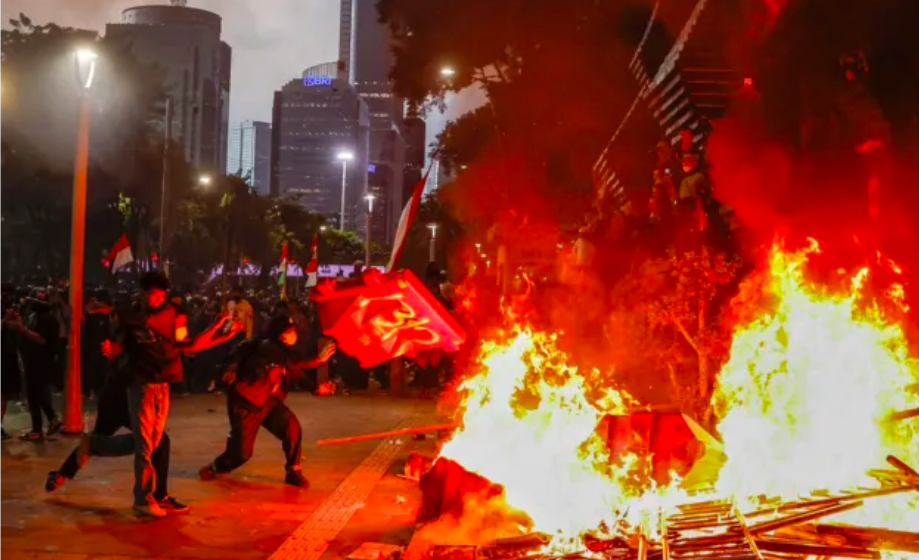
Protesters and Police Clash After Death of Taxi Driver in Indonesia
Indonesia has been gripped by widespread protests and violent clashes following the death of a young ride-sharing driver who was struck by a police vehicle in Jakarta on Thursday night. The death of 21-year-old Affan Kurniawan, who had been participating in demonstrations over cost-of-living pressures and controversial new perks for lawmakers, has ignited anger across the country, becoming a flashpoint for broader frustrations about inequality, governance, and accountability.
The unrest, which quickly spread to multiple cities including Jakarta, Surabaya, Bandung, Medan, and Surakarta, is being viewed as one of the first major tests for President Prabowo Subianto, who took office amid high public expectations but is now facing a population increasingly restless over economic and social grievances.
Register for Tekedia Mini-MBA edition 20 (June 8 – Sept 5, 2026).
Register for Tekedia AI in Business Masterclass.
Join Tekedia Capital Syndicate and co-invest in great global startups.
Register for Tekedia AI Lab.
The Incident That Sparked Unrest
Kurniawan, a Gojek driver and delivery rider, was hit by a police vehicle while participating in a protest late Thursday. Eyewitnesses say that the vehicle struck him as police attempted to disperse demonstrators who had gathered to oppose new monthly housing allowances for politicians, set at 50 million rupiah ($3,030)—almost ten times the Jakarta minimum wage.
His death, coming amid tensions over rising living costs, stagnant wages, and what many see as worsening inequality, immediately transformed him into a symbol of the public’s discontent. The following day, protests escalated into violent clashes as crowds took to the streets demanding justice for Kurniawan and accountability from police authorities.

A Funeral Amid Protests
Kurniawan’s funeral on Friday became a powerful moment of mourning and protest. Thousands of fellow riders—many wearing the distinctive green jackets of Gojek, Indonesia’s leading ride-hailing app—joined his family, friends, and colleagues in escorting him to his final resting place. Drone footage showed long convoys of motorbikes, banners raised in his honor, and a community united in grief.
Notably, Jakarta police chief Asep Edi Suheri, Jakarta governor Pramono Anung, and prominent politicians including Rieke Dyah Pitaloka and former governor Anies Baswedan attended, offering condolences. President Prabowo issued a personal apology, saying he was “shocked and disappointed by the excessive actions of the officers.” The government also pledged financial assistance for funeral arrangements, but for many protesters, words of sorrow were not enough.

Outside police headquarters in central Jakarta, demonstrators carried banners reading “arrest the damn officers”, chanting for justice as tensions escalated.
Escalating Clashes
As Friday unfolded, protests grew more confrontational. Demonstrators threw Molotov cocktails, fireworks, and rocks at police, while officers responded with tear gas and water cannons. In Jakarta’s Kwitang area, protesters marching toward police headquarters were blocked by army and marine units, but many pressed on despite heavy rain.
Police confirmed that seven members of the Mobile Brigade Corps (Satbrimob) had been found to have violated professional codes of ethics in relation to Kurniawan’s death. While disciplinary action is reportedly being taken, protesters say accountability should not stop there—they demand arrests, criminal prosecutions, and systemic reform of Indonesia’s police force, which has long been accused of heavy-handed tactics.
Economic Anger Beneath the Surface
While Kurniawan’s death was the immediate spark, the protests reflect deeper, long-standing frustrations. At the center of public anger is the government’s decision to grant lawmakers a generous monthly housing allowance of 50 million rupiah. For many Indonesians, this figure is staggering, particularly when compared to the Jakarta minimum wage of just 5 million rupiah ($303).
Demonstrators argue the perk highlights the disconnect between politicians and ordinary citizens struggling with rising food, fuel, and housing costs. The new allowance is being seen not just as financial mismanagement, but as symbolic of a wider culture of elitism and corruption in politics.
Protesters are also demanding:
- Higher wages to keep pace with inflation.
- Lower taxes to ease the burden on working families.
- Stronger anti-corruption measures to hold politicians accountable.
These issues, combined with stagnant job creation and widening inequality, have created a combustible environment. Kurniawan’s death has simply brought these frustrations to the surface.
A Test for President Prabowo
For President Prabowo, the protests represent a significant challenge to his leadership and credibility. Having campaigned on promises of stability and prosperity, he now faces the difficult task of balancing public anger with the need to maintain order. His swift apology to Kurniawan’s family indicates recognition of the gravity of the situation, but critics argue that apologies without systemic reform will do little to calm the unrest.
This crisis also underscores longstanding issues with police accountability in Indonesia. While disciplinary action against officers is welcome, activists say that without transparent investigations and criminal charges, the cycle of violence and impunity will continue.
Solidarity and Corporate Response
Gojek, Kurniawan’s employer, released a statement honoring him and pledging support for his family. “Behind every green jacket, there’s a family, prayers, and struggle. Affan Kurniawan was part of that journey, and his departure leaves a deep sorrow for all of us,” the company wrote.
The statement resonated with many Indonesians, as Gojek drivers have become a visible symbol of urban life, often embodying both the promise of flexible work and the hardships of insecure, low-paid labor. Kurniawan’s death has amplified these debates, with some protesters tying his story to broader concerns about workers’ rights and economic justice.
Final Thoughts:
The protests following Affan Kurniawan’s death have laid bare the depth of public anger in Indonesia. His story has become a rallying point for frustrations about inequality, corruption, and the burden of daily living costs. While apologies and promises of investigations are steps toward healing, the unrest highlights a deeper demand for accountability and reform. Moving forward, the government’s ability to address these grievances will not only determine the stability of the streets but also shape the public’s trust in its leaders.
Conclusion: A Movement Beyond One Tragedy
The death of Affan Kurniawan has become more than a tragic accident—it has ignited a nationwide movement against inequality, political privilege, and heavy-handed policing. While government leaders have apologized and pledged investigations, the protests show no sign of abating.
For many Indonesians, Kurniawan’s story is emblematic of the everyday struggles of ordinary citizens, caught between rising costs, stagnant wages, and an elite political class seemingly out of touch with reality.
Whether this unrest fades or becomes a sustained movement will depend on the government’s response in the coming weeks. For now, Indonesia is witnessing an outpouring of anger and grief that reflects not just the death of one young man, but the frustrations of millions who feel left behind.
Meta Description:
Mass protests across Indonesia have erupted after 21-year-old Gojek driver Affan Kurniawan was killed by a police vehicle. Clashes highlight public anger over inequality, cost-of-living pressures, and political perks.
Share this:
- Click to share on Facebook (Opens in new window) Facebook
- Click to share on X (Opens in new window) X
- Click to share on WhatsApp (Opens in new window) WhatsApp
- Click to share on LinkedIn (Opens in new window) LinkedIn
- Click to email a link to a friend (Opens in new window) Email
- Click to print (Opens in new window) Print