

"Islamic State Resurgence: A Global Threat Reborn – IS's New Tactics and Growing Influence"

Quote from Alex Bobby on September 20, 2025, 3:04 AM
Dormant or Resurgent? Islamic State Group's Recent Comeback, Explained
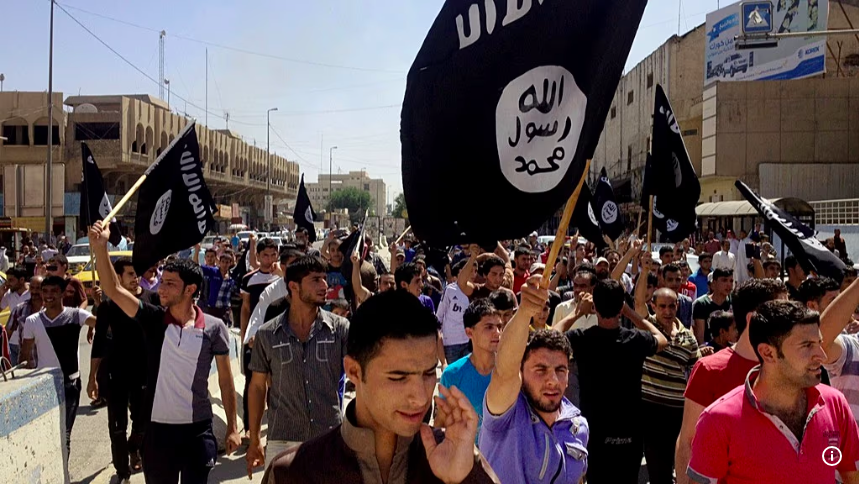
The global threat of terrorism has seen ebbs and flows over the years, with groups like the Islamic State (IS) emerging as one of the most notorious in recent history. After its territorial defeat in 2019, many believed that the so-called IS group was on the verge of extinction. However, a recent surge in violence and attacks attributed too IS and its offshoots has raised serious concerns. The question now on the minds of many is: is the Islamic State group truly making a comeback, or is it simply a dormant force regaining its strength?
A Brief History of the Islamic State Group
The Islamic State group, which emerged from the ashes of Al-Qaeda in Iraq (AQI), gained global notoriety after declaring a "caliphate" in 2014. Its self-proclaimed caliphate spanned large parts of Iraq and Syria, with a brutal campaign to enforce its interpretation of Sharia law. The group’s rapid rise was marked by gruesome beheadings, the destruction of cultural heritage sites, and a steady stream of international recruits flocking to its cause.
However, the tide turned in 2017-2019, as a multinational coalition, including the U.S.-led coalition, Kurdish forces, and the Syrian government, dealt significant blows to the group. By 2019, IS had lost its territorial holdings, and its leader, Abu Bakr al-Baghdadi, was killed during a U.S. military raid.
Despite this apparent defeat, the group never disappeared. Instead, it entered a phase of regrouping, focusing on asymmetric warfare, insurgencies, and terror attacks, continuing to operate as a decentralised network rather than a traditional state actor.
The Resurgence: A Global Threat?
The last year has seen a troubling uptick in attacks linked to IS. In regions where the group once thrived, violence has surged, particularly in Iraq, Syria, and parts of Africa. This uptick has sparked concern among experts, who warn that IS is not merely dormant but is in the midst of a dangerous resurgence.
1. Resurgence in the Middle East
In Iraq and Syria, while the territorial "caliphate" has been dismantled, IS has been operating through sleeper cells and guerrilla tactics. According to reports, these cells have carried out numerous bombings, ambushes, and attacks on military and civilian targets. In Iraq, the group has targeted both Iraqi forces and local tribal leaders who previously fought against them, signalling a return to insurgency-style warfare.
One of the key factors contributing to this resurgence is the volatile political and security landscape in both Iraq and Syria. In Iraq, internal political strife and corruption have left gaps in governance that IS has been able to exploit. Similarly, in Syria, the ongoing civil war has created a chaotic environment in which the group can operate with relative impunity.
The rise of the Kurdish-led Syrian Democratic Forces (SDF) in northern Syria has also sparked tensions with Turkey, creating an opportunity for IS to regain some ground amid the instability.
2. Africa: A Growing Base of Operations
While the IS group's roots are in the Middle East, it has expanded its operations significantly in Africa in recent years. The Islamic State in West Africa Province (ISWAP), an offshoot of the Boko Haram militant group, has been particularly active in Nigeria and neighbouring countries. ISWAP has taken credit for a series of attacks, including bombings and assaults on military positions.
In countries like Mozambique and the Sahel region, IS has strengthened its presence by exploiting weak governments, economic underdevelopment, and sectarian divisions. In some instances, the group has even formed alliances with local insurgents, giving it additional manpower and resources.
The rise of IS in Africa is a troubling trend, as the group’s reach extends into regions previously untouched by its influence. It now has the capacity to destabilise entire countries, much as it did in the Middle East.
3. The Role of Technology and Social Media
A key factor contributing to the group's resurgence is its adept use of technology. In the past, the Islamic State gained significant media attention through its brutal executions, propaganda videos, and sophisticated social media campaigns. Even as its territorial control shrank, the group maintained a powerful presence online, utilising encrypted messaging apps and dark web platforms to communicate and recruit new followers.
The COVID-19 pandemic further highlighted how technology could be a double-edged sword for counterterrorism efforts. As global attention shifted toward the health crisis, IS capitalised on the distraction to ramp up its messaging, calling on supporters to carry out lone-wolf attacks and to take advantage of the widespread unrest in various parts of the world.
Is IS Truly Resurgent, or Simply Adapting?
The question of whether the Islamic State group is truly "resurgent" or simply adapting to a new phase of conflict is a complex one. While the group no longer controls vast swathes of land, its capacity for violence and disruption has not been eliminated. Instead, it has evolved into a decentralised, transnational terror organisation that uses insurgent tactics, local alliances, and propaganda to maintain relevance.
The resurgence is also aided by persistent grievances within the regions it targets. Disenfranchised youth, sectarian tensions, and the collapse of state authority have allowed IS to rebuild its network, even in the absence of a central, cohesive structure. The group’s ability to exploit local conflicts and weaknesses has made it a resilient threat.
The International Response: A Fractured Approach
The global response to the Islamic State's resurgence has been mixed. While some countries have stepped up their efforts to combat IS, others remain focused on different priorities. For instance, the U.S. has shifted its attention to China and Russia, leaving a security vacuum in regions like the Sahel and parts of Iraq and Syria. Meanwhile, countries in Africa and the Middle East often lack the resources and coordination necessary to effectively confront the threat.
In Syria, ongoing conflicts between the Assad regime, Turkish forces, and Kurdish groups have complicated counter-IS efforts. Similarly, in Africa, a lack of unity among regional powers and the persistence of local insurgencies has allowed IS affiliates to flourish.
Looking Forward: The Resurgence of the Islamic State and Its Global Implications
The recent uptick in violence tied to the Islamic State (IS) group signals a troubling resurgence of the terror network. While IS may no longer control large swaths of land, its influence continues to grow in decentralised pockets, particularly in the Middle East and Africa. As IS adapts to a new phase of insurgent warfare, governments worldwide are closely watching how this evolving threat could reshape global security.
For counterterrorism efforts, the coming months will be crucial. International coalitions must navigate shifting strategies, local alliances, and the resurgence of sleeper cells. A coordinated, multi-agency response that addresses both the military and ideological aspects of the threat will be essential for long-term stability.
On a larger scale, IS's resurgence reflects a global trend toward heightened vigilance and increased security measures. Countries outside of the regions directly impacted by IS are closely monitoring developments, as the group's decentralised model and use of digital platforms could set a new standard for how terrorist organisations operate.
Ultimately, the resurgence of IS positions the global community at a crossroads. As counterterrorism agencies, policymakers, and businesses face the evolving threat, they must find a balance between fostering international cooperation and adapting to the shifting tactics of a resurgent extremist network.
Final thoughts
The resurgence of the Islamic State group is a reminder of the complexity of global counterterrorism efforts. While its territorial defeat was a significant victory, the group's adaptability—whether through sleeper cells, insurgencies, or online recruitment—shows that defeating an ideology is far harder than dismantling its physical presence. The resurgence, particularly in the Middle East and Africa, poses a serious challenge not only to the regions directly affected but to global security as well. The international community must evolve its strategies, addressing not just military solutions but also tackling the underlying political and social factors that allow groups like IS to thrive. Vigilance and cooperation across borders will be key to curbing its influence in the years to come.
Conclusion: A Resilient Threat
While the so-called Islamic State may no longer control vast territories, its ability to adapt and resurge through asymmetrical warfare, alliances with local insurgents, and online propaganda ensures that it remains a potent global threat. As experts warn, IS's resurgence is a reminder that defeating a terrorist group militarily does not equate to eradicating its ideology. As long as there are regions suffering from conflict, weak governance, and instability, the Islamic State group will continue to find fertile ground to rebuild.
The international community must remain vigilant and adapt its counterterrorism strategies to address this evolving threat. The fight against IS is far from over, and the group's dormant nature may only serve as a prelude to even more dangerous phases of its existence.
Meta Description:
"Explore the resurgence of the Islamic State (IS) group as it adapts to decentralised tactics and expands its influence across the Middle East and Africa. Learn how IS's use of technology and ideology continues to pose a global security threat."
Dormant or Resurgent? Islamic State Group's Recent Comeback, Explained
The global threat of terrorism has seen ebbs and flows over the years, with groups like the Islamic State (IS) emerging as one of the most notorious in recent history. After its territorial defeat in 2019, many believed that the so-called IS group was on the verge of extinction. However, a recent surge in violence and attacks attributed too IS and its offshoots has raised serious concerns. The question now on the minds of many is: is the Islamic State group truly making a comeback, or is it simply a dormant force regaining its strength?
A Brief History of the Islamic State Group
Register for Tekedia Mini-MBA edition 20 (June 8 – Sept 5, 2026).
Register for Tekedia AI in Business Masterclass.
Join Tekedia Capital Syndicate and co-invest in great global startups.
Register for Tekedia AI Lab.
The Islamic State group, which emerged from the ashes of Al-Qaeda in Iraq (AQI), gained global notoriety after declaring a "caliphate" in 2014. Its self-proclaimed caliphate spanned large parts of Iraq and Syria, with a brutal campaign to enforce its interpretation of Sharia law. The group’s rapid rise was marked by gruesome beheadings, the destruction of cultural heritage sites, and a steady stream of international recruits flocking to its cause.
However, the tide turned in 2017-2019, as a multinational coalition, including the U.S.-led coalition, Kurdish forces, and the Syrian government, dealt significant blows to the group. By 2019, IS had lost its territorial holdings, and its leader, Abu Bakr al-Baghdadi, was killed during a U.S. military raid.
Despite this apparent defeat, the group never disappeared. Instead, it entered a phase of regrouping, focusing on asymmetric warfare, insurgencies, and terror attacks, continuing to operate as a decentralised network rather than a traditional state actor.

The Resurgence: A Global Threat?
The last year has seen a troubling uptick in attacks linked to IS. In regions where the group once thrived, violence has surged, particularly in Iraq, Syria, and parts of Africa. This uptick has sparked concern among experts, who warn that IS is not merely dormant but is in the midst of a dangerous resurgence.
1. Resurgence in the Middle East

In Iraq and Syria, while the territorial "caliphate" has been dismantled, IS has been operating through sleeper cells and guerrilla tactics. According to reports, these cells have carried out numerous bombings, ambushes, and attacks on military and civilian targets. In Iraq, the group has targeted both Iraqi forces and local tribal leaders who previously fought against them, signalling a return to insurgency-style warfare.
One of the key factors contributing to this resurgence is the volatile political and security landscape in both Iraq and Syria. In Iraq, internal political strife and corruption have left gaps in governance that IS has been able to exploit. Similarly, in Syria, the ongoing civil war has created a chaotic environment in which the group can operate with relative impunity.
The rise of the Kurdish-led Syrian Democratic Forces (SDF) in northern Syria has also sparked tensions with Turkey, creating an opportunity for IS to regain some ground amid the instability.
2. Africa: A Growing Base of Operations
While the IS group's roots are in the Middle East, it has expanded its operations significantly in Africa in recent years. The Islamic State in West Africa Province (ISWAP), an offshoot of the Boko Haram militant group, has been particularly active in Nigeria and neighbouring countries. ISWAP has taken credit for a series of attacks, including bombings and assaults on military positions.
In countries like Mozambique and the Sahel region, IS has strengthened its presence by exploiting weak governments, economic underdevelopment, and sectarian divisions. In some instances, the group has even formed alliances with local insurgents, giving it additional manpower and resources.
The rise of IS in Africa is a troubling trend, as the group’s reach extends into regions previously untouched by its influence. It now has the capacity to destabilise entire countries, much as it did in the Middle East.
3. The Role of Technology and Social Media
A key factor contributing to the group's resurgence is its adept use of technology. In the past, the Islamic State gained significant media attention through its brutal executions, propaganda videos, and sophisticated social media campaigns. Even as its territorial control shrank, the group maintained a powerful presence online, utilising encrypted messaging apps and dark web platforms to communicate and recruit new followers.
The COVID-19 pandemic further highlighted how technology could be a double-edged sword for counterterrorism efforts. As global attention shifted toward the health crisis, IS capitalised on the distraction to ramp up its messaging, calling on supporters to carry out lone-wolf attacks and to take advantage of the widespread unrest in various parts of the world.
Is IS Truly Resurgent, or Simply Adapting?
The question of whether the Islamic State group is truly "resurgent" or simply adapting to a new phase of conflict is a complex one. While the group no longer controls vast swathes of land, its capacity for violence and disruption has not been eliminated. Instead, it has evolved into a decentralised, transnational terror organisation that uses insurgent tactics, local alliances, and propaganda to maintain relevance.
The resurgence is also aided by persistent grievances within the regions it targets. Disenfranchised youth, sectarian tensions, and the collapse of state authority have allowed IS to rebuild its network, even in the absence of a central, cohesive structure. The group’s ability to exploit local conflicts and weaknesses has made it a resilient threat.
The International Response: A Fractured Approach
The global response to the Islamic State's resurgence has been mixed. While some countries have stepped up their efforts to combat IS, others remain focused on different priorities. For instance, the U.S. has shifted its attention to China and Russia, leaving a security vacuum in regions like the Sahel and parts of Iraq and Syria. Meanwhile, countries in Africa and the Middle East often lack the resources and coordination necessary to effectively confront the threat.
In Syria, ongoing conflicts between the Assad regime, Turkish forces, and Kurdish groups have complicated counter-IS efforts. Similarly, in Africa, a lack of unity among regional powers and the persistence of local insurgencies has allowed IS affiliates to flourish.
Looking Forward: The Resurgence of the Islamic State and Its Global Implications
The recent uptick in violence tied to the Islamic State (IS) group signals a troubling resurgence of the terror network. While IS may no longer control large swaths of land, its influence continues to grow in decentralised pockets, particularly in the Middle East and Africa. As IS adapts to a new phase of insurgent warfare, governments worldwide are closely watching how this evolving threat could reshape global security.
For counterterrorism efforts, the coming months will be crucial. International coalitions must navigate shifting strategies, local alliances, and the resurgence of sleeper cells. A coordinated, multi-agency response that addresses both the military and ideological aspects of the threat will be essential for long-term stability.
On a larger scale, IS's resurgence reflects a global trend toward heightened vigilance and increased security measures. Countries outside of the regions directly impacted by IS are closely monitoring developments, as the group's decentralised model and use of digital platforms could set a new standard for how terrorist organisations operate.
Ultimately, the resurgence of IS positions the global community at a crossroads. As counterterrorism agencies, policymakers, and businesses face the evolving threat, they must find a balance between fostering international cooperation and adapting to the shifting tactics of a resurgent extremist network.
Final thoughts
The resurgence of the Islamic State group is a reminder of the complexity of global counterterrorism efforts. While its territorial defeat was a significant victory, the group's adaptability—whether through sleeper cells, insurgencies, or online recruitment—shows that defeating an ideology is far harder than dismantling its physical presence. The resurgence, particularly in the Middle East and Africa, poses a serious challenge not only to the regions directly affected but to global security as well. The international community must evolve its strategies, addressing not just military solutions but also tackling the underlying political and social factors that allow groups like IS to thrive. Vigilance and cooperation across borders will be key to curbing its influence in the years to come.
Conclusion: A Resilient Threat
While the so-called Islamic State may no longer control vast territories, its ability to adapt and resurge through asymmetrical warfare, alliances with local insurgents, and online propaganda ensures that it remains a potent global threat. As experts warn, IS's resurgence is a reminder that defeating a terrorist group militarily does not equate to eradicating its ideology. As long as there are regions suffering from conflict, weak governance, and instability, the Islamic State group will continue to find fertile ground to rebuild.
The international community must remain vigilant and adapt its counterterrorism strategies to address this evolving threat. The fight against IS is far from over, and the group's dormant nature may only serve as a prelude to even more dangerous phases of its existence.
Meta Description:
"Explore the resurgence of the Islamic State (IS) group as it adapts to decentralised tactics and expands its influence across the Middle East and Africa. Learn how IS's use of technology and ideology continues to pose a global security threat."
Share this:
- Click to share on Facebook (Opens in new window) Facebook
- Click to share on X (Opens in new window) X
- Click to share on WhatsApp (Opens in new window) WhatsApp
- Click to share on LinkedIn (Opens in new window) LinkedIn
- Click to email a link to a friend (Opens in new window) Email
- Click to print (Opens in new window) Print