

Life on Mars? NASA’s Perseverance Rover Finds Strongest Evidence Yet of Ancient Microbes

Quote from Alex Bobby on September 11, 2025, 4:05 AM
Life on Mars? NASA Says This May Be the Closest Evidence Yet
For decades, humanity has wondered: are we alone in the universe? While the search for extraterrestrial life has often felt like the domain of science fiction, new findings from Mars are bringing that question closer to reality. This week, NASA scientists announced what they described as the clearest sign yet of ancient life on Mars, though they stressed that more research is needed before drawing any definitive conclusions.
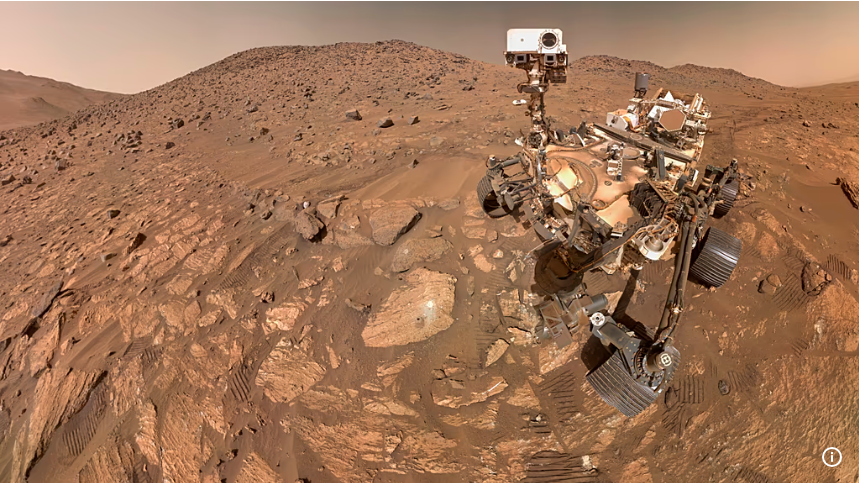
The latest discovery comes from NASA’s Perseverance rover, which has been exploring the Martian surface since 2021. In its mission to search for past habitable environments, the rover has now collected 30 samples of rock and soil. One of these samples, gathered last summer from an area rich in ancient clay, has yielded particularly tantalising clues that may point to microbial activity billions of years ago.
A Groundbreaking Discovery — With Caveats
The research team, led by Joel Hurowitz of Stony Brook University, found unusual chemical signatures in a sample drilled from reddish, clay-rich mudstones in Neretva Vallis, a dried-up river channel that once flowed into Mars’s Jezero Crater. This geological formation, known as Bright Angel, has long been considered one of the most promising places on the planet to search for signs of ancient life, thanks to its watery past.
The sample contained traces of organic carbon, one of life’s fundamental building blocks, along with tiny specks nicknamed “poppy seeds” and “leopard spots”. These features were enriched with iron phosphate and iron sulfide — compounds that, on Earth, are often created when microorganisms break down organic matter.
“It’s the closest we’ve actually come to discovering ancient life on Mars,” said Nicky Fox, NASA’s science mission chief. Still, both NASA officials and outside experts cautioned against calling it proof of life. As Hurowitz himself explained:
“All we can say is one of the possible explanations is microbial life, but there could be other ways to make this set of features that we see.”Why This Sample Stands Out
Perseverance’s 25th sample, now part of a growing cache of Martian rock cores, represents the most compelling candidate yet for potential biosignatures. Other collected samples have shown evidence of past water or chemical ingredients necessary for life, but this one combines several critical factors:
- A watery, sediment-rich environment where microbes could once have thrived.
- The presence of organic carbon molecules.
- Distinctive chemical patterns that mimic those produced by life on Earth.
According to Hurowitz, if microbes ever lived in Mars’s ancient lakes, they might have left behind exactly these kinds of chemical fingerprints. “It would be amazing to be able to demonstrate conclusively that these features were formed by something that was alive on another planet billions of years ago,” he said.
Scientists Urge Caution
The excitement is palpable, but scientists outside the study urge careful skepticism. Janice Bishop of the SETI Institute and Mario Parente of the University of Massachusetts Amherst noted that non-biological processes can also generate iron sulfides and phosphates under the right conditions. “That’s part of the reason why we can’t go so far as to say, ‘A-ha, this is proof positive of life,’” Bishop explained.
The distinction between life and lifelike chemistry has always been the central challenge in astrobiology. Mars, in particular, has a history of “false alarms” — from controversial meteorites to ambiguous methane detections. Each apparent sign of life has been met with competing explanations rooted in purely chemical or geological processes.
As Bishop and Parente wrote in their editorial accompanying the study in Nature, “There is no evidence of microbes on Mars today, but if any had been present on ancient Mars, they too might have reduced sulfate minerals to form sulfides in such a lake at Jezero Crater.”
The Long Wait for Answers
Despite the promising results, definitive proof will likely remain elusive until the samples can be studied in state-of-the-art laboratories on Earth. Unfortunately, that milestone is still years — perhaps decades — away.
NASA originally aimed to return Perseverance’s samples by the early 2030s, but ballooning costs, now estimated at $11 billion, have pushed the timeline into the 2040s. The plan to send retrieval spacecraft to Mars has stalled, prompting calls for cheaper and faster alternatives.
In the meantime, Perseverance has deposited ten titanium tubes filled with Martian rock on the surface as a backup cache, while the rest remain aboard the rover. NASA officials, including acting administrator Sean Duffy, are now considering whether to send more advanced equipment directly to Mars to analyse the samples in place. “All options are on the table,” Duffy said.
Why This Matters
Even if the findings ultimately prove non-biological, the discovery remains scientifically significant. As Hurowitz noted, it teaches researchers how nature can mimic the fingerprints of life — an important lesson as we continue the search across Mars, Europa, and other worlds.
But if the chemical features do turn out to have been shaped by microbial activity, the implications are profound. It would represent the first evidence that life arose independently on another planet, reshaping our understanding of biology, evolution, and the uniqueness of Earth.
As NASA’s Fox put it, “This certainly is not the final answer, but it is the closest we’ve come yet.”
Final Thoughts
The Perseverance rover’s discovery at Jezero Crater may not be “proof positive” of Martian life, but it is the strongest clue yet in humanity’s long quest to answer one of the biggest questions in science. The path forward will be slow, expensive, and uncertain — yet the potential reward is unparalleled.
Whether these chemical traces ultimately reveal biology or geology, one thing is clear: Mars still has secrets to tell, and we are inching closer to unlocking them.
Conclusion
NASA’s latest findings from Mars are a powerful reminder of just how close we may be to answering humanity’s oldest question: are we alone? The chemical signatures uncovered by Perseverance offer the most compelling evidence yet of potential ancient microbial life, but they also highlight the limits of current technology and the challenges of interpreting Martian geology.
While the world must wait for samples to be studied on Earth — a process that could take decades — this discovery keeps the dream alive that life may once have existed beyond our planet. Whether these traces prove biological or not, the search itself deepens our understanding of Mars and pushes us closer to uncovering the truth.
In the end, Perseverance’s work is not just about Mars — it’s about expanding humanity’s place in the cosmos.
Meta Description:
NASA scientists say new Perseverance rover findings may be the closest evidence yet of ancient life on Mars. The discovery, while not conclusive, raises exciting questions about microbial life on the Red Planet.
Life on Mars? NASA Says This May Be the Closest Evidence Yet
For decades, humanity has wondered: are we alone in the universe? While the search for extraterrestrial life has often felt like the domain of science fiction, new findings from Mars are bringing that question closer to reality. This week, NASA scientists announced what they described as the clearest sign yet of ancient life on Mars, though they stressed that more research is needed before drawing any definitive conclusions.
The latest discovery comes from NASA’s Perseverance rover, which has been exploring the Martian surface since 2021. In its mission to search for past habitable environments, the rover has now collected 30 samples of rock and soil. One of these samples, gathered last summer from an area rich in ancient clay, has yielded particularly tantalising clues that may point to microbial activity billions of years ago.
Register for Tekedia Mini-MBA edition 20 (June 8 – Sept 5, 2026).
Register for Tekedia AI in Business Masterclass.
Join Tekedia Capital Syndicate and co-invest in great global startups.
Register for Tekedia AI Lab.
A Groundbreaking Discovery — With Caveats
The research team, led by Joel Hurowitz of Stony Brook University, found unusual chemical signatures in a sample drilled from reddish, clay-rich mudstones in Neretva Vallis, a dried-up river channel that once flowed into Mars’s Jezero Crater. This geological formation, known as Bright Angel, has long been considered one of the most promising places on the planet to search for signs of ancient life, thanks to its watery past.
The sample contained traces of organic carbon, one of life’s fundamental building blocks, along with tiny specks nicknamed “poppy seeds” and “leopard spots”. These features were enriched with iron phosphate and iron sulfide — compounds that, on Earth, are often created when microorganisms break down organic matter.

“It’s the closest we’ve actually come to discovering ancient life on Mars,” said Nicky Fox, NASA’s science mission chief. Still, both NASA officials and outside experts cautioned against calling it proof of life. As Hurowitz himself explained:
“All we can say is one of the possible explanations is microbial life, but there could be other ways to make this set of features that we see.”
Why This Sample Stands Out
Perseverance’s 25th sample, now part of a growing cache of Martian rock cores, represents the most compelling candidate yet for potential biosignatures. Other collected samples have shown evidence of past water or chemical ingredients necessary for life, but this one combines several critical factors:

- A watery, sediment-rich environment where microbes could once have thrived.
- The presence of organic carbon molecules.
- Distinctive chemical patterns that mimic those produced by life on Earth.
According to Hurowitz, if microbes ever lived in Mars’s ancient lakes, they might have left behind exactly these kinds of chemical fingerprints. “It would be amazing to be able to demonstrate conclusively that these features were formed by something that was alive on another planet billions of years ago,” he said.
Scientists Urge Caution
The excitement is palpable, but scientists outside the study urge careful skepticism. Janice Bishop of the SETI Institute and Mario Parente of the University of Massachusetts Amherst noted that non-biological processes can also generate iron sulfides and phosphates under the right conditions. “That’s part of the reason why we can’t go so far as to say, ‘A-ha, this is proof positive of life,’” Bishop explained.
The distinction between life and lifelike chemistry has always been the central challenge in astrobiology. Mars, in particular, has a history of “false alarms” — from controversial meteorites to ambiguous methane detections. Each apparent sign of life has been met with competing explanations rooted in purely chemical or geological processes.
As Bishop and Parente wrote in their editorial accompanying the study in Nature, “There is no evidence of microbes on Mars today, but if any had been present on ancient Mars, they too might have reduced sulfate minerals to form sulfides in such a lake at Jezero Crater.”
The Long Wait for Answers
Despite the promising results, definitive proof will likely remain elusive until the samples can be studied in state-of-the-art laboratories on Earth. Unfortunately, that milestone is still years — perhaps decades — away.
NASA originally aimed to return Perseverance’s samples by the early 2030s, but ballooning costs, now estimated at $11 billion, have pushed the timeline into the 2040s. The plan to send retrieval spacecraft to Mars has stalled, prompting calls for cheaper and faster alternatives.
In the meantime, Perseverance has deposited ten titanium tubes filled with Martian rock on the surface as a backup cache, while the rest remain aboard the rover. NASA officials, including acting administrator Sean Duffy, are now considering whether to send more advanced equipment directly to Mars to analyse the samples in place. “All options are on the table,” Duffy said.
Why This Matters
Even if the findings ultimately prove non-biological, the discovery remains scientifically significant. As Hurowitz noted, it teaches researchers how nature can mimic the fingerprints of life — an important lesson as we continue the search across Mars, Europa, and other worlds.
But if the chemical features do turn out to have been shaped by microbial activity, the implications are profound. It would represent the first evidence that life arose independently on another planet, reshaping our understanding of biology, evolution, and the uniqueness of Earth.
As NASA’s Fox put it, “This certainly is not the final answer, but it is the closest we’ve come yet.”
Final Thoughts
The Perseverance rover’s discovery at Jezero Crater may not be “proof positive” of Martian life, but it is the strongest clue yet in humanity’s long quest to answer one of the biggest questions in science. The path forward will be slow, expensive, and uncertain — yet the potential reward is unparalleled.
Whether these chemical traces ultimately reveal biology or geology, one thing is clear: Mars still has secrets to tell, and we are inching closer to unlocking them.
Conclusion
NASA’s latest findings from Mars are a powerful reminder of just how close we may be to answering humanity’s oldest question: are we alone? The chemical signatures uncovered by Perseverance offer the most compelling evidence yet of potential ancient microbial life, but they also highlight the limits of current technology and the challenges of interpreting Martian geology.
While the world must wait for samples to be studied on Earth — a process that could take decades — this discovery keeps the dream alive that life may once have existed beyond our planet. Whether these traces prove biological or not, the search itself deepens our understanding of Mars and pushes us closer to uncovering the truth.
In the end, Perseverance’s work is not just about Mars — it’s about expanding humanity’s place in the cosmos.
Meta Description:
NASA scientists say new Perseverance rover findings may be the closest evidence yet of ancient life on Mars. The discovery, while not conclusive, raises exciting questions about microbial life on the Red Planet.
Share this:
- Click to share on Facebook (Opens in new window) Facebook
- Click to share on X (Opens in new window) X
- Click to share on WhatsApp (Opens in new window) WhatsApp
- Click to share on LinkedIn (Opens in new window) LinkedIn
- Click to email a link to a friend (Opens in new window) Email
- Click to print (Opens in new window) Print