

“Louis Vuitton Sues Small Portuguese Liqueur Brand Over Logo Similarities in Trademark Battle”

Quote from Alex Bobby on June 6, 2025, 3:12 AM
Louis Vuitton Files Lawsuit Against Portuguese Liqueur Start-up Over Logo Dispute
In an unexpected legal clash that has been likened to a modern-day David vs Goliath battle, luxury fashion giant Louis Vuitton has filed a lawsuit against a small Portuguese liqueur start-up, accusing it of copying its world-famous LV logo.
The French conglomerate is suing Licores do Vale, a modest artisanal producer based in Monção, northern Portugal, claiming that the company’s brand image and bottle design bear a striking resemblance to Louis Vuitton’s iconic monogram. The dispute has reached Portugal's Intellectual Property Court, where Louis Vuitton aims to overturn the registration of the start-up’s trademark approved by the National Institute of Industrial Property.
The Heart of the Dispute
At the centre of the lawsuit is the small company’s logo, an “L” and an inverted “V”, which Louis Vuitton claims closely mimics its own trademarked insignia, both visually and conceptually. According to reports from Jornal de Notícias, the luxury brand accuses Licores do Vale of "parasitically exploiting" the prestige associated with Louis Vuitton’s logo and brand identity, alleging unfair competition and a breach of intellectual property rights.
The fashion house states that the logo on the Portuguese brand’s labels constitutes an "almost total reproduction" on a verbal, phonetic, and conceptual level. Despite operating in vastly different industries—luxury fashion versus regional liqueur production—Louis Vuitton argues that both brands have registered trademarks under similar product classes, providing grounds for the lawsuit.
A Small Business in Shock
André Ferreira, the man behind Licores do Vale, expressed disbelief over the legal move. Ferreira, a metrology technician by trade, created the brand as a personal passion project together with his girlfriend. Their logo, he explained, represents both the geographical location of the Longos Vales parish (with the inverted "V" symbolising the surrounding mountains) and the natural elements of their craft, with small leaves representing nature.
Ferreira told Jornal de Notícias he was “surprised” by the legal action, noting that the products are not even commercially available yet. “This is a hobby. We’ve only just begun, and we’re already faced with this,” he said. “The Louis Vuitton logo and our logo have nothing to do with each other.”
He registered the Licores do Vale trademark in August 2024, and it was officially accepted in January 2025. At that time, Louis Vuitton did not oppose the registration. However, the recent appeal by the French brand now places the registration in legal limbo, leaving the future of Ferreira’s start-up uncertain.
Public Backlash and Support
The case has quickly garnered public attention, especially on social media platforms like Instagram, where users have rallied in support of the Portuguese liqueur maker. Many view the lawsuit as an example of corporate overreach, with fans urging Ferreira to continue his craft and capitalise on the media spotlight.
On Instagram, Licores do Vale has a humble following of just over 1,000 people, while Louis Vuitton boasts over 55 million followers, highlighting the stark contrast in scale between the two parties. Supporters of the Portuguese start-up have encouraged a grassroots campaign to help boost the brand’s visibility and support small-scale entrepreneurship in the face of corporate legal pressure.
The Bigger Picture
While intellectual property rights are crucial to protecting brands and their identities, this case raises broader questions about proportionality and fairness. Critics argue that such lawsuits risk stifling creativity and small businesses, especially when there is no clear evidence of malicious intent or market confusion.
Louis Vuitton, which has a history dating back 170 years, is no stranger to enforcing its brand protection globally. However, targeting a fledgling liqueur producer in rural Portugal has triggered a debate over how far such protections should go and whether context should matter in trademark enforcement.
Conclusion
The lawsuit between Louis Vuitton and Licores do Vale reflects the complex and sometimes controversial nature of brand protection in a globalised world. While legal experts will decide whether the logos are indeed too similar, the court of public opinion is already leaning toward the underdog.
For André Ferreira, what began as a weekend hobby now finds itself at the centre of an international controversy—one that could either crush his budding dream or unexpectedly catapult his brand into the spotlight.
Only time—and the Intellectual Property Court—will tell.
Louis Vuitton Files Lawsuit Against Portuguese Liqueur Start-up Over Logo Dispute
In an unexpected legal clash that has been likened to a modern-day David vs Goliath battle, luxury fashion giant Louis Vuitton has filed a lawsuit against a small Portuguese liqueur start-up, accusing it of copying its world-famous LV logo.
The French conglomerate is suing Licores do Vale, a modest artisanal producer based in Monção, northern Portugal, claiming that the company’s brand image and bottle design bear a striking resemblance to Louis Vuitton’s iconic monogram. The dispute has reached Portugal's Intellectual Property Court, where Louis Vuitton aims to overturn the registration of the start-up’s trademark approved by the National Institute of Industrial Property.
Register for Tekedia Mini-MBA edition 20 (June 8 – Sept 5, 2026).
Register for Tekedia AI in Business Masterclass.
Join Tekedia Capital Syndicate and co-invest in great global startups.
Register for Tekedia AI Lab.
The Heart of the Dispute
At the centre of the lawsuit is the small company’s logo, an “L” and an inverted “V”, which Louis Vuitton claims closely mimics its own trademarked insignia, both visually and conceptually. According to reports from Jornal de Notícias, the luxury brand accuses Licores do Vale of "parasitically exploiting" the prestige associated with Louis Vuitton’s logo and brand identity, alleging unfair competition and a breach of intellectual property rights.
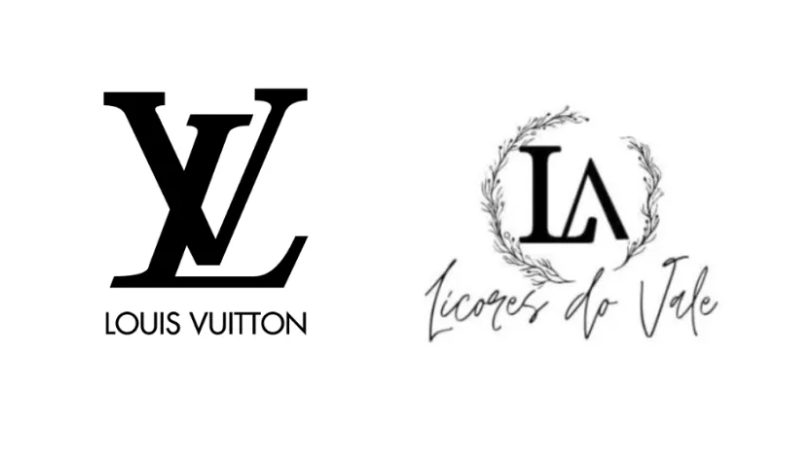
The fashion house states that the logo on the Portuguese brand’s labels constitutes an "almost total reproduction" on a verbal, phonetic, and conceptual level. Despite operating in vastly different industries—luxury fashion versus regional liqueur production—Louis Vuitton argues that both brands have registered trademarks under similar product classes, providing grounds for the lawsuit.

A Small Business in Shock
André Ferreira, the man behind Licores do Vale, expressed disbelief over the legal move. Ferreira, a metrology technician by trade, created the brand as a personal passion project together with his girlfriend. Their logo, he explained, represents both the geographical location of the Longos Vales parish (with the inverted "V" symbolising the surrounding mountains) and the natural elements of their craft, with small leaves representing nature.
Ferreira told Jornal de Notícias he was “surprised” by the legal action, noting that the products are not even commercially available yet. “This is a hobby. We’ve only just begun, and we’re already faced with this,” he said. “The Louis Vuitton logo and our logo have nothing to do with each other.”

He registered the Licores do Vale trademark in August 2024, and it was officially accepted in January 2025. At that time, Louis Vuitton did not oppose the registration. However, the recent appeal by the French brand now places the registration in legal limbo, leaving the future of Ferreira’s start-up uncertain.
Public Backlash and Support
The case has quickly garnered public attention, especially on social media platforms like Instagram, where users have rallied in support of the Portuguese liqueur maker. Many view the lawsuit as an example of corporate overreach, with fans urging Ferreira to continue his craft and capitalise on the media spotlight.
On Instagram, Licores do Vale has a humble following of just over 1,000 people, while Louis Vuitton boasts over 55 million followers, highlighting the stark contrast in scale between the two parties. Supporters of the Portuguese start-up have encouraged a grassroots campaign to help boost the brand’s visibility and support small-scale entrepreneurship in the face of corporate legal pressure.
The Bigger Picture
While intellectual property rights are crucial to protecting brands and their identities, this case raises broader questions about proportionality and fairness. Critics argue that such lawsuits risk stifling creativity and small businesses, especially when there is no clear evidence of malicious intent or market confusion.
Louis Vuitton, which has a history dating back 170 years, is no stranger to enforcing its brand protection globally. However, targeting a fledgling liqueur producer in rural Portugal has triggered a debate over how far such protections should go and whether context should matter in trademark enforcement.
Conclusion
The lawsuit between Louis Vuitton and Licores do Vale reflects the complex and sometimes controversial nature of brand protection in a globalised world. While legal experts will decide whether the logos are indeed too similar, the court of public opinion is already leaning toward the underdog.
For André Ferreira, what began as a weekend hobby now finds itself at the centre of an international controversy—one that could either crush his budding dream or unexpectedly catapult his brand into the spotlight.
Only time—and the Intellectual Property Court—will tell.
Uploaded files:Share this:
- Click to share on Facebook (Opens in new window) Facebook
- Click to share on X (Opens in new window) X
- Click to share on WhatsApp (Opens in new window) WhatsApp
- Click to share on LinkedIn (Opens in new window) LinkedIn
- Click to email a link to a friend (Opens in new window) Email
- Click to print (Opens in new window) Print