

Mars Meteorite Found in Niger Sells for $4.3M in New York, Sparking Legal Battle

Quote from Alex Bobby on August 11, 2025, 3:16 AM
Mars Rock Found in Niger Sells for Millions in New York – Now the Country Wants Answers
When a piece of Mars landed on Earth, it was always going to attract attention. But when that same rock—discovered in Niger just two years ago—ended up under the hammer at Sotheby’s in New York for an astonishing $4.3 million (£3.2 million), it sparked more than just excitement. It ignited anger, suspicion, and a brewing international dispute.
“Brazen! It is brazen!” says Professor Paul Sereno, his frustration clear down the phone line from Chicago. Sereno, a renowned palaeontologist with long-standing ties to Niger, believes that this rare Martian meteorite should never have left the country, let alone been sold to an anonymous buyer on the other side of the Atlantic.
A Once-in-a-Lifetime Find
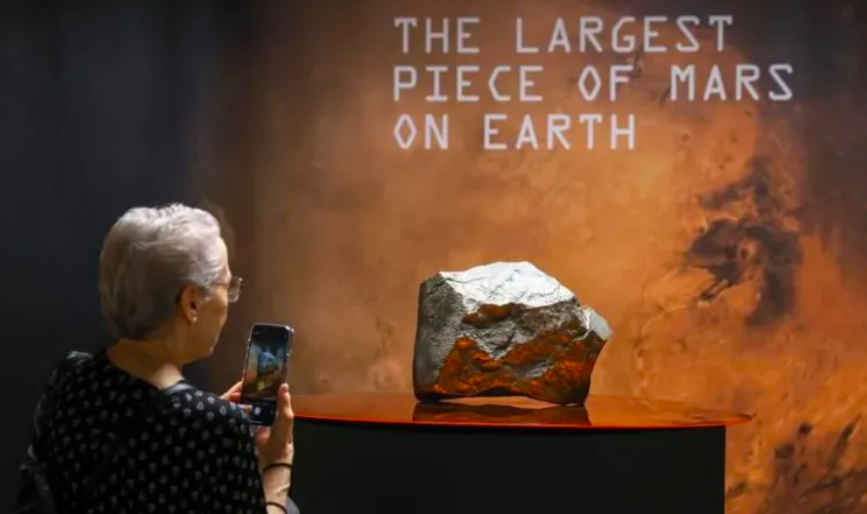
Named NWA 16788 (Northwest Africa being the catch-all designation for meteorites found in the Sahara), the rock is no ordinary cosmic souvenir. Weighing 24.7 kilograms (54 pounds), it is the largest known Martian meteorite ever discovered on Earth. To put that into perspective, out of the 50,000 meteorites catalogued worldwide, fewer than 400 have been confirmed to originate from Mars.
Its silvery-red surface—gleaming in Sotheby’s auction photographs—captured imaginations around the world. Scientists were eager to study it, collectors wanted to own it, and the public marvelled at the idea of holding a tangible fragment of another planet. For a while, the story was one of wonder and awe.
Then the questions began.
From the Sahara to Sotheby’s
According to an Italian academic article published in 2024, NWA 16788 was found on 16 November 2023 in Niger’s Agadez region, about 90km west of the Chirfa Oasis. The discoverer was described only as “a meteorite hunter” whose identity has not been revealed. The Sahara, with its dry climate and vast, undisturbed landscapes, is one of the best places on Earth to preserve and spot meteorites. But it’s also an environment where tracking and regulating such finds is difficult.
Reports suggest that the meteorite was sold by the local community to an international dealer, eventually landing in the hands of a private gallery owner in Arezzo, Italy. It was studied by a team of scientists led by Professor Giovanni Pratesi from the University of Florence, who confirmed its Martian origin and shared research insights. The meteorite even had a short public display run in Italy, including at the Italian Space Agency in Rome, before vanishing from public view—until it resurfaced at Sotheby’s in New York earlier this year.
Two small slices of the rock remain in Italy for further research, but the bulk of it is now in the hands of an anonymous collector.
Niger’s Legal and Moral Challenge
The government of Niger has made it clear it is not happy with how events unfolded. In an official statement, it expressed “doubts about the legality of its export” and raised concerns about “possible illicit international trafficking.” The country has launched an investigation into the meteorite’s journey from the Sahara to the sale room.
Sotheby’s, for its part, insists that “all relevant documentation was in order at each stage” and that the meteorite was exported in compliance with “all relevant international procedures.” The auction house has acknowledged Niger’s ongoing investigation and says it is “reviewing the information available” in light of the questions raised.
But Professor Sereno is convinced that Nigerien law was broken. Having founded NigerHeritage, an organisation dedicated to preserving the country’s natural and cultural heritage, he argues that such a significant national—and planetary—treasure should remain in Niger, where it could benefit science, education, and national pride.
The Meteorite Market and Its Controversies
Meteorites have long fascinated humanity. In ancient times, they were revered as sacred objects or forged into ceremonial tools. Today, they are sought after by scientists, collectors, and investors. Much like the art market, their value depends on rarity, provenance, and aesthetic appeal. Martian meteorites are particularly prized due to their scarcity and the insight they offer into the geology of another planet.
But the high prices also fuel a shadowy side of the trade. Many meteorites are found in developing countries with limited resources for monitoring, making them vulnerable to illicit trafficking. The line between legitimate scientific collection and exploitation can be blurred, especially when local communities—often the first to find these rocks—see little of the profits from their sale.
In the case of NWA 16788, it remains unclear if Niger received any compensation from the sale, or even from earlier transactions that moved it from the desert to Italy and then to the U.S. market.
Bigger Questions About Ownership
At the heart of the controversy is a fundamental question: Who owns space rocks that fall to Earth? International space law is largely silent on the matter. On national soil, many countries claim ownership of such finds, especially if they are considered part of the nation’s cultural or scientific heritage. Others, however, have looser rules, leaving meteorites to be treated like any other natural resource.
In Niger’s case, the government appears determined to assert that this was not just any rock, but a national treasure—one that should never have been allowed to slip away so quietly.
What Happens Next
Niger’s investigation will focus on whether the meteorite was exported legally and whether any international laws or agreements were breached. Depending on its findings, the country could pursue legal avenues to reclaim the meteorite, though such cases are notoriously difficult, especially once objects are in private collections overseas.
For now, the $4.3 million Martian rock sits in an undisclosed location, its future uncertain. What is certain is that the case has ignited debate over the ethics and legality of the meteorite trade, and whether the treasures of other worlds should be treated as commodities—or as shared heritage belonging to all humanity.
As Professor Sereno puts it, “This meteorite belongs in Niger, in a museum where its people can see it and its scientists can study it—not hidden away in someone’s private collection.”
Conclusion
The sale of NWA 16788 is more than a story about a rock from Mars—it’s a collision of science, commerce, ethics, and national pride. While the meteorite’s scientific value is undeniable, the way it journeyed from the sands of Niger to the glittering auction rooms of New York raises urgent questions about ownership, legality, and fairness in the global trade of extraterrestrial relics. Whether Niger can reclaim the meteorite remains to be seen, but the controversy has already exposed the need for clearer rules and stronger protections to ensure that such rare and remarkable pieces of our cosmic history benefit everyone—not just the highest bidder.
Meta Description:
A rare 24.7kg Mars meteorite found in Niger sold for $4.3M at Sotheby’s, prompting a government investigation into its export and possible illicit trafficking.
Mars Rock Found in Niger Sells for Millions in New York – Now the Country Wants Answers
When a piece of Mars landed on Earth, it was always going to attract attention. But when that same rock—discovered in Niger just two years ago—ended up under the hammer at Sotheby’s in New York for an astonishing $4.3 million (£3.2 million), it sparked more than just excitement. It ignited anger, suspicion, and a brewing international dispute.
“Brazen! It is brazen!” says Professor Paul Sereno, his frustration clear down the phone line from Chicago. Sereno, a renowned palaeontologist with long-standing ties to Niger, believes that this rare Martian meteorite should never have left the country, let alone been sold to an anonymous buyer on the other side of the Atlantic.
Register for Tekedia Mini-MBA edition 20 (June 8 – Sept 5, 2026).
Register for Tekedia AI in Business Masterclass.
Join Tekedia Capital Syndicate and co-invest in great global startups.
Register for Tekedia AI Lab.
A Once-in-a-Lifetime Find
Named NWA 16788 (Northwest Africa being the catch-all designation for meteorites found in the Sahara), the rock is no ordinary cosmic souvenir. Weighing 24.7 kilograms (54 pounds), it is the largest known Martian meteorite ever discovered on Earth. To put that into perspective, out of the 50,000 meteorites catalogued worldwide, fewer than 400 have been confirmed to originate from Mars.
Its silvery-red surface—gleaming in Sotheby’s auction photographs—captured imaginations around the world. Scientists were eager to study it, collectors wanted to own it, and the public marvelled at the idea of holding a tangible fragment of another planet. For a while, the story was one of wonder and awe.

Then the questions began.
From the Sahara to Sotheby’s
According to an Italian academic article published in 2024, NWA 16788 was found on 16 November 2023 in Niger’s Agadez region, about 90km west of the Chirfa Oasis. The discoverer was described only as “a meteorite hunter” whose identity has not been revealed. The Sahara, with its dry climate and vast, undisturbed landscapes, is one of the best places on Earth to preserve and spot meteorites. But it’s also an environment where tracking and regulating such finds is difficult.

Reports suggest that the meteorite was sold by the local community to an international dealer, eventually landing in the hands of a private gallery owner in Arezzo, Italy. It was studied by a team of scientists led by Professor Giovanni Pratesi from the University of Florence, who confirmed its Martian origin and shared research insights. The meteorite even had a short public display run in Italy, including at the Italian Space Agency in Rome, before vanishing from public view—until it resurfaced at Sotheby’s in New York earlier this year.
Two small slices of the rock remain in Italy for further research, but the bulk of it is now in the hands of an anonymous collector.
Niger’s Legal and Moral Challenge
The government of Niger has made it clear it is not happy with how events unfolded. In an official statement, it expressed “doubts about the legality of its export” and raised concerns about “possible illicit international trafficking.” The country has launched an investigation into the meteorite’s journey from the Sahara to the sale room.
Sotheby’s, for its part, insists that “all relevant documentation was in order at each stage” and that the meteorite was exported in compliance with “all relevant international procedures.” The auction house has acknowledged Niger’s ongoing investigation and says it is “reviewing the information available” in light of the questions raised.
But Professor Sereno is convinced that Nigerien law was broken. Having founded NigerHeritage, an organisation dedicated to preserving the country’s natural and cultural heritage, he argues that such a significant national—and planetary—treasure should remain in Niger, where it could benefit science, education, and national pride.
The Meteorite Market and Its Controversies
Meteorites have long fascinated humanity. In ancient times, they were revered as sacred objects or forged into ceremonial tools. Today, they are sought after by scientists, collectors, and investors. Much like the art market, their value depends on rarity, provenance, and aesthetic appeal. Martian meteorites are particularly prized due to their scarcity and the insight they offer into the geology of another planet.
But the high prices also fuel a shadowy side of the trade. Many meteorites are found in developing countries with limited resources for monitoring, making them vulnerable to illicit trafficking. The line between legitimate scientific collection and exploitation can be blurred, especially when local communities—often the first to find these rocks—see little of the profits from their sale.
In the case of NWA 16788, it remains unclear if Niger received any compensation from the sale, or even from earlier transactions that moved it from the desert to Italy and then to the U.S. market.
Bigger Questions About Ownership
At the heart of the controversy is a fundamental question: Who owns space rocks that fall to Earth? International space law is largely silent on the matter. On national soil, many countries claim ownership of such finds, especially if they are considered part of the nation’s cultural or scientific heritage. Others, however, have looser rules, leaving meteorites to be treated like any other natural resource.
In Niger’s case, the government appears determined to assert that this was not just any rock, but a national treasure—one that should never have been allowed to slip away so quietly.
What Happens Next
Niger’s investigation will focus on whether the meteorite was exported legally and whether any international laws or agreements were breached. Depending on its findings, the country could pursue legal avenues to reclaim the meteorite, though such cases are notoriously difficult, especially once objects are in private collections overseas.
For now, the $4.3 million Martian rock sits in an undisclosed location, its future uncertain. What is certain is that the case has ignited debate over the ethics and legality of the meteorite trade, and whether the treasures of other worlds should be treated as commodities—or as shared heritage belonging to all humanity.
As Professor Sereno puts it, “This meteorite belongs in Niger, in a museum where its people can see it and its scientists can study it—not hidden away in someone’s private collection.”
Conclusion
The sale of NWA 16788 is more than a story about a rock from Mars—it’s a collision of science, commerce, ethics, and national pride. While the meteorite’s scientific value is undeniable, the way it journeyed from the sands of Niger to the glittering auction rooms of New York raises urgent questions about ownership, legality, and fairness in the global trade of extraterrestrial relics. Whether Niger can reclaim the meteorite remains to be seen, but the controversy has already exposed the need for clearer rules and stronger protections to ensure that such rare and remarkable pieces of our cosmic history benefit everyone—not just the highest bidder.
Meta Description:
A rare 24.7kg Mars meteorite found in Niger sold for $4.3M at Sotheby’s, prompting a government investigation into its export and possible illicit trafficking.
Share this:
- Click to share on Facebook (Opens in new window) Facebook
- Click to share on X (Opens in new window) X
- Click to share on WhatsApp (Opens in new window) WhatsApp
- Click to share on LinkedIn (Opens in new window) LinkedIn
- Click to email a link to a friend (Opens in new window) Email
- Click to print (Opens in new window) Print