

Netherlands Joins Eurovision 2026 Boycott Over Israel’s Participation Amid Gaza War

Quote from Alex Bobby on September 13, 2025, 4:45 AM
Netherlands Joins Growing Boycott of Eurovision 2026 Over Israeli Participation
The Eurovision Song Contest, one of Europe’s most iconic cultural institutions, is facing an escalating crisis ahead of its 70th anniversary edition in 2026. The Netherlands has announced it will join Slovenia, Iceland, Spain, and Ireland in boycotting next year’s competition if Israel is allowed to participate, marking a major rupture in what is traditionally celebrated as an apolitical event meant to unite nations through music.
The announcement from Dutch public broadcaster AVROTROS intensifies mounting pressure on the European Broadcasting Union (EBU), which organizes Eurovision, to take a definitive stand on Israel’s contested inclusion. It also reflects how the ongoing war in Gaza and concerns about press freedom have pushed Eurovision into the heart of a fierce international political debate.
A Stand for Values Over Tradition
In a strongly worded statement, AVROTROS said that Eurovision’s core mission of unity and peace was incompatible with Israel’s continued participation under current conditions.
“The Eurovision Song Contest was founded in 1956 to bring people together after a period of deep division and war. Since its inception seventy years ago, music has been at the heart of the Contest as a unifying force, with peace, equality, and respect as its core values,” the broadcaster stated.
“However, we can no longer justify Israel’s participation in the current situation, given the ongoing and severe human suffering in Gaza.”
The Dutch broadcaster also echoed concerns raised by Ireland’s RTÉ, alleging there was “proven evidence of interference by the Israeli government” during the 2025 contest and that Israel had used the event “as a political instrument.” It warned that “human suffering, the suppression of press freedom and political interference are at odds with the values of public broadcasting.”
This statement marks a significant break for the Netherlands, which has been a Eurovision mainstay since the contest’s inception and has won the competition five times. Their withdrawal would be one of the most high-profile boycotts in the event’s history.
Spain and Ireland Also Turn Up the Pressure
The Netherlands’ move follows similar threats from other European countries. Earlier this week, Irish broadcaster RTÉ confirmed it would boycott the competition if Israel remains on the roster, citing both humanitarian concerns and alleged government interference.
Spain’s Culture Minister, Ernest Urtasun, went even further in an interview on TVE’s La hora de La 1, warning that Spain may also withdraw if Israel participates. He stressed that Eurovision cannot act as though “nothing is happening” while “severe human rights violations” are ongoing in Gaza.
“It is not an individual artist who participates but someone who participates on behalf of that country’s citizens,” Urtasun said. He described Israel’s government as “genocidal” and reminded viewers that Spanish Prime Minister Pedro Sánchez has publicly called on the EBU to ban Israel from international competitions.
In May, Sánchez pointed out that “no one was shaking their heads” when Russia was banned from Eurovision and other cultural events following its invasion of Ukraine. He argued that the same standard should be applied to Israel.
Urtasun also clarified that denouncing what he called “genocide” in Gaza is not antisemitic, directly addressing accusations that criticism of Israel’s participation could fuel antisemitism. His comments reflect a broader European debate over where to draw the line between political accountability and cultural inclusion.
A Growing Movement Against Israel’s Participation
The boycott movement has been gaining momentum since Hamas’ attack on Israeli citizens on October 7, 2023, and Israel’s subsequent military campaign in Gaza. Multiple UN human rights experts have said Israel’s actions amount to genocide, and the International Court of Justice has ruled that claims of genocide are “plausible.”
Humanitarian conditions in Gaza have deteriorated sharply. The Integrated Food Security Phase Classification recently declared the territory to be in a state of “man-made famine,” despite denials from the Israeli government. At the same time, journalists and aid workers have reported widespread restrictions on media access to Gaza, and dozens of journalists have been killed during the conflict.
These concerns have galvanized cultural figures as well as governments. More than 70 former Eurovision contestants have signed an open letter urging the EBU to ban Israel and its national broadcaster KAN from participating in 2026. JJ, the Austrian singer who won last year’s Eurovision, has also spoken out, saying he supports banning Israel from the contest.
EBU Under Growing Scrutiny
The European Broadcasting Union is now facing unprecedented pressure. Traditionally, the EBU has maintained that Eurovision is a non-political event and that participation should not be determined by governments’ foreign policies. However, critics point out that Russia was banned from the contest in 2022 after its invasion of Ukraine, setting a precedent for excluding countries accused of major violations of international law.
The EBU has extended its penalty-free withdrawal deadline to December, when a final decision on Israel’s participation is expected at its General Assembly. If Israel remains in the competition, the withdrawals of the Netherlands, Spain, Ireland, Slovenia, and Iceland could spark a domino effect, potentially pulling other countries out and overshadowing what is meant to be a celebratory anniversary edition of Eurovision.
The 70th Eurovision Song Contest is scheduled to be held in Vienna, Austria, with the semi-finals on May 12 and 14 and the grand final on May 16, 2026. Whether it becomes a glittering celebration of European culture or a flashpoint for political controversy may depend entirely on how the EBU handles the Israel question in the coming weeks.
A Cultural Contest at a Crossroads
Eurovision was created to bring a divided continent together in the aftermath of World War II, offering a stage where music could transcend politics. Yet, as the war in Gaza rages on, it is becoming increasingly difficult to keep politics off the stage.
For the Netherlands and other nations boycotting the 2026 contest, standing aside is not about rejecting music, but about rejecting what they see as complicity in silence. The coming months will test whether Eurovision can uphold its values without turning a blind eye to the world beyond the spotlight.
Looking Forward
As the December deadline approaches, all eyes will be on the European Broadcasting Union to see how it navigates this unprecedented crisis. A clear and principled decision on Israel’s participation will be crucial to prevent a full-scale exodus of participating countries and to restore public trust in Eurovision’s mission.
If the EBU can engage in honest dialogue with concerned broadcasters and establish stronger safeguards against political interference, Eurovision 2026 could still go ahead as a moment of unity rather than division. But if indecision prevails, the contest risks losing not only key participants but also the very spirit of solidarity it was created to uphold.
Final Thoughts
Eurovision has always thrived on its ability to rise above politics, offering a shared stage where music bridges divides. But the growing boycott movement surrounding Israel’s participation in 2026 shows that cultural events can no longer exist in isolation from global crises. The Netherlands joining this protest signals a deeper shift: countries are increasingly willing to put principles before pageantry.
If the EBU hopes to preserve Eurovision’s role as a unifying force, it must confront these concerns transparently and decisively. Otherwise, what was meant to celebrate harmony could instead become a symbol of silence in the face of suffering — a risk that could tarnish the contest’s legacy far beyond its 70th anniversary.
Conclusion
The Netherlands’ decision to join a growing boycott of Eurovision 2026 marks a pivotal moment for one of Europe’s most cherished cultural events. What was once envisioned as an apolitical stage to unite nations through music has become a battleground for moral and political accountability. As more countries threaten to withdraw over Israel’s inclusion, the European Broadcasting Union now faces a defining choice — uphold the contest’s founding values of peace and solidarity or risk fracturing its credibility by appearing indifferent to human suffering.
How the EBU responds will shape not just the 70th anniversary edition of Eurovision, but its legacy as a symbol of unity in an increasingly divided world.
Meta Description: The Netherlands has joined Spain, Ireland, Slovenia, and Iceland in threatening to boycott Eurovision 2026 over Israel’s participation, citing human rights abuses in Gaza and press freedom concerns.
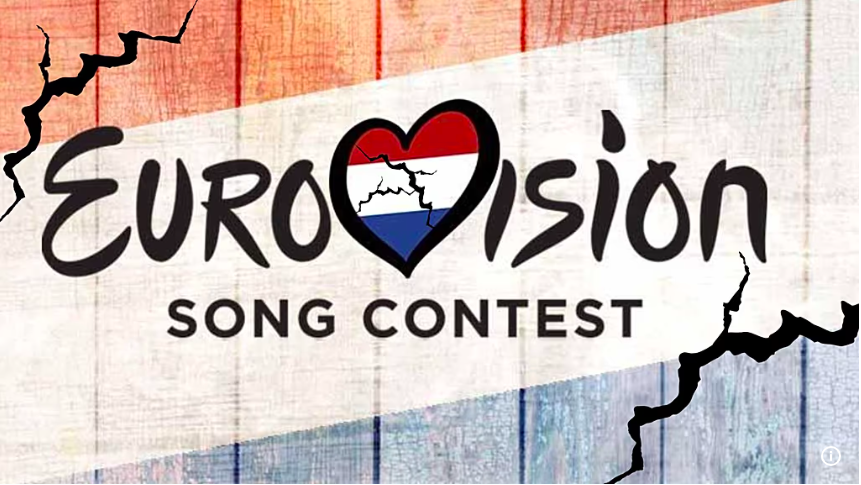
Netherlands Joins Growing Boycott of Eurovision 2026 Over Israeli Participation
The Eurovision Song Contest, one of Europe’s most iconic cultural institutions, is facing an escalating crisis ahead of its 70th anniversary edition in 2026. The Netherlands has announced it will join Slovenia, Iceland, Spain, and Ireland in boycotting next year’s competition if Israel is allowed to participate, marking a major rupture in what is traditionally celebrated as an apolitical event meant to unite nations through music.
The announcement from Dutch public broadcaster AVROTROS intensifies mounting pressure on the European Broadcasting Union (EBU), which organizes Eurovision, to take a definitive stand on Israel’s contested inclusion. It also reflects how the ongoing war in Gaza and concerns about press freedom have pushed Eurovision into the heart of a fierce international political debate.
Register for Tekedia Mini-MBA edition 20 (June 8 – Sept 5, 2026).
Register for Tekedia AI in Business Masterclass.
Join Tekedia Capital Syndicate and co-invest in great global startups.
Register for Tekedia AI Lab.
A Stand for Values Over Tradition
In a strongly worded statement, AVROTROS said that Eurovision’s core mission of unity and peace was incompatible with Israel’s continued participation under current conditions.
“The Eurovision Song Contest was founded in 1956 to bring people together after a period of deep division and war. Since its inception seventy years ago, music has been at the heart of the Contest as a unifying force, with peace, equality, and respect as its core values,” the broadcaster stated.

“However, we can no longer justify Israel’s participation in the current situation, given the ongoing and severe human suffering in Gaza.”
The Dutch broadcaster also echoed concerns raised by Ireland’s RTÉ, alleging there was “proven evidence of interference by the Israeli government” during the 2025 contest and that Israel had used the event “as a political instrument.” It warned that “human suffering, the suppression of press freedom and political interference are at odds with the values of public broadcasting.”
This statement marks a significant break for the Netherlands, which has been a Eurovision mainstay since the contest’s inception and has won the competition five times. Their withdrawal would be one of the most high-profile boycotts in the event’s history.

Spain and Ireland Also Turn Up the Pressure
The Netherlands’ move follows similar threats from other European countries. Earlier this week, Irish broadcaster RTÉ confirmed it would boycott the competition if Israel remains on the roster, citing both humanitarian concerns and alleged government interference.
Spain’s Culture Minister, Ernest Urtasun, went even further in an interview on TVE’s La hora de La 1, warning that Spain may also withdraw if Israel participates. He stressed that Eurovision cannot act as though “nothing is happening” while “severe human rights violations” are ongoing in Gaza.
“It is not an individual artist who participates but someone who participates on behalf of that country’s citizens,” Urtasun said. He described Israel’s government as “genocidal” and reminded viewers that Spanish Prime Minister Pedro Sánchez has publicly called on the EBU to ban Israel from international competitions.
In May, Sánchez pointed out that “no one was shaking their heads” when Russia was banned from Eurovision and other cultural events following its invasion of Ukraine. He argued that the same standard should be applied to Israel.
Urtasun also clarified that denouncing what he called “genocide” in Gaza is not antisemitic, directly addressing accusations that criticism of Israel’s participation could fuel antisemitism. His comments reflect a broader European debate over where to draw the line between political accountability and cultural inclusion.
A Growing Movement Against Israel’s Participation
The boycott movement has been gaining momentum since Hamas’ attack on Israeli citizens on October 7, 2023, and Israel’s subsequent military campaign in Gaza. Multiple UN human rights experts have said Israel’s actions amount to genocide, and the International Court of Justice has ruled that claims of genocide are “plausible.”
Humanitarian conditions in Gaza have deteriorated sharply. The Integrated Food Security Phase Classification recently declared the territory to be in a state of “man-made famine,” despite denials from the Israeli government. At the same time, journalists and aid workers have reported widespread restrictions on media access to Gaza, and dozens of journalists have been killed during the conflict.
These concerns have galvanized cultural figures as well as governments. More than 70 former Eurovision contestants have signed an open letter urging the EBU to ban Israel and its national broadcaster KAN from participating in 2026. JJ, the Austrian singer who won last year’s Eurovision, has also spoken out, saying he supports banning Israel from the contest.
EBU Under Growing Scrutiny
The European Broadcasting Union is now facing unprecedented pressure. Traditionally, the EBU has maintained that Eurovision is a non-political event and that participation should not be determined by governments’ foreign policies. However, critics point out that Russia was banned from the contest in 2022 after its invasion of Ukraine, setting a precedent for excluding countries accused of major violations of international law.
The EBU has extended its penalty-free withdrawal deadline to December, when a final decision on Israel’s participation is expected at its General Assembly. If Israel remains in the competition, the withdrawals of the Netherlands, Spain, Ireland, Slovenia, and Iceland could spark a domino effect, potentially pulling other countries out and overshadowing what is meant to be a celebratory anniversary edition of Eurovision.
The 70th Eurovision Song Contest is scheduled to be held in Vienna, Austria, with the semi-finals on May 12 and 14 and the grand final on May 16, 2026. Whether it becomes a glittering celebration of European culture or a flashpoint for political controversy may depend entirely on how the EBU handles the Israel question in the coming weeks.
A Cultural Contest at a Crossroads
Eurovision was created to bring a divided continent together in the aftermath of World War II, offering a stage where music could transcend politics. Yet, as the war in Gaza rages on, it is becoming increasingly difficult to keep politics off the stage.
For the Netherlands and other nations boycotting the 2026 contest, standing aside is not about rejecting music, but about rejecting what they see as complicity in silence. The coming months will test whether Eurovision can uphold its values without turning a blind eye to the world beyond the spotlight.
Looking Forward
As the December deadline approaches, all eyes will be on the European Broadcasting Union to see how it navigates this unprecedented crisis. A clear and principled decision on Israel’s participation will be crucial to prevent a full-scale exodus of participating countries and to restore public trust in Eurovision’s mission.
If the EBU can engage in honest dialogue with concerned broadcasters and establish stronger safeguards against political interference, Eurovision 2026 could still go ahead as a moment of unity rather than division. But if indecision prevails, the contest risks losing not only key participants but also the very spirit of solidarity it was created to uphold.
Final Thoughts
Eurovision has always thrived on its ability to rise above politics, offering a shared stage where music bridges divides. But the growing boycott movement surrounding Israel’s participation in 2026 shows that cultural events can no longer exist in isolation from global crises. The Netherlands joining this protest signals a deeper shift: countries are increasingly willing to put principles before pageantry.
If the EBU hopes to preserve Eurovision’s role as a unifying force, it must confront these concerns transparently and decisively. Otherwise, what was meant to celebrate harmony could instead become a symbol of silence in the face of suffering — a risk that could tarnish the contest’s legacy far beyond its 70th anniversary.
Conclusion
The Netherlands’ decision to join a growing boycott of Eurovision 2026 marks a pivotal moment for one of Europe’s most cherished cultural events. What was once envisioned as an apolitical stage to unite nations through music has become a battleground for moral and political accountability. As more countries threaten to withdraw over Israel’s inclusion, the European Broadcasting Union now faces a defining choice — uphold the contest’s founding values of peace and solidarity or risk fracturing its credibility by appearing indifferent to human suffering.
How the EBU responds will shape not just the 70th anniversary edition of Eurovision, but its legacy as a symbol of unity in an increasingly divided world.
Meta Description: The Netherlands has joined Spain, Ireland, Slovenia, and Iceland in threatening to boycott Eurovision 2026 over Israel’s participation, citing human rights abuses in Gaza and press freedom concerns.
Uploaded files:Share this:
- Click to share on Facebook (Opens in new window) Facebook
- Click to share on X (Opens in new window) X
- Click to share on WhatsApp (Opens in new window) WhatsApp
- Click to share on LinkedIn (Opens in new window) LinkedIn
- Click to email a link to a friend (Opens in new window) Email
- Click to print (Opens in new window) Print