

Over 300 Fall Ill in Indonesia’s $28bn Free School Meals Scheme, Raising Safety and Budget Concerns

Quote from Alex Bobby on August 16, 2025, 6:38 AM
More than 300 Fall Ill in Indonesia After Eating Free School Lunches — Raising Questions Over Prabowo’s $28bn Programme
Indonesia’s ambitious free school meals programme, one of President Prabowo Subianto’s flagship policies, is facing its biggest test yet. In the Central Java town of Sragen, at least 365 people — mostly schoolchildren — have fallen ill after consuming lunches provided under the scheme. The incident marks the largest reported spate of food poisoning since the programme launched in January and has amplified ongoing debates about its cost, safety, and long-term viability.
A Night of Pain and Panic
For ninth-grader Wizdan Ridho Abimanyu, it began in the middle of the night. Awoken by sharp stomach pain, he soon found himself battling diarrhoea and a pounding headache. Logging onto social media, he realised he wasn’t alone — dozens of his classmates were posting about similar symptoms.
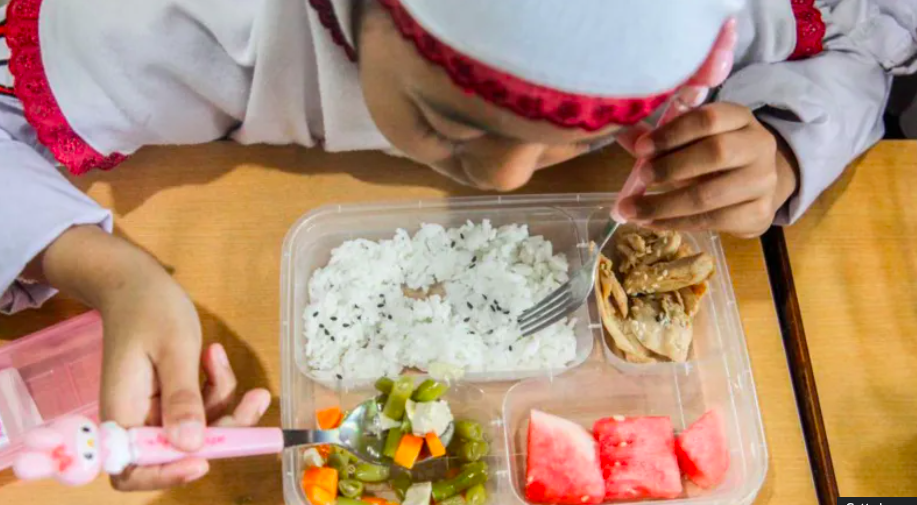
The culprit, according to preliminary accounts, was a meal consisting of turmeric rice, scrambled eggs, fried tempeh, cucumber salad, and a box of milk. The food, prepared in a central kitchen, had been distributed to several schools in the area.
Local authorities have suspended the programme in Sragen while food samples undergo laboratory testing for contamination. “We cannot draw any specific conclusions right away,” said Sigit Pamungkas, the head of the Sragen government. “But the main point is that it’s not just [happening here]. The programme as a whole needs to be more stringent and more hygienic.”
An Expensive Promise Under Scrutiny
Prabowo’s free meals programme is one of the costliest social initiatives in Indonesia’s history, with an estimated price tag of $28 billion. Launched as part of his campaign pledge to combat child stunting and improve nutrition for the nation’s 80 million schoolchildren, it aims to provide one nutritious meal a day to every student.
But the scale of the operation — sourcing, preparing, and delivering millions of meals daily — has made it vulnerable to logistical, safety, and financial challenges. Since its rollout, more than 1,000 people nationwide have reportedly fallen ill after eating the meals, prompting localised suspensions and public concern.
The Budget Trade-Offs
To fund the free meal programme and other populist initiatives, Prabowo ordered $19 billion in budget cuts across multiple ministries. Reports have surfaced of government offices being forced to halve their operational budgets, limit air conditioning, restrict elevator use, and even cut back on printing.
These austerity measures have fuelled public anger, particularly among civil servants and sectors whose projects were scaled back. In some cities, thousands have taken to the streets in protest. One viral banner at a rally summed up the resentment: “Children eat for free, parents are laid off.”
Economists warn that while feeding schoolchildren is an important social investment, the sudden and sweeping budget reallocation risks undermining other critical areas, from infrastructure to healthcare. “The question is not whether nutrition is important — it clearly is,” said Jakarta-based economist Anisa Putri. “The question is whether this programme has been implemented too quickly, without proper oversight or a sustainable funding model.”
Food Safety — A Growing Concern
Indonesia’s vast archipelago poses unique challenges to ensuring food safety at scale. Meals are often prepared in centralised kitchens and distributed over considerable distances, sometimes in hot, humid conditions. Without stringent hygiene standards, temperature control, and timely delivery, the risk of contamination is significant.
The Sragen case has highlighted the need for better quality control. While officials await lab results, health experts have already called for an overhaul of the supply chain. Dr. Bagus Wirawan, a public health specialist, noted that “any national feeding programme must have rigorous checks — from ingredient sourcing to storage, cooking, and transportation. A single weak link can result in widespread illness.”
Prabowo Defends the Programme
Despite mounting criticism, President Prabowo used his first State of the Nation Address on Friday to defend the initiative. He framed it as part of a broader vision to lift Indonesia out of poverty and hunger.
“This programme, alongside other social policies, will help transform Indonesia into a country free from poverty, free from hunger, free from suffering,” he declared. “We will not let temporary setbacks deter us from our mission.”
His remarks suggest that the administration sees the Sragen incident not as a reason to abandon the programme, but as a call to strengthen its implementation.
Balancing Ambition with Practicality
Large-scale school feeding programmes have been implemented successfully in countries such as India and Brazil, but these models took years to develop and relied on decentralised management, community involvement, and rigorous safety protocols. Analysts say Indonesia could learn from these examples — gradually scaling up while investing in robust monitoring systems.
There is also a debate about whether the centralised kitchen model is the most effective approach. Some nutrition advocates argue that giving schools more autonomy to source fresh, local ingredients could both boost community economies and reduce the risks associated with mass-prepared meals.
Public Sentiment at a Crossroads
The Sragen incident has sparked mixed reactions among Indonesians. On one hand, parents appreciate the relief of having daily meals provided for their children, particularly in low-income areas. On the other, the reports of mass illness have shaken trust.
For some, the broader economic consequences — budget cuts, job losses, and reduced public services — are harder to swallow than the health risks. “We all want our children to be healthy and well-fed,” said Yuli, a mother of two in Jakarta. “But not at the expense of our livelihoods and other essential services.”
The Road Ahead
As the government investigates the Sragen outbreak, it faces the challenge of restoring public confidence while keeping the programme on track. Ensuring strict hygiene standards, improving distribution logistics, and finding a more balanced funding strategy will be key to its survival.
For now, the free school meals scheme remains a bold social experiment — one that promises to tackle deep-rooted nutritional problems but risks becoming a cautionary tale if speed continues to take precedence over safety and sustainability.
If Prabowo can navigate these challenges, his vision of an Indonesia “free from hunger” might yet become a reality. But the events in Sragen are a stark reminder that even the noblest goals can falter without careful planning, transparency, and community trust.
Meta Description:
Over 300 people in Sragen, Indonesia, have fallen ill after eating free school lunches from President Prabowo Subianto’s $28bn meals programme, sparking safety concerns, budget debates, and calls for stricter hygiene standards.
More than 300 Fall Ill in Indonesia After Eating Free School Lunches — Raising Questions Over Prabowo’s $28bn Programme
Indonesia’s ambitious free school meals programme, one of President Prabowo Subianto’s flagship policies, is facing its biggest test yet. In the Central Java town of Sragen, at least 365 people — mostly schoolchildren — have fallen ill after consuming lunches provided under the scheme. The incident marks the largest reported spate of food poisoning since the programme launched in January and has amplified ongoing debates about its cost, safety, and long-term viability.
A Night of Pain and Panic
Register for Tekedia Mini-MBA edition 20 (June 8 – Sept 5, 2026).
Register for Tekedia AI in Business Masterclass.
Join Tekedia Capital Syndicate and co-invest in great global startups.
Register for Tekedia AI Lab.
For ninth-grader Wizdan Ridho Abimanyu, it began in the middle of the night. Awoken by sharp stomach pain, he soon found himself battling diarrhoea and a pounding headache. Logging onto social media, he realised he wasn’t alone — dozens of his classmates were posting about similar symptoms.
The culprit, according to preliminary accounts, was a meal consisting of turmeric rice, scrambled eggs, fried tempeh, cucumber salad, and a box of milk. The food, prepared in a central kitchen, had been distributed to several schools in the area.
Local authorities have suspended the programme in Sragen while food samples undergo laboratory testing for contamination. “We cannot draw any specific conclusions right away,” said Sigit Pamungkas, the head of the Sragen government. “But the main point is that it’s not just [happening here]. The programme as a whole needs to be more stringent and more hygienic.”

An Expensive Promise Under Scrutiny
Prabowo’s free meals programme is one of the costliest social initiatives in Indonesia’s history, with an estimated price tag of $28 billion. Launched as part of his campaign pledge to combat child stunting and improve nutrition for the nation’s 80 million schoolchildren, it aims to provide one nutritious meal a day to every student.
But the scale of the operation — sourcing, preparing, and delivering millions of meals daily — has made it vulnerable to logistical, safety, and financial challenges. Since its rollout, more than 1,000 people nationwide have reportedly fallen ill after eating the meals, prompting localised suspensions and public concern.

The Budget Trade-Offs
To fund the free meal programme and other populist initiatives, Prabowo ordered $19 billion in budget cuts across multiple ministries. Reports have surfaced of government offices being forced to halve their operational budgets, limit air conditioning, restrict elevator use, and even cut back on printing.
These austerity measures have fuelled public anger, particularly among civil servants and sectors whose projects were scaled back. In some cities, thousands have taken to the streets in protest. One viral banner at a rally summed up the resentment: “Children eat for free, parents are laid off.”
Economists warn that while feeding schoolchildren is an important social investment, the sudden and sweeping budget reallocation risks undermining other critical areas, from infrastructure to healthcare. “The question is not whether nutrition is important — it clearly is,” said Jakarta-based economist Anisa Putri. “The question is whether this programme has been implemented too quickly, without proper oversight or a sustainable funding model.”
Food Safety — A Growing Concern
Indonesia’s vast archipelago poses unique challenges to ensuring food safety at scale. Meals are often prepared in centralised kitchens and distributed over considerable distances, sometimes in hot, humid conditions. Without stringent hygiene standards, temperature control, and timely delivery, the risk of contamination is significant.
The Sragen case has highlighted the need for better quality control. While officials await lab results, health experts have already called for an overhaul of the supply chain. Dr. Bagus Wirawan, a public health specialist, noted that “any national feeding programme must have rigorous checks — from ingredient sourcing to storage, cooking, and transportation. A single weak link can result in widespread illness.”
Prabowo Defends the Programme
Despite mounting criticism, President Prabowo used his first State of the Nation Address on Friday to defend the initiative. He framed it as part of a broader vision to lift Indonesia out of poverty and hunger.
“This programme, alongside other social policies, will help transform Indonesia into a country free from poverty, free from hunger, free from suffering,” he declared. “We will not let temporary setbacks deter us from our mission.”
His remarks suggest that the administration sees the Sragen incident not as a reason to abandon the programme, but as a call to strengthen its implementation.
Balancing Ambition with Practicality
Large-scale school feeding programmes have been implemented successfully in countries such as India and Brazil, but these models took years to develop and relied on decentralised management, community involvement, and rigorous safety protocols. Analysts say Indonesia could learn from these examples — gradually scaling up while investing in robust monitoring systems.
There is also a debate about whether the centralised kitchen model is the most effective approach. Some nutrition advocates argue that giving schools more autonomy to source fresh, local ingredients could both boost community economies and reduce the risks associated with mass-prepared meals.
Public Sentiment at a Crossroads
The Sragen incident has sparked mixed reactions among Indonesians. On one hand, parents appreciate the relief of having daily meals provided for their children, particularly in low-income areas. On the other, the reports of mass illness have shaken trust.
For some, the broader economic consequences — budget cuts, job losses, and reduced public services — are harder to swallow than the health risks. “We all want our children to be healthy and well-fed,” said Yuli, a mother of two in Jakarta. “But not at the expense of our livelihoods and other essential services.”
The Road Ahead
As the government investigates the Sragen outbreak, it faces the challenge of restoring public confidence while keeping the programme on track. Ensuring strict hygiene standards, improving distribution logistics, and finding a more balanced funding strategy will be key to its survival.
For now, the free school meals scheme remains a bold social experiment — one that promises to tackle deep-rooted nutritional problems but risks becoming a cautionary tale if speed continues to take precedence over safety and sustainability.
If Prabowo can navigate these challenges, his vision of an Indonesia “free from hunger” might yet become a reality. But the events in Sragen are a stark reminder that even the noblest goals can falter without careful planning, transparency, and community trust.
Meta Description:
Over 300 people in Sragen, Indonesia, have fallen ill after eating free school lunches from President Prabowo Subianto’s $28bn meals programme, sparking safety concerns, budget debates, and calls for stricter hygiene standards.
Share this:
- Click to share on Facebook (Opens in new window) Facebook
- Click to share on X (Opens in new window) X
- Click to share on WhatsApp (Opens in new window) WhatsApp
- Click to share on LinkedIn (Opens in new window) LinkedIn
- Click to email a link to a friend (Opens in new window) Email
- Click to print (Opens in new window) Print