

Poland Neutralises Drone Over Warsaw Government Buildings Amid Rising Regional Tensions

Quote from Alex Bobby on September 16, 2025, 7:04 AM
Drone Neutralised Over Government Buildings in Warsaw Amid Rising Regional Tensions
Poland’s Prime Minister Donald Tusk has confirmed that a drone was neutralised while flying over sensitive government buildings in the capital city of Warsaw, in what authorities have described as a serious security breach. Speaking in a post on X (formerly Twitter), Tusk revealed that Poland’s State Protection Service (SOP) swiftly took down the drone after it was detected over restricted areas that house key government offices.
According to Tusk, two Belarusian citizens were detained in connection with the incident, and police have since launched a full investigation. The incident has sparked concern in Warsaw and across Europe, occurring during a period of heightened tension in the region following a string of recent airspace violations linked to Russia’s war in Ukraine.
A Growing Threat from the Skies
The drone sighting in Warsaw was not an isolated event. Just hours earlier, Polish officials reported that the country’s airspace had been violated by a record 19 drones believed to be Russian, marking one of the largest such breaches since Moscow launched its full-scale invasion of Ukraine in February 2022.
This escalating wave of aerial incursions has prompted alarm among NATO allies and regional leaders. In response to Poland’s report, Ukraine’s Armed Forces announced plans to send a specialised team to Poland to train Polish personnel in anti-drone defence tactics, a move that underscores the seriousness of the threat and the growing cross-border security cooperation between Warsaw and Kyiv.
For Poland, a frontline state bordering both Belarus and Ukraine, the danger posed by drones has grown exponentially as the war drags on. These unmanned aerial systems are not only difficult to detect but can also be used for intelligence gathering or, potentially, as weapons.
Poland: A Staunch Ally of Ukraine
Poland has been one of Ukraine’s staunchest allies since the early days of Russia’s invasion. Warsaw has provided around €3.3 billion in military and humanitarian aid, supplying Kyiv with tanks, ammunition, and other critical support. Beyond military aid, Poland has opened its doors to Ukrainian refugees, becoming the largest host country for displaced Ukrainians in Europe.
According to the UN Refugee Agency, between 1 and 1.6 million Ukrainians are currently living in Poland, many of whom have integrated into the workforce. A study released earlier this year by Poland’s National Development Bank found that Ukrainian refugees contributed more in taxes than they received in state benefits, highlighting their positive economic impact.
However, as the war enters its third year, public sentiment is shifting. While Poland’s government continues to back Ukraine firmly, anti-Ukrainian sentiment has been rising among parts of the Polish public. A Flash Eurobarometer survey from last year showed that support for providing assistance to Ukrainian refugees had fallen, with only around 60% of Poles in favour—down from much higher levels in 2022.
This changing mood is beginning to put political pressure on Warsaw, even as it grapples with new security threats like the recent drone incidents.
Wider Regional Alarm and NATO’s Response
The Warsaw drone incident comes just days after another alarming breach of airspace—this time in Romania. On Monday, Romanian officials condemned Moscow’s “irresponsible actions” after a Russian drone allegedly entered Romanian airspace during an aerial assault on Ukraine. The Romanian Defence Ministry said it had scrambled fighter jets in response to the intrusion, which raised fears of accidental escalation.
These repeated incidents have heightened NATO’s sense of urgency about defending its eastern flank. On Friday, NATO Secretary General Mark Rutte unveiled a new initiative dubbed “Eastern Sentry,” aimed at strengthening the alliance’s defences along its eastern borders, especially in Poland and the Baltic states.
“We see drones violating our airspace. Whether it was intentional or not, it is unacceptable,” Rutte said during the announcement. “The allies have expressed full solidarity with Poland. It is crucial to counter aggression and defend every member of the Alliance. The defence of the eastern flank is our key task. That is why we are launching the Eastern Sentry initiative to further strengthen our eastern flank.”
The launch of Eastern Sentry represents NATO’s most direct response yet to the growing threat of drone incursions, and signals a broader effort to reassure frontline allies like Poland that they will not face these threats alone.
A Test of Vigilance and Resolve
The neutralisation of the drone in Warsaw is being seen by Polish officials as a warning sign rather than an isolated incident. Investigators are now working to determine whether the drone was gathering intelligence, testing Poland’s air defences, or preparing for something more serious.
For Prime Minister Tusk’s government, the episode underscores the need for constant vigilance, tighter counter-drone measures, and deeper cooperation with allies. It also highlights the growing complexity of modern warfare, where small and relatively cheap unmanned systems can bypass traditional defences and pose disproportionate risks to national security.
As Poland continues to support Ukraine’s war effort while facing increasing domestic scepticism, the challenge for Tusk will be to maintain public confidence and political unity in the face of mounting external pressure. The incident is a stark reminder that Poland, as a key NATO state bordering both Russia’s ally Belarus and war-torn Ukraine, remains on the frontline of a volatile geopolitical standoff.
Looking Forward
The drone incident over Warsaw underscores that Poland remains on high alert amid growing regional tensions, with threats ranging from unmanned aerial systems to more conventional military provocations. As the Eastern Sentry initiative rolls out, Poland’s security forces are expected to strengthen airspace monitoring, improve counter-drone capabilities, and deepen intelligence cooperation with NATO allies, particularly Ukraine.
For Warsaw, the coming months will be a test of both resilience and strategy. Balancing continued support for Ukraine with domestic pressures and public concern over safety will be crucial. At the same time, the government will need to ensure that NATO’s eastern flank remains robust, deterring future incursions and signalling to aggressors that violations of airspace will not go unanswered.
Looking ahead, Poland’s role as a frontline state in Europe will likely grow, reinforcing its position as a key player in regional security while highlighting the importance of preparedness, vigilance, and international solidarity in an increasingly complex geopolitical landscape.
Final Thoughts
The neutralisation of a drone over Warsaw serves as a stark reminder that modern security threats are evolving rapidly, combining traditional espionage with new, low-cost technologies like unmanned aerial systems. For Poland, these incidents highlight the delicate balance between safeguarding national security, maintaining public confidence, and continuing robust support for Ukraine.
The Eastern Sentry initiative demonstrates NATO’s commitment to defending its eastern flank, but the situation also underscores the need for constant vigilance and adaptability in the face of hybrid threats. As regional tensions persist, Poland’s experience may serve as a model for other European nations on how to combine domestic preparedness with international cooperation to deter aggression and protect citizens.
Ultimately, the drone incident is not just about one small aircraft in the skies over Warsaw — it is a symbol of the larger strategic challenges facing Europe today and a call to remain proactive, united, and resilient in defending sovereignty and stability.
Conclusion
The drone neutralised over Warsaw is more than a brief security scare — it’s a symbol of the increasingly unstable security environment in Eastern Europe. With airspace violations escalating, public opinion shifting, and the war in Ukraine grinding on, Poland is navigating one of its most precarious moments in decades.
The swift response from Poland’s State Protection Service, combined with NATO’s pledge of solidarity through the Eastern Sentry initiative, shows that Warsaw is far from isolated. But the incident also makes clear that Europe’s eastern flank is now a primary testing ground for hybrid threats, including drones, disinformation, and covert operations.
How Poland responds in the coming months — balancing security, diplomacy, and public opinion — could set the tone for the region’s broader resilience in the face of a rapidly evolving threat landscape.
Meta Description:
Poland’s State Protection Service neutralised a drone flying over sensitive government sites in Warsaw, detaining two Belarusian citizens amid growing airspace violations and NATO concerns.
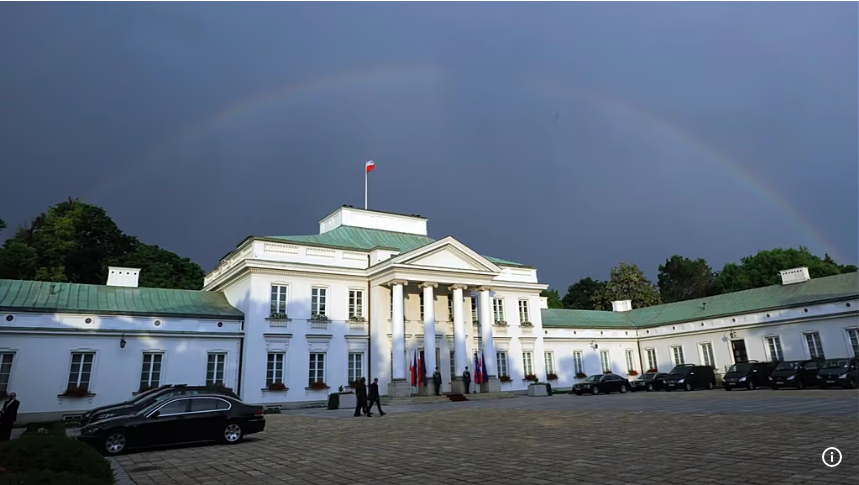
Drone Neutralised Over Government Buildings in Warsaw Amid Rising Regional Tensions
Poland’s Prime Minister Donald Tusk has confirmed that a drone was neutralised while flying over sensitive government buildings in the capital city of Warsaw, in what authorities have described as a serious security breach. Speaking in a post on X (formerly Twitter), Tusk revealed that Poland’s State Protection Service (SOP) swiftly took down the drone after it was detected over restricted areas that house key government offices.
According to Tusk, two Belarusian citizens were detained in connection with the incident, and police have since launched a full investigation. The incident has sparked concern in Warsaw and across Europe, occurring during a period of heightened tension in the region following a string of recent airspace violations linked to Russia’s war in Ukraine.
Register for Tekedia Mini-MBA edition 20 (June 8 – Sept 5, 2026).
Register for Tekedia AI in Business Masterclass.
Join Tekedia Capital Syndicate and co-invest in great global startups.
Register for Tekedia AI Lab.
A Growing Threat from the Skies
The drone sighting in Warsaw was not an isolated event. Just hours earlier, Polish officials reported that the country’s airspace had been violated by a record 19 drones believed to be Russian, marking one of the largest such breaches since Moscow launched its full-scale invasion of Ukraine in February 2022.
This escalating wave of aerial incursions has prompted alarm among NATO allies and regional leaders. In response to Poland’s report, Ukraine’s Armed Forces announced plans to send a specialised team to Poland to train Polish personnel in anti-drone defence tactics, a move that underscores the seriousness of the threat and the growing cross-border security cooperation between Warsaw and Kyiv.

For Poland, a frontline state bordering both Belarus and Ukraine, the danger posed by drones has grown exponentially as the war drags on. These unmanned aerial systems are not only difficult to detect but can also be used for intelligence gathering or, potentially, as weapons.
Poland: A Staunch Ally of Ukraine
Poland has been one of Ukraine’s staunchest allies since the early days of Russia’s invasion. Warsaw has provided around €3.3 billion in military and humanitarian aid, supplying Kyiv with tanks, ammunition, and other critical support. Beyond military aid, Poland has opened its doors to Ukrainian refugees, becoming the largest host country for displaced Ukrainians in Europe.

According to the UN Refugee Agency, between 1 and 1.6 million Ukrainians are currently living in Poland, many of whom have integrated into the workforce. A study released earlier this year by Poland’s National Development Bank found that Ukrainian refugees contributed more in taxes than they received in state benefits, highlighting their positive economic impact.
However, as the war enters its third year, public sentiment is shifting. While Poland’s government continues to back Ukraine firmly, anti-Ukrainian sentiment has been rising among parts of the Polish public. A Flash Eurobarometer survey from last year showed that support for providing assistance to Ukrainian refugees had fallen, with only around 60% of Poles in favour—down from much higher levels in 2022.
This changing mood is beginning to put political pressure on Warsaw, even as it grapples with new security threats like the recent drone incidents.
Wider Regional Alarm and NATO’s Response
The Warsaw drone incident comes just days after another alarming breach of airspace—this time in Romania. On Monday, Romanian officials condemned Moscow’s “irresponsible actions” after a Russian drone allegedly entered Romanian airspace during an aerial assault on Ukraine. The Romanian Defence Ministry said it had scrambled fighter jets in response to the intrusion, which raised fears of accidental escalation.
These repeated incidents have heightened NATO’s sense of urgency about defending its eastern flank. On Friday, NATO Secretary General Mark Rutte unveiled a new initiative dubbed “Eastern Sentry,” aimed at strengthening the alliance’s defences along its eastern borders, especially in Poland and the Baltic states.
“We see drones violating our airspace. Whether it was intentional or not, it is unacceptable,” Rutte said during the announcement. “The allies have expressed full solidarity with Poland. It is crucial to counter aggression and defend every member of the Alliance. The defence of the eastern flank is our key task. That is why we are launching the Eastern Sentry initiative to further strengthen our eastern flank.”
The launch of Eastern Sentry represents NATO’s most direct response yet to the growing threat of drone incursions, and signals a broader effort to reassure frontline allies like Poland that they will not face these threats alone.
A Test of Vigilance and Resolve
The neutralisation of the drone in Warsaw is being seen by Polish officials as a warning sign rather than an isolated incident. Investigators are now working to determine whether the drone was gathering intelligence, testing Poland’s air defences, or preparing for something more serious.
For Prime Minister Tusk’s government, the episode underscores the need for constant vigilance, tighter counter-drone measures, and deeper cooperation with allies. It also highlights the growing complexity of modern warfare, where small and relatively cheap unmanned systems can bypass traditional defences and pose disproportionate risks to national security.
As Poland continues to support Ukraine’s war effort while facing increasing domestic scepticism, the challenge for Tusk will be to maintain public confidence and political unity in the face of mounting external pressure. The incident is a stark reminder that Poland, as a key NATO state bordering both Russia’s ally Belarus and war-torn Ukraine, remains on the frontline of a volatile geopolitical standoff.
Looking Forward
The drone incident over Warsaw underscores that Poland remains on high alert amid growing regional tensions, with threats ranging from unmanned aerial systems to more conventional military provocations. As the Eastern Sentry initiative rolls out, Poland’s security forces are expected to strengthen airspace monitoring, improve counter-drone capabilities, and deepen intelligence cooperation with NATO allies, particularly Ukraine.
For Warsaw, the coming months will be a test of both resilience and strategy. Balancing continued support for Ukraine with domestic pressures and public concern over safety will be crucial. At the same time, the government will need to ensure that NATO’s eastern flank remains robust, deterring future incursions and signalling to aggressors that violations of airspace will not go unanswered.
Looking ahead, Poland’s role as a frontline state in Europe will likely grow, reinforcing its position as a key player in regional security while highlighting the importance of preparedness, vigilance, and international solidarity in an increasingly complex geopolitical landscape.
Final Thoughts
The neutralisation of a drone over Warsaw serves as a stark reminder that modern security threats are evolving rapidly, combining traditional espionage with new, low-cost technologies like unmanned aerial systems. For Poland, these incidents highlight the delicate balance between safeguarding national security, maintaining public confidence, and continuing robust support for Ukraine.
The Eastern Sentry initiative demonstrates NATO’s commitment to defending its eastern flank, but the situation also underscores the need for constant vigilance and adaptability in the face of hybrid threats. As regional tensions persist, Poland’s experience may serve as a model for other European nations on how to combine domestic preparedness with international cooperation to deter aggression and protect citizens.
Ultimately, the drone incident is not just about one small aircraft in the skies over Warsaw — it is a symbol of the larger strategic challenges facing Europe today and a call to remain proactive, united, and resilient in defending sovereignty and stability.
Conclusion
The drone neutralised over Warsaw is more than a brief security scare — it’s a symbol of the increasingly unstable security environment in Eastern Europe. With airspace violations escalating, public opinion shifting, and the war in Ukraine grinding on, Poland is navigating one of its most precarious moments in decades.
The swift response from Poland’s State Protection Service, combined with NATO’s pledge of solidarity through the Eastern Sentry initiative, shows that Warsaw is far from isolated. But the incident also makes clear that Europe’s eastern flank is now a primary testing ground for hybrid threats, including drones, disinformation, and covert operations.
How Poland responds in the coming months — balancing security, diplomacy, and public opinion — could set the tone for the region’s broader resilience in the face of a rapidly evolving threat landscape.
Meta Description:
Poland’s State Protection Service neutralised a drone flying over sensitive government sites in Warsaw, detaining two Belarusian citizens amid growing airspace violations and NATO concerns.
Share this:
- Click to share on Facebook (Opens in new window) Facebook
- Click to share on X (Opens in new window) X
- Click to share on WhatsApp (Opens in new window) WhatsApp
- Click to share on LinkedIn (Opens in new window) LinkedIn
- Click to email a link to a friend (Opens in new window) Email
- Click to print (Opens in new window) Print