

Rutte Hails NATO’s 5% Defence Spending Goal as ‘Quantum Leap’ to Strengthen Alliance

Quote from Alex Bobby on June 24, 2025, 5:53 AM
NATO's New 5% Defence Spending Target: A ‘Quantum Leap’ for Security, Says Rutte
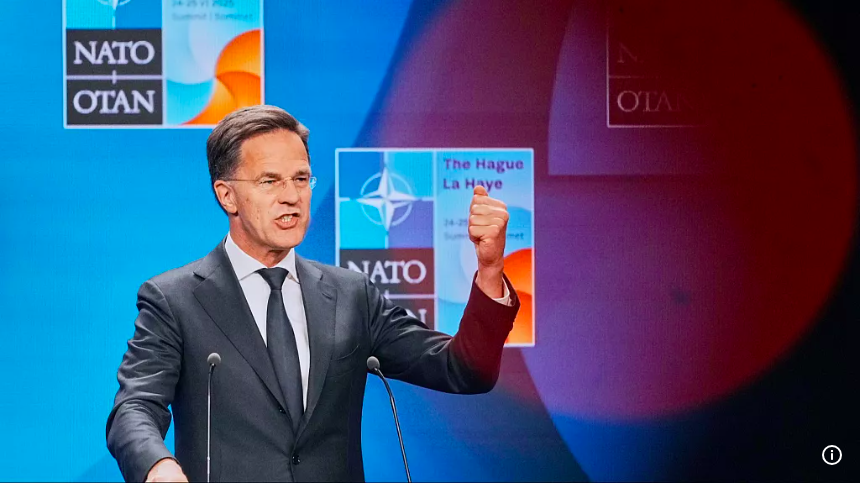
In a bold and historic move, NATO is poised to approve a sweeping new defence spending target, raising the bar from the long-standing 2% benchmark to an ambitious 5% of GDP. NATO Secretary General Mark Rutte, speaking ahead of the alliance’s summit in The Hague, described the shift as “a quantum leap that is ambitious, historic and fundamental to securing our future.”
The new target, set to be signed off by all 32 allied countries on Wednesday, reflects a major overhaul of NATO’s military posture in the face of evolving threats—most notably from Russia. Rutte emphasised that unless the alliance significantly ramps up defence spending and production, its deterrent capacity could fall short just when it is most needed.
“Our security environment has changed,” Rutte said. “If we don’t act now, our deterrence will not be strong enough in a few years when Russia could potentially attack another European country.”
A Breakdown of the 5% Target
The 5% GDP defence target is split into two components:
- 3.5% will be dedicated to core military spending, which includes purchasing military equipment like tanks, aircraft, and air defence systems.
- 1.5% will go towards broader defence-related investments, such as cybersecurity, military mobility, civilian-military cooperation, and resilience to hybrid threats.
Rutte said the additional funds would finance a five-fold increase in air defence systems, the purchase of “thousands” of new tanks and armoured vehicles, and the production of “millions of rounds” of artillery ammunition.
While the specific capabilities each nation must build remain classified, sources indicate that the goals were reached after intense negotiations. NATO members will be required to meet the 5% target by 2035, although the United States has urged allies to accelerate the timeline.
“There’s not an unlimited timeframe here—our adversaries will not wait for us to be ready,” said U.S. Ambassador to NATO Matthew Whitaker. “We expect meaningful, credible growth year-on-year.”
A Clearer Framework for Accountability
Unlike the 2014 Wales summit pledge—where the 2% target was frequently missed—this new agreement includes a rigorous review process. A comprehensive evaluation will take place in 2029, with member countries required to submit annual reports detailing their progress.
Rutte called this accountability mechanism “a big difference from the Welsh pledge,” acknowledging past frustrations from allies—particularly the United States—over the slow pace of commitment.
Still, flexibility will remain. Member countries will be allowed to choose their own pathway to meeting the target, a point Rutte reiterated in communications with leaders like Spanish Prime Minister Pedro Sánchez, who had initially expressed concerns due to economic constraints at home.
A Summit with High Stakes
The summit in The Hague, hosted by the Netherlands, officially begins Tuesday with meetings of foreign and defence ministers. Ukrainian officials will also be present. The format has been deliberately streamlined, with a single working session on Wednesday following a royal dinner hosted by the Dutch King—reportedly designed to ensure U.S. President Donald Trump’s participation and focus.
The final joint declaration, expected to be significantly shorter than previous summit statements, will reaffirm NATO’s stance that Russia remains the primary long-term threat to Euro-Atlantic security. While Ukraine will be mentioned, allies are not expected to restate its “irreversible path” to NATO membership, a phrase that appeared in last year’s communiqué.
Rutte pushed back against any notion that NATO’s support for Ukraine is waning, noting that allied aid had increased from a previously announced $20 billion (€17.3 billion) to $35 billion (€30 billion) so far this year.
“NATO’s support to Ukraine is unwavering and will persist,” Rutte declared.
Iran and Middle East Tensions in Focus
While Russia remains NATO’s core concern, the crisis in the Middle East is also expected to loom large over the summit. Rutte addressed concerns over Iran’s nuclear ambitions and its growing military cooperation with Russia.
“Allies have long agreed that Iran must not develop a nuclear weapon,” he said. “There is a close connection between Iran and our main threat, Russia. Iran is heavily involved in the war against Ukraine, particularly through supplying Shahed kamikaze drones.”
As regional instability intensifies, NATO leaders are expected to discuss how best to respond to hybrid threats, proxy conflicts, and potential spillovers into Europe.
A Historic Turning Point
The upcoming vote on the 5% defence spending pledge marks one of the most significant shifts in NATO’s strategic orientation in decades. It reflects a growing consensus among allies that deterrence is not a luxury but a necessity in today’s volatile geopolitical climate.
From air defence systems to tank divisions, NATO is preparing to bolster its capabilities not just for tomorrow, but for the next decade. If successful, the alliance will emerge not only stronger but also more unified in its commitment to collective defence.
Conclusion
NATO’s new 5% defence spending target marks a pivotal moment in the alliance’s history—signalling a firm commitment to strengthening its collective military capabilities in an increasingly volatile world. As Secretary General Mark Rutte emphasised, this “quantum leap” is not just about higher budgets, but about ensuring NATO’s readiness to deter threats from Russia, Iran, and beyond. With clear accountability measures, increased investments in air defence, tanks, and ammunition, and unwavering support for Ukraine, the alliance is redefining its role for the next decade. The challenge now lies in turning this ambitious vision into real, sustained action.
Meta Description:
NATO’s new 5% GDP defence spending target marks a historic shift in military policy. Secretary General Rutte calls it a “quantum leap” to bolster air defence, tanks, and ammo production.
NATO's New 5% Defence Spending Target: A ‘Quantum Leap’ for Security, Says Rutte
In a bold and historic move, NATO is poised to approve a sweeping new defence spending target, raising the bar from the long-standing 2% benchmark to an ambitious 5% of GDP. NATO Secretary General Mark Rutte, speaking ahead of the alliance’s summit in The Hague, described the shift as “a quantum leap that is ambitious, historic and fundamental to securing our future.”
The new target, set to be signed off by all 32 allied countries on Wednesday, reflects a major overhaul of NATO’s military posture in the face of evolving threats—most notably from Russia. Rutte emphasised that unless the alliance significantly ramps up defence spending and production, its deterrent capacity could fall short just when it is most needed.
Register for Tekedia Mini-MBA edition 20 (June 8 – Sept 5, 2026).
Register for Tekedia AI in Business Masterclass.
Join Tekedia Capital Syndicate and co-invest in great global startups.
Register for Tekedia AI Lab.
“Our security environment has changed,” Rutte said. “If we don’t act now, our deterrence will not be strong enough in a few years when Russia could potentially attack another European country.”
A Breakdown of the 5% Target
The 5% GDP defence target is split into two components:

- 3.5% will be dedicated to core military spending, which includes purchasing military equipment like tanks, aircraft, and air defence systems.
- 1.5% will go towards broader defence-related investments, such as cybersecurity, military mobility, civilian-military cooperation, and resilience to hybrid threats.
Rutte said the additional funds would finance a five-fold increase in air defence systems, the purchase of “thousands” of new tanks and armoured vehicles, and the production of “millions of rounds” of artillery ammunition.
While the specific capabilities each nation must build remain classified, sources indicate that the goals were reached after intense negotiations. NATO members will be required to meet the 5% target by 2035, although the United States has urged allies to accelerate the timeline.
“There’s not an unlimited timeframe here—our adversaries will not wait for us to be ready,” said U.S. Ambassador to NATO Matthew Whitaker. “We expect meaningful, credible growth year-on-year.”

A Clearer Framework for Accountability
Unlike the 2014 Wales summit pledge—where the 2% target was frequently missed—this new agreement includes a rigorous review process. A comprehensive evaluation will take place in 2029, with member countries required to submit annual reports detailing their progress.
Rutte called this accountability mechanism “a big difference from the Welsh pledge,” acknowledging past frustrations from allies—particularly the United States—over the slow pace of commitment.
Still, flexibility will remain. Member countries will be allowed to choose their own pathway to meeting the target, a point Rutte reiterated in communications with leaders like Spanish Prime Minister Pedro Sánchez, who had initially expressed concerns due to economic constraints at home.
A Summit with High Stakes
The summit in The Hague, hosted by the Netherlands, officially begins Tuesday with meetings of foreign and defence ministers. Ukrainian officials will also be present. The format has been deliberately streamlined, with a single working session on Wednesday following a royal dinner hosted by the Dutch King—reportedly designed to ensure U.S. President Donald Trump’s participation and focus.
The final joint declaration, expected to be significantly shorter than previous summit statements, will reaffirm NATO’s stance that Russia remains the primary long-term threat to Euro-Atlantic security. While Ukraine will be mentioned, allies are not expected to restate its “irreversible path” to NATO membership, a phrase that appeared in last year’s communiqué.
Rutte pushed back against any notion that NATO’s support for Ukraine is waning, noting that allied aid had increased from a previously announced $20 billion (€17.3 billion) to $35 billion (€30 billion) so far this year.
“NATO’s support to Ukraine is unwavering and will persist,” Rutte declared.
Iran and Middle East Tensions in Focus
While Russia remains NATO’s core concern, the crisis in the Middle East is also expected to loom large over the summit. Rutte addressed concerns over Iran’s nuclear ambitions and its growing military cooperation with Russia.
“Allies have long agreed that Iran must not develop a nuclear weapon,” he said. “There is a close connection between Iran and our main threat, Russia. Iran is heavily involved in the war against Ukraine, particularly through supplying Shahed kamikaze drones.”
As regional instability intensifies, NATO leaders are expected to discuss how best to respond to hybrid threats, proxy conflicts, and potential spillovers into Europe.
A Historic Turning Point
The upcoming vote on the 5% defence spending pledge marks one of the most significant shifts in NATO’s strategic orientation in decades. It reflects a growing consensus among allies that deterrence is not a luxury but a necessity in today’s volatile geopolitical climate.
From air defence systems to tank divisions, NATO is preparing to bolster its capabilities not just for tomorrow, but for the next decade. If successful, the alliance will emerge not only stronger but also more unified in its commitment to collective defence.
Conclusion
NATO’s new 5% defence spending target marks a pivotal moment in the alliance’s history—signalling a firm commitment to strengthening its collective military capabilities in an increasingly volatile world. As Secretary General Mark Rutte emphasised, this “quantum leap” is not just about higher budgets, but about ensuring NATO’s readiness to deter threats from Russia, Iran, and beyond. With clear accountability measures, increased investments in air defence, tanks, and ammunition, and unwavering support for Ukraine, the alliance is redefining its role for the next decade. The challenge now lies in turning this ambitious vision into real, sustained action.
Meta Description:
NATO’s new 5% GDP defence spending target marks a historic shift in military policy. Secretary General Rutte calls it a “quantum leap” to bolster air defence, tanks, and ammo production.
Share this:
- Click to share on Facebook (Opens in new window) Facebook
- Click to share on X (Opens in new window) X
- Click to share on WhatsApp (Opens in new window) WhatsApp
- Click to share on LinkedIn (Opens in new window) LinkedIn
- Click to email a link to a friend (Opens in new window) Email
- Click to print (Opens in new window) Print