

South African Farm Worker Says He Was Forced to Feed Murder Victims to Pigs Amid Racially Charged Trial

Quote from Alex Bobby on August 5, 2025, 5:10 AM
South African Farm Worker Claims He Was Forced to Feed Women to Pigs in Shocking Murder Case
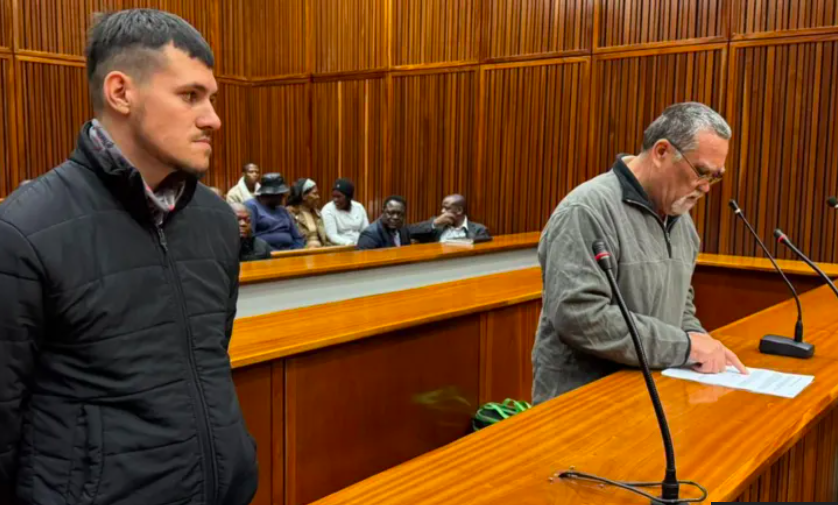
In a case that has sent shockwaves through South Africa and rekindled deep racial tensions, a white farm worker has claimed in court that he was forced to help dispose of the bodies of two black women by feeding them too pigs. The grisly allegation surfaced as the murder trial of three men accused of killing Maria Makgato, 45, and Lucia Ndlovu, 34, began in Limpopo province.
Adrian de Wet, 20, one of the three accused, turned state witness as the trial opened at the Limpopo High Court. According to both his legal team and prosecutors, de Wet alleges that farm owner Zachariah Johannes Olivier, 60, shot and killed the women after they were found scavenging for expired dairy products left for pigs on his property near the city of Polokwane in 2023.
De Wet, who served as a supervisor on the farm, claims he acted under duress when he was ordered to throw the women's bodies into a pig enclosure to conceal the crime. If the court accepts his testimony, all charges against him, including murder, attempted murder, and obstruction of justice, will be dropped.
The details are as disturbing as they are polarising — reigniting unresolved anger over land ownership, economic inequality, and the legacy of apartheid, which ended more than three decades ago.
Searching for Food, Met with Death
Ms. Makgato and Ms. Ndlovu had reportedly entered the farm in search of discarded or soon-to-expire dairy products left for animal feed — a desperate but not uncommon act in a region plagued by unemployment and food insecurity. They were accompanied by Ms. Ndlovu’s husband, who managed to escape after the group was fired upon. The men now face charges of attempted murder for that shooting incident.
Both women were allegedly shot and killed on the spot, after which their bodies were dumped into the pigsty — not just to conceal the evidence, but, according to some courtroom observers, to degrade and dehumanise.
"This is not only a brutal murder — it is a grotesque reminder of how little black lives still matter in parts of this country," said activist Tshireletso Motsepe, who attended the hearing.
The case has drawn widespread public outrage, with many calling for swift and decisive justice.
Racial Tensions at Boiling Point
The trial comes at a time when racial divisions in South Africa remain deeply embedded, especially in rural farming communities. Despite democratic reforms since 1994, the ownership of agricultural land continues to lie largely with the white minority, while black farmworkers, who form the majority labor force, often live in poverty and vulnerability.
The racial optics of this case — two black women killed and allegedly fed to pigs, with a white farm owner accused of orchestrating the crime — have struck a nerve in a nation still struggling to reconcile with its past.
Members of the opposition Economic Freedom Fighters (EFF), known for their outspoken criticism of white-owned farms and land inequality, were present in court. The EFF has previously called for the farm to be permanently shut down and redistributed.
“This is not just about murder — it’s about a system that enables it,” one EFF member told reporters outside the courthouse.
The Accused and the Charges
Alongside Olivier and de Wet, a third accused, William Musora, 50, also appeared in court. Musora, a Zimbabwean national who worked on the farm, is charged with murder, attempted murder, possession of an unlicensed firearm, and obstruction of justice. He also faces an additional charge under South Africa’s Immigration Act, as he is allegedly living in the country illegally.
Neither Olivier nor Musora has yet entered a plea. Both remain in custody, and the trial was postponed to next week to allow further witness preparation and legal argument.
In a courtroom packed with journalists, relatives of the victims, and political supporters, emotions ran high. Olivier’s wife was seen seated in the front row, weeping quietly throughout the proceedings.
Legal Strategy and Public Backlash
De Wet’s legal team is banking on the court accepting that he acted under duress — a defence often difficult to prove but not impossible under South African law. If successful, he could walk free, while testifying against his former employer and co-worker.
The prosecution believes de Wet’s testimony could be crucial to securing convictions against Olivier and Musora. However, many South Africans remain skeptical, questioning how a 20-year-old supervisor could so easily be coerced into such a horrific act.
Civil rights groups have urged caution, warning that the case should not be used to inflame racial hatred, but instead should be a moment of reckoning for the justice system and the rural economy that enables exploitation and violence.
“Justice must be served — but so must truth. We need to confront what allows these atrocities to happen,” said Ntsiki Mavuso of the Rural Justice Network.
Looking Forward
As proceedings resume next week, all eyes will be on Adrian de Wet’s full testimony. His words could determine the fate off the accused — and perhaps set a legal precedent in how the courts interpret duress in cases of racially charged violence.
For the families of the victims and a deeply divided public, the hope is simple: truth, accountability, and a South Africa where such horrors never happen again.
Final Thought
This case is a haunting reminder that South Africa's past is never far from its present. The brutal killing of two women, allegedly over discarded food, speaks volumes about the desperation, injustice, and racial fault lines that still run deep in rural communities. As the nation watches this trial unfold, the demand is not only for legal accountability — but for a collective reckoning with the systems that continue to devalue black lives. Justice must be done, but true healing will only come when dignity, equality, and humanity are guaranteed for all.
Conclusion
The horrific details emerging from the Limpopo murder trial have shocked the nation and reignited painful conversations about race, land, and justice in South Africa. The alleged killing of Maria Makgato and Lucia Ndlovu, and the chilling claim that their bodies were fed to pigs, expose not just a gruesome crime — but the deep structural inequalities that still define much of rural South African life.
As the court weighs the testimony of Adrian de Wet and the responsibility of the accused, the country is left grappling with the broader implications. This case is not just about individual guilt or innocence; it’s about the value of human life in a society still healing from apartheid’s legacy.
Justice for the victims must be delivered swiftly and fairly. But beyond the courtroom, this tragedy must serve as a wake-up call — a reminder that until the roots of inequality are addressed, such acts of cruelty will remain a dark possibility in the shadows of the nation.
Meta Description:
A South African farm worker claims he was forced to dispose of two murdered black women’s bodies by feeding them too pigs. The trial has reignited racial tensions across the country.
South African Farm Worker Claims He Was Forced to Feed Women to Pigs in Shocking Murder Case
In a case that has sent shockwaves through South Africa and rekindled deep racial tensions, a white farm worker has claimed in court that he was forced to help dispose of the bodies of two black women by feeding them too pigs. The grisly allegation surfaced as the murder trial of three men accused of killing Maria Makgato, 45, and Lucia Ndlovu, 34, began in Limpopo province.
Adrian de Wet, 20, one of the three accused, turned state witness as the trial opened at the Limpopo High Court. According to both his legal team and prosecutors, de Wet alleges that farm owner Zachariah Johannes Olivier, 60, shot and killed the women after they were found scavenging for expired dairy products left for pigs on his property near the city of Polokwane in 2023.
Register for Tekedia Mini-MBA edition 20 (June 8 – Sept 5, 2026).
Register for Tekedia AI in Business Masterclass.
Join Tekedia Capital Syndicate and co-invest in great global startups.
Register for Tekedia AI Lab.
De Wet, who served as a supervisor on the farm, claims he acted under duress when he was ordered to throw the women's bodies into a pig enclosure to conceal the crime. If the court accepts his testimony, all charges against him, including murder, attempted murder, and obstruction of justice, will be dropped.
The details are as disturbing as they are polarising — reigniting unresolved anger over land ownership, economic inequality, and the legacy of apartheid, which ended more than three decades ago.
Searching for Food, Met with Death

Ms. Makgato and Ms. Ndlovu had reportedly entered the farm in search of discarded or soon-to-expire dairy products left for animal feed — a desperate but not uncommon act in a region plagued by unemployment and food insecurity. They were accompanied by Ms. Ndlovu’s husband, who managed to escape after the group was fired upon. The men now face charges of attempted murder for that shooting incident.
Both women were allegedly shot and killed on the spot, after which their bodies were dumped into the pigsty — not just to conceal the evidence, but, according to some courtroom observers, to degrade and dehumanise.
"This is not only a brutal murder — it is a grotesque reminder of how little black lives still matter in parts of this country," said activist Tshireletso Motsepe, who attended the hearing.

The case has drawn widespread public outrage, with many calling for swift and decisive justice.
Racial Tensions at Boiling Point
The trial comes at a time when racial divisions in South Africa remain deeply embedded, especially in rural farming communities. Despite democratic reforms since 1994, the ownership of agricultural land continues to lie largely with the white minority, while black farmworkers, who form the majority labor force, often live in poverty and vulnerability.
The racial optics of this case — two black women killed and allegedly fed to pigs, with a white farm owner accused of orchestrating the crime — have struck a nerve in a nation still struggling to reconcile with its past.
Members of the opposition Economic Freedom Fighters (EFF), known for their outspoken criticism of white-owned farms and land inequality, were present in court. The EFF has previously called for the farm to be permanently shut down and redistributed.
“This is not just about murder — it’s about a system that enables it,” one EFF member told reporters outside the courthouse.
The Accused and the Charges
Alongside Olivier and de Wet, a third accused, William Musora, 50, also appeared in court. Musora, a Zimbabwean national who worked on the farm, is charged with murder, attempted murder, possession of an unlicensed firearm, and obstruction of justice. He also faces an additional charge under South Africa’s Immigration Act, as he is allegedly living in the country illegally.
Neither Olivier nor Musora has yet entered a plea. Both remain in custody, and the trial was postponed to next week to allow further witness preparation and legal argument.
In a courtroom packed with journalists, relatives of the victims, and political supporters, emotions ran high. Olivier’s wife was seen seated in the front row, weeping quietly throughout the proceedings.
Legal Strategy and Public Backlash
De Wet’s legal team is banking on the court accepting that he acted under duress — a defence often difficult to prove but not impossible under South African law. If successful, he could walk free, while testifying against his former employer and co-worker.
The prosecution believes de Wet’s testimony could be crucial to securing convictions against Olivier and Musora. However, many South Africans remain skeptical, questioning how a 20-year-old supervisor could so easily be coerced into such a horrific act.
Civil rights groups have urged caution, warning that the case should not be used to inflame racial hatred, but instead should be a moment of reckoning for the justice system and the rural economy that enables exploitation and violence.
“Justice must be served — but so must truth. We need to confront what allows these atrocities to happen,” said Ntsiki Mavuso of the Rural Justice Network.
Looking Forward
As proceedings resume next week, all eyes will be on Adrian de Wet’s full testimony. His words could determine the fate off the accused — and perhaps set a legal precedent in how the courts interpret duress in cases of racially charged violence.
For the families of the victims and a deeply divided public, the hope is simple: truth, accountability, and a South Africa where such horrors never happen again.
Final Thought
This case is a haunting reminder that South Africa's past is never far from its present. The brutal killing of two women, allegedly over discarded food, speaks volumes about the desperation, injustice, and racial fault lines that still run deep in rural communities. As the nation watches this trial unfold, the demand is not only for legal accountability — but for a collective reckoning with the systems that continue to devalue black lives. Justice must be done, but true healing will only come when dignity, equality, and humanity are guaranteed for all.
Conclusion
The horrific details emerging from the Limpopo murder trial have shocked the nation and reignited painful conversations about race, land, and justice in South Africa. The alleged killing of Maria Makgato and Lucia Ndlovu, and the chilling claim that their bodies were fed to pigs, expose not just a gruesome crime — but the deep structural inequalities that still define much of rural South African life.
As the court weighs the testimony of Adrian de Wet and the responsibility of the accused, the country is left grappling with the broader implications. This case is not just about individual guilt or innocence; it’s about the value of human life in a society still healing from apartheid’s legacy.
Justice for the victims must be delivered swiftly and fairly. But beyond the courtroom, this tragedy must serve as a wake-up call — a reminder that until the roots of inequality are addressed, such acts of cruelty will remain a dark possibility in the shadows of the nation.
Meta Description:
A South African farm worker claims he was forced to dispose of two murdered black women’s bodies by feeding them too pigs. The trial has reignited racial tensions across the country.
Share this:
- Click to share on Facebook (Opens in new window) Facebook
- Click to share on X (Opens in new window) X
- Click to share on WhatsApp (Opens in new window) WhatsApp
- Click to share on LinkedIn (Opens in new window) LinkedIn
- Click to email a link to a friend (Opens in new window) Email
- Click to print (Opens in new window) Print