

SpaceX Launches 50th Dragon Spacecraft to ISS on CRS-33 Resupply Mission

Quote from Alex Bobby on August 25, 2025, 3:34 AM
SpaceX Launches 50th Dragon Spacecraft to ISS on Resupply Mission for NASA
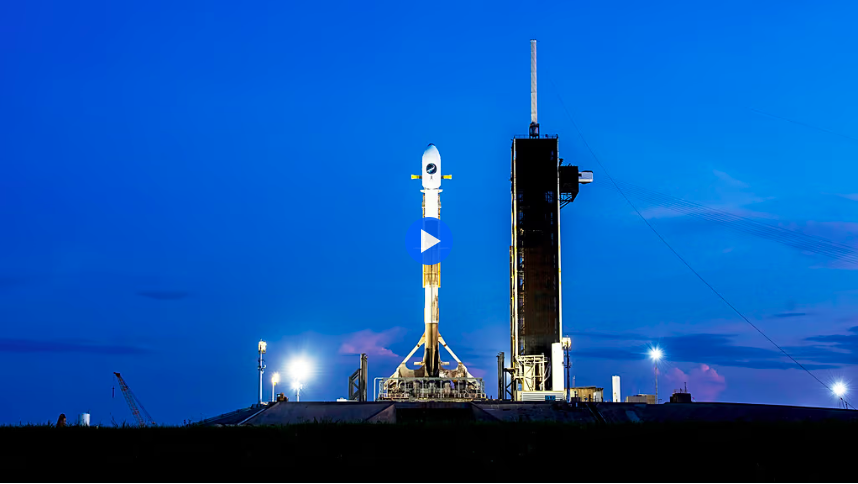
SpaceX achieved another milestone in its long-standing partnership with NASA on Sunday, as the company successfully launched its 50th Dragon spacecraft to the International Space Station (ISS). The mission, officially designated Commercial Resupply Services-33 (CRS-33), lifted off from Cape Canaveral, Florida, marking more than a decade of reliable cargo transport to the orbiting laboratory.
This latest mission not only underscores SpaceX’s central role in sustaining human spaceflight aboard the ISS but also highlights the evolving capabilities of the Dragon spacecraft, which now serves as a platform for both logistics and pioneering science.
A Milestone Launch
The launch took place under clear Florida skies, with SpaceX’s Falcon 9 rocket carrying the Dragon capsule into orbit. Following stage separation, the first-stage booster executed a precise landing on the A Shortfall of Gravitas droneship stationed in the Atlantic Ocean. This booster had already flown six previous missions, showcasing the company’s hallmark achievement in reusability.
For the Dragon capsule itself, this marks its third journey to space, while the launch stands as the 50th Dragon spacecraft to reach the ISS since SpaceX’s historic first resupply demonstration flight in May 2012.
“This is a remarkable milestone for SpaceX and NASA,” said Bill Spetch, Operations Integration Manager for the ISS Program. “Over the last decade, Dragon has become a vital lifeline to the station, carrying not just food and supplies, but also scientific experiments that will shape the future of human exploration.”
What CRS-33 is Delivering
The CRS-33 mission is transporting over 5,000 pounds (2,268 kilograms) of cargo to astronauts currently stationed on the ISS. The payload includes:
- Fresh food and crew supplies
- Replacement hardware for station systems
- Science experiments and technology demonstrations critical for future spaceflight
The Dragon capsule is expected to autonomously dock with the ISS on Monday, roughly 28 hours after liftoff. Once berthed, astronauts will begin unloading the cargo, some of which could have far-reaching implications for space medicine and long-term missions to the Moon and Mars.
Scientific Research at the Core
While every resupply mission carries essentials for the crew, NASA officials emphasized that CRS-33 stands out because of the breadth and depth of its scientific portfolio. More than 50 experiments are being transported aboard Dragon, many of which directly address challenges astronauts face during extended stays in microgravity.
One of the headline investigations focuses on bone health in space. Astronauts typically experience significant bone loss during prolonged exposure to microgravity, a condition that could have devastating implications for missions lasting months or even years. Researchers are testing whether blocking a specific protein in the body — known to influence bone density — can slow or even prevent this loss.
“This research team is testing out the hypothesis that blocking a certain protein in the body that is known to promote bone loss or bone health changes may actually help reduce the overall bone loss that astronauts experience in space,” explained Heidi Parris, associate program scientist for the ISS Program.
Other experiments include studies into plant biology, fluid dynamics, and materials science, all of which are crucial for enabling sustainable long-term exploration beyond Earth orbit.
Dragon’s Expanding Role
The CRS-33 mission also reflects the growing versatility of Dragon as more than just a cargo delivery system. According to NASA’s Bill Spetch, SpaceX’s spacecraft will be used in September to provide the ISS with a much-needed altitude boost — a service previously performed by Russian spacecraft.
“As you know, the space station’s altitude slowly decays over time due to the thin amount of atmosphere still at our altitude,” Spetch noted. “NASA contracted with SpaceX a few years ago to provide a reboost capability to the space station.”
This capability is a significant step, as it reduces reliance on other international partners and further cements SpaceX’s importance in the station’s continued operations.
Looking Ahead
Dragon will remain docked at the ISS until at least December, when it is scheduled to return to Earth with completed experiments and hardware for analysis. The capsule’s safe re-entry and splashdown will once again demonstrate the craft’s ability to ferry both cargo to space and critical samples back to Earth — a capability no other active spacecraft currently matches.
For SpaceX, the 50th Dragon flight is more than a symbolic milestone; it reflects the company’s sustained reliability, innovation, and the trust placed in it by NASA. What began as an ambitious private venture in the early 2000s has now become an indispensable part of humanity’s presence in space.
Final Thoughts
The 50th Dragon mission is more than just a number — it’s a symbol of how far commercial spaceflight has come in reshaping human access to low Earth orbit. What began with a single demonstration flight in 2012 has now matured into a dependable system that not only sustains the International Space Station but also drives forward critical science and technology for humanity’s next giant leaps.
As SpaceX continues to refine Dragon’s capabilities and expand its role, each launch brings us closer to a future where deep space missions are not only possible but sustainable. CRS-33 reminds us that milestones in space exploration are not just measured in launches and landings, but in the knowledge gained and the doors they open for the generations that follow.
Conclusion
The successful launch of CRS-33 underscores SpaceX’s remarkable journey over the past decade, from sending its first Dragon to the ISS in 2012 to celebrating its 50th spacecraft visit in 2025. Each mission has carried not just supplies, but also the promise of advancing science, medicine, and human exploration.
As Dragon continues to evolve — taking on new roles such as reboosting the station’s orbit — its importance will only grow in shaping the future of spaceflight. With ambitious goals ahead, including missions to the Moon and Mars, milestones like this one remind us that the path to deep space exploration begins with consistent, reliable steps.
For NASA and SpaceX, CRS-33 is not just a resupply mission; it’s a testament to how far commercial spaceflight has come — and how far it can still take us.
Meta Description:
SpaceX’s 50th Dragon spacecraft has launched to the ISS on NASA’s CRS-33 mission, carrying 5,000 lbs of supplies and over 50 science experiments to advance human space exploration.
SpaceX Launches 50th Dragon Spacecraft to ISS on Resupply Mission for NASA
SpaceX achieved another milestone in its long-standing partnership with NASA on Sunday, as the company successfully launched its 50th Dragon spacecraft to the International Space Station (ISS). The mission, officially designated Commercial Resupply Services-33 (CRS-33), lifted off from Cape Canaveral, Florida, marking more than a decade of reliable cargo transport to the orbiting laboratory.
This latest mission not only underscores SpaceX’s central role in sustaining human spaceflight aboard the ISS but also highlights the evolving capabilities of the Dragon spacecraft, which now serves as a platform for both logistics and pioneering science.
Register for Tekedia Mini-MBA edition 20 (June 8 – Sept 5, 2026).
Register for Tekedia AI in Business Masterclass.
Join Tekedia Capital Syndicate and co-invest in great global startups.
Register for Tekedia AI Lab.
A Milestone Launch
The launch took place under clear Florida skies, with SpaceX’s Falcon 9 rocket carrying the Dragon capsule into orbit. Following stage separation, the first-stage booster executed a precise landing on the A Shortfall of Gravitas droneship stationed in the Atlantic Ocean. This booster had already flown six previous missions, showcasing the company’s hallmark achievement in reusability.
For the Dragon capsule itself, this marks its third journey to space, while the launch stands as the 50th Dragon spacecraft to reach the ISS since SpaceX’s historic first resupply demonstration flight in May 2012.

“This is a remarkable milestone for SpaceX and NASA,” said Bill Spetch, Operations Integration Manager for the ISS Program. “Over the last decade, Dragon has become a vital lifeline to the station, carrying not just food and supplies, but also scientific experiments that will shape the future of human exploration.”
What CRS-33 is Delivering
The CRS-33 mission is transporting over 5,000 pounds (2,268 kilograms) of cargo to astronauts currently stationed on the ISS. The payload includes:

- Fresh food and crew supplies
- Replacement hardware for station systems
- Science experiments and technology demonstrations critical for future spaceflight
The Dragon capsule is expected to autonomously dock with the ISS on Monday, roughly 28 hours after liftoff. Once berthed, astronauts will begin unloading the cargo, some of which could have far-reaching implications for space medicine and long-term missions to the Moon and Mars.
Scientific Research at the Core
While every resupply mission carries essentials for the crew, NASA officials emphasized that CRS-33 stands out because of the breadth and depth of its scientific portfolio. More than 50 experiments are being transported aboard Dragon, many of which directly address challenges astronauts face during extended stays in microgravity.
One of the headline investigations focuses on bone health in space. Astronauts typically experience significant bone loss during prolonged exposure to microgravity, a condition that could have devastating implications for missions lasting months or even years. Researchers are testing whether blocking a specific protein in the body — known to influence bone density — can slow or even prevent this loss.
“This research team is testing out the hypothesis that blocking a certain protein in the body that is known to promote bone loss or bone health changes may actually help reduce the overall bone loss that astronauts experience in space,” explained Heidi Parris, associate program scientist for the ISS Program.
Other experiments include studies into plant biology, fluid dynamics, and materials science, all of which are crucial for enabling sustainable long-term exploration beyond Earth orbit.
Dragon’s Expanding Role
The CRS-33 mission also reflects the growing versatility of Dragon as more than just a cargo delivery system. According to NASA’s Bill Spetch, SpaceX’s spacecraft will be used in September to provide the ISS with a much-needed altitude boost — a service previously performed by Russian spacecraft.
“As you know, the space station’s altitude slowly decays over time due to the thin amount of atmosphere still at our altitude,” Spetch noted. “NASA contracted with SpaceX a few years ago to provide a reboost capability to the space station.”
This capability is a significant step, as it reduces reliance on other international partners and further cements SpaceX’s importance in the station’s continued operations.
Looking Ahead
Dragon will remain docked at the ISS until at least December, when it is scheduled to return to Earth with completed experiments and hardware for analysis. The capsule’s safe re-entry and splashdown will once again demonstrate the craft’s ability to ferry both cargo to space and critical samples back to Earth — a capability no other active spacecraft currently matches.
For SpaceX, the 50th Dragon flight is more than a symbolic milestone; it reflects the company’s sustained reliability, innovation, and the trust placed in it by NASA. What began as an ambitious private venture in the early 2000s has now become an indispensable part of humanity’s presence in space.
Final Thoughts
The 50th Dragon mission is more than just a number — it’s a symbol of how far commercial spaceflight has come in reshaping human access to low Earth orbit. What began with a single demonstration flight in 2012 has now matured into a dependable system that not only sustains the International Space Station but also drives forward critical science and technology for humanity’s next giant leaps.
As SpaceX continues to refine Dragon’s capabilities and expand its role, each launch brings us closer to a future where deep space missions are not only possible but sustainable. CRS-33 reminds us that milestones in space exploration are not just measured in launches and landings, but in the knowledge gained and the doors they open for the generations that follow.
Conclusion
The successful launch of CRS-33 underscores SpaceX’s remarkable journey over the past decade, from sending its first Dragon to the ISS in 2012 to celebrating its 50th spacecraft visit in 2025. Each mission has carried not just supplies, but also the promise of advancing science, medicine, and human exploration.
As Dragon continues to evolve — taking on new roles such as reboosting the station’s orbit — its importance will only grow in shaping the future of spaceflight. With ambitious goals ahead, including missions to the Moon and Mars, milestones like this one remind us that the path to deep space exploration begins with consistent, reliable steps.
For NASA and SpaceX, CRS-33 is not just a resupply mission; it’s a testament to how far commercial spaceflight has come — and how far it can still take us.
Meta Description:
SpaceX’s 50th Dragon spacecraft has launched to the ISS on NASA’s CRS-33 mission, carrying 5,000 lbs of supplies and over 50 science experiments to advance human space exploration.
Share this:
- Click to share on Facebook (Opens in new window) Facebook
- Click to share on X (Opens in new window) X
- Click to share on WhatsApp (Opens in new window) WhatsApp
- Click to share on LinkedIn (Opens in new window) LinkedIn
- Click to email a link to a friend (Opens in new window) Email
- Click to print (Opens in new window) Print