

Steve McQueen’s 34-Hour Holocaust Documentary Occupied City to Screen at Amsterdam’s Rijksmuseum

Quote from Alex Bobby on September 14, 2025, 5:06 AM
Steve McQueen’s 34-Hour Holocaust Documentary Occupied City to Be Projected on Amsterdam’s Rijksmuseum
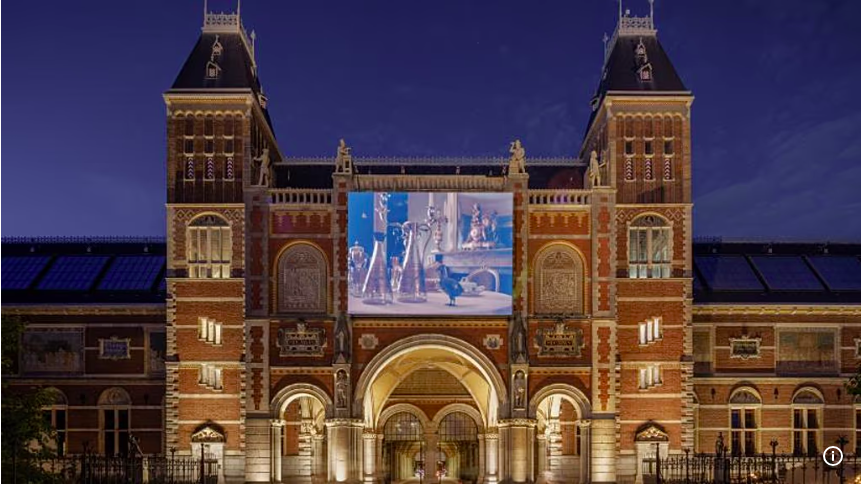
Beginning this week, visitors to Amsterdam’s iconic Rijksmuseum will witness a remarkable and haunting cinematic event: a 34-hour silent version of Steve McQueen’s monumental Holocaust documentary Occupied City will be projected continuously on the museum’s south façade from 12 September 2025 until 25 January 2026.
The extraordinary presentation marks the first time the full-length version of McQueen’s deeply ambitious work will be experienced in the way the Oscar-winning filmmaker originally intended — as a meditative, uninterrupted journey through history, memory, and the silent presence of the past.
From Cannes to the Rijksmuseum
Occupied City first drew international attention when a 4 hour and 28 minute cut premiered at the Cannes Film Festival in 2023. That version, while already epic in scope, represented only a fraction of McQueen’s full vision.
The new 34-hour silent cut — titled Occupied City (still) — has never been seen publicly until now. It will be shown on a loop across the Rijksmuseum’s vast south-facing exterior, transforming the museum itself into a living monument of remembrance.
The full version chronicles more than 2,000 addresses and buildings in Amsterdam that were directly affected by the Nazi occupation during World War II. Through still and moving images of the city today, it reveals the silent echoes of what happened in each place — deportations, arrests, acts of resistance, and countless tragedies that shaped the city’s history.
A Radical Approach to Holocaust Memory
Rather than using the traditional documentary language of archival footage, talking head interviews, or images of swastika flags, McQueen adopted a radically different approach.
Based on the Dutch-language book Atlas of an Occupied City, Amsterdam 1940–1945 by his wife Bianca Stigter, the documentary overlays accounts of wartime atrocities with present-day visuals of the same locations.
This creates a striking dissonance: viewers see contemporary life in Amsterdam — cyclists, cafes, children playing — while hearing about the horrific events that unfolded in those very same streets and buildings eight decades ago.
McQueen has described the effect as “living with ghosts.”
“The work invites reflection on themes such as occupation, persecution and freedom,” McQueen explained.
“Occupied City (still), which is mounted on the façade of the Rijksmuseum, holds up a mirror to the city. It presents the daily life of contemporary Amsterdam, which sits on 750 years of history.
At its core is the magnitude of what has taken place right here during the Second World War. You couldn’t possibly hold it all in your head and the passage of time has covered most of it. Living in Amsterdam feels like living with ghosts. There are always two or three parallel narratives unfolding at once. The past is always present.”Screenings Inside the Museum
In addition to the outdoor projection, the complete version with sound and voiceover will be shown inside the Rijksmuseum auditorium on 11 and 12 October 2025. This version includes narration of the historical accounts from the book, offering a more traditional cinematic experience for those able to endure the staggering running time.
The Rijksmuseum has positioned this monumental presentation as part of Amsterdam’s 750th anniversary celebrations and the commemoration of 80 years since the city’s liberation from Nazi occupation.
Taco Dibbits, General Director of the Rijksmuseum, praised the collaboration:
“Collaborating with Steve McQueen has long been a cherished wish. In Occupied City, McQueen powerfully interweaves the invisible scars of the Second World War with the contemporary rhythm of Amsterdam. As a Brit living in Amsterdam, he allows us to see our own present and past through different eyes.”
An Ambitious Act of Memory
Filmed during a time of pandemic lockdowns and global protests, Occupied City also draws subtle parallels between the oppression of the past and the turbulence of the present.
McQueen has said that the piece is not only about documenting history but also about reflecting on what it means to live atop the remnants of tragedy. By slowing down the process of watching and removing conventional narrative structures, he forces viewers to confront the haunting dissonance between the vibrancy of life today and the devastation that once engulfed the same streets.
In a review of the Cannes cut, critics noted:
“While it could work as a four-part miniseries, the effect of watching it in one go remains uniquely haunting. It can start to feel monotonous after a while, but there’s a certain savvy in this repetition… McQueen establishes a spatial navigation which is less topography of trauma and more a geographical exploration of collective memory.”
The Artist Behind the Film
McQueen is no stranger to bold, boundary-pushing work. The British artist rose to fame after winning the Turner Prize in 1999 and later became a celebrated filmmaker with acclaimed titles such as Hunger (2008), Shame (2011), and the Oscar-winning 12 Years a Slave (2013).
His more recent projects include the Small Axe anthology (2020), the documentary Grenfell (2023) — which captured the charred shell of the Grenfell Tower from above — and the World War II drama Blitz, which premiered in 2024.
McQueen has lived in Amsterdam for years, and Occupied City is deeply rooted in his adopted home’s history, serving as both a memorial and a confrontation.
Looking Forward
As Occupied City continues its unprecedented run at the Rijksmuseum until January 2026, audiences have the unique opportunity to experience history in a way that few other works of art allow — immersively, reflectively, and uninterrupted.
Looking ahead, this presentation could inspire other museums and cultural institutions to explore similarly ambitious projects that blend contemporary urban life with historical memory. For Amsterdam, it reinforces the city’s commitment to remembering the Holocaust and honouring the lives of those affected, while offering residents and visitors a chance to see their city through the lens of both past and present.
For Steve McQueen, the Rijksmuseum screening represents not only a culmination of years of research and artistic vision but also a chance to continue pushing the boundaries of how film, history, and public space can intersect — inviting reflection, dialogue, and deeper engagement with the weight of history.
Final Thoughts
Steve McQueen’s Occupied City is not just another historical documentary — it is a monumental meditation on memory, loss, and the lingering presence of the past within everyday life. By projecting the 34-hour silent version across the Rijksmuseum’s façade, McQueen transforms one of the world’s most famous museums into a living canvas of remembrance, forcing viewers to confront history not as distant or abstract, but as something embedded in the streets they walk today.
This ambitious project arrives at a fitting moment — as Amsterdam celebrates 750 years and reflects on 80 years since its liberation. It serves as a powerful reminder that beneath the beauty and bustle of modern cities lie the scars of untold stories.
Ultimately, Occupied City challenges us to look beyond the surface, to see the echoes of the past around us, and to carry those memories forward with empathy and vigilance.
Conclusion
The Rijksmuseum’s presentation of Steve McQueen’s Occupied City is more than an exhibition — it is a profound act of remembrance and reflection. By placing the ghosts of the past in direct conversation with the living city of today, McQueen compels viewers to reconsider what it means to inhabit a place layered with centuries of trauma, resilience, and renewal.
As Amsterdam marks 750 years of existence and 80 years since its liberation, the towering projection of Occupied City stands as both a tribute to those who suffered and a challenge to future generations: to remember, to reflect, and to never look away.
The outdoor projection runs from 12 September 2025 to 25 January 2026, while the full narrated screening will be held on 11–12 October inside the Rijksmuseum.
Meta Description:
Steve McQueen’s 34-hour Holocaust documentary Occupied City will be projected continuously on Amsterdam’s Rijksmuseum façade from September 2025 to January 2026, offering a haunting reflection on WWII and the city’s past.
Steve McQueen’s 34-Hour Holocaust Documentary Occupied City to Be Projected on Amsterdam’s Rijksmuseum
Beginning this week, visitors to Amsterdam’s iconic Rijksmuseum will witness a remarkable and haunting cinematic event: a 34-hour silent version of Steve McQueen’s monumental Holocaust documentary Occupied City will be projected continuously on the museum’s south façade from 12 September 2025 until 25 January 2026.
The extraordinary presentation marks the first time the full-length version of McQueen’s deeply ambitious work will be experienced in the way the Oscar-winning filmmaker originally intended — as a meditative, uninterrupted journey through history, memory, and the silent presence of the past.
Register for Tekedia Mini-MBA edition 20 (June 8 – Sept 5, 2026).
Register for Tekedia AI in Business Masterclass.
Join Tekedia Capital Syndicate and co-invest in great global startups.
Register for Tekedia AI Lab.
From Cannes to the Rijksmuseum
Occupied City first drew international attention when a 4 hour and 28 minute cut premiered at the Cannes Film Festival in 2023. That version, while already epic in scope, represented only a fraction of McQueen’s full vision.
The new 34-hour silent cut — titled Occupied City (still) — has never been seen publicly until now. It will be shown on a loop across the Rijksmuseum’s vast south-facing exterior, transforming the museum itself into a living monument of remembrance.

The full version chronicles more than 2,000 addresses and buildings in Amsterdam that were directly affected by the Nazi occupation during World War II. Through still and moving images of the city today, it reveals the silent echoes of what happened in each place — deportations, arrests, acts of resistance, and countless tragedies that shaped the city’s history.
A Radical Approach to Holocaust Memory
Rather than using the traditional documentary language of archival footage, talking head interviews, or images of swastika flags, McQueen adopted a radically different approach.

Based on the Dutch-language book Atlas of an Occupied City, Amsterdam 1940–1945 by his wife Bianca Stigter, the documentary overlays accounts of wartime atrocities with present-day visuals of the same locations.
This creates a striking dissonance: viewers see contemporary life in Amsterdam — cyclists, cafes, children playing — while hearing about the horrific events that unfolded in those very same streets and buildings eight decades ago.
McQueen has described the effect as “living with ghosts.”
“The work invites reflection on themes such as occupation, persecution and freedom,” McQueen explained.
“Occupied City (still), which is mounted on the façade of the Rijksmuseum, holds up a mirror to the city. It presents the daily life of contemporary Amsterdam, which sits on 750 years of history.
At its core is the magnitude of what has taken place right here during the Second World War. You couldn’t possibly hold it all in your head and the passage of time has covered most of it. Living in Amsterdam feels like living with ghosts. There are always two or three parallel narratives unfolding at once. The past is always present.”
Screenings Inside the Museum
In addition to the outdoor projection, the complete version with sound and voiceover will be shown inside the Rijksmuseum auditorium on 11 and 12 October 2025. This version includes narration of the historical accounts from the book, offering a more traditional cinematic experience for those able to endure the staggering running time.
The Rijksmuseum has positioned this monumental presentation as part of Amsterdam’s 750th anniversary celebrations and the commemoration of 80 years since the city’s liberation from Nazi occupation.
Taco Dibbits, General Director of the Rijksmuseum, praised the collaboration:
“Collaborating with Steve McQueen has long been a cherished wish. In Occupied City, McQueen powerfully interweaves the invisible scars of the Second World War with the contemporary rhythm of Amsterdam. As a Brit living in Amsterdam, he allows us to see our own present and past through different eyes.”
An Ambitious Act of Memory
Filmed during a time of pandemic lockdowns and global protests, Occupied City also draws subtle parallels between the oppression of the past and the turbulence of the present.
McQueen has said that the piece is not only about documenting history but also about reflecting on what it means to live atop the remnants of tragedy. By slowing down the process of watching and removing conventional narrative structures, he forces viewers to confront the haunting dissonance between the vibrancy of life today and the devastation that once engulfed the same streets.
In a review of the Cannes cut, critics noted:
“While it could work as a four-part miniseries, the effect of watching it in one go remains uniquely haunting. It can start to feel monotonous after a while, but there’s a certain savvy in this repetition… McQueen establishes a spatial navigation which is less topography of trauma and more a geographical exploration of collective memory.”
The Artist Behind the Film
McQueen is no stranger to bold, boundary-pushing work. The British artist rose to fame after winning the Turner Prize in 1999 and later became a celebrated filmmaker with acclaimed titles such as Hunger (2008), Shame (2011), and the Oscar-winning 12 Years a Slave (2013).
His more recent projects include the Small Axe anthology (2020), the documentary Grenfell (2023) — which captured the charred shell of the Grenfell Tower from above — and the World War II drama Blitz, which premiered in 2024.
McQueen has lived in Amsterdam for years, and Occupied City is deeply rooted in his adopted home’s history, serving as both a memorial and a confrontation.
Looking Forward
As Occupied City continues its unprecedented run at the Rijksmuseum until January 2026, audiences have the unique opportunity to experience history in a way that few other works of art allow — immersively, reflectively, and uninterrupted.
Looking ahead, this presentation could inspire other museums and cultural institutions to explore similarly ambitious projects that blend contemporary urban life with historical memory. For Amsterdam, it reinforces the city’s commitment to remembering the Holocaust and honouring the lives of those affected, while offering residents and visitors a chance to see their city through the lens of both past and present.
For Steve McQueen, the Rijksmuseum screening represents not only a culmination of years of research and artistic vision but also a chance to continue pushing the boundaries of how film, history, and public space can intersect — inviting reflection, dialogue, and deeper engagement with the weight of history.
Final Thoughts
Steve McQueen’s Occupied City is not just another historical documentary — it is a monumental meditation on memory, loss, and the lingering presence of the past within everyday life. By projecting the 34-hour silent version across the Rijksmuseum’s façade, McQueen transforms one of the world’s most famous museums into a living canvas of remembrance, forcing viewers to confront history not as distant or abstract, but as something embedded in the streets they walk today.
This ambitious project arrives at a fitting moment — as Amsterdam celebrates 750 years and reflects on 80 years since its liberation. It serves as a powerful reminder that beneath the beauty and bustle of modern cities lie the scars of untold stories.
Ultimately, Occupied City challenges us to look beyond the surface, to see the echoes of the past around us, and to carry those memories forward with empathy and vigilance.
Conclusion
The Rijksmuseum’s presentation of Steve McQueen’s Occupied City is more than an exhibition — it is a profound act of remembrance and reflection. By placing the ghosts of the past in direct conversation with the living city of today, McQueen compels viewers to reconsider what it means to inhabit a place layered with centuries of trauma, resilience, and renewal.
As Amsterdam marks 750 years of existence and 80 years since its liberation, the towering projection of Occupied City stands as both a tribute to those who suffered and a challenge to future generations: to remember, to reflect, and to never look away.
The outdoor projection runs from 12 September 2025 to 25 January 2026, while the full narrated screening will be held on 11–12 October inside the Rijksmuseum.
Meta Description:
Steve McQueen’s 34-hour Holocaust documentary Occupied City will be projected continuously on Amsterdam’s Rijksmuseum façade from September 2025 to January 2026, offering a haunting reflection on WWII and the city’s past.
Share this:
- Click to share on Facebook (Opens in new window) Facebook
- Click to share on X (Opens in new window) X
- Click to share on WhatsApp (Opens in new window) WhatsApp
- Click to share on LinkedIn (Opens in new window) LinkedIn
- Click to email a link to a friend (Opens in new window) Email
- Click to print (Opens in new window) Print