

Stolen Art Campaign: Fighting Mislabeling of Ukrainian Artists in Western Museums

Quote from Alex Bobby on September 7, 2025, 5:02 AM
'We’re Here to Take It Back': Campaign Urges Museums to Correct Mislabelling of Ukrainian Artists
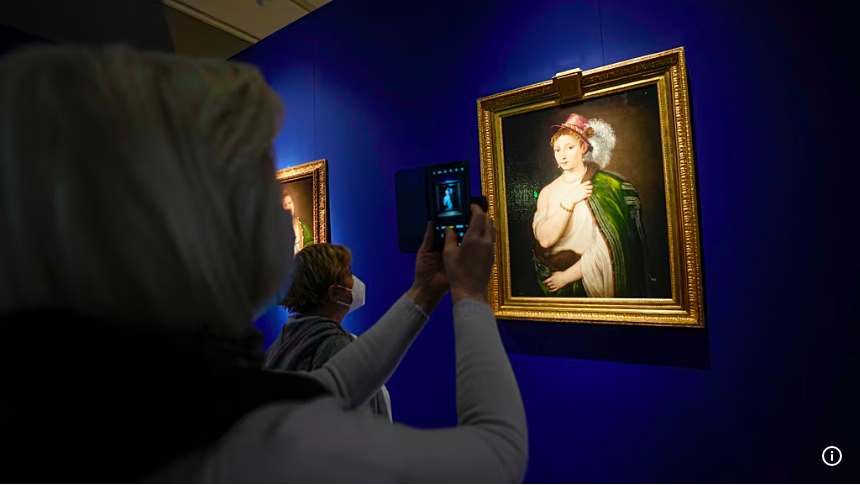
Since Russia’s full-scale invasion of Ukraine in 2022, the war has not only been fought on the battlefield but also in the cultural sphere. While missiles and tanks threaten lives and infrastructure, another quieter struggle has emerged: the fight to preserve Ukrainian identity in the arts. A new initiative, The Stolen Art Campaign, led by the NGO Shadows Project, is putting global museums under the spotlight, urging them to correct the misattribution of Ukrainian artists long mislabeled as “Russian.”
The campaign, which Shadows Project calls “the first coordinated, public-facing push to get museums that mislabel Ukrainian artists to correct their attribution,” is exposing how Western institutions may be inadvertently perpetuating Russia’s cultural dominance.
The Roots of Cultural Erasure
For centuries, the Russian Empire and later the Soviet Union sought to suppress or absorb Ukrainian culture into a larger “Russian” identity. This included not just political and linguistic domination but also the systematic misrepresentation of Ukrainian contributions in literature, music, and the visual arts.
Many Ukrainian-born or Ukrainian-identified artists working during the late imperial and Soviet periods were catalogued as Russian. Among them are figures central to 20th-century art history: Kazymyr Malevych, the avant-garde pioneer born in Kyiv; Aleksandra Ekster, whose work drew from Ukrainian folk traditions; and Vladimir Tatlin, painter and architect of Constructivism.
Though multilingual and cosmopolitan, these artists’ identities and cultural ties cannot be reduced to “Russian.” For Shadows Project activists, continuing to label them as such today amounts to complicity in what they call an “act of deliberate erasure.”
“These misattributions are the result of centuries of Russian imperialism and cultural domination that continues to persist to this day,” the NGO wrote in its campaign press release.
Why Museum Labels Matter
Museum labels may seem like minor details, but for Shadows Project, they are battlegrounds in the fight for self-determination. The way an artist is identified affects how audiences perceive cultural history, how nations are represented, and how legacies are built.
“With Ukraine’s sovereignty under attack, the country’s representation in global institutions has real consequences, shaping international perception, political support, and aid,” the NGO argued.
At a time when Russia is targeting Ukraine’s cultural institutions with bombs—more than 2,000 cultural sites have reportedly been damaged or destroyed since 2022—mislabelled plaques in world-famous museums take on added weight. For Shadows Project co-founder Agatha Gorski, the stakes are existential.
“Defending our culture means defending our identity—and that’s essential to defending our state,” she said.
Outdated Sources, Global Consequences
Part of the issue, according to the campaign, is that many museums rely on outdated sources or even casual references like Wikipedia when drafting exhibition texts. This has left them vulnerable not only to historical inertia but also to what Shadows Project describes as Russia’s “coordinated information warfare, including in the cultural sphere.”
The result is that leading institutions—including New York’s MoMA, Paris’s Centre Pompidou, and London’s Tate Modern—still list Ukrainian-born artists as “Russian,” reinforcing narratives that blur Ukraine’s contributions.
Early Successes
Despite these challenges, the Stolen Art Campaign has already begun to deliver results. Since launching in July, it has reached more than 500,000 people worldwide through its digital outreach, according to Shadows Project.
Some museums are beginning to respond:
- The Cleveland Museum of Art has removed the “Russian” label from one of Aleksandra Ekster’s works, replacing it with recognition of her Ukrainian heritage.
- The Brooklyn Museum updated its description of painter Ilya Repin, long considered Russian, to reflect his Ukrainian background.
- Institutions such as the Louvre, Tate, and MoMA have reportedly committed to reviewing their attributions after being contacted by Shadows Project.
These changes, though modest, signal a willingness among major cultural institutions to reconsider entrenched narratives.
Beyond the Museum Walls
The campaign is not confined to private conversations with curators. Shadows Project has developed a public database where anyone can contribute evidence of mislabelled works, creating a community-driven archive to hold institutions accountable.
It is also preparing a research report examining how Russian disinformation spreads in the cultural space, aiming to expose how narratives of “Russian ownership” of Ukrainian art have been constructed and maintained.
In addition, Shadows Project has teamed up with Ukrainian streetwear brand RDNY to launch a clothing line featuring mislabeled artists. Proceeds will help protect museums in the northeastern city of Sumy, many of which have come under attack. The campaign even includes a digital push with an Instagram filter that encourages users to “call out” mislabeled attributions in galleries around the world.
Why This Matters Now
The campaign’s urgency lies not only in cultural accuracy but also in geopolitical stakes. As Ukraine fights for sovereignty on the battlefield, its cultural sovereignty is equally under siege. Correcting museum labels may not stop missiles, but it does push back against a centuries-old narrative that seeks to deny Ukraine its own identity.
Cultural historian Oksana Bruikhova notes that “when museums mislabel Ukrainian artists as Russian, they unwittingly validate the imperial idea that Ukraine is merely a province of Russia. This has direct consequences for how international audiences understand the current war.”
By reclaiming their artists, Ukrainians are reclaiming their history—and, symbolically, their right to exist as a nation.
Looking Forward
As the Stolen Art Campaign gains momentum, the coming months will be critical in reshaping how Ukrainian artists are recognised globally. With museums reviewing their attributions and public awareness spreading through social media and community archives, the campaign has the potential to create lasting change in the art world. Beyond labels, it encourages institutions to confront historical inaccuracies and the lingering effects of cultural erasure. Looking ahead, sustained advocacy, research, and international collaboration could ensure that Ukrainian culture is accurately represented, defended, and celebrated worldwide—reinforcing the idea that art is inseparable from identity and sovereignty.
Final Thought
The Stolen Art Campaign highlights that the battle for Ukraine’s identity extends beyond the battlefield into museums, archives, and cultural institutions worldwide. Correctly attributing Ukrainian artists is not just a matter of accuracy—it is a form of resistance against historical erasure and a statement of national sovereignty. As more museums acknowledge the truth, this effort strengthens global awareness of Ukraine’s rich cultural heritage and underscores the power of art to defend a nation’s identity in times of conflict.
Conclusion
The Stolen Art Campaign is more than a call for accurate labels on museum walls. It is a demand for recognition, justice, and cultural survival. As Russia seeks to erase Ukrainian identity through bombs and propaganda, correcting attributions becomes an act of resistance, one that asserts Ukraine’s place in the global story of art.
Museums have long been seen as neutral spaces of preservation, but they are also storytellers of history. Today, they face a choice: to continue repeating outdated narratives shaped by imperial legacies, or to acknowledge the voices and identities that were silenced.
For Ukraine, this is not just about art—it is about sovereignty, dignity, and the truth. And as Shadows Project declares, “We’re here to take it back.”
Meta Description:
The Stolen Art Campaign urges museums worldwide to correct misattributions of Ukrainian artists, countering Russia’s cultural erasure and highlighting the importance of accurate representation in global institutions.
'We’re Here to Take It Back': Campaign Urges Museums to Correct Mislabelling of Ukrainian Artists
Since Russia’s full-scale invasion of Ukraine in 2022, the war has not only been fought on the battlefield but also in the cultural sphere. While missiles and tanks threaten lives and infrastructure, another quieter struggle has emerged: the fight to preserve Ukrainian identity in the arts. A new initiative, The Stolen Art Campaign, led by the NGO Shadows Project, is putting global museums under the spotlight, urging them to correct the misattribution of Ukrainian artists long mislabeled as “Russian.”
The campaign, which Shadows Project calls “the first coordinated, public-facing push to get museums that mislabel Ukrainian artists to correct their attribution,” is exposing how Western institutions may be inadvertently perpetuating Russia’s cultural dominance.
Register for Tekedia Mini-MBA edition 20 (June 8 – Sept 5, 2026).
Register for Tekedia AI in Business Masterclass.
Join Tekedia Capital Syndicate and co-invest in great global startups.
Register for Tekedia AI Lab.
The Roots of Cultural Erasure
For centuries, the Russian Empire and later the Soviet Union sought to suppress or absorb Ukrainian culture into a larger “Russian” identity. This included not just political and linguistic domination but also the systematic misrepresentation of Ukrainian contributions in literature, music, and the visual arts.
Many Ukrainian-born or Ukrainian-identified artists working during the late imperial and Soviet periods were catalogued as Russian. Among them are figures central to 20th-century art history: Kazymyr Malevych, the avant-garde pioneer born in Kyiv; Aleksandra Ekster, whose work drew from Ukrainian folk traditions; and Vladimir Tatlin, painter and architect of Constructivism.

Though multilingual and cosmopolitan, these artists’ identities and cultural ties cannot be reduced to “Russian.” For Shadows Project activists, continuing to label them as such today amounts to complicity in what they call an “act of deliberate erasure.”
“These misattributions are the result of centuries of Russian imperialism and cultural domination that continues to persist to this day,” the NGO wrote in its campaign press release.
Why Museum Labels Matter

Museum labels may seem like minor details, but for Shadows Project, they are battlegrounds in the fight for self-determination. The way an artist is identified affects how audiences perceive cultural history, how nations are represented, and how legacies are built.
“With Ukraine’s sovereignty under attack, the country’s representation in global institutions has real consequences, shaping international perception, political support, and aid,” the NGO argued.
At a time when Russia is targeting Ukraine’s cultural institutions with bombs—more than 2,000 cultural sites have reportedly been damaged or destroyed since 2022—mislabelled plaques in world-famous museums take on added weight. For Shadows Project co-founder Agatha Gorski, the stakes are existential.
“Defending our culture means defending our identity—and that’s essential to defending our state,” she said.
Outdated Sources, Global Consequences
Part of the issue, according to the campaign, is that many museums rely on outdated sources or even casual references like Wikipedia when drafting exhibition texts. This has left them vulnerable not only to historical inertia but also to what Shadows Project describes as Russia’s “coordinated information warfare, including in the cultural sphere.”
The result is that leading institutions—including New York’s MoMA, Paris’s Centre Pompidou, and London’s Tate Modern—still list Ukrainian-born artists as “Russian,” reinforcing narratives that blur Ukraine’s contributions.
Early Successes
Despite these challenges, the Stolen Art Campaign has already begun to deliver results. Since launching in July, it has reached more than 500,000 people worldwide through its digital outreach, according to Shadows Project.
Some museums are beginning to respond:
- The Cleveland Museum of Art has removed the “Russian” label from one of Aleksandra Ekster’s works, replacing it with recognition of her Ukrainian heritage.
- The Brooklyn Museum updated its description of painter Ilya Repin, long considered Russian, to reflect his Ukrainian background.
- Institutions such as the Louvre, Tate, and MoMA have reportedly committed to reviewing their attributions after being contacted by Shadows Project.
These changes, though modest, signal a willingness among major cultural institutions to reconsider entrenched narratives.
Beyond the Museum Walls
The campaign is not confined to private conversations with curators. Shadows Project has developed a public database where anyone can contribute evidence of mislabelled works, creating a community-driven archive to hold institutions accountable.
It is also preparing a research report examining how Russian disinformation spreads in the cultural space, aiming to expose how narratives of “Russian ownership” of Ukrainian art have been constructed and maintained.
In addition, Shadows Project has teamed up with Ukrainian streetwear brand RDNY to launch a clothing line featuring mislabeled artists. Proceeds will help protect museums in the northeastern city of Sumy, many of which have come under attack. The campaign even includes a digital push with an Instagram filter that encourages users to “call out” mislabeled attributions in galleries around the world.
Why This Matters Now
The campaign’s urgency lies not only in cultural accuracy but also in geopolitical stakes. As Ukraine fights for sovereignty on the battlefield, its cultural sovereignty is equally under siege. Correcting museum labels may not stop missiles, but it does push back against a centuries-old narrative that seeks to deny Ukraine its own identity.
Cultural historian Oksana Bruikhova notes that “when museums mislabel Ukrainian artists as Russian, they unwittingly validate the imperial idea that Ukraine is merely a province of Russia. This has direct consequences for how international audiences understand the current war.”
By reclaiming their artists, Ukrainians are reclaiming their history—and, symbolically, their right to exist as a nation.
Looking Forward
As the Stolen Art Campaign gains momentum, the coming months will be critical in reshaping how Ukrainian artists are recognised globally. With museums reviewing their attributions and public awareness spreading through social media and community archives, the campaign has the potential to create lasting change in the art world. Beyond labels, it encourages institutions to confront historical inaccuracies and the lingering effects of cultural erasure. Looking ahead, sustained advocacy, research, and international collaboration could ensure that Ukrainian culture is accurately represented, defended, and celebrated worldwide—reinforcing the idea that art is inseparable from identity and sovereignty.
Final Thought
The Stolen Art Campaign highlights that the battle for Ukraine’s identity extends beyond the battlefield into museums, archives, and cultural institutions worldwide. Correctly attributing Ukrainian artists is not just a matter of accuracy—it is a form of resistance against historical erasure and a statement of national sovereignty. As more museums acknowledge the truth, this effort strengthens global awareness of Ukraine’s rich cultural heritage and underscores the power of art to defend a nation’s identity in times of conflict.
Conclusion
The Stolen Art Campaign is more than a call for accurate labels on museum walls. It is a demand for recognition, justice, and cultural survival. As Russia seeks to erase Ukrainian identity through bombs and propaganda, correcting attributions becomes an act of resistance, one that asserts Ukraine’s place in the global story of art.
Museums have long been seen as neutral spaces of preservation, but they are also storytellers of history. Today, they face a choice: to continue repeating outdated narratives shaped by imperial legacies, or to acknowledge the voices and identities that were silenced.
For Ukraine, this is not just about art—it is about sovereignty, dignity, and the truth. And as Shadows Project declares, “We’re here to take it back.”
Meta Description:
The Stolen Art Campaign urges museums worldwide to correct misattributions of Ukrainian artists, countering Russia’s cultural erasure and highlighting the importance of accurate representation in global institutions.
Share this:
- Click to share on Facebook (Opens in new window) Facebook
- Click to share on X (Opens in new window) X
- Click to share on WhatsApp (Opens in new window) WhatsApp
- Click to share on LinkedIn (Opens in new window) LinkedIn
- Click to email a link to a friend (Opens in new window) Email
- Click to print (Opens in new window) Print