

Tear Gas in Nairobi: Kenyan Police Clash with Protesters Over Brutality, Cost of Living

Quote from Alex Bobby on July 8, 2025, 5:59 AM
Tear Gas and Tension: Kenyan Police Disperse Protesters in Nairobi Amid Mounting Public Anger
Demonstrations against police brutality, economic hardship, and corruption erupt in Kenya’s capital as government faces rising pressureNairobi, Kenya – Kenya’s capital turned into a battleground on Monday as riot police clashed with demonstrators protesting against police brutality, the surging cost of living, and deep-rooted government corruption. The protests, which drew thousands into the city streets, were met with tear gas, water cannons, and a heavy security presence, as tensions between the government and its citizens continue to escalate.
The unrest erupted early in the day, with protesters gathering in central Nairobi and key neighbourhoods like Mathare and Kibera. Chanting slogans, waving placards, and singing patriotic songs, the demonstrators demanded justice for victims of police violence, accountability for government officials accused of corruption, and urgent economic reforms to address the soaring cost of living that has left many Kenyans struggling to survive.
Brutal Force Meets Public Dissent
Despite the peaceful nature of the initial demonstrations, security forces quickly moved to disperse crowds. Eyewitnesses reported scenes of chaos as police officers fired tear gas canisters into groups of unarmed protesters and used water cannons to break up gatherings. Some demonstrators were seen coughing, bleeding, or fleeing in panic as clouds of tear gas engulfed busy intersections.
“Why are they attacking us for speaking out?” said 26-year-old Joseph Mwangi, a university graduate who joined the protest. “We are not criminals—we just want to live in a country where we can afford food and where police don’t kill us without consequences.”
At least a dozen people were arrested during the confrontations, with local human rights organisations condemning the excessive use of force. The Kenya Human Rights Commission (KHRC) issued a statement calling for restraint by law enforcement and urging the government to address the underlying grievances driving the protests.
Anger Fuelled by Police Violence
The latest round of protests follows several high-profile incidents of police brutality that have sparked national outrage. Over the past month, multiple deaths have been reported during law enforcement operations in informal settlements, with victims often shot or beaten under unclear circumstances.
One recent case that ignited widespread anger involved the death of a 19-year-old man in Nairobi's Mathare slum, who was allegedly killed by police during a curfew enforcement patrol. His family and community members claim he was unarmed and posed no threat, yet was gunned down in cold blood.
“Police are supposed to protect us, but instead they kill our children,” said Esther Wanjiku, the boy’s mother, speaking through tears at a community memorial last week. “We want justice. We want accountability.”
Economic Strain Deepens Discontent
While police abuse has long been a source of public frustration, the economic pain gripping Kenya has added fuel to the fire. Inflation has pushed food and fuel prices to record highs, unemployment remains stubbornly high, and public debt has ballooned under President William Ruto’s administration.
Many demonstrators on Monday said they could no longer afford basic necessities like bread, milk, and cooking oil. With little relief in sight, even middle-class Kenyans have begun to voice dissatisfaction with the government’s handling of the economy.
“We’re tired of empty promises,” said Mary Achieng, a small business owner in Nairobi. “They keep saying things will improve, but our lives are getting worse every day.”
Corruption Adds to Public Outrage
Allegations of corruption have further inflamed tensions. Several recent scandals have implicated top government officials in the misappropriation of public funds meant for health care, education, and infrastructure. These revelations have undermined public trust and left many Kenyans feeling betrayed.
“The government is looting while the people suffer,” said Boniface Mwangi, a prominent activist and former parliamentary candidate. “We cannot sit back while a few grow rich from our taxes and we live in misery.”
Government Response and Calls for Reform
In a brief statement issued late Monday, government spokesperson Isaac Mwaura defended the police response, stating that the protests were unauthorised and posed a threat to public order. He urged citizens to express their concerns through “legal and peaceful channels.”
However, opposition leaders and civil society groups criticised the administration for failing to engage with the public’s demands and relying on brute force to silence dissent.
Former Prime Minister Raila Odinga condemned the crackdown, calling it “a violation of constitutional rights” and demanding an independent investigation into police conduct during the protests.
Final Thought
The scenes that unfolded in Nairobi are a stark reminder that when citizens feel unheard, they will take to the streets to demand change—no matter the cost. Tear gas may scatter crowds, but it cannot erase the deep-seated frustrations over injustice, poverty, and corruption. For Kenya to move forward, its leaders must listen, not silence; engage, not suppress. Lasting peace and stability will only come when the cries of the people are met with meaningful action—not force.
Conclusion
Monday’s unrest in Nairobi is just the latest sign of deepening frustration in Kenya. As economic pressures mount and cases of police brutality continue to surface, the government faces an urgent test of leadership. Unless real reforms are made—and made quickly—Kenya risks descending further into instability, where public anger, long ignored, could erupt into even greater resistance. The tear gas may have cleared the streets for now, but the voices of the people are far from silent.
Meta Description:
Kenyan police fired tear gas and used water cannons to disperse anti-government protesters in Nairobi demanding justice for police brutality, lower living costs, and an end to corruption.
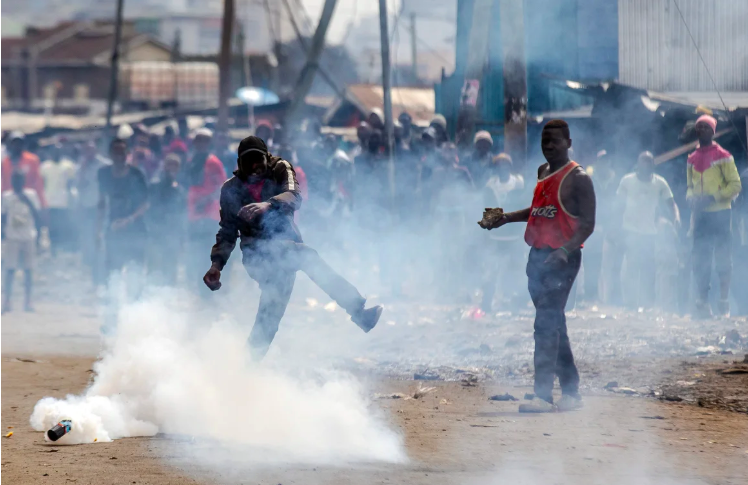
Tear Gas and Tension: Kenyan Police Disperse Protesters in Nairobi Amid Mounting Public Anger
Demonstrations against police brutality, economic hardship, and corruption erupt in Kenya’s capital as government faces rising pressure
Nairobi, Kenya – Kenya’s capital turned into a battleground on Monday as riot police clashed with demonstrators protesting against police brutality, the surging cost of living, and deep-rooted government corruption. The protests, which drew thousands into the city streets, were met with tear gas, water cannons, and a heavy security presence, as tensions between the government and its citizens continue to escalate.
The unrest erupted early in the day, with protesters gathering in central Nairobi and key neighbourhoods like Mathare and Kibera. Chanting slogans, waving placards, and singing patriotic songs, the demonstrators demanded justice for victims of police violence, accountability for government officials accused of corruption, and urgent economic reforms to address the soaring cost of living that has left many Kenyans struggling to survive.
Register for Tekedia Mini-MBA edition 20 (June 8 – Sept 5, 2026).
Register for Tekedia AI in Business Masterclass.
Join Tekedia Capital Syndicate and co-invest in great global startups.
Register for Tekedia AI Lab.
Brutal Force Meets Public Dissent
Despite the peaceful nature of the initial demonstrations, security forces quickly moved to disperse crowds. Eyewitnesses reported scenes of chaos as police officers fired tear gas canisters into groups of unarmed protesters and used water cannons to break up gatherings. Some demonstrators were seen coughing, bleeding, or fleeing in panic as clouds of tear gas engulfed busy intersections.
“Why are they attacking us for speaking out?” said 26-year-old Joseph Mwangi, a university graduate who joined the protest. “We are not criminals—we just want to live in a country where we can afford food and where police don’t kill us without consequences.”

At least a dozen people were arrested during the confrontations, with local human rights organisations condemning the excessive use of force. The Kenya Human Rights Commission (KHRC) issued a statement calling for restraint by law enforcement and urging the government to address the underlying grievances driving the protests.
Anger Fuelled by Police Violence
The latest round of protests follows several high-profile incidents of police brutality that have sparked national outrage. Over the past month, multiple deaths have been reported during law enforcement operations in informal settlements, with victims often shot or beaten under unclear circumstances.

One recent case that ignited widespread anger involved the death of a 19-year-old man in Nairobi's Mathare slum, who was allegedly killed by police during a curfew enforcement patrol. His family and community members claim he was unarmed and posed no threat, yet was gunned down in cold blood.
“Police are supposed to protect us, but instead they kill our children,” said Esther Wanjiku, the boy’s mother, speaking through tears at a community memorial last week. “We want justice. We want accountability.”
Economic Strain Deepens Discontent
While police abuse has long been a source of public frustration, the economic pain gripping Kenya has added fuel to the fire. Inflation has pushed food and fuel prices to record highs, unemployment remains stubbornly high, and public debt has ballooned under President William Ruto’s administration.
Many demonstrators on Monday said they could no longer afford basic necessities like bread, milk, and cooking oil. With little relief in sight, even middle-class Kenyans have begun to voice dissatisfaction with the government’s handling of the economy.
“We’re tired of empty promises,” said Mary Achieng, a small business owner in Nairobi. “They keep saying things will improve, but our lives are getting worse every day.”
Corruption Adds to Public Outrage
Allegations of corruption have further inflamed tensions. Several recent scandals have implicated top government officials in the misappropriation of public funds meant for health care, education, and infrastructure. These revelations have undermined public trust and left many Kenyans feeling betrayed.
“The government is looting while the people suffer,” said Boniface Mwangi, a prominent activist and former parliamentary candidate. “We cannot sit back while a few grow rich from our taxes and we live in misery.”
Government Response and Calls for Reform
In a brief statement issued late Monday, government spokesperson Isaac Mwaura defended the police response, stating that the protests were unauthorised and posed a threat to public order. He urged citizens to express their concerns through “legal and peaceful channels.”
However, opposition leaders and civil society groups criticised the administration for failing to engage with the public’s demands and relying on brute force to silence dissent.
Former Prime Minister Raila Odinga condemned the crackdown, calling it “a violation of constitutional rights” and demanding an independent investigation into police conduct during the protests.
Final Thought
The scenes that unfolded in Nairobi are a stark reminder that when citizens feel unheard, they will take to the streets to demand change—no matter the cost. Tear gas may scatter crowds, but it cannot erase the deep-seated frustrations over injustice, poverty, and corruption. For Kenya to move forward, its leaders must listen, not silence; engage, not suppress. Lasting peace and stability will only come when the cries of the people are met with meaningful action—not force.
Conclusion
Monday’s unrest in Nairobi is just the latest sign of deepening frustration in Kenya. As economic pressures mount and cases of police brutality continue to surface, the government faces an urgent test of leadership. Unless real reforms are made—and made quickly—Kenya risks descending further into instability, where public anger, long ignored, could erupt into even greater resistance. The tear gas may have cleared the streets for now, but the voices of the people are far from silent.
Meta Description:
Kenyan police fired tear gas and used water cannons to disperse anti-government protesters in Nairobi demanding justice for police brutality, lower living costs, and an end to corruption.
Share this:
- Click to share on Facebook (Opens in new window) Facebook
- Click to share on X (Opens in new window) X
- Click to share on WhatsApp (Opens in new window) WhatsApp
- Click to share on LinkedIn (Opens in new window) LinkedIn
- Click to email a link to a friend (Opens in new window) Email
- Click to print (Opens in new window) Print