

Trump Promises Security Guarantees for Ukraine After Meeting Zelenskyy

Quote from Alex Bobby on August 19, 2025, 5:01 AM
Trump Tells Zelenskyy US Will Back Security Guarantees for Ukraine
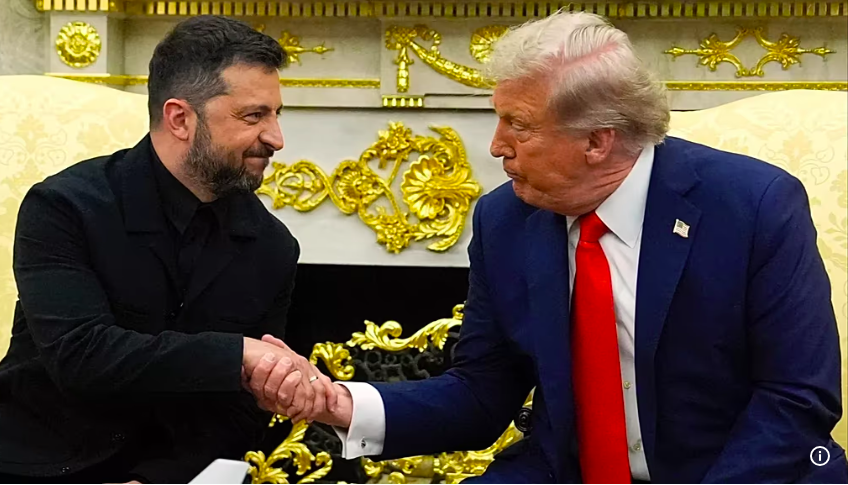
Just days after meeting Russian President Vladimir Putin, U.S. President Donald Trump has signaled a potentially historic shift in Washington’s role in the ongoing war in Ukraine. Speaking alongside Ukrainian President Volodymyr Zelenskyy in the Oval Office on Monday, Trump said the United States would “be involved” in providing substantial security guarantees for Ukraine. Though he stopped short of spelling out the exact nature of those guarantees—or what Ukraine might have to concede in return—the announcement marks the first time Trump has explicitly indicated a U.S. willingness to step into Ukraine’s fragile security equation.
A New Chapter in the Trump–Zelenskyy Relationship
The meeting, billed as a political rematch of sorts between the two leaders, drew global attention. Only a year ago, the pair clashed in a heated exchange that left diplomatic ties strained. This time, however, their tone was markedly different. Trump described “substantial progress” being made, while Zelenskyy spoke of a “very good conversation” that covered “very sensitive points,” with security guarantees at the top of the list.
European leaders, seven of whom had flown to Washington to demonstrate support for Ukraine, were also included in the talks. The gathering underscored both the gravity of the discussions and the international stakes. “Europe is the first line of defense,” Trump said, before adding: “But we will help, we will be involved.” He even left open the possibility of U.S. peacekeepers on the ground in Ukraine—a prospect that would mark a dramatic escalation of U.S. engagement in the conflict.
Dividing the Burden
Even as Trump pledged greater U.S. involvement, he stressed that European nations would shoulder much of the responsibility. “I think that the European nations are going to take a lot of the burden,” he said, noting that discussions focused heavily on “who would do what” when it comes to delivering the promised guarantees.
For Zelenskyy, U.S. involvement is indispensable. “Security in Ukraine depends on the United States, and on you, and on those leaders who are with us in our hearts,” the Ukrainian president told Trump, highlighting his long-held belief that European support alone would not be enough to deter further Russian aggression.
Russia’s Conditional Acceptance
One of the most surprising elements of Trump’s announcement was his claim that Putin had agreed in principle to accept security guarantees for Ukraine. “I believe that in a very significant step, President Putin agreed that Russia would accept security guarantees for Ukraine,” Trump said.
But Moscow quickly poured cold water on the optimism. Russia’s foreign ministry spokesperson Maria Zakharova reiterated that the Kremlin would not accept any scenario involving NATO troops on Ukrainian soil, warning that such a move could trigger “uncontrollable escalation with unpredictable consequences.” The sharp statement highlighted the fragile tightrope Washington and Kyiv must walk in order to secure meaningful guarantees without crossing Moscow’s red lines.
Will There Be a Trilateral Meeting?
Trump confirmed that his next move would be to get Putin on the phone and push for a trilateral meeting involving himself, Zelenskyy, and the Russian leader. “If we don’t have a trilateral meeting, then the fighting continues,” Trump said. “If we do, there’s a good chance of maybe ending it.”
Zelenskyy readily agreed to the proposal, reiterating his longstanding desire for direct talks with Putin. Moscow, however, has so far consistently rebuffed Zelenskyy’s requests. The Russian president has only agreed to bilateral meetings with Trump, the most recent of which took place in Alaska last Friday.
Still, the possibility of a trilateral summit—something that would represent the highest-level talks since the war began—was enough to inject cautious optimism into an otherwise uncertain diplomatic process.
The Thorny Issue of Territory
Perhaps the most contentious element of Monday’s discussions was Trump’s suggestion that a final deal might involve “land swapping” based on the current frontlines. “We also need to discuss the possible exchanges of territory,” Trump said, acknowledging that any agreement would likely require Ukraine to make territorial concessions while Russia would not be expected to return any occupied land.
The idea immediately sparked debate among observers. While territorial compromises are often part of peace negotiations, in this case they would formalise Russia’s occupation of parts of eastern Ukraine and Crimea—something Kyiv has long vowed never to accept. Trump’s framing—that the talks would reflect “the war lines that are now, pretty obvious, very sad”—suggested he sees little alternative to recognising Russia’s battlefield gains.
For Zelenskyy, who has repeatedly insisted Ukraine will not cede territory, the suggestion poses a political dilemma. European leaders accompanying him to Washington emphasized that any negotiations must begin with a ceasefire first, creating the breathing space needed for substantive talks.
From Ceasefire to Peace Deal?
Initially, Trump seemed supportive of a ceasefire as the immediate next step. But after meeting with Putin in Alaska, he shifted his stance toward prioritising a comprehensive peace deal instead. On Monday, he acknowledged the tension between the two approaches: “All of us would obviously prefer an immediate ceasefire while we work on a lasting peace. Maybe something like that could happen. As of this moment, it’s not happening.”
This recalibration has unsettled some European partners, who view a ceasefire as essential to preventing further bloodshed while longer-term negotiations unfold. For Kyiv, too, halting Russia’s advance is a matter of survival, not strategy.
Final Thought: Trump’s promise to back Ukraine with U.S. security guarantees could mark the beginning of a new phase in the conflict—but without clarity on territory, troop deployments, or Putin’s true intentions, the peace process remains as precarious as ever.
Conclusion
Trump’s announcement that the U.S. will play a direct role in security guarantees for Ukraine is a watershed moment in the war’s trajectory. His claim that Putin is open to such guarantees offers a sliver of hope, but Moscow’s swift rejection of NATO troop deployments underscores the fragility of the path ahead.
The prospect of a trilateral Trump–Zelenskyy–Putin summit raises expectations, yet also sharpens the difficult questions: Will Ukraine be asked to concede territory? Will Russia accept meaningful limitations on its aggression? And can Europe and the U.S. coordinate a unified approach without widening the conflict?
For now, Zelenskyy leaves Washington with reassurances of U.S. involvement, but without firm commitments on what form those guarantees will take. The road ahead is filled with political and diplomatic minefields. The world will be watching closely to see whether Trump’s gamble pays off—or whether Ukraine’s security will once again be left hanging in the balance.
Meta Description:
U.S. President Donald Trump told Volodymyr Zelenskyy the U.S. will support security guarantees for Ukraine, raising hopes of a peace deal with Russia—but questions remain over territory, NATO troops, and Putin’s true intentions.
Trump Tells Zelenskyy US Will Back Security Guarantees for Ukraine
Just days after meeting Russian President Vladimir Putin, U.S. President Donald Trump has signaled a potentially historic shift in Washington’s role in the ongoing war in Ukraine. Speaking alongside Ukrainian President Volodymyr Zelenskyy in the Oval Office on Monday, Trump said the United States would “be involved” in providing substantial security guarantees for Ukraine. Though he stopped short of spelling out the exact nature of those guarantees—or what Ukraine might have to concede in return—the announcement marks the first time Trump has explicitly indicated a U.S. willingness to step into Ukraine’s fragile security equation.
A New Chapter in the Trump–Zelenskyy Relationship
Register for Tekedia Mini-MBA edition 20 (June 8 – Sept 5, 2026).
Register for Tekedia AI in Business Masterclass.
Join Tekedia Capital Syndicate and co-invest in great global startups.
Register for Tekedia AI Lab.
The meeting, billed as a political rematch of sorts between the two leaders, drew global attention. Only a year ago, the pair clashed in a heated exchange that left diplomatic ties strained. This time, however, their tone was markedly different. Trump described “substantial progress” being made, while Zelenskyy spoke of a “very good conversation” that covered “very sensitive points,” with security guarantees at the top of the list.
European leaders, seven of whom had flown to Washington to demonstrate support for Ukraine, were also included in the talks. The gathering underscored both the gravity of the discussions and the international stakes. “Europe is the first line of defense,” Trump said, before adding: “But we will help, we will be involved.” He even left open the possibility of U.S. peacekeepers on the ground in Ukraine—a prospect that would mark a dramatic escalation of U.S. engagement in the conflict.
Dividing the Burden

Even as Trump pledged greater U.S. involvement, he stressed that European nations would shoulder much of the responsibility. “I think that the European nations are going to take a lot of the burden,” he said, noting that discussions focused heavily on “who would do what” when it comes to delivering the promised guarantees.
For Zelenskyy, U.S. involvement is indispensable. “Security in Ukraine depends on the United States, and on you, and on those leaders who are with us in our hearts,” the Ukrainian president told Trump, highlighting his long-held belief that European support alone would not be enough to deter further Russian aggression.
Russia’s Conditional Acceptance

One of the most surprising elements of Trump’s announcement was his claim that Putin had agreed in principle to accept security guarantees for Ukraine. “I believe that in a very significant step, President Putin agreed that Russia would accept security guarantees for Ukraine,” Trump said.
But Moscow quickly poured cold water on the optimism. Russia’s foreign ministry spokesperson Maria Zakharova reiterated that the Kremlin would not accept any scenario involving NATO troops on Ukrainian soil, warning that such a move could trigger “uncontrollable escalation with unpredictable consequences.” The sharp statement highlighted the fragile tightrope Washington and Kyiv must walk in order to secure meaningful guarantees without crossing Moscow’s red lines.
Will There Be a Trilateral Meeting?
Trump confirmed that his next move would be to get Putin on the phone and push for a trilateral meeting involving himself, Zelenskyy, and the Russian leader. “If we don’t have a trilateral meeting, then the fighting continues,” Trump said. “If we do, there’s a good chance of maybe ending it.”
Zelenskyy readily agreed to the proposal, reiterating his longstanding desire for direct talks with Putin. Moscow, however, has so far consistently rebuffed Zelenskyy’s requests. The Russian president has only agreed to bilateral meetings with Trump, the most recent of which took place in Alaska last Friday.
Still, the possibility of a trilateral summit—something that would represent the highest-level talks since the war began—was enough to inject cautious optimism into an otherwise uncertain diplomatic process.
The Thorny Issue of Territory
Perhaps the most contentious element of Monday’s discussions was Trump’s suggestion that a final deal might involve “land swapping” based on the current frontlines. “We also need to discuss the possible exchanges of territory,” Trump said, acknowledging that any agreement would likely require Ukraine to make territorial concessions while Russia would not be expected to return any occupied land.
The idea immediately sparked debate among observers. While territorial compromises are often part of peace negotiations, in this case they would formalise Russia’s occupation of parts of eastern Ukraine and Crimea—something Kyiv has long vowed never to accept. Trump’s framing—that the talks would reflect “the war lines that are now, pretty obvious, very sad”—suggested he sees little alternative to recognising Russia’s battlefield gains.
For Zelenskyy, who has repeatedly insisted Ukraine will not cede territory, the suggestion poses a political dilemma. European leaders accompanying him to Washington emphasized that any negotiations must begin with a ceasefire first, creating the breathing space needed for substantive talks.
From Ceasefire to Peace Deal?
Initially, Trump seemed supportive of a ceasefire as the immediate next step. But after meeting with Putin in Alaska, he shifted his stance toward prioritising a comprehensive peace deal instead. On Monday, he acknowledged the tension between the two approaches: “All of us would obviously prefer an immediate ceasefire while we work on a lasting peace. Maybe something like that could happen. As of this moment, it’s not happening.”
This recalibration has unsettled some European partners, who view a ceasefire as essential to preventing further bloodshed while longer-term negotiations unfold. For Kyiv, too, halting Russia’s advance is a matter of survival, not strategy.
Final Thought: Trump’s promise to back Ukraine with U.S. security guarantees could mark the beginning of a new phase in the conflict—but without clarity on territory, troop deployments, or Putin’s true intentions, the peace process remains as precarious as ever.
Conclusion
Trump’s announcement that the U.S. will play a direct role in security guarantees for Ukraine is a watershed moment in the war’s trajectory. His claim that Putin is open to such guarantees offers a sliver of hope, but Moscow’s swift rejection of NATO troop deployments underscores the fragility of the path ahead.
The prospect of a trilateral Trump–Zelenskyy–Putin summit raises expectations, yet also sharpens the difficult questions: Will Ukraine be asked to concede territory? Will Russia accept meaningful limitations on its aggression? And can Europe and the U.S. coordinate a unified approach without widening the conflict?
For now, Zelenskyy leaves Washington with reassurances of U.S. involvement, but without firm commitments on what form those guarantees will take. The road ahead is filled with political and diplomatic minefields. The world will be watching closely to see whether Trump’s gamble pays off—or whether Ukraine’s security will once again be left hanging in the balance.
Meta Description:
U.S. President Donald Trump told Volodymyr Zelenskyy the U.S. will support security guarantees for Ukraine, raising hopes of a peace deal with Russia—but questions remain over territory, NATO troops, and Putin’s true intentions.
Share this:
- Click to share on Facebook (Opens in new window) Facebook
- Click to share on X (Opens in new window) X
- Click to share on WhatsApp (Opens in new window) WhatsApp
- Click to share on LinkedIn (Opens in new window) LinkedIn
- Click to email a link to a friend (Opens in new window) Email
- Click to print (Opens in new window) Print