

Trump’s Call for Ceasefire Fails as Thailand-Cambodia Border Violence Escalates

Quote from Alex Bobby on July 27, 2025, 7:32 AM
Trump’s Ceasefire Push Fails to Halt Thailand-Cambodia Border Clashes
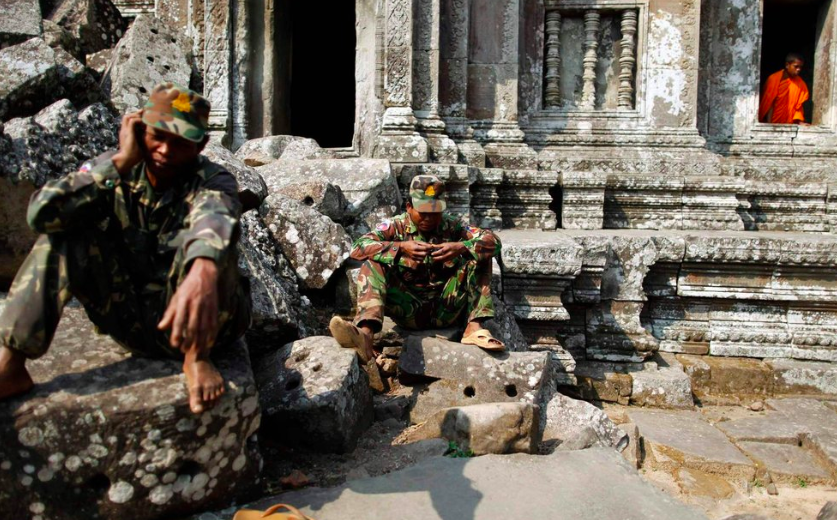
Former U.S. President Donald Trump’s attempt to broker a ceasefire between Thailand and Cambodia has failed to end the violent border clashes now raging into their fourth day. Despite Trump’s surprise intervention and calls for calm, artillery fire, missile strikes, and intense gun battles continue to erupt along the contested frontier, particularly around the ancient temples of Ta Moan Thom and Ta Krabei — long-standing flashpoints in a decades-old territorial dispute.
The fighting, which has already claimed more than 40 lives and displaced nearly 180,000 civilians across both countries, shows no sign of abating. Analysts say Trump’s efforts — viewed by some as a political stunt and by others as a genuine attempt at diplomacy — lacked the legitimacy and structure needed to produce meaningful results.
Trump’s Attempt at Diplomacy
Trump, who remains a polarising figure in global politics and is campaigning for re-election in the U.S., made headlines on Saturday after releasing a statement urging both nations to “lay down their weapons immediately” and offering to mediate peace talks. In a televised interview, he said, “I know both Thailand and Cambodia well. They’re beautiful countries with amazing people. They need to stop this war right now.”
His comments, however, were met with a lukewarm response in Bangkok and Phnom Penh. Cambodian Prime Minister Hun Manet dismissed the overture, saying, “This is not a reality show. We are defending our sovereignty against deliberate and unprovoked aggression.” Thai officials similarly sidestepped the suggestion, emphasising that the conflict requires a “measured and regionally led resolution,” not outside theatrics.
Ongoing Escalation Despite Pleas for Peace
Meanwhile, fighting has intensified across multiple areas along the border, with both sides trading blame for continued hostilities. Cambodian officials say Thai artillery strikes have hit civilian zones in Oddar Meanchey province, including residential villages and public buildings. Thailand accuses Cambodia of planting new landmines and launching long-range rockets into Surin province, some allegedly targeting hospitals.
Independent verification has been nearly impossible due to the dangerous conditions on the ground, but international observers report increasing civilian casualties and worsening humanitarian conditions.
Displaced families on both sides of the border have taken refuge in schools, pagodas, and temporary shelters, with many struggling to access food, water, and medicine. In some areas, local leaders are rationing rice and essential supplies. “We’ve already run out of clean drinking water,” said one Cambodian villager sheltering near Samraong. “We’re just trying to survive.”
International Reactions and Regional Worries
Trump’s call for a ceasefire, while drawing media attention, has done little to shift diplomatic gears. Instead, ASEAN — the Association of Southeast Asian Nations — has been quietly working behind the scenes to arrange a neutral forum for talks. Neither Thailand nor Cambodia has confirmed attendance at any formal negotiations, and neither appears willing to de-escalate unilaterally.
The United Nations issued a statement late Sunday urging both nations to “exercise restraint” and avoid targeting civilian infrastructure. UN Secretary-General António Guterres expressed concern that the situation could spiral into a wider regional conflict if not contained soon.
The European Union and China have also called for dialogue, with Beijing offering to host peace talks. China has long maintained economic and political influence in both countries and is widely seen as a more credible third-party mediator in the region than Trump.
Ceasefire Proposals Fall Flat
Trump’s team reportedly drafted a basic ceasefire framework proposing mutual withdrawal from contested zones, UN peacekeeping observers, and joint temple preservation efforts. However, neither government acknowledged receiving the proposal officially. Cambodian foreign ministry officials described the proposal as “symbolic at best and politically motivated at worst.”
Thai military officials were more blunt: “We will not halt operations based on social media statements from a former U.S. president,” one officer told local media.
Critics argue Trump’s involvement may have even hardened positions. “By inserting himself into a sensitive regional issue without coordination or support from ASEAN or the UN, Trump may have undermined ongoing diplomatic efforts,” said Dr. Seree Komkarn, a political analyst at Thammasat University in Bangkok.
Domestic Implications in the U.S.
Some analysts say Trump’s involvement was primarily aimed at bolstering his foreign policy credentials ahead of the 2024 U.S. presidential election. As headlines about international conflict dominate the news cycle, Trump’s dramatic attempt to play peacemaker allowed him to position himself as a global statesman — even if the results were negligible.
However, critics in the U.S. have called the move unserious and tone-deaf. “Foreign policy isn’t reality TV,” tweeted Senator Chris Murphy, a Democrat on the Senate Foreign Relations Committee. “If Trump wants to help, he should support multilateral diplomacy, not freelance press releases.”
Future Uncertain as Fighting Rages On
On the ground, neither side appears ready to back down. Both Thailand and Cambodia have mobilised more troops and equipment to the border, and sporadic exchanges of fire continued throughout Sunday night.
Civilians remain in limbo — unable to return home and uncertain of when, or if, peace will come. For families separated by violence and living in makeshift shelters, Trump’s call for peace means little if the shells keep falling.
“Let him come here and see what it’s like,” said a Cambodian farmer whose village was shelled over the weekend. “We don’t need tweets. We need help.”
Conclusion
Donald Trump’s attempted intervention in the Thailand-Cambodia border conflict may have made headlines, but it did little to slow the escalating violence. As artillery continues to rain down on civilian areas and diplomatic ties deteriorate further, it is clear that serious multilateral efforts — not soundbites — are needed to bring peace. Until then, thousands remain displaced, wounded, and caught in the crossfire of a deepening regional crisis.
Meta Description:
Donald Trump's bid to mediate a ceasefire between Thailand and Cambodia has failed, as border clashes intensify and civilians continue to flee the escalating conflict.
Trump’s Ceasefire Push Fails to Halt Thailand-Cambodia Border Clashes
Former U.S. President Donald Trump’s attempt to broker a ceasefire between Thailand and Cambodia has failed to end the violent border clashes now raging into their fourth day. Despite Trump’s surprise intervention and calls for calm, artillery fire, missile strikes, and intense gun battles continue to erupt along the contested frontier, particularly around the ancient temples of Ta Moan Thom and Ta Krabei — long-standing flashpoints in a decades-old territorial dispute.
The fighting, which has already claimed more than 40 lives and displaced nearly 180,000 civilians across both countries, shows no sign of abating. Analysts say Trump’s efforts — viewed by some as a political stunt and by others as a genuine attempt at diplomacy — lacked the legitimacy and structure needed to produce meaningful results.
Register for Tekedia Mini-MBA edition 20 (June 8 – Sept 5, 2026).
Register for Tekedia AI in Business Masterclass.
Join Tekedia Capital Syndicate and co-invest in great global startups.
Register for Tekedia AI Lab.
Trump’s Attempt at Diplomacy
Trump, who remains a polarising figure in global politics and is campaigning for re-election in the U.S., made headlines on Saturday after releasing a statement urging both nations to “lay down their weapons immediately” and offering to mediate peace talks. In a televised interview, he said, “I know both Thailand and Cambodia well. They’re beautiful countries with amazing people. They need to stop this war right now.”
His comments, however, were met with a lukewarm response in Bangkok and Phnom Penh. Cambodian Prime Minister Hun Manet dismissed the overture, saying, “This is not a reality show. We are defending our sovereignty against deliberate and unprovoked aggression.” Thai officials similarly sidestepped the suggestion, emphasising that the conflict requires a “measured and regionally led resolution,” not outside theatrics.

Ongoing Escalation Despite Pleas for Peace
Meanwhile, fighting has intensified across multiple areas along the border, with both sides trading blame for continued hostilities. Cambodian officials say Thai artillery strikes have hit civilian zones in Oddar Meanchey province, including residential villages and public buildings. Thailand accuses Cambodia of planting new landmines and launching long-range rockets into Surin province, some allegedly targeting hospitals.
Independent verification has been nearly impossible due to the dangerous conditions on the ground, but international observers report increasing civilian casualties and worsening humanitarian conditions.

Displaced families on both sides of the border have taken refuge in schools, pagodas, and temporary shelters, with many struggling to access food, water, and medicine. In some areas, local leaders are rationing rice and essential supplies. “We’ve already run out of clean drinking water,” said one Cambodian villager sheltering near Samraong. “We’re just trying to survive.”
International Reactions and Regional Worries
Trump’s call for a ceasefire, while drawing media attention, has done little to shift diplomatic gears. Instead, ASEAN — the Association of Southeast Asian Nations — has been quietly working behind the scenes to arrange a neutral forum for talks. Neither Thailand nor Cambodia has confirmed attendance at any formal negotiations, and neither appears willing to de-escalate unilaterally.
The United Nations issued a statement late Sunday urging both nations to “exercise restraint” and avoid targeting civilian infrastructure. UN Secretary-General António Guterres expressed concern that the situation could spiral into a wider regional conflict if not contained soon.
The European Union and China have also called for dialogue, with Beijing offering to host peace talks. China has long maintained economic and political influence in both countries and is widely seen as a more credible third-party mediator in the region than Trump.
Ceasefire Proposals Fall Flat
Trump’s team reportedly drafted a basic ceasefire framework proposing mutual withdrawal from contested zones, UN peacekeeping observers, and joint temple preservation efforts. However, neither government acknowledged receiving the proposal officially. Cambodian foreign ministry officials described the proposal as “symbolic at best and politically motivated at worst.”
Thai military officials were more blunt: “We will not halt operations based on social media statements from a former U.S. president,” one officer told local media.
Critics argue Trump’s involvement may have even hardened positions. “By inserting himself into a sensitive regional issue without coordination or support from ASEAN or the UN, Trump may have undermined ongoing diplomatic efforts,” said Dr. Seree Komkarn, a political analyst at Thammasat University in Bangkok.
Domestic Implications in the U.S.
Some analysts say Trump’s involvement was primarily aimed at bolstering his foreign policy credentials ahead of the 2024 U.S. presidential election. As headlines about international conflict dominate the news cycle, Trump’s dramatic attempt to play peacemaker allowed him to position himself as a global statesman — even if the results were negligible.
However, critics in the U.S. have called the move unserious and tone-deaf. “Foreign policy isn’t reality TV,” tweeted Senator Chris Murphy, a Democrat on the Senate Foreign Relations Committee. “If Trump wants to help, he should support multilateral diplomacy, not freelance press releases.”
Future Uncertain as Fighting Rages On
On the ground, neither side appears ready to back down. Both Thailand and Cambodia have mobilised more troops and equipment to the border, and sporadic exchanges of fire continued throughout Sunday night.
Civilians remain in limbo — unable to return home and uncertain of when, or if, peace will come. For families separated by violence and living in makeshift shelters, Trump’s call for peace means little if the shells keep falling.
“Let him come here and see what it’s like,” said a Cambodian farmer whose village was shelled over the weekend. “We don’t need tweets. We need help.”
Conclusion
Donald Trump’s attempted intervention in the Thailand-Cambodia border conflict may have made headlines, but it did little to slow the escalating violence. As artillery continues to rain down on civilian areas and diplomatic ties deteriorate further, it is clear that serious multilateral efforts — not soundbites — are needed to bring peace. Until then, thousands remain displaced, wounded, and caught in the crossfire of a deepening regional crisis.
Meta Description:
Donald Trump's bid to mediate a ceasefire between Thailand and Cambodia has failed, as border clashes intensify and civilians continue to flee the escalating conflict.
Share this:
- Click to share on Facebook (Opens in new window) Facebook
- Click to share on X (Opens in new window) X
- Click to share on WhatsApp (Opens in new window) WhatsApp
- Click to share on LinkedIn (Opens in new window) LinkedIn
- Click to email a link to a friend (Opens in new window) Email
- Click to print (Opens in new window) Print