

UK Economy Leads G7 Growth in 2025’s First Half Despite Tariff Pressures

Quote from Alex Bobby on August 15, 2025, 2:58 AM
UK Economy Outpaces G7 Peers in First Half of 2025 Despite Tariff Pressures
The UK economy has surprised analysts once again, delivering a performance that—while not as explosive as the start of the year—signals resilience in a turbulent global landscape. Figures for July revealed a stronger-than-expected outcome, with Q2 2025 GDP expanding by 0.3%, placing the UK ahead of most of its G7 peers and reinforcing its position as the fastest-growing major advanced economy so far this year.
This comes despite lingering concerns over US trade tariffs, a sluggish global manufacturing climate, and geopolitical uncertainty. In fact, the UK’s half-year performance—driven by robust services and construction activity—has managed to outshine several of its continental and North American counterparts.
A Slowdown From the Early-Year Surge—but Still Ahead of Expectations
Earlier in 2025, the economy sprinted out of the gates with a 0.7% Q1 growth rate, buoyed by a wave of pre-emptive economic activity. Businesses front-loaded investment and production in February and March to avoid the impact of US tariff announcements and anticipated changes to UK stamp duty. That momentum was always going to be difficult to sustain, and the second quarter inevitably saw a moderation.
Yet, the slowdown was not as sharp as many economists had feared. Predictions had been cautious, with some forecasting quarterly growth closer to 0.1%, especially after weak activity in April and May. Instead, a 0.4% monthly GDP jump in June turned the tide, delivering a stronger quarterly figure and suggesting the economy found a new gear midway through the year.
Sectoral Drivers: Services and Construction Take the Lead
The UK’s growth story in Q2 was far from uniform. Services, which account for more than 70% of GDP, rose 0.4% in the quarter. The strongest contributions came from:
- Information and communication – benefiting from ongoing digital transformation in both the public and private sectors.
- Health and social work – boosted by increased NHS activity and private healthcare demand.
- Professional services – including legal and consulting firms engaged in cross-border projects.
However, the picture wasn’t entirely rosy. Wholesale and retail trade lagged behind, reflecting ongoing cost-of-living pressures on households and weaker consumer confidence.
The construction sector was the standout performer, surging 1.2%. Infrastructure projects—especially in transport and energy—combined with a healthy level of private housing activity to push the industry ahead. This strength has been supported by easing supply chain bottlenecks and a slight moderation in material costs, allowing delayed projects to get back on track.
By contrast, the production sector slipped 0.3%, primarily due to:
- Sharp drops in electricity, gas, and steam supply.
- Weakness in mining and quarrying amid subdued global commodity demand.
One bright spot in production was manufacturing, which inched up 0.3%, thanks to an impressive 7.0% jump in pharmaceuticals and 3.0% growth in machinery and equipment—two areas that have seen renewed export orders and innovation investment.
Trade Flows: Services Exports Carry the Load
Trade data painted a mixed but largely encouraging picture. Export volumes rose 1.6% year-on-year, driven almost entirely by stronger services exports. The UK’s expertise in financial services, legal consulting, and creative industries continues to make it a global leader in the intangible economy.
Goods exports, however, dipped 0.2%, reflecting softer demand from Europe and Asia. Import volumes climbed 1.4%, as goods imports rose—likely a sign of businesses restocking inventories—while services imports slipped slightly.
The fact that services exports continue to offset weaker goods trade highlights the UK’s structural shift toward a services-dominant export profile, a trend that may prove advantageous in navigating future tariff and supply chain disruptions.
June’s Recovery Balances a Weaker Start to Q2
April and May saw subdued output, partly the result of the Q1 front-loading effect. With many firms rushing orders earlier in the year, some sectors experienced a temporary dip in demand and output as the second quarter began.
June, however, brought a rebound across all major sectors—services, production, and construction—delivering the 0.4% monthly GDP rise that kept quarterly growth comfortably above zero.
This resilience also suggests that consumer and business sentiment may be more robust than previously assumed. While household budgets remain under pressure from inflation, wage growth in certain sectors and a stabilising jobs market have supported spending in pockets of the economy.
Outperforming the G7
In a volatile global economic environment, the UK’s Q2 performance stands out. Across the G7:
- France also grew 0.3%, matching the UK.
- Canada recorded zero growth.
- Germany and Italy both contracted by 0.1%.
- United States led quarterly growth with 0.7%, driven by consumer spending and industrial investment.
However, when combining Q1 and Q2 results, the UK emerges as the leader. With a half-year annualised growth rate of 2.2%, the UK’s economy is expanding faster than any other G7 member, even the US.
This matters not just for bragging rights, but because it reflects a stronger-than-expected capacity to weather headwinds—from trade disputes to energy market volatility.
Risks and the Road Ahead
Despite the strong half-year showing, risks remain. The US tariff measures still hang over certain UK exports, particularly in manufacturing. A global slowdown in manufacturing and reduced demand from China could weigh on the production sector in the months ahead.
Domestically, inflation—while easing—continues to pressure consumers, and higher interest rates are still filtering through to businesses and households. The Bank of England will need to balance keeping inflation under control with not stifling growth momentum.
Policymakers will also be watching investment trends closely. The post-pandemic recovery in capital expenditure has been uneven, and sustained growth will require businesses to keep investing in productivity-boosting technology and skills.
Conclusion: A Resilient First Half
The UK’s economy in 2025 has so far proven more resilient than many had expected. While Q2 growth of 0.3% is a slowdown from the early-year surge, it beats forecasts and places the UK ahead of most G7 peers on a half-year basis.
Strong services and construction output have offset weaknesses in certain industrial sectors, while the country’s competitive advantage in services exports continues to shield it from some of the harsher global trade headwinds.
For now, the UK remains on a relatively steady growth path. If it can sustain momentum into the second half of the year—despite tariff tensions and global economic uncertainty—it may well close out 2025 as one of the world’s best-performing major economies.
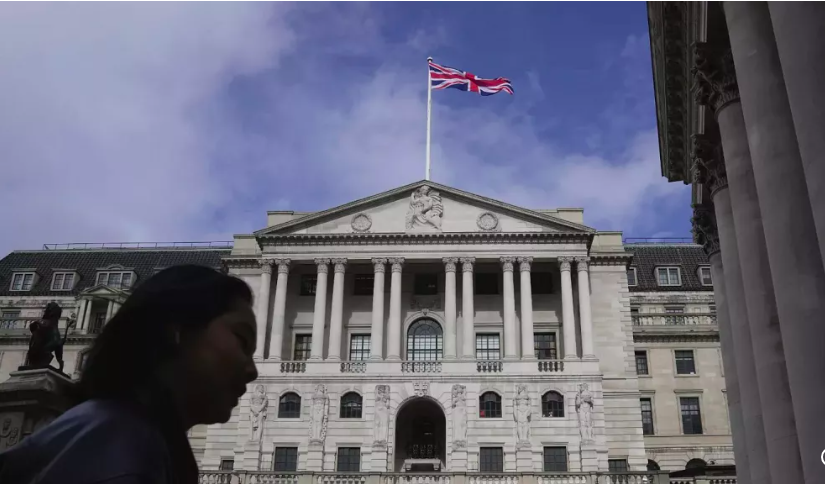
UK Economy Outpaces G7 Peers in First Half of 2025 Despite Tariff Pressures
The UK economy has surprised analysts once again, delivering a performance that—while not as explosive as the start of the year—signals resilience in a turbulent global landscape. Figures for July revealed a stronger-than-expected outcome, with Q2 2025 GDP expanding by 0.3%, placing the UK ahead of most of its G7 peers and reinforcing its position as the fastest-growing major advanced economy so far this year.
This comes despite lingering concerns over US trade tariffs, a sluggish global manufacturing climate, and geopolitical uncertainty. In fact, the UK’s half-year performance—driven by robust services and construction activity—has managed to outshine several of its continental and North American counterparts.
Register for Tekedia Mini-MBA edition 20 (June 8 – Sept 5, 2026).
Register for Tekedia AI in Business Masterclass.
Join Tekedia Capital Syndicate and co-invest in great global startups.
Register for Tekedia AI Lab.
A Slowdown From the Early-Year Surge—but Still Ahead of Expectations
Earlier in 2025, the economy sprinted out of the gates with a 0.7% Q1 growth rate, buoyed by a wave of pre-emptive economic activity. Businesses front-loaded investment and production in February and March to avoid the impact of US tariff announcements and anticipated changes to UK stamp duty. That momentum was always going to be difficult to sustain, and the second quarter inevitably saw a moderation.
Yet, the slowdown was not as sharp as many economists had feared. Predictions had been cautious, with some forecasting quarterly growth closer to 0.1%, especially after weak activity in April and May. Instead, a 0.4% monthly GDP jump in June turned the tide, delivering a stronger quarterly figure and suggesting the economy found a new gear midway through the year.

Sectoral Drivers: Services and Construction Take the Lead
The UK’s growth story in Q2 was far from uniform. Services, which account for more than 70% of GDP, rose 0.4% in the quarter. The strongest contributions came from:
- Information and communication – benefiting from ongoing digital transformation in both the public and private sectors.
- Health and social work – boosted by increased NHS activity and private healthcare demand.
- Professional services – including legal and consulting firms engaged in cross-border projects.
However, the picture wasn’t entirely rosy. Wholesale and retail trade lagged behind, reflecting ongoing cost-of-living pressures on households and weaker consumer confidence.

The construction sector was the standout performer, surging 1.2%. Infrastructure projects—especially in transport and energy—combined with a healthy level of private housing activity to push the industry ahead. This strength has been supported by easing supply chain bottlenecks and a slight moderation in material costs, allowing delayed projects to get back on track.
By contrast, the production sector slipped 0.3%, primarily due to:
- Sharp drops in electricity, gas, and steam supply.
- Weakness in mining and quarrying amid subdued global commodity demand.
One bright spot in production was manufacturing, which inched up 0.3%, thanks to an impressive 7.0% jump in pharmaceuticals and 3.0% growth in machinery and equipment—two areas that have seen renewed export orders and innovation investment.
Trade Flows: Services Exports Carry the Load
Trade data painted a mixed but largely encouraging picture. Export volumes rose 1.6% year-on-year, driven almost entirely by stronger services exports. The UK’s expertise in financial services, legal consulting, and creative industries continues to make it a global leader in the intangible economy.
Goods exports, however, dipped 0.2%, reflecting softer demand from Europe and Asia. Import volumes climbed 1.4%, as goods imports rose—likely a sign of businesses restocking inventories—while services imports slipped slightly.
The fact that services exports continue to offset weaker goods trade highlights the UK’s structural shift toward a services-dominant export profile, a trend that may prove advantageous in navigating future tariff and supply chain disruptions.
June’s Recovery Balances a Weaker Start to Q2
April and May saw subdued output, partly the result of the Q1 front-loading effect. With many firms rushing orders earlier in the year, some sectors experienced a temporary dip in demand and output as the second quarter began.
June, however, brought a rebound across all major sectors—services, production, and construction—delivering the 0.4% monthly GDP rise that kept quarterly growth comfortably above zero.
This resilience also suggests that consumer and business sentiment may be more robust than previously assumed. While household budgets remain under pressure from inflation, wage growth in certain sectors and a stabilising jobs market have supported spending in pockets of the economy.
Outperforming the G7
In a volatile global economic environment, the UK’s Q2 performance stands out. Across the G7:
- France also grew 0.3%, matching the UK.
- Canada recorded zero growth.
- Germany and Italy both contracted by 0.1%.
- United States led quarterly growth with 0.7%, driven by consumer spending and industrial investment.
However, when combining Q1 and Q2 results, the UK emerges as the leader. With a half-year annualised growth rate of 2.2%, the UK’s economy is expanding faster than any other G7 member, even the US.
This matters not just for bragging rights, but because it reflects a stronger-than-expected capacity to weather headwinds—from trade disputes to energy market volatility.
Risks and the Road Ahead
Despite the strong half-year showing, risks remain. The US tariff measures still hang over certain UK exports, particularly in manufacturing. A global slowdown in manufacturing and reduced demand from China could weigh on the production sector in the months ahead.
Domestically, inflation—while easing—continues to pressure consumers, and higher interest rates are still filtering through to businesses and households. The Bank of England will need to balance keeping inflation under control with not stifling growth momentum.
Policymakers will also be watching investment trends closely. The post-pandemic recovery in capital expenditure has been uneven, and sustained growth will require businesses to keep investing in productivity-boosting technology and skills.
Conclusion: A Resilient First Half
The UK’s economy in 2025 has so far proven more resilient than many had expected. While Q2 growth of 0.3% is a slowdown from the early-year surge, it beats forecasts and places the UK ahead of most G7 peers on a half-year basis.
Strong services and construction output have offset weaknesses in certain industrial sectors, while the country’s competitive advantage in services exports continues to shield it from some of the harsher global trade headwinds.
For now, the UK remains on a relatively steady growth path. If it can sustain momentum into the second half of the year—despite tariff tensions and global economic uncertainty—it may well close out 2025 as one of the world’s best-performing major economies.
Uploaded files:Share this:
- Click to share on Facebook (Opens in new window) Facebook
- Click to share on X (Opens in new window) X
- Click to share on WhatsApp (Opens in new window) WhatsApp
- Click to share on LinkedIn (Opens in new window) LinkedIn
- Click to email a link to a friend (Opens in new window) Email
- Click to print (Opens in new window) Print