

Unveiling Hidden Art Masterpieces: The Secret Portraits Beneath Famous Titanic, Picasso, and Van Gogh’s Works

Quote from Alex Bobby on February 23, 2025, 6:52 AM
Unveiling Hidden Histories: The Secret Portraits Beneath Masterpieces
Every few weeks, the art world is rocked by astonishing discoveries—vanished figures lurking beneath the varnish of paintings we thought we knew inside out. The past month alone has seen the revelation of concealed portraits hidden beneath works by the Renaissance master Titian and modernist pioneer Pablo Picasso. But what do these spectral presences tell us? Why do they fascinate and disturb us in equal measure?
The Ghost Beneath Titian’s Ecce Homo
In early February, researchers at the Cyprus Institute uncovered an upside-down portrait of a mustachioed man holding a quill beneath Titian’s Ecce Homo (1570-75). Using an advanced multi-modal scanner, experts confirmed that this hidden figure, buried for nearly 450 years, had influenced the composition of the final painting. The ropes binding Christ’s hands follow the contours of the obscured face, creating a hidden dialogue between past and present. Though his identity remains a mystery, his silent presence reshapes our understanding of Titian’s masterpiece.
A Whisper from Picasso’s Blue Period
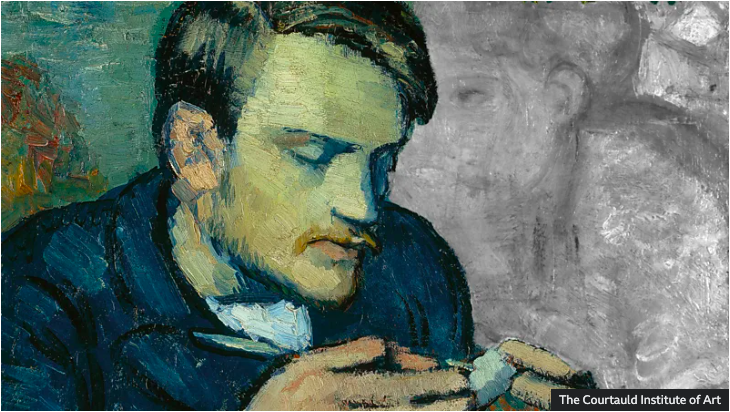
At The Courtauld Institute of Art, conservators recently detected a hidden woman’s face beneath Pablo Picasso’s portrait of his friend Mateu Fernández de Soto. Infrared imaging revealed a whispering, impressionistic figure merging with the finished painting. The discovery adds to the enigmatic layers of Picasso’s Blue Period, where emotion and experimentation coalesced into hauntingly beautiful works.
These buried images are often mere sketches, abandoned compositions never meant for our eyes. However, once exposed, they demand recognition. Here are some of the most fascinating concealed portraits that have surfaced in art history, proving that masterpieces are rarely what they seem at first glance.
Rembrandt’s Old Man in Military Costume
Rembrandt’s world is one of deep shadows and introspective gloom, but beneath An Old Man in Military Costume, researchers uncovered an unexpected burst of color—a youthful, flamboyant figure in red and green. This hidden portrait, found using macro X-ray fluorescence (MA-XRF) imaging, contrasts sharply with the somber final composition, adding an unexpected layer of poignancy to the painting’s meditation on age and mortality.
Artemisia Gentileschi’s Saint Catherine of Alexandria
X-ray analysis of Artemisia Gentileschi’s Saint Catherine of Alexandria (1619) uncovered an earlier self-portrait beneath the final work. Originally, the painting bore the unmistakable features of the artist herself before evolving into a depiction of Caterina de’ Medici. This transformation highlights the intimate relationship between artist and subject—Gentileschi’s presence remains, even if concealed.
Caravaggio’s Bacchus
Caravaggio, notorious for his dramatic realism, was also a master of self-insertion. In Bacchus, scholars using reflectography discovered a minuscule self-portrait hidden within the reflection of a carafe. Originally detected in 1922 but obscured by restorations, this now-visible distorted face echoes the painting’s themes of illusion and intoxication, reinforcing Caravaggio’s lifelong fascination with reality’s slippery nature.
Van Gogh’s Patch of Grass
Van Gogh’s sun-drenched landscapes often conceal more melancholic roots. A century before David Lynch’s Blue Velvetunearthed hidden horrors beneath a suburban lawn, researchers uncovered a somber portrait beneath Van Gogh’s Patch of Grass (1887). High-intensity X-rays revealed the face of a peasant woman, painted years earlier and later buried beneath vibrant greenery. This discovery underscores Van Gogh’s habit of reworking canvases—his past is always present beneath his brushstrokes.
Seurat’s Young Woman Powdering Herself
Pointillist pioneer Georges Seurat meticulously layered tiny dots to create luminous images, but one of his works, Young Woman Powdering Herself, hides a surprise—his only known self-portrait. Initially painting himself in an open window, Seurat later concealed his image beneath a flurry of painted dots, transforming himself into a vase of flowers. This act of self-erasure deepens the painting’s exploration of appearance and identity.
Modigliani’s Portrait of a Girl
In 2021, AI reconstruction of Amedeo Modigliani’s Portrait of a Girl (1917) revealed another full-length portrait beneath the surface. Scholars suspect the hidden figure may depict Beatrice Hastings, the artist’s former lover. If true, the concealed image adds a layer of personal history and unresolved emotion, reinforcing Modigliani’s recurring themes of longing and loss.
Magritte’s La Cinquième Saison
Surrealist master René Magritte often played with perception, but his La Cinquième Saison (1943) holds a secret—infrared reflectography exposed a buried portrait of a woman beneath the final composition. The face bears a striking resemblance to both his wife, Georgette, and an unknown muse. The discovery amplifies Magritte’s signature themes of duality and disguise, suggesting that even in his most enigmatic works, something unseen always lurks beneath.
Conclusion: The Past Lives On
As technology continues to unveil hidden histories, these revelations challenge our understanding of artistic intention. Whether discarded sketches, reworked compositions, or self-portraits hidden in plain sight, these spectral figures remind us that art is never truly finished. The ghosts of the past persist, whispering their secrets through the cracks of time.
Unveiling Hidden Histories: The Secret Portraits Beneath Masterpieces
Every few weeks, the art world is rocked by astonishing discoveries—vanished figures lurking beneath the varnish of paintings we thought we knew inside out. The past month alone has seen the revelation of concealed portraits hidden beneath works by the Renaissance master Titian and modernist pioneer Pablo Picasso. But what do these spectral presences tell us? Why do they fascinate and disturb us in equal measure?
The Ghost Beneath Titian’s Ecce Homo
In early February, researchers at the Cyprus Institute uncovered an upside-down portrait of a mustachioed man holding a quill beneath Titian’s Ecce Homo (1570-75). Using an advanced multi-modal scanner, experts confirmed that this hidden figure, buried for nearly 450 years, had influenced the composition of the final painting. The ropes binding Christ’s hands follow the contours of the obscured face, creating a hidden dialogue between past and present. Though his identity remains a mystery, his silent presence reshapes our understanding of Titian’s masterpiece.
Register for Tekedia Mini-MBA edition 20 (June 8 – Sept 5, 2026).
Register for Tekedia AI in Business Masterclass.
Join Tekedia Capital Syndicate and co-invest in great global startups.
Register for Tekedia AI Lab.
A Whisper from Picasso’s Blue Period
At The Courtauld Institute of Art, conservators recently detected a hidden woman’s face beneath Pablo Picasso’s portrait of his friend Mateu Fernández de Soto. Infrared imaging revealed a whispering, impressionistic figure merging with the finished painting. The discovery adds to the enigmatic layers of Picasso’s Blue Period, where emotion and experimentation coalesced into hauntingly beautiful works.
These buried images are often mere sketches, abandoned compositions never meant for our eyes. However, once exposed, they demand recognition. Here are some of the most fascinating concealed portraits that have surfaced in art history, proving that masterpieces are rarely what they seem at first glance.
Rembrandt’s Old Man in Military Costume
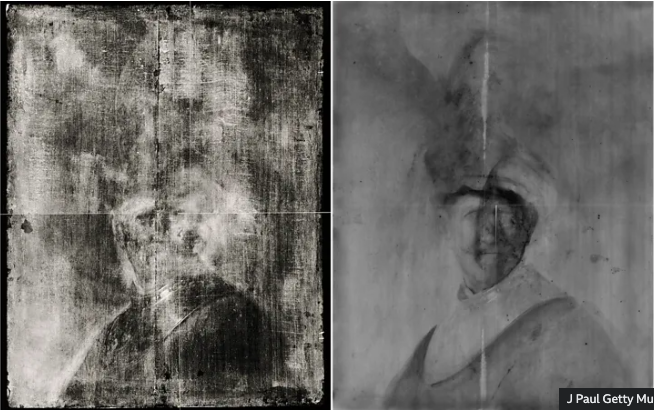
Rembrandt’s world is one of deep shadows and introspective gloom, but beneath An Old Man in Military Costume, researchers uncovered an unexpected burst of color—a youthful, flamboyant figure in red and green. This hidden portrait, found using macro X-ray fluorescence (MA-XRF) imaging, contrasts sharply with the somber final composition, adding an unexpected layer of poignancy to the painting’s meditation on age and mortality.

Artemisia Gentileschi’s Saint Catherine of Alexandria
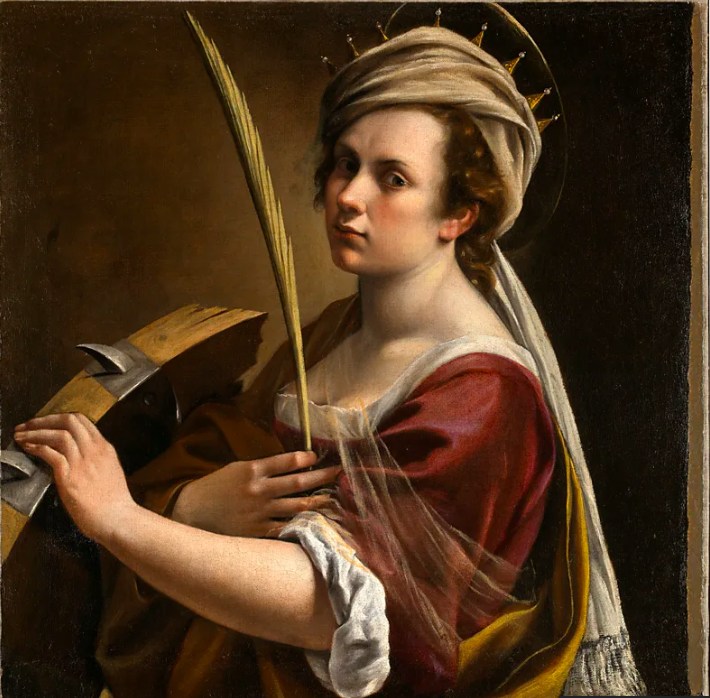
X-ray analysis of Artemisia Gentileschi’s Saint Catherine of Alexandria (1619) uncovered an earlier self-portrait beneath the final work. Originally, the painting bore the unmistakable features of the artist herself before evolving into a depiction of Caterina de’ Medici. This transformation highlights the intimate relationship between artist and subject—Gentileschi’s presence remains, even if concealed.
Caravaggio’s Bacchus
Caravaggio, notorious for his dramatic realism, was also a master of self-insertion. In Bacchus, scholars using reflectography discovered a minuscule self-portrait hidden within the reflection of a carafe. Originally detected in 1922 but obscured by restorations, this now-visible distorted face echoes the painting’s themes of illusion and intoxication, reinforcing Caravaggio’s lifelong fascination with reality’s slippery nature.
Van Gogh’s Patch of Grass
Van Gogh’s sun-drenched landscapes often conceal more melancholic roots. A century before David Lynch’s Blue Velvetunearthed hidden horrors beneath a suburban lawn, researchers uncovered a somber portrait beneath Van Gogh’s Patch of Grass (1887). High-intensity X-rays revealed the face of a peasant woman, painted years earlier and later buried beneath vibrant greenery. This discovery underscores Van Gogh’s habit of reworking canvases—his past is always present beneath his brushstrokes.

Seurat’s Young Woman Powdering Herself
Pointillist pioneer Georges Seurat meticulously layered tiny dots to create luminous images, but one of his works, Young Woman Powdering Herself, hides a surprise—his only known self-portrait. Initially painting himself in an open window, Seurat later concealed his image beneath a flurry of painted dots, transforming himself into a vase of flowers. This act of self-erasure deepens the painting’s exploration of appearance and identity.
Modigliani’s Portrait of a Girl
In 2021, AI reconstruction of Amedeo Modigliani’s Portrait of a Girl (1917) revealed another full-length portrait beneath the surface. Scholars suspect the hidden figure may depict Beatrice Hastings, the artist’s former lover. If true, the concealed image adds a layer of personal history and unresolved emotion, reinforcing Modigliani’s recurring themes of longing and loss.
Magritte’s La Cinquième Saison
Surrealist master René Magritte often played with perception, but his La Cinquième Saison (1943) holds a secret—infrared reflectography exposed a buried portrait of a woman beneath the final composition. The face bears a striking resemblance to both his wife, Georgette, and an unknown muse. The discovery amplifies Magritte’s signature themes of duality and disguise, suggesting that even in his most enigmatic works, something unseen always lurks beneath.
Conclusion: The Past Lives On
As technology continues to unveil hidden histories, these revelations challenge our understanding of artistic intention. Whether discarded sketches, reworked compositions, or self-portraits hidden in plain sight, these spectral figures remind us that art is never truly finished. The ghosts of the past persist, whispering their secrets through the cracks of time.
Uploaded files:Share this:
- Click to share on Facebook (Opens in new window) Facebook
- Click to share on X (Opens in new window) X
- Click to share on WhatsApp (Opens in new window) WhatsApp
- Click to share on LinkedIn (Opens in new window) LinkedIn
- Click to email a link to a friend (Opens in new window) Email
- Click to print (Opens in new window) Print