

Vance and Lammy Rally Allies for Ukraine Ahead of High-Stakes Trump-Putin Summit

Quote from Alex Bobby on August 10, 2025, 2:58 AM
Vance and Lammy Host High-Level Ukraine Talks Ahead of Contentious US-Russia Summit
With the eyes of the world fixed on the looming meeting between US President Donald Trump and Russian President Vladimir Putin, Washington and London have staged a high-profile show of support for Kyiv. On Saturday, US Vice-President JD Vance and UK Foreign Secretary David Lammy hosted an emergency gathering of Ukrainian and European security officials at Chevening, Lammy’s official country residence in Kent.
The talks, reportedly initiated at the request of the United States, brought together senior representatives from Ukraine, NATO, and key European allies including France, Germany, Italy, Finland, and the European Union. Among the Ukrainian delegation were Rustem Umerov, secretary of Ukraine’s National Security and Defence Council, and Andriy Yermak, chief of staff to President Volodymyr Zelensky.
Lammy reaffirmed Britain’s commitment in stark terms: “The UK’s support for Ukraine remains ironclad as we continue working towards a just and lasting peace.”
A Strategic Moment Before Alaska
The timing was no accident. The Chevening talks came just days before the 15 August Trump-Putin summit in Alaska — a meeting that has sparked intense concern in Kyiv and across Europe.
Trump has repeatedly signalled that Ukraine may have to make territorial concessions to Russia to end the war, which began with Moscow’s full-scale invasion in February 2022. On Friday, he reiterated the point, telling reporters that “there will be some swapping of territories, to the betterment of both,” describing the conflict as one over “land that’s been fought over for three and a half years” at enormous human cost.
Those remarks immediately set off alarm bells in European capitals. For Ukraine, they touch on the very core of its sovereignty and national survival. Zelensky responded sharply but diplomatically, stressing in a Telegram post: “Ukrainians will not give their land to the occupier… We are ready, together with President Trump, together with all partners, to work for a real, and most importantly, lasting peace — a peace that will not collapse because of Moscow’s wishes.”
Starmer and Zelensky in Step
Before the Kent gathering, UK Prime Minister Keir Starmer held a call with Zelensky. Both leaders reportedly agreed that the meeting would be a “vital forum” for discussing progress towards peace.
For London, the stakes are twofold: defending Ukraine’s territorial integrity and ensuring Europe’s security is not undermined by a US-Russia deal made over the heads of those most affected.
This concern was echoed in a late-night joint statement from leaders of Britain, France, Germany, Italy, Poland, Finland, and European Commission President Ursula von der Leyen. The declaration stressed: “The path to peace in Ukraine cannot be decided without Ukraine… Ukraine has the freedom of choice over its own destiny.”
They further warned that “international borders must not be changed by force” and pledged to continue military, diplomatic, and financial support for Kyiv.
The Risk of a ‘Deal Without Ukraine’
European officials have long feared that Trump and Putin could strike a bargain without Ukraine present — a scenario reminiscent of historical “great power” diplomacy where smaller nations were sidelined.
French President Emmanuel Macron voiced that anxiety bluntly on Saturday, posting on X: “Ukraine’s future cannot be decided without the Ukrainians… Europeans will also necessarily be part of the solution, as their own security is at stake.”
For Ukraine, the nightmare scenario is being forced into a ceasefire that cements Russian control over occupied territories while offering no security guarantees for the future. Such an arrangement, critics argue, would simply give Moscow time to regroup and strike again.
Military and Political Realities
Russia’s demands remain maximalist: formal recognition of its sovereignty over annexed Ukrainian regions, Ukrainian demilitarisation, and abandonment of NATO membership aspirations. These conditions, for Kyiv, are non-starters.
While Trump has hardened his rhetoric on Russia in recent months, Zelensky’s government notes that concrete actions have yet to follow. On Friday, Trump’s self-imposed deadline for Russia to agree to a ceasefire passed without apparent consequences, undermining his claims of leverage over Moscow.
According to US media reports, White House officials still consider it possible that Zelensky could be involved in the Alaska talks in some form, though plans remain “fluid.”
War Fatigue vs. National Resolve
On the ground, both soldiers and civilians express a deep longing for peace after more than three years of relentless fighting, missile strikes, and drone attacks. The human toll has been staggering. But there is little sign that Ukraine is willing to accept what many see as a peace dictated by Moscow’s terms.
Zelensky underlined this point in his Saturday night address: “The path to peace for Ukraine should be determined together and only together with Ukraine — this is the key principle.”
Why This Meeting Matters
By convening key allies at Chevening, Vance and Lammy aimed to send a dual message: to reassure Ukraine that its allies remain committed, and to warn Moscow — and perhaps Washington — that any lasting settlement must respect Ukraine’s sovereignty.
Whether this united front will hold in the face of potential US-Russia bargaining remains uncertain. The Alaska summit will test not only the resilience of Ukraine’s diplomacy but also the strength of Western solidarity.
If Trump and Putin attempt to finalise a deal without Ukraine in the room, it will be met with fierce resistance from Kyiv and European capitals. But if allies can keep Ukraine’s voice central to the talks, the Kent meeting may prove a turning point in shaping the war’s endgame.
For now, the message from Chevening is clear: any peace without Ukraine is no peace at all.
Final thoughts
Ultimately, the coming days will reveal whether the Alaska summit becomes a milestone for genuine, lasting peace or a cautionary tale of power politics sidelining those most affected. Ukraine and its allies have drawn their red lines clearly: no territorial concessions, no deals struck behind closed doors, and no compromises that undermine sovereignty. The unity shown at Chevening was more than diplomatic theatre — it was a signal that Europe and its partners will not quietly accept a settlement dictated by Moscow’s terms or brokered without Kyiv’s consent. As Trump and Putin sit down in Alaska, the test will be whether the voices from Kent still echo loudly enough to shape the future of the war.
Conclusion
the Chevening talks underscored a critical reality: while the US-Russia summit in Alaska may dominate headlines, the real measure of progress towards ending the war in Ukraine will depend on whether Kyiv’s voice remains central in shaping the outcome. Allies from Britain to Brussels have made it clear that any peace imposed without Ukraine’s consent would not only undermine its sovereignty but also set a dangerous precedent for global security. As Trump and Putin prepare to meet, the unity displayed in Kent serves as both a warning to Moscow and a reminder to Washington that true peace must be built with Ukraine, not around it.
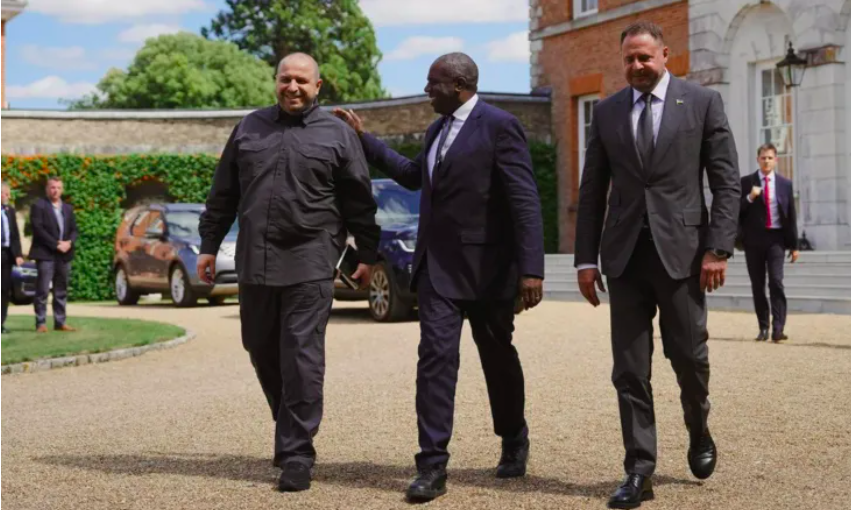
Vance and Lammy Host High-Level Ukraine Talks Ahead of Contentious US-Russia Summit
With the eyes of the world fixed on the looming meeting between US President Donald Trump and Russian President Vladimir Putin, Washington and London have staged a high-profile show of support for Kyiv. On Saturday, US Vice-President JD Vance and UK Foreign Secretary David Lammy hosted an emergency gathering of Ukrainian and European security officials at Chevening, Lammy’s official country residence in Kent.
The talks, reportedly initiated at the request of the United States, brought together senior representatives from Ukraine, NATO, and key European allies including France, Germany, Italy, Finland, and the European Union. Among the Ukrainian delegation were Rustem Umerov, secretary of Ukraine’s National Security and Defence Council, and Andriy Yermak, chief of staff to President Volodymyr Zelensky.
Register for Tekedia Mini-MBA edition 20 (June 8 – Sept 5, 2026).
Register for Tekedia AI in Business Masterclass.
Join Tekedia Capital Syndicate and co-invest in great global startups.
Register for Tekedia AI Lab.
Lammy reaffirmed Britain’s commitment in stark terms: “The UK’s support for Ukraine remains ironclad as we continue working towards a just and lasting peace.”
A Strategic Moment Before Alaska
The timing was no accident. The Chevening talks came just days before the 15 August Trump-Putin summit in Alaska — a meeting that has sparked intense concern in Kyiv and across Europe.

Trump has repeatedly signalled that Ukraine may have to make territorial concessions to Russia to end the war, which began with Moscow’s full-scale invasion in February 2022. On Friday, he reiterated the point, telling reporters that “there will be some swapping of territories, to the betterment of both,” describing the conflict as one over “land that’s been fought over for three and a half years” at enormous human cost.
Those remarks immediately set off alarm bells in European capitals. For Ukraine, they touch on the very core of its sovereignty and national survival. Zelensky responded sharply but diplomatically, stressing in a Telegram post: “Ukrainians will not give their land to the occupier… We are ready, together with President Trump, together with all partners, to work for a real, and most importantly, lasting peace — a peace that will not collapse because of Moscow’s wishes.”
Starmer and Zelensky in Step

Before the Kent gathering, UK Prime Minister Keir Starmer held a call with Zelensky. Both leaders reportedly agreed that the meeting would be a “vital forum” for discussing progress towards peace.
For London, the stakes are twofold: defending Ukraine’s territorial integrity and ensuring Europe’s security is not undermined by a US-Russia deal made over the heads of those most affected.
This concern was echoed in a late-night joint statement from leaders of Britain, France, Germany, Italy, Poland, Finland, and European Commission President Ursula von der Leyen. The declaration stressed: “The path to peace in Ukraine cannot be decided without Ukraine… Ukraine has the freedom of choice over its own destiny.”
They further warned that “international borders must not be changed by force” and pledged to continue military, diplomatic, and financial support for Kyiv.
The Risk of a ‘Deal Without Ukraine’
European officials have long feared that Trump and Putin could strike a bargain without Ukraine present — a scenario reminiscent of historical “great power” diplomacy where smaller nations were sidelined.
French President Emmanuel Macron voiced that anxiety bluntly on Saturday, posting on X: “Ukraine’s future cannot be decided without the Ukrainians… Europeans will also necessarily be part of the solution, as their own security is at stake.”
For Ukraine, the nightmare scenario is being forced into a ceasefire that cements Russian control over occupied territories while offering no security guarantees for the future. Such an arrangement, critics argue, would simply give Moscow time to regroup and strike again.
Military and Political Realities
Russia’s demands remain maximalist: formal recognition of its sovereignty over annexed Ukrainian regions, Ukrainian demilitarisation, and abandonment of NATO membership aspirations. These conditions, for Kyiv, are non-starters.
While Trump has hardened his rhetoric on Russia in recent months, Zelensky’s government notes that concrete actions have yet to follow. On Friday, Trump’s self-imposed deadline for Russia to agree to a ceasefire passed without apparent consequences, undermining his claims of leverage over Moscow.
According to US media reports, White House officials still consider it possible that Zelensky could be involved in the Alaska talks in some form, though plans remain “fluid.”
War Fatigue vs. National Resolve
On the ground, both soldiers and civilians express a deep longing for peace after more than three years of relentless fighting, missile strikes, and drone attacks. The human toll has been staggering. But there is little sign that Ukraine is willing to accept what many see as a peace dictated by Moscow’s terms.
Zelensky underlined this point in his Saturday night address: “The path to peace for Ukraine should be determined together and only together with Ukraine — this is the key principle.”
Why This Meeting Matters
By convening key allies at Chevening, Vance and Lammy aimed to send a dual message: to reassure Ukraine that its allies remain committed, and to warn Moscow — and perhaps Washington — that any lasting settlement must respect Ukraine’s sovereignty.
Whether this united front will hold in the face of potential US-Russia bargaining remains uncertain. The Alaska summit will test not only the resilience of Ukraine’s diplomacy but also the strength of Western solidarity.
If Trump and Putin attempt to finalise a deal without Ukraine in the room, it will be met with fierce resistance from Kyiv and European capitals. But if allies can keep Ukraine’s voice central to the talks, the Kent meeting may prove a turning point in shaping the war’s endgame.
For now, the message from Chevening is clear: any peace without Ukraine is no peace at all.
Final thoughts
Ultimately, the coming days will reveal whether the Alaska summit becomes a milestone for genuine, lasting peace or a cautionary tale of power politics sidelining those most affected. Ukraine and its allies have drawn their red lines clearly: no territorial concessions, no deals struck behind closed doors, and no compromises that undermine sovereignty. The unity shown at Chevening was more than diplomatic theatre — it was a signal that Europe and its partners will not quietly accept a settlement dictated by Moscow’s terms or brokered without Kyiv’s consent. As Trump and Putin sit down in Alaska, the test will be whether the voices from Kent still echo loudly enough to shape the future of the war.
Conclusion
the Chevening talks underscored a critical reality: while the US-Russia summit in Alaska may dominate headlines, the real measure of progress towards ending the war in Ukraine will depend on whether Kyiv’s voice remains central in shaping the outcome. Allies from Britain to Brussels have made it clear that any peace imposed without Ukraine’s consent would not only undermine its sovereignty but also set a dangerous precedent for global security. As Trump and Putin prepare to meet, the unity displayed in Kent serves as both a warning to Moscow and a reminder to Washington that true peace must be built with Ukraine, not around it.
Uploaded files:Share this:
- Click to share on Facebook (Opens in new window) Facebook
- Click to share on X (Opens in new window) X
- Click to share on WhatsApp (Opens in new window) WhatsApp
- Click to share on LinkedIn (Opens in new window) LinkedIn
- Click to email a link to a friend (Opens in new window) Email
- Click to print (Opens in new window) Print