

Venice’s Daytripper Fee Raised €5 Million in 2025 – But Did It Stop Overtourism?

Quote from Alex Bobby on September 9, 2025, 5:07 AM
Venice’s Daytripper Fee Raised €5 Million in 2025 — But Did It Curb Overtourism?
Venice has long been a victim of its own beauty. Its canals, bridges, and palazzos make it one of the most enchanting destinations in the world, but they also attract millions of tourists every year. For decades, the narrow alleys and fragile infrastructure of the lagoon city have been overwhelmed by mass tourism, with daytrippers often singled out as the worst offenders. These so-called “hit and run” visitors flood the city during peak hours, spend little, and contribute to overcrowding that diminishes the quality of life for residents.
In 2024, the city council launched an experimental solution: a daytripper fee. The idea was simple — tourists visiting Venice for just the day would need to book their visit in advance and, unless exempt, pay a small levy. The initiative returned for its second year in 2025, expanded to cover 54 days between April and July. And while the results show the scheme generated an impressive €5.4 million in revenue, the question remains: has it actually reduced overtourism?
The Numbers Behind the Daytripper Fee
The city council’s provisional data paints a mixed picture. A total of 723,497 visitors paid the fee this year, compared to 485,062 in 2024. That’s nearly a 50% increase in visitors paying into the system. Unsurprisingly, revenue nearly doubled from €2.4 million last year to €5,421,425 in 2025.
On paper, this looks like a win. But context is key. In 2024, the fee was enforced for only 29 days, whereas this year it was applied for nearly double the period. The daily average of visitors who paid the tax actually fell slightly, from 16,676 last year to 13,046 in 2025.
Still, on peak days, the numbers were staggering. On Friday, 2 May, Venice welcomed 24,951 daytrippers — more than half the size of the city’s resident population of 48,500. Saturdays remained the busiest days overall, followed by Fridays and Sundays.
The €5 vs €10 Divide
To better manage flows, authorities introduced a tiered system this year. Visitors who booked at least four days in advance paid the standard €5 fee, while those booking last-minute were charged double at €10. The goal was to reduce spontaneous surges and give the city more time to prepare.
The outcome, however, was surprising. Nearly 49% of visitors opted for the last-minute €10 fee, suggesting that cost was not a deterrent. Instead, many tourists seemed willing to pay extra for flexibility, undermining one of the city council’s core objectives.
Ticket enforcement was also stepped up. Around 140 inspectors patrolled Venice daily, carrying out more than 445,000 QR code checks. Roughly 2,500 tourists were caught without a valid ticket — a small fraction, but enough to justify the heightened controls.
Did It Work Against Overtourism?
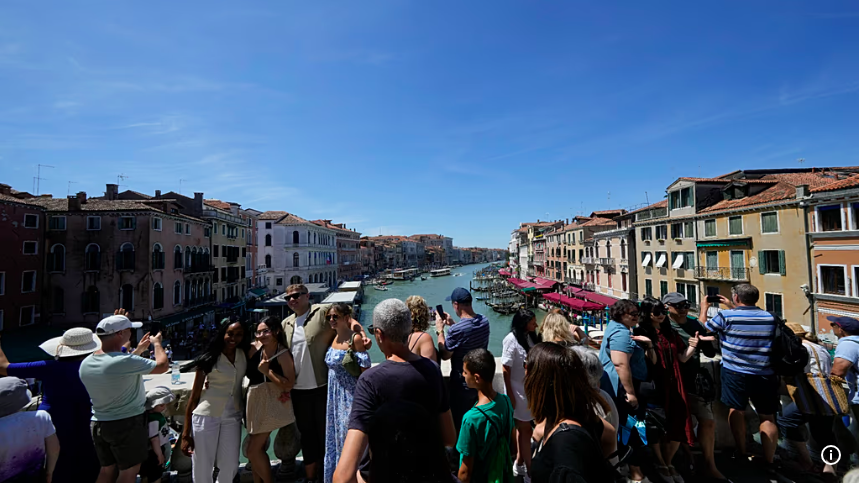
Here’s where the scheme’s success is more debatable. While revenue rose, tourist numbers didn’t fall significantly. The city council itself admitted that attendance on certain days was comparable to — or even higher than — the previous year. This aligns with regional data, which shows a broader decline in tourism across Veneto rather than any city-specific reduction due to the fee.
For residents, the reality on the ground has hardly changed. Waterbuses remain packed, walkways still overflow during peak hours, and the city feels no less crowded. As Democratic Party councillor Monica Sambo told local media:
“The entrance fee, presented as a tool to manage tourist flows on the busiest days, hasn't led to any significant reduction in admissions. In fact, the city council itself admits that on some days, attendance actually increased. It's therefore clear that this measure has nothing to do with city governance."
Critics argue that the fee has become less a tool for crowd control and more a way to collect money from tourists without addressing the deeper issues behind overtourism.
Where the Money Goes
If nothing else, the fee has boosted city coffers. Venice has promised that at least €1.5 million of the proceeds will be invested directly into services for residents, particularly in reducing the city’s notoriously high waste tax. Supporters of the measure point out that even if the fee hasn’t thinned the crowds, it does ensure that daytrippers contribute financially to the city they impact.
But many residents remain unconvinced. For them, the solution lies not in taxing visitors but in tackling systemic problems, such as depopulation and the proliferation of short-term rentals. Today, there are more tourist beds in Venice’s historic centre than there are residents, whose numbers continue to dwindle. At just 48,500, the resident population is at an all-time low, fuelling concerns that Venice risks becoming more theme park than living city.
A Balancing Act for the Future
Venice’s daytripper fee represents a bold attempt to rethink tourism management in a city at breaking point. Yet two years in, it’s clear that the measure is no silver bullet. While it has successfully generated revenue and introduced a new culture of booking and monitoring, it has not substantially reduced the crowds that overwhelm the city during peak periods.
For the initiative to truly succeed, it may need to be combined with deeper reforms: stricter limits on short-term rentals, policies encouraging residents to remain in the historic centre, and sustainable tourism strategies that spread visitor flows more evenly throughout the year.
Until then, Venice will remain caught between two identities: a vibrant city fighting to preserve its character, and a global attraction besieged by the very visitors who love it. The daytripper fee might be a step forward, but for Venetians, the journey toward reclaiming their city is far from over.
Looking Forward
As Venice reflects on the second year of its daytripper fee, the next step will be deciding whether to expand, adjust, or abandon the experiment. The €5 million raised in 2025 shows the financial potential of the scheme, but without a noticeable decline in overtourism, the city faces mounting pressure to deliver stronger results.
Looking ahead, authorities may refine the booking system, raise fees on peak days, or pair the levy with tougher measures on short-term rentals and housing policies. For travellers, the data also offers an unexpected benefit: a clearer picture of when crowds are heaviest and when to plan visits for a more authentic Venetian experience.
Ultimately, the world will be watching how Venice balances its fragile identity as both a global treasure and a lived-in city. The choices made in the coming years could set a precedent for other overtouristed destinations seeking sustainable solutions.
Conclusion
Venice’s daytripper fee has proven effective at raising revenue, but far less so at reducing overtourism. The city now has millions of euros to reinvest in public services, yet its canals, walkways, and vaporettos remain as congested as ever. For many residents, the experiment feels like a financial patch rather than a meaningful solution to the pressures of mass tourism.
If Venice truly wants to safeguard its heritage and make daily life more sustainable, the fee will need to be part of a broader strategy — one that tackles housing, short-term rentals, and the city’s shrinking population. Until then, the world’s most romantic lagoon risks drifting further toward becoming a stage set for tourists rather than a living, breathing city.
Meta Description:
Venice’s daytripper fee generated over €5 million in 2025, nearly doubling last year’s revenue. But did the controversial levy actually reduce overtourism in the lagoon city, or just fill council coffers?
Venice’s Daytripper Fee Raised €5 Million in 2025 — But Did It Curb Overtourism?
Venice has long been a victim of its own beauty. Its canals, bridges, and palazzos make it one of the most enchanting destinations in the world, but they also attract millions of tourists every year. For decades, the narrow alleys and fragile infrastructure of the lagoon city have been overwhelmed by mass tourism, with daytrippers often singled out as the worst offenders. These so-called “hit and run” visitors flood the city during peak hours, spend little, and contribute to overcrowding that diminishes the quality of life for residents.
In 2024, the city council launched an experimental solution: a daytripper fee. The idea was simple — tourists visiting Venice for just the day would need to book their visit in advance and, unless exempt, pay a small levy. The initiative returned for its second year in 2025, expanded to cover 54 days between April and July. And while the results show the scheme generated an impressive €5.4 million in revenue, the question remains: has it actually reduced overtourism?
Register for Tekedia Mini-MBA edition 20 (June 8 – Sept 5, 2026).
Register for Tekedia AI in Business Masterclass.
Join Tekedia Capital Syndicate and co-invest in great global startups.
Register for Tekedia AI Lab.
The Numbers Behind the Daytripper Fee
The city council’s provisional data paints a mixed picture. A total of 723,497 visitors paid the fee this year, compared to 485,062 in 2024. That’s nearly a 50% increase in visitors paying into the system. Unsurprisingly, revenue nearly doubled from €2.4 million last year to €5,421,425 in 2025.
On paper, this looks like a win. But context is key. In 2024, the fee was enforced for only 29 days, whereas this year it was applied for nearly double the period. The daily average of visitors who paid the tax actually fell slightly, from 16,676 last year to 13,046 in 2025.

Still, on peak days, the numbers were staggering. On Friday, 2 May, Venice welcomed 24,951 daytrippers — more than half the size of the city’s resident population of 48,500. Saturdays remained the busiest days overall, followed by Fridays and Sundays.
The €5 vs €10 Divide
To better manage flows, authorities introduced a tiered system this year. Visitors who booked at least four days in advance paid the standard €5 fee, while those booking last-minute were charged double at €10. The goal was to reduce spontaneous surges and give the city more time to prepare.

The outcome, however, was surprising. Nearly 49% of visitors opted for the last-minute €10 fee, suggesting that cost was not a deterrent. Instead, many tourists seemed willing to pay extra for flexibility, undermining one of the city council’s core objectives.
Ticket enforcement was also stepped up. Around 140 inspectors patrolled Venice daily, carrying out more than 445,000 QR code checks. Roughly 2,500 tourists were caught without a valid ticket — a small fraction, but enough to justify the heightened controls.
Did It Work Against Overtourism?
Here’s where the scheme’s success is more debatable. While revenue rose, tourist numbers didn’t fall significantly. The city council itself admitted that attendance on certain days was comparable to — or even higher than — the previous year. This aligns with regional data, which shows a broader decline in tourism across Veneto rather than any city-specific reduction due to the fee.
For residents, the reality on the ground has hardly changed. Waterbuses remain packed, walkways still overflow during peak hours, and the city feels no less crowded. As Democratic Party councillor Monica Sambo told local media:
“The entrance fee, presented as a tool to manage tourist flows on the busiest days, hasn't led to any significant reduction in admissions. In fact, the city council itself admits that on some days, attendance actually increased. It's therefore clear that this measure has nothing to do with city governance."
Critics argue that the fee has become less a tool for crowd control and more a way to collect money from tourists without addressing the deeper issues behind overtourism.
Where the Money Goes
If nothing else, the fee has boosted city coffers. Venice has promised that at least €1.5 million of the proceeds will be invested directly into services for residents, particularly in reducing the city’s notoriously high waste tax. Supporters of the measure point out that even if the fee hasn’t thinned the crowds, it does ensure that daytrippers contribute financially to the city they impact.
But many residents remain unconvinced. For them, the solution lies not in taxing visitors but in tackling systemic problems, such as depopulation and the proliferation of short-term rentals. Today, there are more tourist beds in Venice’s historic centre than there are residents, whose numbers continue to dwindle. At just 48,500, the resident population is at an all-time low, fuelling concerns that Venice risks becoming more theme park than living city.
A Balancing Act for the Future
Venice’s daytripper fee represents a bold attempt to rethink tourism management in a city at breaking point. Yet two years in, it’s clear that the measure is no silver bullet. While it has successfully generated revenue and introduced a new culture of booking and monitoring, it has not substantially reduced the crowds that overwhelm the city during peak periods.
For the initiative to truly succeed, it may need to be combined with deeper reforms: stricter limits on short-term rentals, policies encouraging residents to remain in the historic centre, and sustainable tourism strategies that spread visitor flows more evenly throughout the year.
Until then, Venice will remain caught between two identities: a vibrant city fighting to preserve its character, and a global attraction besieged by the very visitors who love it. The daytripper fee might be a step forward, but for Venetians, the journey toward reclaiming their city is far from over.
Looking Forward
As Venice reflects on the second year of its daytripper fee, the next step will be deciding whether to expand, adjust, or abandon the experiment. The €5 million raised in 2025 shows the financial potential of the scheme, but without a noticeable decline in overtourism, the city faces mounting pressure to deliver stronger results.
Looking ahead, authorities may refine the booking system, raise fees on peak days, or pair the levy with tougher measures on short-term rentals and housing policies. For travellers, the data also offers an unexpected benefit: a clearer picture of when crowds are heaviest and when to plan visits for a more authentic Venetian experience.
Ultimately, the world will be watching how Venice balances its fragile identity as both a global treasure and a lived-in city. The choices made in the coming years could set a precedent for other overtouristed destinations seeking sustainable solutions.
Conclusion
Venice’s daytripper fee has proven effective at raising revenue, but far less so at reducing overtourism. The city now has millions of euros to reinvest in public services, yet its canals, walkways, and vaporettos remain as congested as ever. For many residents, the experiment feels like a financial patch rather than a meaningful solution to the pressures of mass tourism.
If Venice truly wants to safeguard its heritage and make daily life more sustainable, the fee will need to be part of a broader strategy — one that tackles housing, short-term rentals, and the city’s shrinking population. Until then, the world’s most romantic lagoon risks drifting further toward becoming a stage set for tourists rather than a living, breathing city.
Meta Description:
Venice’s daytripper fee generated over €5 million in 2025, nearly doubling last year’s revenue. But did the controversial levy actually reduce overtourism in the lagoon city, or just fill council coffers?
Share this:
- Click to share on Facebook (Opens in new window) Facebook
- Click to share on X (Opens in new window) X
- Click to share on WhatsApp (Opens in new window) WhatsApp
- Click to share on LinkedIn (Opens in new window) LinkedIn
- Click to email a link to a friend (Opens in new window) Email
- Click to print (Opens in new window) Print