

Xi and Modi Pledge Stronger China-India Ties in Landmark Tianjin Meeting

Quote from Alex Bobby on September 1, 2025, 3:06 AM
China’s Xi and India’s Modi Vow Stronger Ties in Landmark Meeting Ahead of Regional Summit
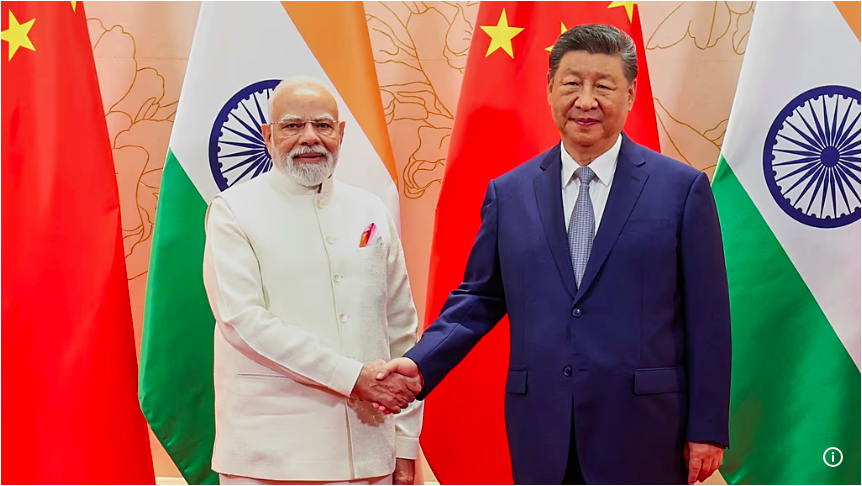
In a development that could reshape the political and economic landscape of Asia, Chinese President Xi Jinping and Indian Prime Minister Narendra Modi have pledged to strengthen ties and move beyond decades of mistrust during a landmark meeting in Tianjin. The high-profile talks, held on Sunday ahead of the Shanghai Cooperation Organisation (SCO) summit, marked Modi’s first visit to China since relations between the two countries deteriorated in the aftermath of deadly border clashes in 2020.
The meeting, which saw both leaders speak openly about past tensions and future possibilities, signalled a cautious but notable thaw between the two Asian giants. It came at a time when both countries face mounting external pressures, including escalating tariffs from Washington and shifting global trade patterns, making cooperation not just desirable but strategically necessary.
Modi’s First Visit Since 2020 Border Clashes
Relations between China and India hit their lowest point in decades following the 2020 skirmishes in the Galwan Valley, which left soldiers dead on both sides. The clashes sparked nationalist outrage, disrupted trade flows, and led to military build-ups across disputed Himalayan borders. For years, dialogue was stalled, and confidence eroded as both nations focused on asserting territorial claims rather than cooperation.
Against this backdrop, Modi’s visit to Tianjin carried symbolic and practical weight. In his opening remarks, the Indian prime minister acknowledged the progress already made:
“Relations with China have moved in a meaningful direction,” Modi said. “There is a peaceful environment at the borders after disengagement.”
For India, the opportunity to stabilise ties comes at a time of economic uncertainty. With steep U.S. tariffs now threatening Indian exports and global growth forecasts under strain, New Delhi appears eager to diversify its strategic partnerships and restore dialogue with Beijing.
Xi: Border Issues Should Not Define Relations
In his remarks, President Xi struck a conciliatory tone, underscoring the importance of long-term cooperation. According to state broadcaster CCTV, Xi urged both sides to “not let the border issue define the overall China-India relationship.”
Xi’s statement reflects a significant shift in emphasis. While territorial disputes have long dominated the bilateral agenda, Beijing now appears intent on broadening the relationship to encompass economic, cultural, and multilateral cooperation. Xi went on to note:
“As long as they remain committed to the overarching goal of being partners, not rivals, and providing development opportunities, not threats, China-India relations will flourish and move forward steadily.”
The language of partnership rather than rivalry suggests that both sides recognise the limits of confrontation. With China’s economy slowing and India eager to attract foreign investment while countering Western trade restrictions, cooperation between the two largest emerging economies in Asia could open new pathways for growth.
Renewed Diplomatic Engagement
Sunday’s meeting was not an isolated gesture but the culmination of months of quiet diplomacy. In early August, China’s top diplomat Wang Yi traveled to New Delhi, where he met Indian officials to set the stage for a broader rapprochement. That visit produced commitments to restart border talks, reopen direct flights, and resume visa processing, signalling a gradual normalisation of people-to-people and commercial ties.
Symbolic moves have also reinforced this warming trend. In June, Beijing reopened Tibet’s sacred sites to Indian pilgrims, a gesture aimed at rebuilding cultural links and softening public opinion. The steady increase in official visits throughout the year reflects both governments’ willingness to reduce mistrust and focus on pragmatic cooperation.
External Pressures Push India Closer to Beijing
While the dialogue reflects an internal recognition of the costs of confrontation, external pressures have also accelerated the rapprochement. The U.S. decision to impose 50% tariffs on India over its continued purchase of Russian oil has sent shockwaves through New Delhi’s trade community. Coming into effect on 27 August, the tariffs target a broad range of Indian exports and threaten to undermine key sectors of its overseas trade.
For India, the tariffs are a stark reminder of the volatility of global trade and the risks of over-reliance on Western markets. Seeking new partners and stabilising existing ones has therefore become an urgent priority. Strengthening ties with China — the world’s second-largest economy and a major driver of regional supply chains — offers India a way to hedge against external shocks while keeping strategic options open.
The Shanghai Cooperation Organisation as a Platform
The timing of the Modi-Xi meeting ahead of the Shanghai Cooperation Organisation summit was no coincidence. The SCO, founded by China in 2001, has emerged as a key platform for regional political, economic, and security collaboration. For India, which joined as a full member in 2017, participation in the SCO allows it to engage with Central Asia while keeping a seat at the table alongside China and Russia.
By holding their landmark talks under the SCO umbrella, Modi and Xi signalled their intention to anchor bilateral cooperation within broader regional frameworks. This not only reduces the perception of bilateral isolation but also enhances the legitimacy of their renewed partnership within the eyes of other member states.
Cautious Optimism for the Future
Despite the warm rhetoric, challenges remain. Trust between the two nations has been badly damaged by years of border standoffs, trade restrictions, and mutual suspicion. Both governments will need to show concrete progress — whether through restoring trade flows, advancing border talks, or deepening cultural exchanges — to convince their domestic audiences that cooperation is sustainable.
Still, the fact that Modi traveled to China after a four-year absence and that Xi openly emphasised partnership over rivalry suggests that both sides are willing to test a new chapter. For India, under pressure from U.S. tariffs and seeking new trade lifelines, the stakes are high. For China, managing its neighbourhood relations and avoiding further isolation amid global tensions is equally vital.
The Tianjin meeting may not erase decades of mistrust overnight, but it marks an important step in reframing the China-India relationship. If both leaders can translate their words into action, Asia’s two largest nations may find that cooperation — rather than confrontation — offers the surest path toward stability and prosperity.
Looking Forward
The coming months will be critical in determining whether the momentum from the Tianjin meeting translates into lasting change. Much will depend on how swiftly both governments can resume stalled border talks, expand trade channels, and demonstrate goodwill through tangible steps.
For India, diversifying trade partnerships and reducing its vulnerability to external shocks will remain a strategic priority. For China, nurturing stable relations with a powerful neighbor like India could provide a much-needed counterbalance to its growing tensions with the West.
If Xi and Modi can maintain the spirit of dialogue and partnership expressed in Tianjin, the landmark meeting may come to be seen as the beginning of a new phase in Asia’s political and economic order — one defined less by rivalry and more by shared opportunity.
Final Thoughts
The Xi-Modi meeting in Tianjin highlights how necessity and strategy often converge in international diplomacy. While mistrust lingers from past border clashes, both leaders appear willing to prioritise stability and economic growth over confrontation. The fact that two of Asia’s most powerful nations are seeking common ground in the midst of global economic uncertainty is significant not just for their own futures, but for the wider region.
The road ahead will not be easy — progress will require patience, compromise, and political will on both sides. Yet, this landmark dialogue offers a glimpse of what might be possible if India and China can reframe their relationship as one of partnership rather than rivalry. If successful, it could reshape regional dynamics for decades to come.
Conclusion
The landmark meeting between President Xi Jinping and Prime Minister Narendra Modi marks an important turning point in China-India relations. After years of heightened border tensions and strained diplomacy, both leaders are now signalling a willingness to reset ties and focus on cooperation. With external pressures such as U.S. tariffs pushing India to seek new partners, and China eager to maintain stability in its neighbourhood, the timing for rapprochement could not be more critical.
Whether this spirit of partnership can overcome deep-rooted mistrust remains to be seen. But the Tianjin talks have opened the door to a new phase in bilateral relations — one where Asia’s two largest nations may chart a path of dialogue, trade, and shared opportunity, rather than conflict.
Meta Description:
Chinese President Xi Jinping and Indian Prime Minister Narendra Modi vow to ease border tensions and boost cooperation during a landmark meeting in Tianjin ahead of the Shanghai Cooperation Organisation summit.
China’s Xi and India’s Modi Vow Stronger Ties in Landmark Meeting Ahead of Regional Summit
In a development that could reshape the political and economic landscape of Asia, Chinese President Xi Jinping and Indian Prime Minister Narendra Modi have pledged to strengthen ties and move beyond decades of mistrust during a landmark meeting in Tianjin. The high-profile talks, held on Sunday ahead of the Shanghai Cooperation Organisation (SCO) summit, marked Modi’s first visit to China since relations between the two countries deteriorated in the aftermath of deadly border clashes in 2020.
The meeting, which saw both leaders speak openly about past tensions and future possibilities, signalled a cautious but notable thaw between the two Asian giants. It came at a time when both countries face mounting external pressures, including escalating tariffs from Washington and shifting global trade patterns, making cooperation not just desirable but strategically necessary.
Register for Tekedia Mini-MBA edition 20 (June 8 – Sept 5, 2026).
Register for Tekedia AI in Business Masterclass.
Join Tekedia Capital Syndicate and co-invest in great global startups.
Register for Tekedia AI Lab.
Modi’s First Visit Since 2020 Border Clashes
Relations between China and India hit their lowest point in decades following the 2020 skirmishes in the Galwan Valley, which left soldiers dead on both sides. The clashes sparked nationalist outrage, disrupted trade flows, and led to military build-ups across disputed Himalayan borders. For years, dialogue was stalled, and confidence eroded as both nations focused on asserting territorial claims rather than cooperation.
Against this backdrop, Modi’s visit to Tianjin carried symbolic and practical weight. In his opening remarks, the Indian prime minister acknowledged the progress already made:

“Relations with China have moved in a meaningful direction,” Modi said. “There is a peaceful environment at the borders after disengagement.”
For India, the opportunity to stabilise ties comes at a time of economic uncertainty. With steep U.S. tariffs now threatening Indian exports and global growth forecasts under strain, New Delhi appears eager to diversify its strategic partnerships and restore dialogue with Beijing.
Xi: Border Issues Should Not Define Relations

In his remarks, President Xi struck a conciliatory tone, underscoring the importance of long-term cooperation. According to state broadcaster CCTV, Xi urged both sides to “not let the border issue define the overall China-India relationship.”
Xi’s statement reflects a significant shift in emphasis. While territorial disputes have long dominated the bilateral agenda, Beijing now appears intent on broadening the relationship to encompass economic, cultural, and multilateral cooperation. Xi went on to note:
“As long as they remain committed to the overarching goal of being partners, not rivals, and providing development opportunities, not threats, China-India relations will flourish and move forward steadily.”
The language of partnership rather than rivalry suggests that both sides recognise the limits of confrontation. With China’s economy slowing and India eager to attract foreign investment while countering Western trade restrictions, cooperation between the two largest emerging economies in Asia could open new pathways for growth.
Renewed Diplomatic Engagement
Sunday’s meeting was not an isolated gesture but the culmination of months of quiet diplomacy. In early August, China’s top diplomat Wang Yi traveled to New Delhi, where he met Indian officials to set the stage for a broader rapprochement. That visit produced commitments to restart border talks, reopen direct flights, and resume visa processing, signalling a gradual normalisation of people-to-people and commercial ties.
Symbolic moves have also reinforced this warming trend. In June, Beijing reopened Tibet’s sacred sites to Indian pilgrims, a gesture aimed at rebuilding cultural links and softening public opinion. The steady increase in official visits throughout the year reflects both governments’ willingness to reduce mistrust and focus on pragmatic cooperation.
External Pressures Push India Closer to Beijing
While the dialogue reflects an internal recognition of the costs of confrontation, external pressures have also accelerated the rapprochement. The U.S. decision to impose 50% tariffs on India over its continued purchase of Russian oil has sent shockwaves through New Delhi’s trade community. Coming into effect on 27 August, the tariffs target a broad range of Indian exports and threaten to undermine key sectors of its overseas trade.
For India, the tariffs are a stark reminder of the volatility of global trade and the risks of over-reliance on Western markets. Seeking new partners and stabilising existing ones has therefore become an urgent priority. Strengthening ties with China — the world’s second-largest economy and a major driver of regional supply chains — offers India a way to hedge against external shocks while keeping strategic options open.
The Shanghai Cooperation Organisation as a Platform
The timing of the Modi-Xi meeting ahead of the Shanghai Cooperation Organisation summit was no coincidence. The SCO, founded by China in 2001, has emerged as a key platform for regional political, economic, and security collaboration. For India, which joined as a full member in 2017, participation in the SCO allows it to engage with Central Asia while keeping a seat at the table alongside China and Russia.
By holding their landmark talks under the SCO umbrella, Modi and Xi signalled their intention to anchor bilateral cooperation within broader regional frameworks. This not only reduces the perception of bilateral isolation but also enhances the legitimacy of their renewed partnership within the eyes of other member states.
Cautious Optimism for the Future
Despite the warm rhetoric, challenges remain. Trust between the two nations has been badly damaged by years of border standoffs, trade restrictions, and mutual suspicion. Both governments will need to show concrete progress — whether through restoring trade flows, advancing border talks, or deepening cultural exchanges — to convince their domestic audiences that cooperation is sustainable.
Still, the fact that Modi traveled to China after a four-year absence and that Xi openly emphasised partnership over rivalry suggests that both sides are willing to test a new chapter. For India, under pressure from U.S. tariffs and seeking new trade lifelines, the stakes are high. For China, managing its neighbourhood relations and avoiding further isolation amid global tensions is equally vital.
The Tianjin meeting may not erase decades of mistrust overnight, but it marks an important step in reframing the China-India relationship. If both leaders can translate their words into action, Asia’s two largest nations may find that cooperation — rather than confrontation — offers the surest path toward stability and prosperity.
Looking Forward
The coming months will be critical in determining whether the momentum from the Tianjin meeting translates into lasting change. Much will depend on how swiftly both governments can resume stalled border talks, expand trade channels, and demonstrate goodwill through tangible steps.
For India, diversifying trade partnerships and reducing its vulnerability to external shocks will remain a strategic priority. For China, nurturing stable relations with a powerful neighbor like India could provide a much-needed counterbalance to its growing tensions with the West.
If Xi and Modi can maintain the spirit of dialogue and partnership expressed in Tianjin, the landmark meeting may come to be seen as the beginning of a new phase in Asia’s political and economic order — one defined less by rivalry and more by shared opportunity.
Final Thoughts
The Xi-Modi meeting in Tianjin highlights how necessity and strategy often converge in international diplomacy. While mistrust lingers from past border clashes, both leaders appear willing to prioritise stability and economic growth over confrontation. The fact that two of Asia’s most powerful nations are seeking common ground in the midst of global economic uncertainty is significant not just for their own futures, but for the wider region.
The road ahead will not be easy — progress will require patience, compromise, and political will on both sides. Yet, this landmark dialogue offers a glimpse of what might be possible if India and China can reframe their relationship as one of partnership rather than rivalry. If successful, it could reshape regional dynamics for decades to come.
Conclusion
The landmark meeting between President Xi Jinping and Prime Minister Narendra Modi marks an important turning point in China-India relations. After years of heightened border tensions and strained diplomacy, both leaders are now signalling a willingness to reset ties and focus on cooperation. With external pressures such as U.S. tariffs pushing India to seek new partners, and China eager to maintain stability in its neighbourhood, the timing for rapprochement could not be more critical.
Whether this spirit of partnership can overcome deep-rooted mistrust remains to be seen. But the Tianjin talks have opened the door to a new phase in bilateral relations — one where Asia’s two largest nations may chart a path of dialogue, trade, and shared opportunity, rather than conflict.
Meta Description:
Chinese President Xi Jinping and Indian Prime Minister Narendra Modi vow to ease border tensions and boost cooperation during a landmark meeting in Tianjin ahead of the Shanghai Cooperation Organisation summit.
Share this:
- Click to share on Facebook (Opens in new window) Facebook
- Click to share on X (Opens in new window) X
- Click to share on WhatsApp (Opens in new window) WhatsApp
- Click to share on LinkedIn (Opens in new window) LinkedIn
- Click to email a link to a friend (Opens in new window) Email
- Click to print (Opens in new window) Print