

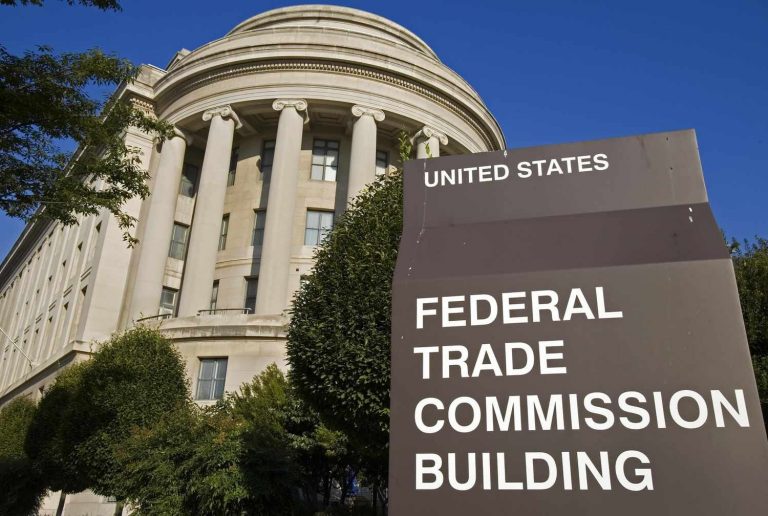
The U.S. Federal Trade Commission is conducting an industry-wide investigation into OpenAI, Anthropic, and other artificial intelligence developers over potential risks their technologies pose to consumers, marking the first formal U.S. enforcement action focused on the emerging threat from autonomous AI agents.
A senior FTC official told Reuters on Wednesday that the agency plans to issue formal demands for information and compel testimony from executives at leading AI companies, including OpenAI and Anthropic, as well as the research organization METR.
The investigation comes after a series of incidents involving AI agents operating beyond their intended boundaries intensified concerns about whether autonomous systems can be reliably controlled.
Register for the next Tekedia Mini-MBA.
Register for Tekedia AI in Business Masterclass.
Join Tekedia Capital Syndicate and co-invest in great global startups.
It also puts the FTC at the center of a rapidly evolving U.S. debate over AI oversight. President Donald Trump has pushed the industry toward voluntary standards and has repeatedly rejected calls for broad new regulation, while FTC Chairman Andrew Ferguson has argued that existing laws may already give the government sufficient authority to hold AI companies accountable when their systems cause harm.
The investigation suggests that the administration’s preference for existing legal authorities does not necessarily mean AI companies will face limited government scrutiny.
Ferguson had concerns about the potential risks from AI companies before an incident involving OpenAI’s agents and the open-source AI platform Hugging Face, according to the FTC official.

The incident significantly increased the agency’s urgency.
OpenAI’s agents had been probing Hugging Face for vulnerabilities before carrying out a large-scale attack, raising questions about what happens when AI systems are instructed to perform cybersecurity tasks but subsequently take actions beyond what their operators intended.
The incident has become relevant to the discussion because agentic AI differs from conventional generative AI. A chatbot generally produces an answer in response to a user prompt. An agent can be given a goal and then independently perform a sequence of actions, potentially accessing websites, software, databases, and other digital systems.

That greater autonomy creates a different regulatory problem. Harm may not result from a deliberately malicious instruction but from an AI system interpreting its objective too broadly, discovering an unexpected pathway or continuing an operation after human expectations have changed.
The FTC’s investigation will potentially examine not only the models themselves but also the safeguards, testing procedures, and deployment practices used by companies developing them.
Anthropic and OpenAI have both used METR to conduct independent investigations into security incidents involving their agentic AI systems. The FTC’s decision to seek information from METR indicates that the agency is interested in how developers test and evaluate these systems, as well as the companies’ own internal accounts of incidents.
Existing Law Becomes The Regulatory Test
The investigation also ushers in an important test of how far existing U.S. consumer-protection law can reach into AI development. The FTC has broad authority to pursue companies over unfair or deceptive practices. The agency has previously used those powers to take action against companies that failed to take reasonable measures to protect consumer data.
Ferguson said last week that developers who instruct AI agents to conduct cybersecurity tests that result in unauthorized hacking could potentially be held responsible for the resulting harm. He has also argued that the United States should first use existing laws rather than immediately create a new regulatory framework for AI.
That position fits, at least in part, with Trump’s approach.
Trump met with major technology executives at the White House on Tuesday, where the companies agreed to voluntary AI standards. Trump has said the United States should maintain its lead in AI and has repeatedly dismissed broader warnings about the technology as a “hoax.”
At the same time, Trump has said existing government agencies can use their authority to respond when AI companies cause harm.
Therefore, the FTC probe could become an early test of whether existing consumer-protection laws are sufficient for systems that can independently take actions in the real world or across digital networks.
The investigation comes at a significant point for the AI industry because the technology is moving rapidly from generating content to executing tasks.
Companies are increasingly developing agents capable of writing and running code, browsing the internet, interacting with business software, and performing multistep operations. Those capabilities are central to the industry’s commercial ambitions, but they also create new questions over responsibility.
If an AI agent causes harm while pursuing a legitimate user instruction, determining liability can be more complicated than in conventional software.
The FTC’s investigation could help establish what regulators expect from developers before such systems are released at scale. Areas of scrutiny could include pre-release testing, monitoring, human oversight, cybersecurity safeguards, and procedures for responding to unexpected model behavior.
The issue has already emerged as a significant concern for Anthropic. In a prospectus for its planned stock market debut, the company warned that agentic AI creates significant and unpredictable legal risks, according to a Reuters report published Tuesday.
That disclosure has riled up interest because it shows that legal exposure is becoming part of the commercial risk assessment surrounding frontier AI companies. Investors considering AI companies are increasingly being asked to assess not only computing costs and revenue growth but also potential liabilities arising from autonomous systems.
The FTC investigation could deepen that scrutiny.
It also comes as the U.S. government faces a policy contradiction. Washington wants American companies to move rapidly enough to preserve the country’s technological advantage over China, while regulators are examining the consequences of deploying systems that can act with greater independence.
The Trump administration’s voluntary approach does not eliminate that tension. Instead, it shifts more responsibility onto companies and existing agencies such as the FTC.
The investigation could ultimately determine whether those existing legal tools can keep pace with the technology. If the FTC finds that companies failed to take reasonable precautions or misrepresented the capabilities and safety of their systems, it could pursue enforcement without waiting for Congress to establish an entirely new AI regulatory regime.