

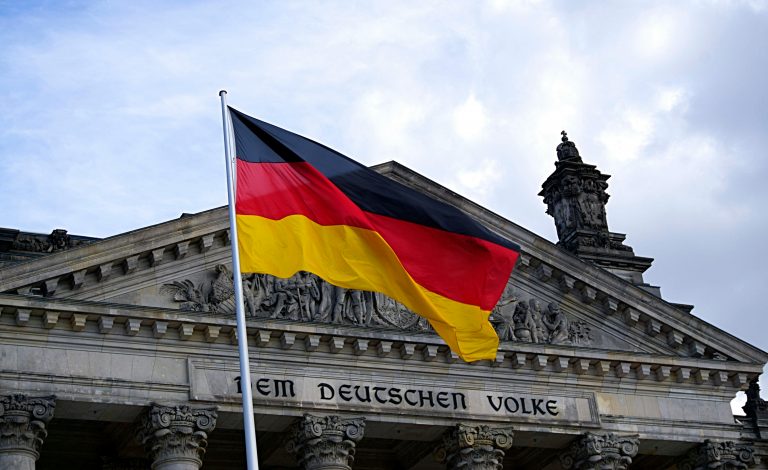
Germany’s corporate sector is confronting a security challenge that increasingly extends beyond traditional espionage and physical sabotage. According to a survey by the German Economic Institute (IW), one in five companies says it is already feeling the effects of hybrid threats originating from abroad.
These threats include cyberattacks, disinformation, espionage and sabotage, highlighting how geopolitical tensions are increasingly reaching directly into the country’s business environment.
Hybrid threats are particularly difficult to counter because they do not necessarily resemble conventional attacks. A cyberattack can disrupt production without a single physical intruder entering a factory.
Disinformation can damage a company’s reputation without altering any computer system.
Register for the next Tekedia Mini-MBA.
Register for Tekedia AI in Business Masterclass.
Join Tekedia Capital Syndicate and co-invest in great global startups.
Espionage can quietly extract valuable intellectual property, while sabotage can target critical infrastructure at a strategically important moment. These methods create a broad security challenge for German businesses.
The IW findings are significant because Germany’s economy depends heavily on sophisticated industrial networks, global supply chains and advanced technological capabilities.
Its automotive, chemical, pharmaceutical, engineering and technology sectors possess valuable intellectual property that can attract foreign intelligence operations and criminal groups.

At the same time, companies increasingly depend on interconnected digital systems, making them potentially vulnerable to attacks that can move rapidly across organizational boundaries.
Cybersecurity therefore becomes an economic issue as much as a technical one. A successful attack against a manufacturer, logistics provider or energy supplier can interrupt production, delay deliveries and generate substantial financial losses.
For smaller companies, the consequences could be especially severe because they may lack the financial resources and specialist personnel required to maintain sophisticated cybersecurity infrastructure. Disinformation presents a different but equally complicated problem.

False information can spread rapidly through social media and online platforms, creating uncertainty among customers, employees and investors.
During periods of geopolitical tension, coordinated disinformation campaigns can attempt to undermine confidence in institutions, companies or entire industries.
The challenge is that businesses must respond without accidentally amplifying the false claims they are trying to combat. Espionage is another major concern for Germany because technological knowledge represents one of its most valuable economic assets.
Sensitive research, industrial designs, manufacturing processes and commercial strategies can provide competitors or foreign actors with years of technological progress at relatively low cost.
Protecting intellectual property is therefore becoming increasingly connected to national economic security. The growing concern over sabotage also reflects a changing understanding of critical infrastructure.
Modern economies rely on interconnected systems covering telecommunications, energy, transportation, manufacturing and financial services. Disrupting one part of that network can create consequences elsewhere. This interconnectedness means companies cannot view security solely as an internal corporate responsibility.
Germany’s response will consequently require greater cooperation between businesses and government agencies. Companies need stronger cyber defenses, employee training, incident-response procedures and supply-chain monitoring.
Government institutions must provide timely intelligence about emerging threats and help businesses understand the changing risk environment. The broader lesson from the IW survey is that economic security and national security are becoming increasingly intertwined.
For Germany, protecting companies is no longer simply about preventing theft or financial losses. It is about safeguarding industrial capacity, technological leadership and public confidence.
As geopolitical competition intensifies, hybrid threats are likely to remain a persistent feature of the global economy. German companies therefore face a new strategic reality: resilience against foreign interference must become an essential part of doing business, rather than an afterthought reserved for moments of crisis.
Germany’s Water Deficit Worsens as Europe Faces Growing Water Crisis
The worsening water deficit across Germany and Europe is becoming a major environmental and economic concern, highlighting how climate change is reshaping the continent’s water security.
Joint studies conducted by geoscientists in Potsdam in collaboration with NASA and the German Aerospace Center (DLR) indicate that water shortages have intensified in recent months.
The findings point to a growing imbalance between water consumption, precipitation and the natural replenishment of groundwater and surface-water reserves. Water scarcity is often associated with arid regions.
But Europe’s changing climate is challenging that assumption. Germany, traditionally regarded as a relatively water-rich country, has experienced increasingly frequent periods of drought, unusually warm temperatures and declining soil moisture.
These conditions can reduce the amount of water available for agriculture, industry, ecosystems and households. One of the most important concerns is groundwater. Unlike rivers and reservoirs, groundwater is not always visible, making its depletion difficult to recognize until the consequences become severe.
When rainfall is insufficient over extended periods, groundwater reserves receive less replenishment. At the same time, higher temperatures increase evaporation and plant water consumption, placing additional pressure on underground supplies.
The involvement of NASA and DLR highlights the importance of satellite-based Earth observation in understanding this development.
Modern satellites can detect changes in terrestrial water storage across large areas, allowing scientists to monitor groundwater and other water resources that conventional measurements may not capture adequately.
These observations provide policymakers with a broader picture of how drought is developing across national borders. Germany’s situation is particularly important because water availability is closely connected to its industrial economy.
Manufacturing, chemicals, agriculture and energy production all depend on reliable water supplies. Prolonged shortages could increase operating costs, constrain production and intensify competition among different users.
Rivers such as the Rhine are also critical transportation routes, meaning lower water levels can affect supply chains and the movement of industrial goods.
Agriculture faces an equally serious challenge. Crops require sufficient soil moisture during critical growing periods, while livestock farming also depends on reliable water availability.
If drought conditions become more frequent, farmers may face declining yields and rising irrigation costs. This could eventually influence food prices and increase Europe’s dependence on agricultural imports.
The environmental consequences are equally significant. Rivers, wetlands and forests depend on adequate water levels to maintain biodiversity. Persistent water shortages can weaken ecosystems, increase the vulnerability of forests to fires and pests, and place additional stress on aquatic species.
Water scarcity can therefore become a broader ecological crisis rather than simply a problem of human consumption. Europe’s worsening water deficit also raises questions about infrastructure and governance.
Water management systems designed around historical climate patterns may no longer be sufficient. Governments will increasingly need to invest in reservoirs, efficient irrigation, wastewater recycling, groundwater monitoring and technologies that reduce industrial consumption.
The findings from the Potsdam researchers, NASA and DLR demonstrate that Europe’s water challenge is becoming a strategic issue. Climate change is altering when, where and how much water is available.
Germany and the wider European Union will need coordinated policies that treat water as critical infrastructure, strengthen drought resilience and balance economic demand with environmental protection. The emerging deficit is a warning that water security can no longer be taken for granted, even in one of the world’s most developed regions.