

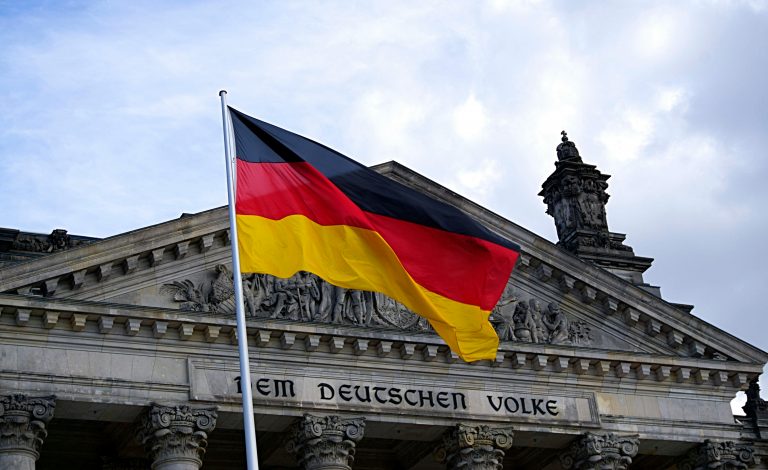
German President Frank-Walter Steinmeier delivered unusually sharp criticism of the ongoing US-Israeli military campaign against Iran during a speech to German diplomats in Berlin. He described the conflict as a “breach of international law”, a “politically disastrous mistake”, and an “avoidable, unnecessary war” whose stated goal of preventing Iran from acquiring nuclear weapons could have been pursued differently.
Steinmeier specifically challenged the Trump administration’s justification, stating there is “little doubt” that claims of an imminent Iranian attack on the US “do not hold water.” He added: “We have no reason whatsoever to align ourselves with this world view” and argued there is “no reason” for Germany (or Europe) to follow Trump’s lead on this issue.
He equated the damage to transatlantic relations from Trump’s second term to the rupture caused by Russia’s full-scale invasion of Ukraine on February 24, 2022 — saying there would be “no going back” to pre-2025 ties with the US.
He criticized the US withdrawal from the 2015 Iran nuclear deal (JCPOA), in which he had been involved as foreign minister, and argued the war was not the inevitable outcome. He urged Germany to pursue greater strategic autonomy: strengthening its military as the “backbone of conventional defense in Europe” and reducing technological dependence on the US to avoid external interference in domestic affairs.
Register for Tekedia Mini-MBA edition 20 (June 8 – Sept 5, 2026).
Register for Tekedia AI in Business Masterclass.
Join Tekedia Capital Syndicate and co-invest in great global startups.
Register for Tekedia AI Lab.
Steinmeier’s role as president is largely ceremonial, so his comments do not represent official German government policy. Chancellor Friedrich Merz has taken a more cautious line, avoiding direct condemnation of the war’s legality while emphasizing that Iran should not be shielded by international law. German media noted Steinmeier’s remarks as among the strongest public rebukes from a major European figure.
This comes amid reports of a US-Israeli offensive involving strikes on Iranian nuclear and military targets, now in its third week as of late March 2026. The Trump administration has framed the action as necessary to neutralize an existential threat, while critics including some US intelligence voices referenced by Steinmeier question the “imminent threat” narrative.
Iran has vowed not to surrender, and the conflict has driven up oil prices and heightened global tensions. Steinmeier’s intervention highlights deep European unease with unilateral US action under Trump, echoing longstanding transatlantic frictions over Iran policy, defense spending, and alliance reliability. It also fuels debates in Germany about “strategic sovereignty” — reducing over-reliance on Washington.

Whether this rhetorical split translates into concrete policy shifts in NATO, sanctions, or European defense initiatives remains to be seen. For now, it underscores how quickly Trump’s return has strained relations with traditional allies, even as the military campaign continues.
German Chancellor Friedrich Merz (CDU) has adopted a cautious, pragmatic stance on the US-Israeli military campaign against Iran, distinguishing his position from the sharper condemnation by President Frank-Walter Steinmeier. While Merz shares the goal of neutralizing Iran’s nuclear and ballistic missile programs and ending the “terror” of the regime, he has increasingly distanced himself from the execution of the war, emphasizing non-participation and the lack of a viable strategy.
Merz has repeatedly stated that “this is not our war” and Germany will not participate. He stressed that the US and Israel did not consult Berlin beforehand, adding that Germany “would have advised against” the current course of action. The conflict is explicitly “not a matter for NATO.”
Shared objectives but criticism of approach: He agrees with Washington and Jerusalem that Iran must no longer pose a threat and has condemned the Iranian regime harshly. However, he has voiced growing concerns about risks, escalation, and the absence of a “convincing plan” or “joint exit strategy” for ending the conflict swiftly.

“Merz has called for developing a post-war agenda focused on regional stability, preserving Iran’s territorial integrity and state functionality to avoid chaos that could harm Europe, and allowing the Iranian people to determine their future. He warned against an “endless war” or the collapse of the Iranian state.
He has spoken directly with President Trump including raising concerns about potential strikes on Iranian power plants and supports efforts toward a ceasefire, while noting the economic fallout for Germany.
Early in the conflict, Merz was relatively supportive, describing the strikes as aimed at ending Iran’s “destructive game” and avoiding lectures on international law. As the war has dragged into its third week with wider regional effects, his criticism has sharpened: highlighting lack of consultation, risks of escalation, and the need for a clear endgame.
This contrasts with Steinmeier’s March 24 speech, which labeled the war a “breach of international law” and a “politically disastrous mistake” with no reason for Europe to align with Trump’s worldview. Merz has deliberately avoided such legal judgments, focusing instead on practical and strategic concerns.
With oil prices elevated and global tensions high, Merz continues to push for a rapid political resolution while ruling out direct German entanglement. Whether this balance holds as the conflict evolves — particularly around issues like the Strait of Hormuz — will be a key test for his government and EU cohesion.