

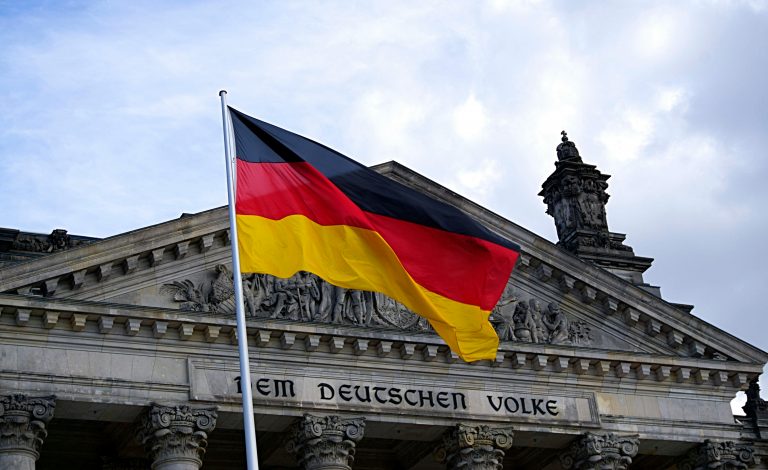
During the European Space Agency’s (ESA) Ministerial Council meeting in Bremen, Germany, the 23 member states approved a landmark three-year budget of €22.1 billion—€5 billion more than the previous cycle’s €17 billion and exceeding the agency’s €22.2 billion target.
This surge underscores Europe’s push for greater autonomy in space exploration, amid concerns over lagging investments and geopolitical tensions.
Germany, as ESA’s largest contributor, pledged over €5 billion, up from approximately €3.5 billion in 2022. German Space Minister Dorothee Bär announced the target at the meeting’s outset, emphasizing the need to bolster Europe’s competitiveness in a rapidly evolving space sector.
Register for Tekedia Mini-MBA edition 20 (June 8 – Sept 5, 2026).
Register for Tekedia AI in Business Masterclass.
Join Tekedia Capital Syndicate and co-invest in great global startups.
Register for Tekedia AI Lab.
This commitment positions Germany ahead of France (€3.7 billion) and Italy (over €3 billion), reflecting Berlin’s strategic priority on aerospace innovation and security.
The funding prioritizes the “European Launcher Challenge” €900 million+ for next-generation rockets, scientific missions, and enhanced security/defense cooperation—marking ESA’s first explicit expansion beyond “peaceful use” of space.
Director General Josef Aschbacher hailed the outcome as “amazing,” noting it counters Europe’s risk of “falling behind” global players like the U.S. and China. ESA aims to send German, French, and Italian astronauts to the Moon via NASA’s Artemis program.

With confirmed U.S. support for Europe’s Rosalind Franklin Mars rover despite NASA’s domestic budget constraints under the Trump administration. The boost arrives as space becomes integral to defense, telecommunications, and climate monitoring.
Aschbacher highlighted the sector’s “fast-growing” economic potential, urging unified European investment to avoid fragmentation. This development signals a pivotal moment for European space policy, potentially accelerating projects like Ariane 6 upgrades and Earth observation satellites.
European Launcher Challenge

The European Launcher Challenge (ELC) is a flagship initiative by the European Space Agency (ESA) to diversify and strengthen Europe’s independent access to space through the development of innovative, commercially viable launch services.
Launched in November 2023 at the ESA Ministerial Council in Seville, Spain, it builds on ESA’s earlier Boost, program initiated in 2019, which provided seed funding for emerging European launch vehicle developers.
The program addresses Europe’s growing need for flexible, cost-effective launch options amid rising demand for small- and medium-lift capabilities, complementing established systems like Ariane 6 and Vega-C.
By fostering a robust ecosystem of new European launch providers, ELC aims to reduce reliance on non-European services (e.g., SpaceX) and ensure reliable access for institutional missions, including satellites for Earth observation, telecommunications, and scientific research.
Promote Commercial Innovation: Encourage private companies in ESA or EU Member States to design, build, and operate orbital launch systems, with a focus on small- and medium-lift vehicles payloads typically 100–2,000 kg to low Earth orbit.
This includes milestones for performance upgrades to meet evolving mission needs. Position Europe as a leader in the “New Space” economy, with potential long-term benefits like a successor to Ariane 6 by the 2030s.
At the ESA Ministerial Council in Bremen, the ELC received over €900 million in commitments as part of the record €22.1 billion three-year budget, marking a significant escalation from initial plans.
Up to €169 million per selected provider, covering development, demonstration flights, and capacity upgrades. ESA contributes up to 25% of the cost for procured launches on successful challengers’ vehicles.
The funding supports multiple winners, with allocations tied to milestone achievements to ensure accountability and progress. The ELC is structured as a two-stage competitive tender process, emphasizing demonstration over grants.
At least one upgrade demo by 2028; operational launches by 2030. Proposals must cover two components: (A) Launch services for 2026–2030, and (B) A capacity upgrade demonstration with at least one orbital flight by 2028.
Launches must originate from European spaceports to support regional infrastructure. While final selections are pending post-2025 Ministerial, the preselection phase highlighted a diverse field of innovative vehicles.
Specific names not publicly detailed yet, but they represent small-lift systems from startups across Europe, focusing on reusable or low-cost designs. Notable Proposals from 12 submissions: Include hybrid rockets, liquid-fueled microlaunchers, and orbital transfer vehicles from companies in France, Germany, Italy, Sweden, and the UK.
Examples from RFI responses: PLD Space’s Miura 5 (Spain), Isar Aerospace’s Spectrum (Germany), and Orbex’s Prime (UK). European spaceports like the Guiana Space Centre, Esrange and ground support services are integral, ensuring end-to-end European operations.
The ELC, now supercharged by the 2025 budget boost, signals Europe’s strategic pivot toward a competitive “launch economy.” ESA Director of Space Transportation Toni Tolker-Nielsen emphasized its role in transitioning from legacy systems to a “diverse transport sector” with “huge potential for growth.”
Successful challengers will not only secure ESA contracts but also open doors to commercial markets, potentially creating thousands of jobs and advancing technologies like green propulsion.
Challenges remain, including technical risks and geopolitical dependencies, but the program’s milestone-based funding mitigates these by tying payments to verified progress.
Germany’s Unemployment Hovers around 3.9%, Up from 3% and Still Below OECD 4% Projection
Germany’s labour market remains a bright spot amid broader economic stagnation, but recent forecasts highlight growing divergence among key economic institutes.
As of November 2025, unemployment hovers around 3.9% ILO definition, up from a low of 3.0% in early 2023 but still below the OECD average of 4.9%. Employment levels are high, with the employment rate at 77.6% in Q1 2025, though growth has slowed to 0.7% for the year.
Structural challenges like population ageing, a shrinking labour force, and persistent skilled worker shortages affecting ~27% of firms are intensifying, while cyclical pressures from weak GDP growth projected at just 0.2% for 2025 and US tariffs under President Trump add uncertainty.
Wage growth supports consumption—nominal wages are up 3.4-4.6% annually—but rising social security contributions such as health and long-term care insurance are eroding disposable income.
The spotlight has intensified on disagreements between institutes like the Deutsche Bundesbank and the Halle Institute for Economic Research (IWH), which is part of the Joint Economic Forecast consortium of five leading research bodies including DIW Berlin, ifo, RWI, and Kiel Institute.
These differences stem from varying assumptions on trade policy impacts, fiscal stimulus from the €500 billion infrastructure fund, and labour supply dynamics.
The Bundesbank’s December 2024 forecast updated in subsequent releases paints a more cautious short-term picture but expects a quicker rebound, driven by easing inflation (2.4% in 2025) and gradual hiring as economic activity picks up.
In contrast, the IWH-led Joint Economic Forecast spring 2025 update emphasizes structural headwinds like bureaucratic burdens and export losses to China, projecting near-stagnation in employment.
The IMF and OECD offer a middle ground, noting softening but resilience, with calls for reforms to boost female, older worker, and immigrant participation. Weak winter 2024-25 activity delays hiring; demographic constraints tighten market from mid-2025; fiscal fund boosts investment later.
Moderate recovery (+0.5-0.8%); tightness rises as supply shrinks. Stable at ~3.9%, edging up mildly. Stagnant (0% growth); no net job gains. US tariffs and policy uncertainty suppress exports/investment; real wages recover but not until Q2 2025; infrastructure fund impacts delayed
Softening; employment flat to -0.1%. Trade headwinds and low productivity growth; recommends reducing red tape and integrating immigrants. Gradual upturn if reforms implemented; focus on innovation/digitalization
Skilled shortages persist; Growth Initiative aids migration/incentives; infrastructure/defense spending reshapes market. +0.2%; ageing limits supply, but green jobs from €500bn fund emerge. Population ageing caps growth; exports down 2.1% in 2024 spill over; fiscal expansion offsets trade tensions
+1.2% GDP aids slight employment bump. The Bundesbank anticipates a sharper dip in employment in early 2025 due to ongoing stagnation (GDP -0.2% in 2024), with recovery hinging on falling unit labour costs and ECB rate cuts.
IWH/Joint sees less volatility but warns of “no substantial scope for additional employment” without bolder reforms, citing a 0.7 percentage point downward revision to 2025 GDP growth from prior estimates.
IMF and OECD stress long-term fixes like skill validation, care cost reforms to free up women’s labour, while Bundesbank focuses on cyclical recovery from 2026. Joint highlights export competitiveness losses, projecting unemployment edging to 6.3% in a tariff-heavy scenario—far worse than Bundesbank’s view.
Wage and Inflation Link: All agree on strong nominal wage growth (3.4-4.6%), but Bundesbank expects actual earnings to outpace negotiated wages, supporting consumption. Joint delays real wage recovery to mid-2025, dampening demand.
Robust banking resilience per EBA/ECB stress tests and policy tools like the Bureaucracy Relief Act IV effective Jan 2025 could ease hiring. Green and defense investments may create 100,000+ jobs annually, especially in construction and skilled trades.
US “reciprocal” tariffs could double negative effects, pushing unemployment to 6.3% and risking a third recession year. Rising short-time work up 13% YoY in Nov 2024 and vacancies 1.06 million in Q2 2025, down from 2022 peaks signal fragility. Without reforms, productivity lags could cap medium-term growth at 0.9-1.3%.
Over 100,000 skilled jobs await in 2025-2026, per migration targets 90,000 annually. Sectors like renewables, IT, and care show demand, with work-life balance and employee rights remaining strong draws.
While the Bundesbank and IWH/Joint disagree on the depth of 2025 weakness—slight contraction vs. stagnation—the consensus is for a tight but softening market, with recovery tied to global trade stability and domestic reforms.