

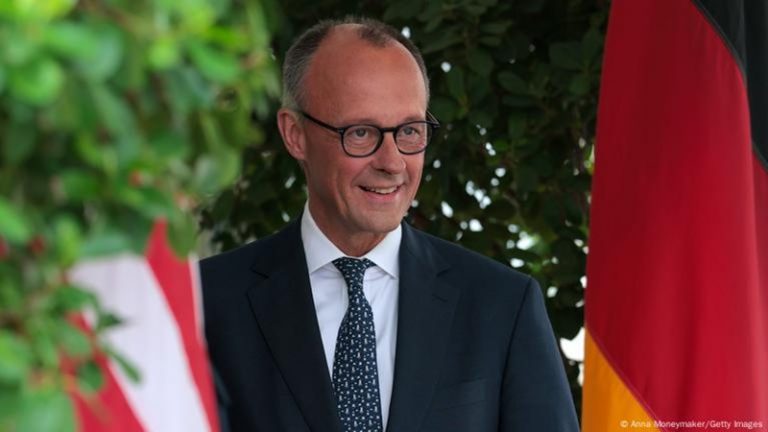
The German government is accelerating arms purchases to counter potential threats, particularly from Russia, following its 2022 invasion of Ukraine. Draft legislation aims to simplify and expedite Bundeswehr procurement by reducing legal hurdles, allowing national-level contracts without EU-wide tenders, and permitting awards despite legal challenges from unsuccessful bidders. This is part of a broader push to modernize the military, with defense spending set to rise from €95 billion in 2025 to €162 billion by 2029, aligning with NATO’s 5% GDP target.
The focus is on rapid delivery, prioritizing air defense and ammunition, with new laws expected by year-end to minimize delays. German arms makers are expanding production, but U.S. companies may also benefit due to their larger capacity. The German government’s push to speed up arms purchases has significant implications, both domestically and internationally, and highlights divides in political, economic, and social spheres.
Germany’s increased defense spending (from €95 billion in 2025 to €162 billion by 2029, targeting NATO’s 5% GDP goal) signals a stronger commitment to collective defense, particularly in response to Russia’s aggression in Ukraine. This bolsters NATO’s eastern flank but may escalate tensions with Russia. A more militarized Germany could reshape its role in European security, potentially reducing reliance on U.S. defense leadership while fostering closer ties with allies like France and Poland.
Register for Tekedia Mini-MBA edition 20 (June 8 – Sept 5, 2026).
Register for Tekedia AI in Business Masterclass.
Join Tekedia Capital Syndicate and co-invest in great global startups.
Register for Tekedia AI Lab.
Accelerated arms purchases could prompt neighboring countries, including non-NATO states, to bolster their own militaries, potentially destabilizing the region. German arms manufacturers like Rheinmetall are scaling up production, creating jobs and economic growth. However, U.S. firms may capture significant contracts due to their larger production capacity, potentially diverting economic benefits abroad.
The massive defense budget increase could strain public finances, potentially diverting funds from social programs, infrastructure, or green energy initiatives, especially as Germany navigates economic challenges like inflation and energy costs. Streamlined processes (e.g., bypassing EU tenders, awarding contracts despite legal challenges) could reduce costs and delays but risks transparency and accountability, potentially leading to corruption or mismanagement.
While the Russian threat has galvanized support for rearmament, pacifist-leaning groups and parts of the public may oppose increased militarization, especially if social spending is cut. The urgency to pass procurement laws by year-end suggests strong political will but could face resistance from opposition parties or coalition members wary of rushed legislation.

Prioritizing air defense and ammunition strengthens Germany’s deterrence and readiness, addressing Bundeswehr shortcomings exposed since 2022. The sustained budget increase signals a shift from Germany’s historically restrained military posture, potentially reshaping its global image.
Former Chancellor Olaf Scholz’s coalition (SPD, Greens, FDP) supports rearmament, but the Greens’ pacifist wing and left-leaning voters may resist, favoring diplomacy over militarization. The far-right AfD could exploit this to criticize government spending priorities. Some Germans prioritize domestic issues (e.g., healthcare, education) over defense, creating tension between security hawks and social welfare advocates.
While German companies benefit, U.S. defense giants may dominate major contracts due to scale, potentially frustrating local industry and workers expecting economic gains. Defense industry growth may favor industrial hubs (e.g., Bavaria, where Rheinmetall operates), leaving other regions feeling neglected.

Bypassing EU-wide tenders could strain relations with smaller EU states reliant on open procurement. Countries like France may push for European-made arms, creating friction with Germany’s pragmatic approach. Germany’s focus on NATO commitments may alienate neutral EU states like Austria or Ireland, deepening divides over European security visions.
Younger, urban, or progressive Germans may view rearmament skeptically, fearing escalation, while older or eastern Germans, closer to Russia, may support it due to historical and geographic concerns. Germany’s diverse population, including Ukrainian and Russian diaspora, may have polarized views, with some supporting arms for Ukraine and others fearing broader conflict.
Germany’s accelerated arms purchases strengthen its military and NATO’s posture but risk economic strain, political friction, and regional tensions. The divide—between militarization and pacifism, national and EU interests, and domestic vs. foreign economic gains—could shape Germany’s path forward. Balancing transparency, public support, and strategic urgency will be critical to navigating these challenges.
Germany’s Inflation Drops To 2% In June 2025, Matching The ECB’s Target
German inflation fell to 2% in June 2025, aligning with the European Central Bank’s target, down from 2.2% in May. This marks the lowest rate since March 2021, driven by stable goods prices despite rising services costs. Core inflation, excluding food and energy, held steady at 2.7%. The drop supports expectations for potential ECB rate cuts, with markets anticipating a possible reduction in September. However, persistent high services inflation and upcoming wage increases could keep core inflation elevated, prompting cautious ECB policy outlooks.
Regional variations in Germany showed inflation rates between 1.4% and 2.6%. The alignment with the ECB’s 2% target reduces immediate pressure for aggressive monetary tightening, supporting expectations of a potential rate cut in September 2025, as markets anticipate. Lower inflation could allow the ECB to prioritize growth over inflation control, especially if other Eurozone countries follow suit.
Persistent core inflation at 2.7%, driven by services, suggests underlying price pressures remain. Upcoming wage increases in Germany could further sustain core inflation, prompting the ECB to maintain a cautious approach, balancing growth and price stability. Analysts expect the ECB to monitor services inflation and wage trends closely before committing to significant policy shifts.
Lower inflation, particularly in goods, could stabilize or improve real wages, enhancing consumer spending power. This is critical for Germany, Europe’s largest economy, where consumer confidence has been fragile post-pandemic. Stable inflation may encourage business investment by reducing uncertainty about costs. However, high services inflation could offset this, as businesses in labor-intensive sectors face rising costs.
As a bellwether for the Eurozone, Germany’s inflation aligning with the ECB target could signal broader stabilization. However, if other countries (e.g., southern Eurozone nations) experience higher inflation, the ECB may face challenges in setting a one-size-fits-all policy, potentially deepening Eurozone economic divergences.
Inflation ranged from 1.4% to 2.6% across German states in June 2025. For instance, North Rhine-Westphalia saw 2.0%, while Saxony recorded 2.6%. These differences reflect varying economic structures, with industrial regions facing different cost pressures than service-oriented urban areas like Berlin.
Lower inflation in some regions (e.g., 1.4% in certain states) could indicate weaker demand or economic activity, potentially exacerbating regional inequalities. Higher inflation in states like Saxony may reflect stronger local wage growth or energy costs, impacting living standards differently.
The data highlights a split between stable goods prices (contributing to the overall 2% rate) and rising services costs (driving core inflation at 2.7%). Sectors like hospitality and healthcare, reliant on labor, face higher cost pressures due to wage demands, while manufacturing benefits from stable input costs. Small businesses in service sectors may struggle with rising labor costs, while larger industrial firms could see improved margins, widening the gap between sector profitability.
Upcoming wage increases, particularly in unionized sectors, could sustain services inflation, benefiting workers in those industries but potentially squeezing lower-income households reliant on fixed incomes or goods-heavy consumption. Despite the headline 2% rate, high services inflation affects urban and middle-class households disproportionately, as they spend more on services like dining, healthcare, and transportation. This could widen inequality if wage growth is unevenly distributed.
Germany’s alignment with the 2% target contrasts with potentially higher inflation in southern Eurozone countries (e.g., Italy, Spain), where energy and food prices may remain volatile. This could strain ECB policy, as Germany may favor looser policy while others require tighter measures, deepening economic fragmentation. The drop to 2% inflation in Germany signals a potential turning point for ECB policy, supporting expectations of rate cuts but tempered by persistent core inflation pressures.
The regional divide (1.4%–2.6% across states) and sectoral split (goods vs. services) highlight uneven economic pressures, which could exacerbate inequalities within Germany and the Eurozone. Policymakers will need to navigate these divides carefully, balancing growth with inflation control, while addressing regional and socioeconomic disparities to ensure cohesive economic recovery.