

Germany’s leading economic advisory bodies believe the country has an opportunity to usher in what they describe as a summer of reforms, with pension reform at the center of efforts to strengthen Europe’s largest economy.
Facing an aging population, slower economic growth, and mounting fiscal pressures, policymakers are under increasing pressure to modernize the pension system while implementing broader structural changes that improve competitiveness.
The coming months could determine whether Germany is able to adapt its social welfare model to new demographic and economic realities.
For decades, Germany has relied on a pay-as-you-go pension system in which current workers finance the retirement benefits of pensioners. While this model has provided stability and generous benefits, it is becoming increasingly difficult to sustain.
Register for the next Tekedia Mini-MBA.
Register for Tekedia AI in Business Masterclass.
Join Tekedia Capital Syndicate and co-invest in great global startups.
Life expectancy has risen steadily, birth rates remain relatively low, and the proportion of retirees compared with working-age citizens continues to increase. As fewer workers support a growing number of pensioners, the financial burden on the system has intensified.
Economic experts argue that reform can no longer be postponed. Without meaningful changes, pension expenditures will consume an even greater share of public finances, potentially limiting government investment in infrastructure, education, innovation, and defense.
These concerns have prompted calls for a comprehensive package of reforms that balances fiscal responsibility with social protection. Among the proposals being discussed are gradually increasing the retirement age in line with life expectancy, encouraging longer workforce participation, expanding private retirement savings, and improving employment opportunities for older workers.

Some economists also advocate measures that attract skilled immigrants to help offset labor shortages and broaden the base of pension contributors. Such reforms aim to preserve the long-term sustainability of the pension system without placing excessive burdens on younger generations.
The discussion extends beyond pensions. Germany’s economy has struggled with sluggish productivity growth, high energy costs, labor shortages, and slower industrial output in recent years. Business leaders and economists argue that pension reform should be part of a wider agenda that includes tax modernization, digital transformation, reduced bureaucracy, and increased investment in research and infrastructure.
These initiatives could strengthen economic resilience and restore investor confidence. Political challenges remain significant. Pension reform is often controversial because it directly affects millions of citizens.
Raising the retirement age or adjusting benefit formulas can face strong public opposition, particularly from labor unions and advocacy groups representing retirees.

Government leaders must therefore balance economic necessity with political feasibility, ensuring that reforms are perceived as fair and gradual rather than abrupt. Supporters of reform argue that delaying difficult decisions would only make future adjustments more painful.
They contend that acting now allows policymakers to implement gradual changes while maintaining public trust. Younger workers, who increasingly worry about the future viability of the pension system, may also welcome reforms that improve long-term financial stability.
International observers are watching Germany closely because of its central role within the European economy. A stronger German economy could boost confidence across the eurozone, support regional growth, and reinforce Europe’s competitiveness in an increasingly challenging global environment.
Prolonged economic stagnation in Germany could have wider implications for neighboring economies and financial markets. The call for a summer of reforms reflects growing recognition that Germany stands at a pivotal moment.
Pension reform is not merely a fiscal exercise but a critical component of preparing the country for demographic change and future economic challenges. If policymakers can build consensus around balanced and forward-looking reforms, Germany may strengthen both its social safety net and its long-term economic prosperity.
Volkswagen Confirms Future Restructuring Plan Amid Industry Transformation
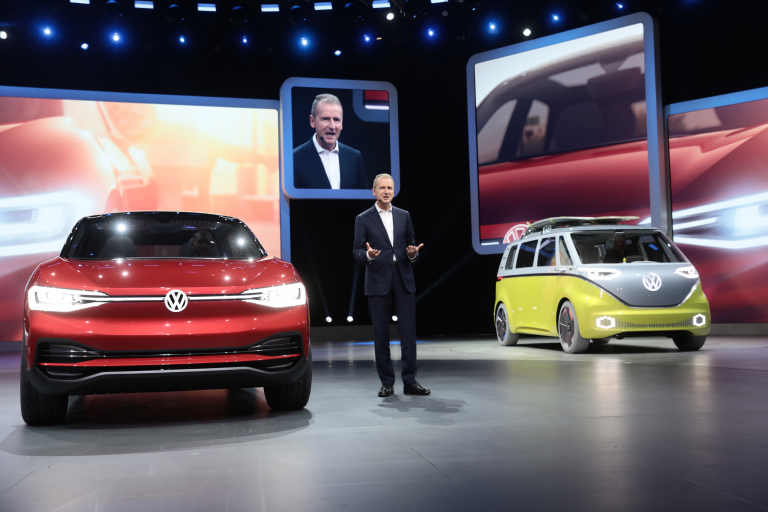
Volkswagen has confirmed that it is developing a future restructuring plan aimed at strengthening its competitiveness in an automotive industry undergoing one of the most significant transformations in its history.
The announcement comes as global carmakers face mounting pressure from slowing vehicle demand, rising production costs, increasing competition from Chinese electric vehicle manufacturers, and the costly transition toward electrification and digital mobility.
While Volkswagen remains one of the world’s largest automobile manufacturers, the company acknowledges that adapting to these changing market conditions is essential to ensuring long-term profitability and sustainable growth.
The restructuring plan is expected to focus on improving operational efficiency, reducing unnecessary costs, and streamlining business operations across Volkswagen’s extensive global network.
Like many legacy automakers, the German manufacturer has invested billions of dollars in electric vehicles, battery technology, software development, and autonomous driving capabilities.
However, these investments have also placed considerable pressure on profit margins, particularly as global demand for electric vehicles has grown more slowly than many analysts had anticipated.
Volkswagen executives have emphasized that the restructuring initiative is designed not simply as a cost-cutting exercise but as part of a broader strategy to prepare the company for the future of transportation.
This includes strengthening its electric vehicle portfolio, accelerating software innovation, modernizing manufacturing facilities, and improving productivity throughout its operations. The company believes that remaining competitive requires continuous adaptation as consumer preferences and industry technologies evolve.
One of the primary challenges facing Volkswagen is the intense competition emerging from China. Chinese manufacturers have rapidly expanded their presence in both domestic and international markets by offering affordable electric vehicles equipped with advanced technology.
Their ability to manufacture vehicles efficiently and at lower costs has created significant pressure on established European and American automakers.
Volkswagen, which has historically relied heavily on the Chinese market for sales and profits, now faces the difficult task of defending its market share while adapting to changing consumer preferences.
The restructuring plan could also involve adjustments to manufacturing capacity, workforce organization, and investment priorities. Although Volkswagen has not disclosed detailed measures, analysts expect the company to carefully evaluate factory utilization, supply chain efficiency, and administrative structures.
Such decisions often generate concerns among labor unions and employees, particularly in Germany, where Volkswagen has long maintained strong partnerships with organized labor. Balancing financial discipline with workforce stability will likely remain a central challenge throughout the restructuring process.
Beyond operational changes, Volkswagen continues to invest heavily in next-generation technologies. The company is expanding its electric vehicle lineup across multiple brands, including Volkswagen, Audi, Porsche, Škoda, and SEAT, while also developing advanced battery systems and connected vehicle software.
Success in these areas will play a major role in determining whether the restructuring delivers lasting competitive advantages. Investors generally view proactive restructuring as a positive sign when it demonstrates management’s willingness to address long-term challenges before they become more severe.
The effectiveness of Volkswagen’s plan will ultimately depend on execution. Cost reductions alone may not be sufficient if the company cannot simultaneously deliver innovative products, maintain quality, and respond quickly to changing customer expectations.
Volkswagen’s confirmation that it is preparing a future restructuring plan reflects the broader transformation taking place throughout the global automotive industry. As electrification, digital technologies, and international competition reshape the market, even the world’s largest automakers must continually reinvent themselves.
If implemented successfully, Volkswagen’s restructuring could position the company to remain a global leader while navigating one of the most challenging periods in modern automotive history.