

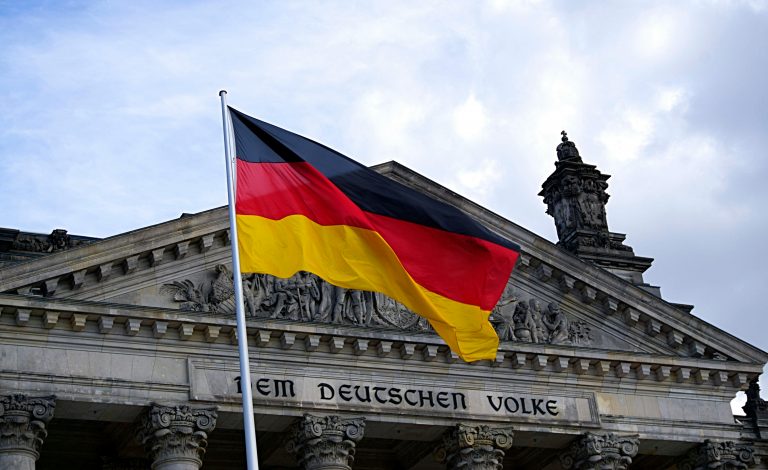
Germany’s Bundestag has approved legislation that could give customs authorities new powers to freeze cryptocurrency holdings worth more than €100,000 when officials have doubts about how the assets were acquired.
The measure marks a significant shift in Germany’s approach to financial crime because authorities would not need to open a criminal investigation before taking initial action.
The bill, passed by the Bundestag on November 12, forms part of a broader reform designed to strengthen customs administration and combat money laundering and organized crime.
Register for the next Tekedia Mini-MBA.
Register for Tekedia AI in Business Masterclass.
Join Tekedia Capital Syndicate and co-invest in great global startups.
It explicitly brings cryptocurrencies within the scope of the rules, alongside cash and other valuable assets whose lawful origins cannot be adequately explained.
However, the legislation does not mean that every German crypto investor holding more than €100,000 will automatically lose access to their funds. Customs officials must have factual indications that the assets may have an unlawful origin.
A large portfolio by itself is not sufficient grounds for intervention. Under the proposed process, customs can initially secure or freeze qualifying assets for up to 30 days while seeking clarification about their origin.

A finance court may extend that period by as much as 150 additional days. If authorities want permanent confiscation, they must apply to the court, which must be satisfied that the assets are not of lawful origin.
The Bundestag’s approval gives customs a route to act before criminal proceedings begin, but it does not grant officials unrestricted authority to take ownership of cryptocurrency without judicial oversight.
The bill gives affected holders an opportunity to explain where their assets came from. The government argues that the change addresses a practical problem in money-laundering cases.

Criminal proceeds can be difficult to trace, while proving that an asset was obtained illegally may be challenging for investigators. Officials say people holding substantial wealth should be able to provide a credible explanation of its origin when concrete doubts arise.
Critics warn that the approach could shift too much of the burden onto asset owners. Germany’s Federal Bar Association and German Bar Association have raised concerns about the breadth of the proposed powers and the possibility that incomplete documentation could be treated as evidence of wrongdoing.
That concern may be especially relevant to long-term crypto holders whose assets were acquired years ago, transferred between wallets, inherited or purchased through platforms that no longer provide complete records.
For cryptocurrency investors, the practical lesson is that transaction history and proof of ownership could become increasingly important.
Records showing when assets were purchased, where funds originated, and how wallets are connected may help demonstrate legitimate ownership if questions arise.
The legislation is not yet in force. After clearing the Bundestag, it must still receive approval from Germany’s upper house, the Bundesrat. If that process is completed, the reform is planned to take effect on January 1, 2027.
Germany’s move reflects a wider regulatory challenge: balancing stronger tools against financial crime with safeguards for lawful investors.
Whether the new powers prove effective will depend on how carefully authorities apply the evidentiary standards and how consistently courts protect the rights of people whose assets are frozen.