

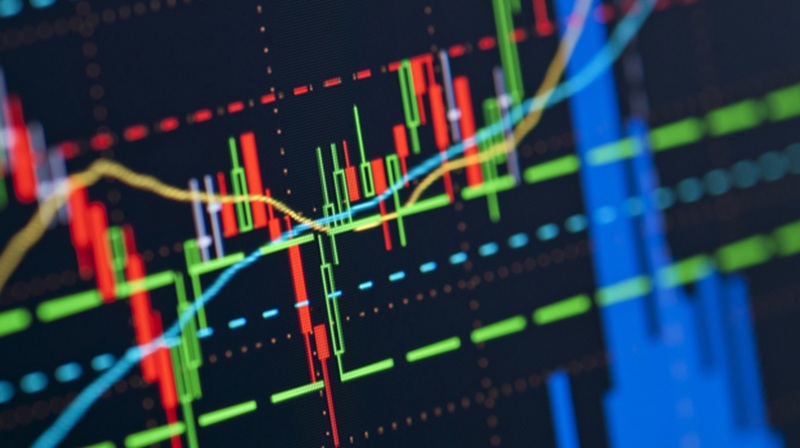
The foreign exchange market, commonly known as Forex or FX, represents the world’s largest and most liquid financial market. With a daily trading volume exceeding $7 trillion, it dwarfs all other financial markets combined. For newcomers, the prospect of entering this dynamic marketplace can seem both exciting and overwhelming. This comprehensive guide will walk you through the essential steps to begin your Forex trading journey with confidence and proper preparation.
The Forex Market
Before diving into trading, it’s crucial to understand what Forex actually is. The Forex market is a decentralized global marketplace where currencies are traded against one another. Unlike stock exchanges that have physical locations, Forex operates 24 hours a day, five days a week, through an electronic network of banks, corporations, institutional investors, and individual traders worldwide.
Currency pairs form the foundation of Forex trading. When you trade Forex, you’re simultaneously buying one currency while selling another. For example, in the EUR/USD pair, the euro is the base currency and the US dollar is the quoted currency. If you believe the euro will strengthen against the dollar, you buy the pair. If you think it will weaken, you sell it.
The major currency pairs include EUR/USD, GBP/USD, USD/JPY, and USD/CHF. These pairs typically offer the tightest spreads and highest liquidity, making them ideal for beginners. As you gain experience, you can explore minor pairs and exotic currency combinations that may offer different trading opportunities.
Building Your Foundation Education Comes First
The most critical mistake new traders make is rushing into live trading without adequate preparation. Successful Forex trading requires a solid understanding of market mechanics, technical and fundamental analysis, risk management, and trading psychology. Fortunately, numerous educational resources are available to help you build this foundation.
Start by learning the basic terminology. Terms like pips, lots, leverage, margin, spreads, and stop-loss orders are fundamental to understanding how Forex works. A pip, for instance, represents the smallest price movement in a currency pair, typically the fourth decimal place for most pairs. Understanding these concepts will help you communicate effectively in the trading community and comprehend market analysis.
Technical analysis involves studying price charts and using indicators to identify potential trading opportunities. Common tools include moving averages, relative strength index (RSI), Fibonacci retracements, and support and resistance levels. Each indicator offers different insights into market momentum, trends, and potential reversal points.
Fundamental analysis, on the other hand, focuses on economic factors that influence currency values. Interest rates, inflation data, employment figures, GDP growth, and geopolitical events all play significant roles in currency movements. Central bank decisions, particularly from the Federal Reserve, European Central Bank, and Bank of Japan, can trigger substantial market volatility.
Choosing the Right Broker
Selecting a reputable broker is one of the most important decisions you’ll make as a Forex trader. Your broker serves as your gateway to the market, so their reliability, trading conditions, and regulatory status are paramount. When evaluating brokers, consider several key factors.
Regulatory compliance should be your top priority. Reputable brokers are regulated by recognized financial authorities such as the Financial Conduct Authority (FCA) in the UK, the Commodity Futures Trading Commission (CFTC) in the US, or the Australian Securities and Investments Commission (ASIC). Regulation provides a layer of protection for your funds and ensures the broker operates within established guidelines.
Trading costs vary significantly between brokers. Look at spreads, commissions, and any other fees that might apply to your trading. Some brokers offer tight spreads on major pairs but charge higher commissions, while others incorporate costs into wider spreads. Calculate the total cost per trade to make accurate comparisons.
The trading platform is where you’ll spend most of your time, so it should be intuitive, stable, and feature-rich. MetaTrader 4 and MetaTrader 5 are industry standards, offering comprehensive charting tools, technical indicators, and automated trading capabilities. Some brokers provide proprietary platforms with unique features and competitive trading conditions that might suit your specific needs.
Customer support quality can make a significant difference, especially when technical issues arise during active trading. Test the broker’s support channels before opening an account to ensure they’re responsive and helpful.
The Power of Practice Demo Trading
One of the greatest advantages modern Forex traders have is the ability to practice without risking real money. A forex demo account replicates live trading conditions using virtual funds, allowing you to test strategies, familiarize yourself with the trading platform, and develop your skills in a risk-free environment.
Demo accounts typically offer the same features as live accounts, including real-time price feeds, full access to technical indicators, and the ability to place all types of orders. This makes them invaluable for beginners who need to understand how different order types work, from market orders to limit orders, stop-loss orders, and trailing stops.
Spend at least several weeks trading on a demo account before considering live trading. During this period, focus on developing a trading strategy and testing it under various market conditions. Keep a trading journal documenting every trade you make, including your reasoning for entering and exiting positions, the outcome, and lessons learned.
However, remember that demo trading has limitations. The psychological pressure of risking real money is absent, which can lead to overconfidence or reckless behavior that you wouldn’t exhibit with actual funds at stake. Additionally, demo accounts sometimes offer better execution speeds and fill rates than live accounts, creating unrealistic expectations.
Developing Your Trading Strategy
A well-defined trading strategy is essential for long-term success in Forex. Your strategy should specify when you’ll enter and exit trades, how much you’ll risk per trade, and what market conditions favor your approach. There are several popular trading styles to consider.
Day trading involves opening and closing positions within a single trading day, avoiding overnight exposure. Day traders typically make multiple trades daily, capitalizing on small price movements. This style requires significant time commitment and quick decision-making.
Swing trading targets larger price movements over several days or weeks. Swing traders aim to catch substantial portions of price trends while holding positions through minor fluctuations. This approach requires less time than day trading but still demands regular market monitoring.
Position trading takes a long-term view, with traders holding positions for weeks, months, or even years. This style relies heavily on fundamental analysis and requires patience and conviction in your market outlook.
Scalping involves making dozens or hundreds of trades per day, targeting tiny price movements. Scalpers need excellent execution speeds, tight spreads, and intense concentration. This demanding style isn’t suitable for most beginners.
Choose a style that matches your personality, available time, and risk tolerance. A full-time professional might successfully day trade, while someone with a regular job might find swing trading more practical.
Risk Management Your Safety Net
Proper risk management separates successful traders from those who blow up their accounts. The golden rule is never to risk more than you can afford to lose. Most professional traders risk only 1-2% of their trading capital on any single trade. This conservative approach ensures that a string of losses won’t devastate your account.
Stop-loss orders are essential risk management tools. These orders automatically close your position when the market moves against you by a specified amount, limiting your potential loss. Always use stop-losses, and never move them further away from your entry point to give a losing trade “more room.”
Position sizing determines how much of a currency pair you buy or sell. Proper position sizing ensures that your predetermined risk percentage translates into an appropriate lot size. Many beginners make the mistake of trading too large, exposing themselves to excessive risk.
Leverage allows you to control large positions with relatively small capital, but it’s a double-edged sword that amplifies both profits and losses. While Forex brokers may offer leverage of 50:1, 100:1, or even higher, using maximum leverage is extremely risky for inexperienced traders. Start with low leverage ratios until you’ve proven your trading strategy is consistently profitable.
Managing Your Trading Psychology
Trading psychology often determines whether traders succeed or fail. Emotions like fear, greed, hope, and regret can cloud judgment and lead to impulsive decisions. Developing emotional discipline is as important as mastering technical analysis.
Fear can cause you to exit winning trades too early or prevent you from taking valid setups. Greed might tempt you to overtrade or risk too much on a single position. Hope can keep you in losing trades far longer than your plan dictates, while regret over missed opportunities can lead to revenge trading.
Establish a pre-trading routine that puts you in the right mental state. Review your trading plan, check economic calendars for important news releases, and analyze current market conditions objectively. Treat trading as a business, not gambling or entertainment.
Accept that losses are part of trading. No strategy wins 100% of the time, and even the best traders experience losing streaks. What matters is your overall performance over many trades, not the outcome of any single position. Focus on executing your strategy correctly rather than obsessing over profits and losses.
Starting with Real Money
When you’ve demonstrated consistent profitability on your demo account and feel confident in your strategy, you can consider live trading. However, start small. Open an account with the minimum deposit and trade micro or mini lots until you adjust to the psychological differences between demo and live trading.
The transition to real money often reveals emotional vulnerabilities that weren’t apparent during demo trading. You might find yourself hesitating on valid setups, exiting winners prematurely, or letting losses run. These reactions are normal, but you must work through them to succeed.
Continue keeping your trading journal with even greater discipline. Review your trades regularly to identify patterns in both your winning and losing positions. Are you better at trend-following or counter-trend trades? Do you perform better during specific market sessions? This self-awareness helps refine your approach.
Continuous Learning and Adaptation
The Forex market constantly evolves, and successful traders commit to lifelong learning. Market conditions change, new trading tools emerge, and economic landscapes shift. Stay informed about global economic developments, follow reputable trading educators, and engage with the trading community.
However, be selective about whose advice you follow. The internet is full of self-proclaimed experts offering get-rich-quick schemes. Stick with established educational resources, regulated brokers, and traders with verifiable track records.
Consider specializing in a few currency pairs rather than trying to trade everything. Deep knowledge of how specific pairs behave under various conditions gives you an edge. Some traders become EUR/USD specialists, while others focus on commodity currencies like AUD or CAD.
Conclusion
Starting your Forex trading journey requires patience, discipline, and dedication to continuous learning. Begin with thorough education, practice extensively on a demo account, develop a robust trading strategy with strict risk management rules, and start small when transitioning to live trading. Remember that Forex trading is not a get-rich-quick scheme but a skill that takes time to master.
Success in Forex comes from making consistent, well-planned decisions over time, not from seeking home runs on individual trades. Focus on protecting your capital, managing risk, and following your trading plan regardless of emotional impulses. With the right approach, mindset, and commitment to improvement, you can work toward becoming a consistently profitable Forex trader.
The journey won’t be easy, and there will be setbacks along the way. However, with persistence and the right foundation, you can navigate the challenges and potentially achieve your trading goals in the world’s largest financial market.