

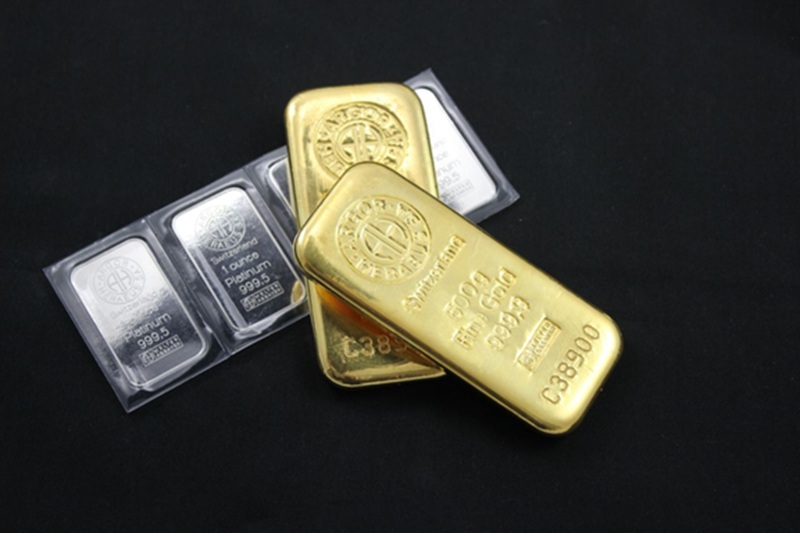
Gold, silver and other precious metals surged on Wednesday as the US dollar weakened and Treasury yields fell following midterm election results that pointed to a shift in congressional control, reviving demand for assets sensitive to monetary policy and currency movements.
Spot gold rose 2.97% to $4,044.90 an ounce by 4:32 a.m. ET, while spot silver gained 4.27% to $51.90. US gold futures advanced 2.94% to $4,056.40 an ounce, and silver futures climbed 4.54% to $52.01.
Other precious metals also recorded strong gains. Platinum rose 3.38% to $1,463.95 an ounce, while palladium advanced 5.57% to $985.50.
Register for the next Tekedia Mini-MBA.
Register for Tekedia AI in Business Masterclass.
Join Tekedia Capital Syndicate and co-invest in great global startups.
The rally came as Democrats won control of the Senate, the House of Representatives and several governorships. The election results triggered movements across financial markets, with US stock futures broadly lower and Treasury yields declining. Oil prices edged higher, while the US dollar index lost approximately 0.3%.
The weaker dollar provided support for precious metals, which are priced internationally in the US currency and become relatively cheaper for buyers holding other currencies when the dollar declines. Lower Treasury yields can also improve the appeal of non-interest-bearing assets such as gold by reducing the opportunity cost of holding them.
Rhona O’Connell, head of market analysis for EMEA and Asia at StoneX, said in a note on Tuesday that a Democratic victory in both chambers of Congress would support gold if it put downward pressure on interest rates and the dollar.

She warned that divided political control could increase uncertainty through what she described as “fiscal brinkmanship” and institutional friction.
“Less fiscal stimulus argues for lower long yields and a softer dollar, offset by debt-limit premia in bills and a Fed leaning towards another hike,” O’Connell said.
She also identified competing influences on gold, including the Iran war, a weaker dollar and the possibility of a more hawkish Federal Reserve. The combination suggests that political developments may support precious metals, but monetary policy and geopolitical risks will continue to shape price movements.

The latest gains come after gold and silver experienced exceptional rallies in 2025, rising 66% and 135%, respectively, as investors sought protection from geopolitical tensions and financial market volatility.
That momentum has weakened this year. Higher inflation, rising bond yields and expectations of tighter monetary policy have reduced support for precious metals, which do not generate interest or dividends.
Gold has fallen more than 7% year to date, while silver has declined almost 28%. The scale of the reversal shows how quickly changes in interest-rate expectations and investor positioning can alter demand for metals even when geopolitical uncertainty remains elevated.
Gold rose on Monday as oil prices retreated and is now on course for a weekly gain of approximately 3.7%. The recovery has attracted attention because investors are reassessing the balance between safe-haven demand, inflation risks and the outlook for US monetary policy.
However, analysts caution that the latest advance does not necessarily signal a sustained reversal of the broader downward trend.
Daniela Hathorn, senior market analyst at Capital.com, said the recovery remained fragile, noting that geopolitical uncertainty does not always translate into stronger safe-haven demand when investors are also concerned about restrictive monetary policy.
“The challenge for precious metals is that geopolitical uncertainty is not automatically translating into safe-haven demand when investors are also concerned about restrictive monetary policy,” she said in a Tuesday note.
She added that precious metals could face selling pressure during sharp equity market declines, as investors liquidate profitable or highly liquid positions to raise cash.
The market reaction to the election highlights the influence of fiscal expectations and monetary policy on precious metals. A weaker dollar and lower long-term yields generally support gold and silver.
Reduced expectations for fiscal stimulus could ease concerns about government borrowing and long-term inflation, potentially putting downward pressure on Treasury yields. However, political disagreements over spending and government funding could introduce fresh uncertainty, while inflation pressures could keep the Federal Reserve cautious about cutting interest rates.
The possibility of further monetary tightening also complicates the outlook. Higher interest rates tend to increase the appeal of interest-bearing assets relative to gold, while stronger yields can support the dollar and weigh on metal prices.
For silver, the outlook also depends on industrial demand, giving it an additional price driver beyond its role as a store of value. Its sharper decline this year compared with gold illustrates how broader market and industrial considerations can amplify movements in the metal.
Analysts thus see the latest rally as a reflection of a combination of currency weakness, falling yields and political uncertainty rather than a clear resolution of the pressures that have weighed on precious metals this year.