

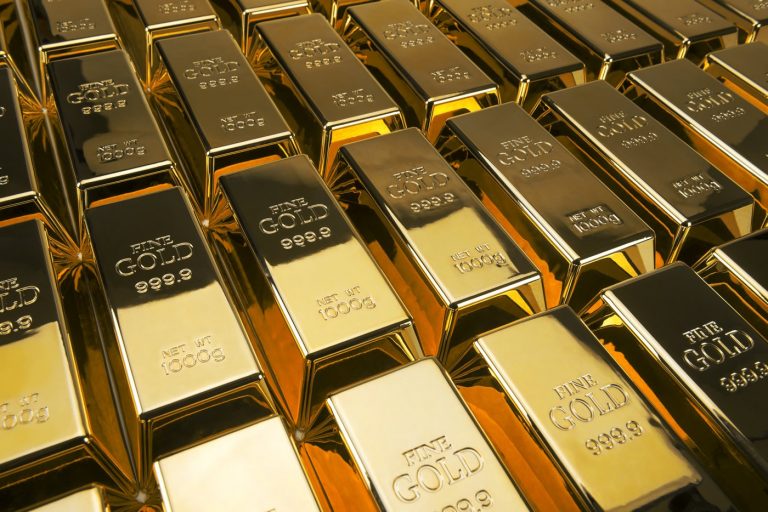
Gold prices smashed through a historic threshold on Monday, climbing above $3,800 per ounce for the first time as expectations of a U.S. Federal Reserve rate cut combined with political gridlock in Washington to fuel a flight into safe-haven assets.
Spot gold surged 1.5% to $3,816.79 per ounce by 0923 GMT, after touching a record $3,819.59 earlier in the session. U.S. gold futures for December delivery advanced 1% to $3,846.60, according to Reuters.
The rally came as the U.S. dollar index slipped 0.3%, making greenback-priced bullion cheaper for overseas buyers. The shift in currency markets reflects mounting bets that the Fed will move ahead with interest rate cuts in the coming months, easing pressure on non-yielding assets such as gold.
Register for Tekedia Mini-MBA edition 20 (June 8 – Sept 5, 2026).
Register for Tekedia AI in Business Masterclass.
Join Tekedia Capital Syndicate and co-invest in great global startups.
Register for Tekedia AI Lab.
President Donald Trump is set to meet Democratic and Republican congressional leaders later Monday to hammer out a deal to extend government funding. Without an agreement, a shutdown could begin on Wednesday, raising uncertainty in financial markets already on edge.
“With the Fed set to cut further rates over the next six months, I think there should be more upside for the yellow metal, targeting a level of $3,900/oz,” said UBS analyst Giovanni Staunovo. “Concern about the U.S. government shutdown is also supporting demand for safe-haven assets like gold.”
The latest Personal Consumption Expenditures (PCE) Price Index, released Friday, matched expectations and reinforced dovish market sentiment. According to the CME FedWatch Tool, traders are now pricing in a 90% chance of a 25-basis-point cut in October and a 65% probability of another cut in December.

Gold thrives in precisely these conditions — lower rates, a weaker dollar, and rising geopolitical or economic uncertainty. Already up more than 45% year-to-date, bullion has transformed into the standout asset of 2025, eclipsing equities and many commodities in performance.
Many brokerages have turned bullish, with ETF flows adding momentum. SPDR Gold Trust, the world’s largest gold-backed exchange-traded fund, reported its holdings climbed 0.89% to 1,005.72 metric tons on Friday.
“We think official demand and ETF holdings are playing a pivotal role in gold strength, while jewellery demand and recycled supply are restraining factors,” Reuters quoted Deutsche Bank as saying in a note.

A Broader Metals Surge
The rally has not been confined to gold. Spot silver rose 2.1% to $46.94 an ounce, its highest in more than 14 years. Platinum climbed 2.5% to $1,606.77, a 12-year high, while palladium edged up 0.7% to $1,279.15.
“Silver and platinum-group metals are responding to two primary things — increased industrial activity on rate cuts and higher levels of inventory holding as nations seek to ensure they have adequate availability in a world of supply chain uncertainty,” said independent analyst Ross Norman.
Analysts note that the rally evokes memories of past surges in safe-haven demand during moments of market upheaval. In 2011, gold briefly topped $1,900 an ounce amid fears of a eurozone debt crisis and a U.S. credit rating downgrade. The scale of today’s move, however, dwarfs those past milestones — underscoring how the combination of Fed policy, political brinkmanship, and investor anxiety is creating a perfect storm for precious metals.
With shutdown fears looming and rate cuts appearing increasingly inevitable, many market participants see room for the rally to extend further. But the sharp climb also raises questions over sustainability: whether gold is now behaving less like a safe haven and more like an overheating asset class, drawing in speculative flows that could mirror past bubbles.
Investor Psychology Shifts
What makes the current surge notable is how it is reshaping investor behavior. Portfolio managers traditionally used gold as a hedge against inflation or crisis, but with equities wobbling and bond yields under pressure from the prospect of looser Fed policy, allocations are shifting more decisively toward bullion and other metals.
ETF inflows, particularly into SPDR Gold Trust, show retail and institutional investors alike treating gold less as a secondary hedge and more as a primary asset. Market strategists note that some investors are reducing equity exposure to fund these positions, while others are treating gold as a substitute for Treasuries in the short term, given concerns about U.S. fiscal stability.
For central banks and sovereign wealth funds, the calculus is similar: diversify reserves in a world where U.S. fiscal politics appear increasingly unstable, and where the dollar may weaken further if the Fed opens the door to multiple rate cuts.
That convergence of traditional safe-haven buying with speculative momentum is what makes this rally unusual. If sustained, it could alter long-standing patterns of portfolio construction, with gold playing a more dominant role in multi-asset strategies than at any point since the late 1970s.
However, investors currently appear unmoved by warnings of overheating. In a year where the yellow metal has already outpaced nearly every major asset, the path toward $3,900 — and perhaps beyond — looks increasingly plausible.