

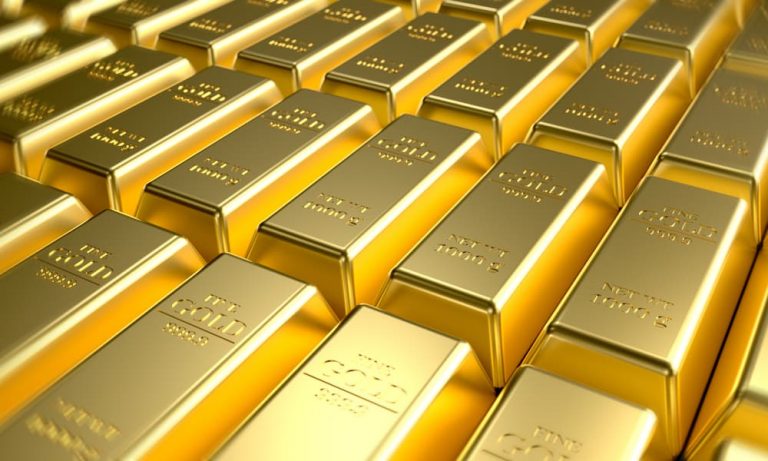
Gold prices dropped below $4,000 an ounce on Friday, reaching their lowest level since mid-July as rising crude oil prices, stronger US economic growth and persistent inflation increased expectations that the Federal Reserve could raise interest rates again in December.
Spot gold fell 0.6% to $3,995.42 per ounce by 0904 GMT, after touching its lowest level since July 17. US gold futures for December delivery also declined 0.6% to $4,005.50. Bullion was down 3.8% for October, putting it on course for a second consecutive monthly loss.
The latest decline underscores pressure on precious metals as inflation concerns translate into expectations of tighter monetary policy. Gold is traditionally viewed as a store of value during periods of economic and geopolitical uncertainty, but it does not generate interest. When investors expect borrowing costs to rise, interest-bearing assets such as US Treasury securities become more attractive relative to bullion.
Register for the next Tekedia Mini-MBA.
Register for Tekedia AI in Business Masterclass.
Join Tekedia Capital Syndicate and co-invest in great global startups.
Stronger-than-expected US gross domestic product growth and accelerating inflation have reinforced that trade-off, particularly as higher energy prices threaten to keep inflation elevated for longer.
“Gold prices are affected by a combination of two factors, the US GDP data which came in stronger than expected and the increase in oil prices putting pressure on the Fed to hike further interest rates,” said Giovanni Staunovo, an analyst at UBS.
Data released on Thursday showed that the US economy expanded faster than expected in the third quarter, while inflation accelerated in September as consumers paid more for gasoline and other goods. The combination has complicated the Federal Reserve’s efforts to bring inflation towards its 2% target without significantly weakening economic activity.

According to the CME FedWatch Tool, traders were pricing in nearly a 74% probability of a Federal Reserve rate increase in December. That expectation has become a significant headwind for gold, as investors reassess the likelihood of further monetary tightening following the central bank’s latest decision.
Oil Prices Complicate the Federal Reserve’s Inflation Outlook
Energy prices have become another important source of uncertainty for financial markets. Crude oil climbed and was heading for a fourth consecutive monthly gain after an attack on a tanker in the Strait of Hormuz renewed concerns about supply disruptions linked to the US-Israeli war on Iran.
The Strait of Hormuz is a critical route for global energy shipments. Sustained disruption in the waterway has restricted oil supplies, pushed crude prices higher, and increased the cost of transportation, manufacturing, and other economic activities.

For central banks, the risk is that higher energy costs could slow the decline in inflation or trigger another acceleration in consumer prices. That would make it more difficult to justify interest-rate cuts and could force policymakers to maintain restrictive monetary conditions for longer.
The Federal Reserve held its benchmark interest rate in a range of 3.75% to 4% on Wednesday, a widely anticipated decision. However, policymakers signaled that inflation risks remained important, particularly amid rising energy costs.
The European Central Bank also held rates steady this week, indicating that major central banks are not yet ready to declare the inflation fight over.
The pressure on gold comes from the interaction between energy prices and interest-rate expectations. Higher oil prices can strengthen inflation concerns, while expectations of further rate increases support the dollar and Treasury yields, both of which can reduce demand for non-yielding bullion.
However, the relationship is not straightforward. Gold can benefit from geopolitical instability and fears of currency depreciation, even when higher interest rates weigh on its immediate performance. The current market environment is therefore testing gold’s ability to attract safe-haven demand while investors focus on the potential cost of holding the metal.
Staunovo said gold could recover to $5,000 or higher next year, arguing that the Federal Reserve would eventually need to resume cutting interest rates and inflation would cease to be a major concern.
That outlook suggests the recent decline may be part of a broader adjustment to changing monetary expectations rather than a permanent deterioration in gold’s longer-term investment case. However, a recovery towards $5,000 would be determined by inflation easing sufficiently to give the Fed room to cut rates and on demand for safe-haven assets remaining strong.
Treasury Yields Fall as Investors Assess Inflation and Jobs Data
US Treasury yields moved lower on Friday as investors assessed the latest economic data and the Federal Reserve’s monetary policy decision.
The benchmark 10-year Treasury yield declined five basis points to 4.933%, while the 30-year yield fell three basis points to 5.293%. The two-year yield, which is particularly sensitive to expectations for near-term Federal Reserve policy, dropped six basis points to 4.589%.
A basis point is 0.01 percentage point. Bond yields and prices move in opposite directions, meaning the decline in yields indicated an increase in Treasury prices.
The movement came as investors continued to digest Thursday’s personal consumption expenditures price index, the Federal Reserve’s preferred inflation measure. The index increased 0.5% month over month and 3.6% year over year, remaining substantially above the central bank’s 2% target.
The figures have reinforced uncertainty about the direction of monetary policy. Although the Fed held rates steady, investors are trying to determine whether the latest inflation pressure will prove temporary or require another period of tightening.
Federal Reserve Chairman Kevin Warsh said policymakers were not committed to a predetermined course of action.
“If we had a firm conclusion about the conduct of monetary policy, we’d announce it to much fanfare today,” Warsh told reporters after the meeting.
His comments leave the door open to further adjustments depending on incoming economic data. That makes the next inflation and employment releases essential for investors assessing the December meeting.
Markets are awaiting the third-quarter Employment Cost Index, which measures changes in labor costs and provides insight into wage pressures. Investors will also monitor next week’s labor-market data, including the September Job Openings and Labor Turnover Survey on Tuesday and the October nonfarm payrolls report on Friday.
The figures could help determine whether the US economy is generating enough employment and wage pressure to sustain inflation, or whether economic conditions are beginning to weaken.
Other precious metals also recorded losses on Friday. Spot silver fell 2.8% to $50.9221 an ounce, platinum declined 3.1% to $1,441.72, and palladium dropped 2.1% to $984.50. All three were heading towards weekly and monthly declines.
However, the latest sell-off in precious metals highlights a market increasingly focused on the Federal Reserve’s response to inflation rather than relying solely on geopolitical uncertainty to support safe-haven demand.