

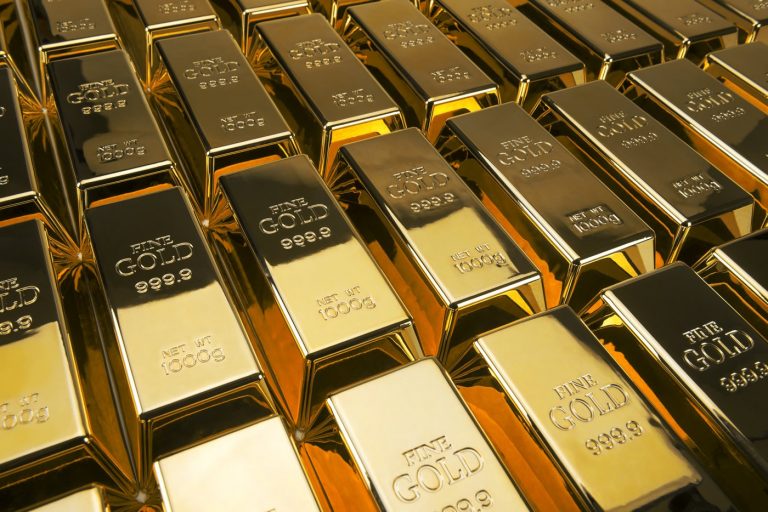
Gold prices have been fluctuating between roughly $4,690 and $4,750+ per ounce with various sources showing it around $4,700–$4,730 in recent hours. It’s pulled back a bit from recent peaks but remains elevated overall, reflecting ongoing safe-haven demand.
WTI has been trading around $92–$97 per barrel; spiking toward the higher end today amid volatility, while Brent has pushed above $100–$106. The jitteriness stems from the fragile U.S.-Iran ceasefire situation. President Trump extended the truce; originally two weeks, now open-ended and indefinite in some descriptions to give Iran time for a unified proposal, but peace talks remain stalled or on hold.
Iran has seized ships in the Strait of Hormuz, the U.S. maintains a naval blockade on Iranian ports, and there’s no clear timeline or breakthrough. This keeps supply disruption fears alive for oil while supporting gold as a hedge against geopolitical and inflation risks.
In short: Gold benefits from uncertainty even as some ceasefire relief causes occasional dips. Oil gets a premium from Hormuz tensions and stalled diplomacy, with potential for more upside if escalation risks rise again. Markets are watching closely for any progress in talks, plus broader factors like the stronger dollar and Fed signals.
Register for Tekedia Mini-MBA edition 20 (June 8 – Sept 5, 2026).
Register for Tekedia AI in Business Masterclass.
Join Tekedia Capital Syndicate and co-invest in great global startups.
Register for Tekedia AI Lab.
The Strait of Hormuz is a narrow waterway located between Iran to the north and Oman and the United Arab Emirates to the south. It connects the Persian Gulf to the Gulf of Oman and the Arabian Sea, serving as the only sea route for oil and natural gas exports from major producers like Saudi Arabia, Iraq, the UAE, Kuwait, and Qatar.
Roughly 20% of the world’s traded oil around 20–21 million barrels per day in normal times and a significant share of liquefied natural gas (LNG) pass through this chokepoint. Even minor disruptions here can spike global energy prices, raise shipping costs, and cause supply chain ripple effects worldwide.
Tensions escalated sharply after the broader U.S.-Israel conflict with Iran began on February 28, 2026. Iran responded to initial strikes by declaring the strait closed or heavily restricted starting in early March, attacking or threatening vessels, and laying mines in some areas. This caused shipping traffic to collapse dramatically—from hundreds of vessels per day to single digits in many periods.
A temporary ceasefire was announced around April 7–8, 2026; brokered with involvement from Pakistan and China, which was supposed to include reopening the strait. However, Iran has maintained control over traffic, imposed high tolls reportedly over $1 million per ship in some cases, sometimes demanded in Chinese yuan, and continued restrictions. Iran accuses the U.S. of violating the ceasefire by keeping its naval blockade in place on Iranian ports.

Iran’s Islamic Revolutionary Guard Corps (IRGC) fired on at least three commercial ships attempting to transit the strait and seized two of them including the Liberian-flagged Epaminondas and Panamanian-flagged MSC Francesca. The ships were reportedly brought to Iranian waters. Iran claims the vessels violated its maritime rules or endangered safety.
The U.S. has maintained a naval blockade preventing ships from entering or leaving Iranian ports. President Trump extended the ceasefire indefinitely with no fixed deadline but kept the blockade active until Iran presents a unified proposal acceptable to all its factions. Trump has also ordered the U.S. Navy to shoot and kill any Iranian boats deploying mines in the strait and to increase mine-sweeping operations.
Both sides accuse each other of piracy or ceasefire violations. Iran says the U.S. blockade makes full reopening impossible; the U.S. views Iran’s ship seizures and attacks as escalatory but has downplayed some incidents. Shipping companies remain extremely cautious due to risks from mines, attacks, and unclear rules. Some vessels have tested the waters, but overall traffic stays severely disrupted.

War risk insurance premiums have soared, and rerouting around Africa via the Cape of Good Hope is costly and time-consuming. This standoff is part of a larger conflict that began with U.S./Israeli strikes on Iranian targets. Iran has used the strait as leverage, historically threatening to close it during crises. Clearing any mines or fully securing the area could take weeks to months, according to some assessments.
Crude oil prices remain elevated while gold benefits from the uncertainty as a safe-haven asset.In short, the tensions boil down to a classic chokepoint power play: Iran leverages its geographic position for bargaining power and retaliation, while the U.S. uses naval superiority to pressure Iran economically and enforce free navigation. Peace talks are stalled, and any miscalculation risks wider escalation.