

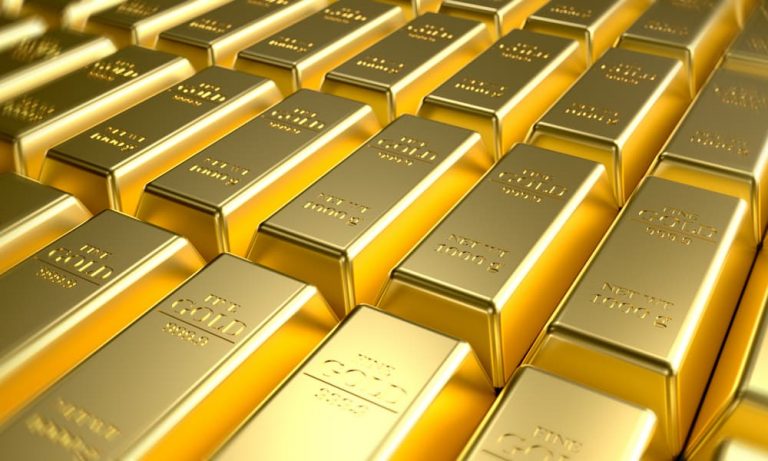
Gold prices rose more than 1% on Friday as falling oil prices and a softer US dollar supported bullion, giving the precious metal room to recover from recent losses even as expectations of further Federal Reserve interest-rate increases continued to limit its upside.
Spot gold gained 1.4% to $4,189.99 an ounce by 0842 GMT, putting it on course for a weekly advance. US gold futures for December delivery also climbed 1.4% to $4,215.30 an ounce.
The recovery followed a decline in oil prices after US President Donald Trump said Washington would not launch attacks against Iran before the November 3 midterm elections. His comments, alongside what he described as productive discussions to end the conflict, eased immediate concerns about further disruptions to Middle Eastern energy supplies.
Register for the next Tekedia Mini-MBA.
Register for Tekedia AI in Business Masterclass.
Join Tekedia Capital Syndicate and co-invest in great global startups.
The shift in sentiment offered relief to financial markets grappling with the inflationary consequences of the war, which began on February 28 and has disrupted global energy markets. Lower oil prices can reduce the risk of another inflation shock, potentially giving the Federal Reserve more room to maintain its current policy rate rather than tighten monetary policy again immediately.
That prospect weighed on the dollar and helped gold recover. Because bullion is priced in US dollars, a weaker greenback makes the metal less expensive for buyers using other currencies, potentially supporting international demand.
“This strengthens the case for a Fed hold this month, weighing on the greenback and pulling yields back from their highs, creating prime conditions for a bullion recovery,” said Nikos Tzabouras, senior market analyst at Jefferies-owned Tradu.com.

However, the improvement in gold prices does not necessarily signal a sustained reversal of the recent selloff. Investors remain caught between easing near-term energy pressures and the possibility that inflation will stay elevated enough to force the Federal Reserve to raise interest rates again before the end of the year.
Tzabouras said bullion continued to face a challenging environment.
“Macro-geopolitical uncertainty and inflationary pressures persist, markets still expect Fed rate hikes ahead and bond yields remain elevated, keeping the opportunity cost of holding gold uncomfortably high.”

Oil Retreat Offers Relief, but Fed Expectations Remain a Risk
Oil prices moved lower on Friday as markets reassessed the likelihood of further military escalation between Washington and Tehran. Brent crude futures fell 1.61% to $102.60 a barrel by 0819 GMT, while US West Texas Intermediate crude declined 1.43% to $90.18.
In later trading, WTI was quoted at $90.77 a barrel, down 0.79%, while Brent was down 0.99% at $103.25. The different price readings reflect the separate reporting times in the market updates.
Despite Friday’s declines, Brent remained on course for a weekly gain after settling 4% higher on Thursday. WTI was set for a slight weekly decline.
Trump’s statement that the United States would not attack Iran before the midterm elections helped reduce immediate concerns about an escalation that could further disrupt energy production and shipping through the region. China’s resumption of petroleum-product exports also contributed to the downward pressure on prices.
Nevertheless, the decline in crude prices has not eliminated the underlying supply risks.
“The escalation of atrocities in the Persian Gulf and around the Red Sea has dashed hopes that swelling oil exports from the region will be sustainable and, as such, a protracted fall in oil prices in the foreseeable future seems implausible,” said Tamas Varga, an analyst at PVM Oil Associates.
That uncertainty complicates the outlook for gold. A sustained decline in energy prices could ease inflation expectations and reduce pressure on central banks to tighten monetary policy. But renewed attacks or disruptions to regional shipping could reverse the move, pushing oil prices higher and reviving concerns about inflation.
Gold’s traditional role as an inflation hedge does not guarantee that it will rise during every period of rising prices. When inflation is accompanied by higher interest rates and rising bond yields, the opportunity cost of holding an asset that pays no interest can outweigh its appeal as a store of value.
The Federal Reserve’s policy outlook therefore remains central to bullion’s direction.
St. Louis Fed President Alberto Musalem said on Thursday that the central bank would need to raise interest rates again to bring inflation back to its 2% target, although he declined to specify what policymakers should do at their meeting later this month.
Federal Reserve Governor Christopher Waller also indicated that further increases could be necessary after inflation remained above the central bank’s target for more than five years. Waller nevertheless said rate hikes did not need to occur at consecutive meetings, suggesting policymakers could adjust the timing of further tightening.
The Fed voted unanimously last month to raise its policy rate by a quarter of a percentage point. Traders were pricing in a 19% probability of another increase in October and an 84% probability of at least one additional 25-basis-point increase by December, according to the CME FedWatch tool.
The combination of lower oil prices and a softer dollar is therefore providing short-term support for gold, but expectations of higher interest rates remain a significant obstacle. If inflation proves persistent and policymakers deliver another increase in December, bullion could face renewed pressure even if geopolitical tensions ease.
Treasury Yields Stabilize as Investors Assess Debt Demand
US Treasury yields were largely steady on Friday after declining during the previous session, when the benchmark 10-year yield had retreated from its highest level since 2002.
The 10-year Treasury yield was last quoted at 5.2399%, while the 30-year yield was unchanged at 5.6150%. The two-year Treasury yield, which is more sensitive to expectations for near-term Federal Reserve policy, rose more than two basis points to 4.7827%.
One basis point equals 0.01 percentage point. Bond prices and yields move in opposite directions.
The latest moves followed the Treasury Department’s sale of $22 billion in 30-year bonds on Thursday. Indirect bidders, a category that includes foreign central banks and other investors submitting bids through intermediaries, purchased more than 72% of the offering, above the average of 68% recorded across the previous 10 auctions.
The department sold $39 billion in 10-year notes on Wednesday. Demand at the latest auctions has offered some reassurance that investors remain willing to absorb US government debt despite elevated yields and concerns about public borrowing.
The 30-year auction is deemed relevant because weak demand for long-dated securities could force the Treasury to offer higher returns to attract buyers, potentially keeping borrowing costs elevated across the economy. Stronger demand, by contrast, can help limit upward pressure on yields.
Treasury yields also influence the broader financial conditions that shape gold’s performance. Higher yields increase the relative attractiveness of interest-bearing assets, while a retreat in yields can make non-yielding bullion more competitive.
Therefore, Friday’s stabilization provides some support for gold, although the two-year yield’s increase suggests investors have not abandoned expectations of further monetary tightening.
With no major US economic data releases scheduled for Friday, markets are likely to remain sensitive to developments in the Middle East, movements in energy prices and further signals from Federal Reserve officials.
Gold’s immediate recovery shows how quickly bullion can respond when the dollar weakens and bond yields retreat. But analysts expect its longer-term direction, however, to hinge on whether easing geopolitical pressures translate into a more durable decline in inflation risks and interest-rate expectations.